





Read Full Transcript
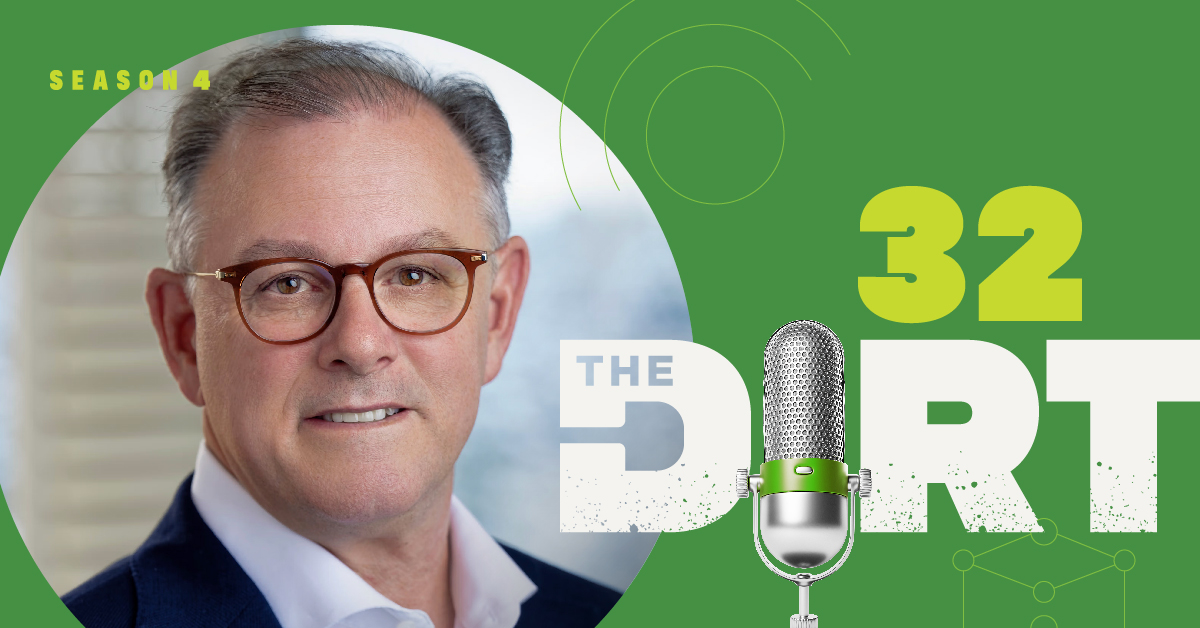
[00:00:00] Mike Howell: The Dirt with me, Mike Howell, an ekonomics podcast where I present the down and dirty agronomic science to help grow crops and bottom lines. Inspired by ekonomics.com farming’s go-to informational resource. I’m here to break down the latest crop nutrition research use, and issues helping farmers make better business decisions through actionable insights. Let’s dig in.
Well, hello again. Listeners. Welcome back to The Dirt. We’re glad you’re tuning in with us this week. If you joined us last week, you heard us with Mark Tully and we talked about the situation that’s going on with the economy here in agriculture. I thought we would kind of continue that this week, and I’ve got a guest with us today that’s gonna help us work through some of these issues.
We have Mr. Jeff Tarsi with us today. Jeff, you’ve been on the program before, but if you will, take just a few minutes and introduce yourself to our listeners, and for those that haven’t been with us before, let ’em know what you do.
[00:01:07] Jeff Tarsi: Hey, first of all, thank you, Mike, for having me back on your program. I’m always happy to do it.
I always like talking agriculture with you. And then secondarily, we always get a little Mississippi State bulldog talk. Yeah. So it’s great to do both, and I’ll get the unique privilege of leading our global downstream retail business for Nutri. As many people would know, we operate in multiple countries around the world and we operate with the objective of helping to feed and clothe the world.
We think we play a very integral part in that process, and we do it with what I think is one of the finest collections of three to 4,000 agronomists around the world, and we’re building solutions for our growers. We hope return on investment opportunities for our customers and give them the best opportunity to maximize their output with the crops that they’re growing.
And it’ll be interesting conversation today because these are some difficult times right now, but not unusual for anybody that’s been in the field of agriculture. Without just aging myself too much. I’ll tell you, I started my career in this business in 1985, so not hard to do the math there on it, that basically I’m 40 years in this industry and anybody that’s been around the industry that long has obviously worked through multiple cycles of agriculture.
That doesn’t make ’em any more Enjoy. It does give you confidence to know what you can do, what you don’t need to do, hopefully, and that all cycles you go into, you come out of. And so, uh, interested in having some conversation with you on that today,
[00:02:42] Mike Howell: Mr. Tarsi. That’s exactly where we want to go today.
Before we get into that, there’s another cycle that we’re trying to break is this same time, and that’s that Mississippi State football cycle. You’ve mentioned that we hit the bottom of that rollercoaster last year, and in all fairness, we’re coming back up this year. Well, we’re recording this on Thursday before the Big Tennessee weekend.
It’ll be a couple of weeks before we get this aired, so I hope we’re not going back down the other side of this rollercoaster by then. But things are looking better in Starkville.
[00:03:08] Jeff Tarsi: They are. I don’t think football’s different than anything else unless you over at Alabama or Ohio State, some of those programs that don’t ever seem to have a down year.
We do it in Mississippi State and we go in cycles. The last two or three years haven’t been comfortable. I’m a big fan of loyalty. I like to be loyal to our customers. I like to be loyal to our strategic suppliers, and I think that if you’re able to do that over the course of time, things generally correct themselves.
And I’m loyal to Mississippi State and I wear my class ring every. Whether we’re two and nine, like last year or two and 10, whatever the record end up being last year, I start every year just like I do in this business with great hope until something proves different.
[00:03:52] Mike Howell: You can probably see over my shoulder here. I keep my cowbell sitting on my desk. I won’t ring it for everybody today, but they’ll, you’ll be ringing on Saturday. Perfect. I know I’m gonna be ringing mine. Well, Mr. Tarsi, let’s get into it and talk a little bit about the topic today. I’ve traveled across the country a good bit this summer, and the common theme of this economic cycle in agriculture keeps coming up.
Growers are talking about it, retailers are talking about it, consultants are talking about it. Even our university researchers are talking about it. I can’t look at social media or pick up a farm publication without reading something about it. And a lot of people are comparing this with the crisis back in the 1980s and last time we had you on the program, you talked about you were in college in that time and getting outta college and had thought about going back to the farm outta college.
Talked about how the economic times back then just didn’t allow for that. So I thought it’d be good if you could take us back to the 1980s and tell us a little bit about what led up to those challenges back then, and we’ll go from there.
[00:04:47] Jeff Tarsi: It’s interesting ’cause a lot of people know I’ve been around a long time and so a lot of people ask me, Hey, what are similarities between the farm crisis of the eighties and today?
And there are things that are similar and there are things that are nowhere similar at all. One of the first things that jumps out at me, and I know from a personal situation when I was growing up and on the farm and what really ended up sinking my opportunity to go back to the farm were. Extremely high interest rates.
We had land financed at 16 point half to 18% interest during those days, and it’s just impossible to exist in that environment. Then at the same time, I’ll tell you that for the last two years and spent a lot of time in Brazil, their interest rates to their growers over there right now are somewhere between that 15 and 16% range as well.
From that standpoint, we’re fortunate here. That would be the death blow here if you had interest range just three or 4% higher right now. From that standpoint, these things always seem to go there when you have either an oversupply of inventory or what you’re producing, and at the same time, when you have depressed commodity prices, which today I guess a lot of people say, we have depressed commodity prices.
Corn, actually probably today, if I’m just being completely transparent, honest, if I was looking a year ago. What I carry out was, and then what I thought we were gonna plant this year, I would’ve probably projected the corn prices would be a bit lower than they are today, and soybean prices probably about where I figured they would be right now from that standpoint, as you know, Mike, we’ve got projections all over the board on this crop.
We got a 180 6 corn yield projected. We had the Pro Farmers tour come out. Theirs was a bit lower than that. I used to love to go on social media ’cause there was a time on social media that you could actually read what was going on with customers there. But today everybody has an angle. If they’re cutting two 30 corn, they say they’re cutting 180.
And I don’t blame people trying to figure out a way to bring some spark into the crop. I think when this thing is over with this year. I’m seeing we’re going to be closer to the low eighties and we’re going be to the higher one eighties. And again, I’ve seen projections everywhere and I think soybeans are going to be a lot more variable than corn.
On the yield side of things, what we had in the eighties, and I grew up on a rice farm in the eighties, and what we had that was just so crippling there again, was you would call it geopolitical. We had the Iran hostage situation. And one of the levers that you could pull or tried to pull in those days.
President Carter, I think it was, was a blockade on grant and embargo at the time. I think Iran was our number one international customer for Rice in this Mid-South area. And so literally overnight you cut the supply chain off. For rice and the price just plummeted. And growers got behind. Most soybean growers were rice growers.
’cause you were rotating those crops. And some of the similarities I see today is that with some of the things going on geopolitically today, we don’t have these trade routes that we’ve had and enjoyed for some time. The elephant in the room is China. From that standpoint, and particularly as it relates to soybeans, you can add up all the other countries that we’re doing trade agreements with, and they’re going to be minuscule compared to what China means to that soybean trade.
If I look at similarities, believe it or not, it’s some geopolitical issues out there that were there in the eighties. And we have a ton of geopolitical issues today, whether it’s the Russian Ukraine crisis, whether it’s the tariffs and retaliatory type tariffs that I think, in my opinion, have disrupted some of the trade channel out there.
That’s pretty evident. I mean, look, in today’s world, Mike, you got information at your fingertip. Probably quicker than you actually probably need to see it sometime. But every time a cargo leaves Brazil for China with soybeans, or every time a cargo leaves Argentina with soybeans to China, you’re gonna read about it and see about it.
And that disturbs people from that standpoint, and that’s gonna have to be worked out. And what’s unfortunate on that side of it is the grower has no control over that really and truthfully. That’s gonna have to be worked out through trade negotiations, and I got confidence that we will get to a place where we can work that out.
I also see another vast difference today is land values obviously are much higher today than they were there in the eighties. In our part of the world, man, a lot of $800 an acre land a lot of $1,200 an acre land in those days. Even in the situation we’re in right now, I challenge you to go find something in the.
Even on the marginal side today, that’s under $5,000 an acre, and so that’s helped this thing a bit because growers have more equity. Those that own land obviously have more equity, and then if you move into the corn belt, that situation’s much different. Even Mike from the South, from that standpoint, again, growers own a lot of land up there.
They have a lot of equity in the land and they don’t want to eat into that equity, but it does give them a longer window for things to sort of correct themselves on that side of it. Those are the things that I would see that would be quite similar. Again, another difference is that, look, we’re so much better at producing yield today, and that can be a positive and a negative.
Okay? But in the eighties, man, if we could cut, my gosh, if you could cut 40 bushels of beans, you’d knock the door down. Where I grew up, we weren’t even planting corn in the eighties. In Mississippi it was cotton, pretty much. But if I look today at where yields have gone, and I always say this. The only thing worse than depressed prices is if you had depressed prices at a poor yield.
Okay. And this year it looks like, while we might think our prices are depressed here, it looks like we’re gonna have extremely high yields in most areas out there. That certainly no disasters from that standpoint, unless you are in some of the areas that you couldn’t get crops planted due to the wet weather that we had early on.
But man, we’ve had a fantastic harvest season to date down southern half of the United States. My gosh, I think we’d probably be 75, 80% done on grain right now. Just so much better from the genetic side of things. So much better in projecting soil profiles and what we need to feed that soil, which again should help us as we go through these times.
[00:11:12] Mike Howell: Mr. Tarsi, we’ll give a shout out to Eric Snodgrass for this great weather he’s given us during harvest season. That sure has helped us get through this and very few delays. We did get a shower of rain down here yesterday and we really needed that, but great weather for harvest.
[00:11:25] Jeff Tarsi: I’ve just mentioned this all relates back to grain prices.
It relates back to basis and. That type stuff. We need some water in the river right now. We need to be able to get this drain down in New Orleans. We got some rain here as well, but really with where the crops were from a jury standpoint really was a blessing on the harvest side of things.
[00:11:45] Mike Howell: Mr. Tarsi, and going through your similarities and differences, you kind of alluded to it, but one thing you didn’t hit on as much as I thought you would was improvements in efficiencies.
Um, and I’m talking about how we can. Get this crop planted in a timely manner. How we can get the fertilizer put out exactly where we need it and, and not wasting as much fertilizer and other inputs, how combines are much more efficient and we’re not losing as much out the back end of these combines.
Would you care to elaborate on efficiencies a little bit?
[00:12:12] Jeff Tarsi: You can be trusted that I wasn’t gonna leave that out. I was saving it a little bit from what I thought You might ask me, well, what can we do more so than what we’re doing today? And absolutely, it kind of goes back to what I said earlier with the advancements that we’ve seen in agricultural, and particularly from the yield capability, yield potential standpoint.
But it does go obviously to the side of efficiency. And my gosh, if I just take the start of the year, which starts with planting generally. Outside of the safety of our people, which is what worries me the most when I lay my head down on a pill at night to go sleep. And the next thing there is, my gosh, can we service these growers at the speed at which they plant a crop?
Today it’s absolutely amazing where we’ve gone since the eighties. With that, I venture to say that there are not many growers out there. I don’t care their size. They can’t plant a crop in seven to 10 days. We got a lot of them, but truth be known, depending on the crop, but they get started planting corn.
They generally plant it in five days. They get started planting soybeans. They generally plant it in five days. And one of the things that’s done is now we got so much of the crop that comes up at the same time. When I was much younger, sometimes planning was a month on our farm, generally about a month.
And so you had a staggered out crop. When the need came to do post emergence application, when the need came to apply fertilizer and such, you had a pretty good window to get that done. Man, that doesn’t exist today. Everything happens really, really fast. And look, we have to have that efficiency, Mike. It’s not a question of do people just wanna be faster doing things?
We have to have that efficiency. To compete on a global agricultural basis. And number one, we don’t have a pool of labor that we had when I was growing up, and so this equipment is bigger. It doesn’t take as much labor, but it takes a very sophisticated person operating this machinery today because basically you’re stepping on a piece of machine that’s operated by an operating system versus an engine.
In my opinion, everything is digital. Everything’s electronic. Everything sends signals and everything, collects data and puts it in a place where we can store it. Again, all of that leads to efficiency and it leads to better decision making by our agronomist. We’ve been sitting here the last six months and just within re Ag solutions, Ken Sites and I, our CEO, we’ve had countless hours of discussion about artificial intelligence.
And where does it fit in our business? And what does our business look like going five and 10 years down the road with ai? And people shouldn’t be afraid of this type of technology. Matter of fact, we should lean into this technology no matter where you are in the value chain in agriculture on this side of it, because it’s going to lead to even better decision making.
It’s going to lead to being able to make better decisions quicker. And Mike, I don’t know. I might’ve said this last time I was on a podcast when I graduated college, went to work BASF. That was my first job. I would say that a lot of decision making, 50% art and 50% science. Okay. Kind of muddy boot scientist type deal.
And what’s in your gut? I ventured to say as we sit here today, it’s really 85, 15. Okay. 85% science, 15% art. I’m gonna tell you that another five years from now, another 10 years from now, it should be 95 5. And we’re very fortunate at Nutri that in my opinion, we have one of the largest data lakes of anyone in agriculture.
In other words, we’ve got more data points than anybody out there in agriculture. Now the problem with a big data lake is how do you mine that data? How do you take that data and put it in a useful format where you can make this decision? And that’s where AI’s going to come into this thing where our agronomists have to sit down for a month into winter.
Just to do calculations and overlay maps and overlay data and that type stuff. Look, I think we’re gonna be able to provide that information sometimes in an hour once we got all the data points collected in a place where we can use this information. And man, that greatly excites me. Look, I’m being honest, transparent, and humble here.
It’s a capability that’s going to exceed my level of intelligence and what I grew up in this industry building. The platform that I tried to build for our people to have in this business, and now it’s time to move to the next level here. Young people are going to prosper in this environment, in my opinion, ’cause they’ve grown up with more of this type of technology.
But Mike, we have to do this because as I travel in other places of the world. I see our international growers that we do, I see them accepting this technology very fast. Matter of fact, they skipped two or three stages that we had to go through. So this is a big challenge for our industry. It’s a big challenge for.
Our people on the ground in nutrient ag solutions in that we’re challenging our growers to accept technology all in the name of making better decisions and becoming more efficient so we can compete on a global platform and be a low cost producer of grain and fiber.
[00:17:37] Mike Howell: Mr. Tarsi, things are definitely changing and we’ve gotta stay on top of these changes in order to be the best supplier in the industry.
Getting back to our discussion about the economic times, I often think about the ag markets as a roller coaster, and we kind of mentioned that early, but this roller coaster can have some general rises and falls, and sometimes it can get some pretty steep peaks and valleys, and I think we’re in one of those steep areas right now.
But it seems that there’s a lot of successful people that have been around the industry for a while, and they’re the ones that are prepared for these times of steep peaks and valleys. During your career, I’m sure you’ve paid attention to some of these individuals that have been successful. Can you talk about some of the characteristics that these individuals have and how they’ve overcome these challenges over time?
[00:18:18] Jeff Tarsi: That’s one thing I love about my job. Is being able to travel and be around producers no matter where it is from a geography standpoint. And one thing that I find is that those that are immensely successful, it doesn’t matter what country they’re in, the characteristics are all the same. They’re very consistent in their operation.
They’re very open to new technology. They’re very open to doing things in a different way. Now, that doesn’t mean that they’re always the first mover, okay? I see a lot of people that are first movers that sometimes aren’t always the most successful. But they pay great attention to what’s going on in the way of r and d, and more so than that, they pay great attention to what’s going on in their own operation.
They don’t get outside of their excuse, and probably the thing that stands out the most is that in the good times are the bad times. You don’t see a lot of change. I had a really good friend of mine that I visited with last weekend that I think is an outstanding grower. I would place him up in the top 20 that I’ve run across anywhere, no matter the crop, and we sat on his balcony last weekend and he told me his toughest things were this year.
I didn’t change anything. I did from an input standpoint. He goes, was it difficult to make that decision? To use a premium fungicide when I’m looking at commodity prices. He said, you dang right it was, he said, I probably stayed up a couple nights on it. He said, but I stayed with what I knew. Was it difficult last fall to put the P and k down that he put out looking at what he was coming into this year?
You dang right it was, but he said, Jeff, I keep intricate records. And I rely back on those records and he said, I saw people around me this year that told me I don’t care what the disease pressure comes back to, I’m not spending another nickel on this crop. I’m just at that point. And he said, there’s a vast difference in what we’re seeing on yield monitors right now.
And a lot of those people were saying, Hey, I got emotional and I made a mistake here on this piece of it. But remarkable consistency with what you know works. Because when you go into these times, like we’re in right now, yield is king. You can’t give up yield in a low commodity price environment. But man, it takes a lot.
I ask myself sometimes if I was sitting in their shoes, but I have that same conviction. I think I would because I’m a great believer in r and d. I’m a great believer in studying yields and overlaying fertility maps and that type stuff, but still. You gotta pull the trigger on those types of things. I know a lot of young growers and right now, a lot of ’em come to me when we’re out and say, man, look, we’re struggling here.
What advice can you give us? And my advice is always the same. Put your head down, go to work. Get your operations from a cost efficiency standpoint as low as you can. That don’t mean cut back on inputs from that side of it, but control your controllers. It’s no different than what we do in our business, and what I charge our people with when we started this year is knowing that we’re coming in a tougher environment.
Control your controllables, keep your costs down in the business. ’cause I see, just to be honest, sometimes I can go from one headquarters to another and one’s got twice the equipment the other’s got and they got the same acres. And those are things that are like a weight around your neck in this type of environment just bogging you down when you get hung with those costs and such.
I guess the thing that I would say that I see. Through this period, like you say, the ups and the downs and such is remarkable consistency in their operations. Remarkable control of the controllables from that side of things. And then openness to what can we do different. Here that might give us an edge.
I look at like the biological platform that we have today, and Fon nutritional platform that we have today. And again, the ROI opportunity we think we can give growers. These are new products, Mike. People haven’t used these products for a long time, but they offered a unique ability. Like right now, look, nutrient prices are high, and so how do you absolutely make sure that you get.
Every ounce of that nutrient that you put in that soil available to that plant, so you can convert that to yield. And we have a lot of products in that platform today that allow that. And even with agronomist, it takes courage to go up and say, Hey, I’m gonna ask you to spend some additional money here on this, but I think the returns it’s going to give you are going to be remarkable.
I might add one other thing here that I didn’t think about when we started this. You asked me how did the eighties compare to today, and what do you see different in that? Something that I see that’s enormously encouraging to me is that I see more producers on the harvester today than I’ve ever seen in my career.
Going back, if I look when I grew up in the eighties, very rarely would you see a farmer owner of a farm. On a combine, on a cotton picker, that type of thing. That’s a total 360 today, in my opinion. And why is that? Why are so many people on these harvesters? ’cause all of the real time data they can look at when they’re on that harvester, they’re sitting there and they’re looking at that yield monitor.
And at the same time, a lot of ’em have got so many screens in there. You don’t have to drive it and steer this auto steer. They get into an area of corn that’s cutting two 70 and they go pull up a fertility map or a soil map and look at, Hey, when we started this year, what did these zones look like? And what did we do from a variable fertilizer rate?
And those types of things. And man, that’s amazingly encouraging to me. Because people wanna learn. Again, it is back to using data and information and how to better your operation going forward. I don’t know if you agree with me on that, Mike or not, or what you see from that standpoint.
[00:24:25] Mike Howell: I do. There’s a lot of growers out there, and they’re in the cab of that combine.
They’re wanting to get this information and a lot of them may be doing that to brag to the others, but I think the vast majority of ’em are there to try to learn. What did I do different in this spot that I didn’t do over here? We’ve gotta be able to get all this information together so that we can make these changes for next year and improve efficiencies and get the most outta this crop for next year.
[00:24:47] Jeff Tarsi: The great thing is that years and years ago, when you bring a new product out, and let’s just say like some of these nutritional products, you get a grower, say you got a 40 acre block of ground, and you say, Hey, plant 20 of it. Use it on 20. Don’t use it on the other 20. Just 10, 15 years ago, then you’d have to say, now look, don’t forget to call me when you start harvesting that field.
’cause I gotta bring a way wagon out there. We gotta a way to yield on it. Well, about 80% of the time a grower would get to that field and he’d go, you know what? I ain’t got time to wait on a way wagon. I gotta get this crop out. And then that whole year was, you lost that year. And so a lot of times it took you three to five years to develop like yield data on these products.
Lemme tell you something, these days, you got one year you bring this product out. It is new. It’s an increasing cost to use that product with the promise or the hope that it’s going to give you an ROI on it. And you know what? You’re gonna capture that in the first year and either it happened or it didn’t happen, but man, that’s great.
That’s the way you want things. You don’t want to take three to five years to learn that a product is doing something great. You don’t wanna take three to five years to learn that, hey, maybe on this soil type with this germ plasm, it doesn’t provide a return here on this operation. But again, that goes back to what you talked about.
That’s sufficiency. That’s getting the biggest bang outta your dollar.
[00:26:09] Mike Howell: Mr. Tarsi, based on what you just said, that burden’s on us as agronomist. We’ve gotta get out there and get that data before that product goes out to the farmer. We’ve gotta know what to tell them. That’s our job to do that research and get that four or five years worth of data.
Before they get it on their farm, we’ve gotta be able to tell them it’s going to work here and it’s probably not going to do as good in this other situation. That’s where that trust factor comes in, that they can trust us to give them the right information.
[00:26:33] Jeff Tarsi: And you know this, Mike, we invested heavily in innovation farms in this organization, and we talked about Mississippi a few times.
I’m very proud. We have a innovation farm in Winterville just north of Greenville. We’ve got a fabulous innovation farm in Champaign, Illinois. We’ve got an innovation farm in Kentucky. When we get into the high value crops, we got innovation farms out in the west, and we also operate some on High plains, the Texas area and the leveling Texas area as well.
But we don’t bring anything new to a grower that we haven’t grown on that innovation farm First. Okay, so not only do we have confidence in the product, but we got confidence in how we’re going to use that product, and we got confidence in the germ plasm that we might select to use that with. We’re not an r and d company.
I always say we’re R and d light, but I love the fact that we’re not gonna go ask a grower. To use anything that we hadn’t used ourself on a farm, in an actual farm environment. And I don’t mean a strip test. I don’t mean a hundred foot strip by four rows. I’m talking about acreage that we test this stuff on.
[00:27:42] Mike Howell: Mr. Tarsi, we had an episode a couple of weeks ago where we’re talking about the innovation farm there at Selma out in California. They’ve got a field day coming up October the eighth. We’ll remind everybody about that. But we talked about all the sensors that are going on out there and some of the new products that are being tested.
Mind everybody about that field day, October the eighth, you’re in that area. Like to see everybody show up for that. It’d be a great event out there.
[00:28:05] Jeff Tarsi: Fantastic work, and man, I don’t get to go out there enough, but every opportunity I get to get on one of those innovation farms, I do. We were up in champagne about a month ago or so and we were testing a lot of drone technology there.
Watching these applications and also looking at stuff like, I call it Short corn ion, I think is the name of it. But we’ve had that technology on that farm for three to four years now. And so when it becomes commercial, when Bear brings it out, we’re gonna know. We’re gonna know how we need to treat that product.
All this new technology is gonna be different ways that we provide fertility, different stages of plant growth, all of those things. And we get that opportunity to do that early on. And again, it’s a sizable commitment. From capital side of things, number one, to buy these farms, operate these farms and such, but well worth it.
And that’s what I call locked arm in arm with growers and standing beside ’em as we write these solutions and prescriptions for their farms.
[00:29:08] Mike Howell: Mr. Tarsi, these farms are invaluable. We can’t get where we need to be without the research to back these products up. Mr. Tarsi, another thing we talked about the last time you were on and we share this same passion, is the young people that are coming into the industry.
And we talked about how we both like to get in front of the young people as much as we can and encourage them. There’s a world of opportunity in agriculture these days, but some of these young people may be getting scared off because of these economic chimes. What advice would you give young people that are considering getting into agriculture but may kind of be shy away because of what they see going on with the economy these days?
[00:29:42] Jeff Tarsi: First of all, you really have to look no further than the demographics of our growers today. We’ve got demographics that on an average age, well, I think well above the age of six. Okay, and so that tells you that there’s going to be a tremendous turnover on these farms. I’ll tell you that one of the neatest things about all this technology we have today started with GMO and then auto steer, and we’re able to go out and satellite image now and create field boundaries and those type things.
One of the neatest things I think, we’ll look back in history, one of the neatest things about that. We attracted young people back to the farm. People weren’t coming back to the farm because nothing ever changed on the farm. You did it the way your dad did it, and your dad did it the way your grandfather did because we had a long period of time in there.
Really. I guess this is probably. People disagree with me some on this, but if you look, when we went from the mule to the tractor, okay, obviously the tractors got bigger, but we went a long spell in there where we just didn’t have groundbreaking technology on that side of things. And then if you started in the late eighties, early nineties, you had the Emmy Dilon chemistry, you had the SU a urea chemistries that came along.
These were, man, these were market changing innovation. Today, we think innovation with a computer. A satellite, data storage, ai. But before that, a lot of times the innovation was strictly in organic chemistry, and with those products came different ways we could grow crops. We went through a period there where we grew a lot, where we just depended on post emerge, or we had a product that was a post, but also had a residual, but people got bored.
I really think they did. I had a grower tell me this, he’s my age several years ago, even with the Roundup ready system, he said. Before there was Roundup ready, you could really tell the difference in really good growers from maybe average growers, because you had to make a lot of decisions with products.
You had to make a lot of decisions with timing of application. And he said, with these systems like Roundup ready. Hell, everybody was pretty good, and he told me he wasn’t challenged. He wasn’t challenged enough, and I’ve never thought about that. Everybody wants a challenge. Now. We probably got more of a challenge today than we want from that side of it, but with our young growers, we desperately need them, number one, because of demographics.
Number two, we need them because we got so much technology coming into this market, and I just told you earlier that I probably have exceeded my level of capability. When it comes to stuff like ai, like there’s nothing that I’ve done in my training that would make me a prime candidate to lead an AI type intervention in agriculture.
But again, our growers are that same age that I am on average, I’m 63, I’ll be 63 here in a month. So we need these young growers in agriculture ’cause they’re gonna have a better handle. On this technology, but I don’t want ’em to get discouraged because of where we are right now. And I understand that they are and can be.
I talked to ’em, like I said earlier, every chance I can get. But I think that what you give them from advice again, is be frugal. Be frugal in how you’re laying out your cash expenses. Don’t do crazy things on land, in my opinion. Don’t get out over your skis. Everybody thinks now that you get bigger. And you divide your expense base well.
Getting bigger is fine unless getting bigger means you’re not farming as well anymore and you can’t manage it as well anymore. So probably the one thing that Mike, we could tell these young growers that I know I’m a hundred percent accurate on is just as sure as you go in a cycle down, you gonna come outta that cycle somewhere.
And if you got the perseverance and if you’re managing your operation and you’re managing your expense and your controllables, stick your butt on that farm. Be out there active on that farm every day. Be on that equipment like we talked about, and learn everything you can about that acre of land that you’re farming.
And what best has a factor on yield out there And work very closely with your ag retail agronomist. These people are exposed to a lot of information. Work very closely with them and ask questions. Ask questions on the solutions that are provided to ’em, and understand what’s being recommended to be used.
So I thought about this the other day. You never know when you’re going into this cycle. If you think about it, Mike. 22. I mean, has anybody ever seen a year like 22 in Africa? I never have. I probably never will. But look, we’re only three years removed from 22, which was the highest of the highest. And so this thing can come back out and it can come back out in ways that you can’t imagine.
Again, we talked about all the geopolitical tensions in the world out there today. It doesn’t take but one little thing here, one little thing there, and the picture’s totally different. You just gotta be ready. When that opportunity comes and a heavy, heavy emphasis on marketing your crop, I still don’t think that we’re where we need to be in that regard as it relates to southern our crops.
For instance, if you look forward to next year, right now, there’s some things out there on the board, particularly with corn and not that bad. So do you layer something in Now? In a lot of cases, if you’re so tied up with what you’re doing on the operations side of it, hire a professional to do that.
That’s another thing I see when you ask separates the really good from the average is most of these people have a marketing plant for their crops.
[00:35:20] Mike Howell: Well, Mr. Tarsi and going through this, I was reminded of a quote that I heard years ago, and you probably know the guy that said this, Dr. Will McCarty. He was a cotton specialist here in Mississippi for years and years, but we were going through some tough times and he was speaking at a grower meeting.
Somebody asked him a question about how are we going to get through these tough times? And he looked at ’em, he said, guys, it always rains at the end of a dry spell. It is going to come around. Things are going to get better. So it’s just a matter of time. We gotta be able to suffer through the tough times and things are going to get better.
Mr. Tarsi, we really appreciate you taking time outta your schedule to visit with us today. Before we go, is there any closing comments you wanna leave us with any new and exciting information from Nutrien Ag Solutions you want to throw out at us today?
[00:36:02] Jeff Tarsi: We are an agriculture company. We are committed to agriculture.
We’re a publicly traded company. You can look on our balance sheets and see the investments that we have in agriculture. We’re gonna continue to invest in this business. We’re going to invest right alongside our growers. I had the opportunity yesterday. I was down in Geiser, Louisiana at our nitrogen plant there.
Looking at what we do there out of that facility the last four or five months, and I’ve been in two potash mines and two nitrogen plants, and I’m so greatly encouraged by what this organization does from a standpoint of investing back into agricul. I’m encouraged about what we do in DC with our lobbying office there, government relations run by Jeremy Stump and his team there, and making sure that the concerns that the grower have are our same concerns.
Let’s work together. Let’s work hand in hand as we go through this period of time right now. I worked alongside Dr. McCarty for a lot of years. I hadn’t heard that line in a while, but I remember it distinctly coming from him. What a talented family his family was and a lot of smart people in that family and did a lot for agriculture.
Those are the type of people we lean on during these times and folks that have access to a lot of data and a lot of information, and so let us partner with you in your operations and let’s work through these issues together so that we can build those solutions that give you the best chance to prosper on your farm.
[00:37:30] Mike Howell: Mr. Tarsi, once again, thanks for being with us today. Listeners, we appreciate you tuning in this week. If you will, hang around for just a moment and we’ll be right back with segment two. Farming Isn’t farming without questions, and now there’s a place to go for answers. At economics. An entire team of agronomists is waiting and ready to help for free.
No question is too big or too small. Visit Nutrien-ekonomics.com. And submit your question with the Ask an agronomist feature.
Listeners, welcome back for segment two. We’re glad you’re tuning in with us this week. Today we have Lyle Cowell here with us Lyle welcome back to the Dirt. Thanks for agreeing to do some of these asking agronomist questions with us today.
[00:38:14] Lyle Cowell: Well, thanks again for having me, Mike, and welcome to Canada.
[00:38:17] Mike Howell: It’s great to be here. Great to get out and see different parts of the world. Enjoy my time up here. Lyle We’ve got a question here that came in from one of our customers. I think this was actually in the northern part of the United States, but it still applies here in Canada. We’re looking for some general recommendations that growers need to follow when they’re making anhydrous ammonia applications this fall.
[00:38:36] Lyle Cowell: Yeah, it’s an important topic. Fall application ammonia is quite common across a lot of the Northern Green Belt in through the northern states, and then the northern prairies of Canada through the black and gray soils and. Why do we put it on in fall? Well, spring is short. We don’t have much time in spring, so that’s one of the reasons is it saves some time.
It’s an operation out of the way. It’s a time saver. Ammonia is often a little bit less expensive in the fall, so a farmer applying it in fall can save a few dollars. Takes away the need to store fertilizer. It’s being stored in the soil. So that’s a nice aspect of putting ammonia on in the fall. It’s out of the way, it’s in the soil.
It’s stored for next year. Those are the primary reasons that farmers apply ammonia in the fall. But what do we gotta do to do this the best, first of all. We don’t want to go too early. Now, the rule of thumb that we’ve followed across Western Canada is 10 degrees Celsius. Once our soil gets down to about 10 degrees Celsius, then it’s okay to start applying ammonia.
Why is that? We want the ammonia. To stay in an ammonium form in the soil. If the ammonium converts to nitrate, which is a slow bacterial process, which happens faster in warm soil, then in the springtime that nitrate might be at risk of loss. Through Denitrification or leaching. It’s not the end of the world of some nitrate forms, so long as the soil conditions are okay in the spring, it may not mean that there is much loss, but if that soil is very, very wet or flooded in spring, that’s where you might have some spring losses.
So that’s why we tend to wait it out in fall. Now, one caution I always have with farmers is. Don’t wait it out too long because what is worse than applying ammonia in soil that’s a little bit too warm is trying to apply ammonia in frozen soil. It just forms a terrible band, and you have immediate loss of ammonia as a gas make a goal of applying it to relatively cool soil.
In about 10 degrees Celsius, but you don’t have to get hung up on 10 degrees. Exactly. It might be 12 as long if it’s relatively cool, will be okay. Applied into good conditioned soil that you can make a nice band that is about, say, eight or 10 centimeters deep. Three or four inches deep. And make sure that band is well sealed.
If you bring those things together with fall applied ammonia, it can be as effective as spring applied ammonia. So it all comes down to good management of that ammonia and how you apply it in the soil that you’re applying it to.
[00:41:15] Mike Howell: Lyle We really appreciate you giving us that answer today. Great information there.
Listeners. Thank you for tuning in this week. And again, if you have any questions about anything we’ve talked about this week, you can always visit our website. That’s Nutrien-ekonomics.com. Until next time, this has been Mike Howell with the Dirt. Hey guys. If you like what you heard today, do us a favor and share this podcast with someone else.
It could be your neighbor, your friend, your crop advisor, or whoever you think would enjoy it. Your support helps ensure future episodes, so please like, subscribe, share, and rate the show wherever you’re listening from.