



Canola Development and Growth Staging
Canola is a member of the Brassica family of plants. Developed in the 1970s by Canadian plant scientists, canola has grown to become one of Canada’s most popular and profitable crops. About 40,000 farmers harvest 15.3 million acres of canola in the Canadian Prairies and Southern Ontario every year. Another two million acres are grown annually in the United States.
Canola plants experience growth throughout every stage of production, from planting to harvest. A deep understanding of each stage of development will help you better manage the crop from planting to harvest. Certain fertility decisions are only effective at specific stages of development, and factors like the climate and soil conditions can impact the evolution of growth. Thus, it is important to better understand canola’s growth stages and development cycle to better manage crop production while meeting your goals. Knowing what stage of growth your crops are in will also allow you to better manage their health, assess crop quality, and determine the best time to harvest.
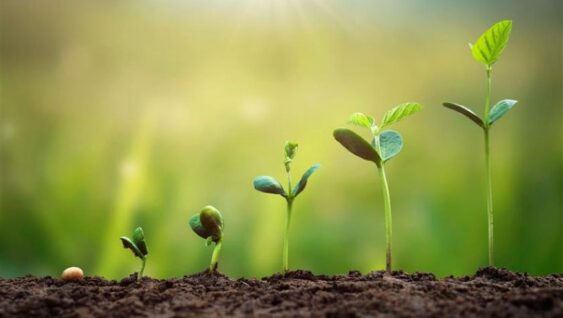
Before canola production begins, the first step in the process is germination. After planting, canola seeds rapidly take up water in moist, oxygen-rich soil until they split, and root tips begin to emerge. This stage typically lasts 4-10 days depending on planting depth, soil temperature, and moisture. After germination, canola crops go through six stages of development, from seedling to ripening. First, the seed is split, and then leaves, stems, flowers, pods, and seeds are developed in a cycle. As the canola crop moves throughout the stages of production, the plant begins to bud and grow.
Each stage of the production process is influenced by soil conditions, weather conditions, and fertilizer and nutrient management decisions. From germination to seed production, the typical canola plant takes about three and a half months to complete the growth cycle.
Click through each of the MORE buttons below to learn more about each stage of canola development to help you make better management decisions this season.
References:
Additional Resources: