



The Cost Of Soil Assumptions: Why Soil Testing Pays
Summary of what you'll find
The first question to ask when planning a fertilizer program is simple: what’s already in the soil?
If you don’t know the answer, you’re guessing, and guessing comes at a cost.
Apply too much fertilizer and you’ll add unnecessary costs. Apply too little and you’ll limit your yield potential and profitability without realizing it. Either way, your bottom line takes a hit, a risk you don’t want to take under tight margins.
That’s why soil testing is essential. Soil fertility decisions aren’t just agronomic; they’re financial, too, and as nutrient removal accelerates and margins tighten, those decisions matter more than ever.
Higher yields are mining more nutrients from your soil
Modern crop production is pushing yields higher and removing more nutrients than ever before.
In Minnesota alone, recent USDA estimates show that corn crops removed about 8,700 tons of nitrogen, phosphorus, potassium, and sulfur in 2025, a 13.9% increase from the previous year due to a combination of expanded acres (+460,000 harvested acres vs. 2024) and higher year-over-year yields (+28 bu/ac average vs. 2024). As yields rise, nutrient removal increases, and so does the pressure on soil fertility (Figure 1).
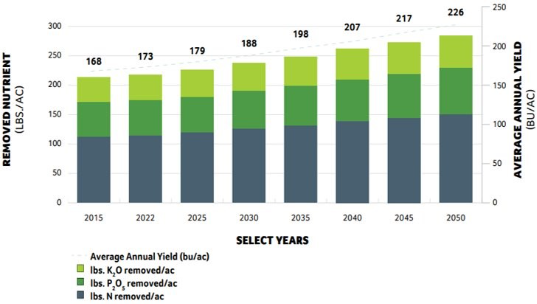
Figure 1: A graph demonstrating the acceleration of nutrient removal and yields from 2015 to 2050 for corn.
Higher yields mean higher removal, and once nutrients leave the field, they must be replaced to maintain fertility. If you don’t replace what is removed, nutrient levels start to drop. For example, for every 20 pounds of phosphorus you remove from the soil, phosphorus levels will drop by one part per million (ppm). As these nutrient levels fall, so does yield potential and profitability.
And once soil test levels drop, it often costs more to rebuild soil fertility than it does to maintain it.
That’s why soil testing is critical. Nutrients are being removed whether you track them or not, and soil testing is the tool that tells you where you stand and what it will take to maintain yield and profitability.
What you don’t know can cost you
Soil testing eliminates the cost of assumptions and grounds every decision in field-level data. Without it, fertilizer programs are built on guesswork or outdated assumptions, which carries real risk.
That risk comes down to where your soil test levels fall relative to the critical level, or the point where fertilizer starts to pay. If the soil test for a nutrient (e.g., phosphorus or potassium) is above the critical level, research shows that adding nutrients does not add yield and that a positive investment response is unlikely. If you’re below it, the chances of seeing a yield response and return on investment (ROI) increase significantly.
Without soil test data, there is no way to know where your fields fall. If you assume test levels are high when they aren’t, you risk underapplying and losing yield. If you assume soil test levels are low when they’re not, you risk overapplying and increasing costs with little return. That’s why assumptions are risky, and why soil testing is essential.
As more fields fall below the critical level for nutrients like phosphorus and potassium, soil testing becomes vital to identifying where yield is being limited and where investment will pay. Because without proper rates of fertilizer, you could be leaving money on the table in lost yield potential (Figure 2).
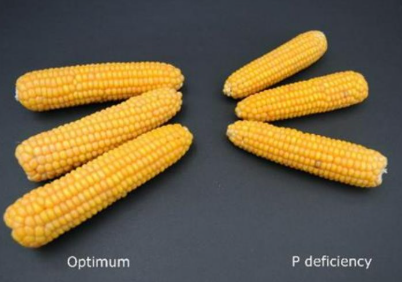
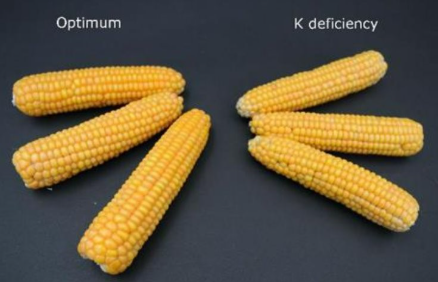
Figure 2: Two images demonstrating the hidden yield impact of underapplying phosphorus and potassium in corn. Source: Yara (2026).
Prioritizing your investments based on soil tests
Soil testing gives you a clear picture of your nutrient ‘bank account,’ including what’s available and what needs to be replaced through fertilization (Figure 3) to help you prioritize where your fertilizer dollars should be spent. Generally, the lower the soil test level, the more fertilizer is needed to provide enough nutrient supply to meet modern yield goals.
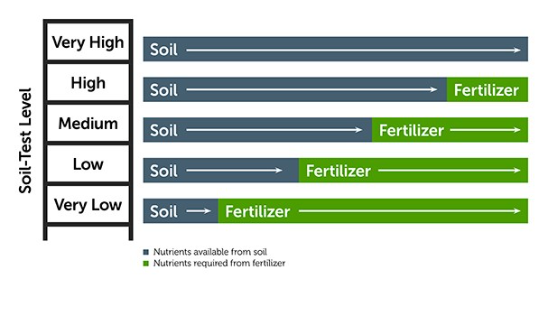
Figure 3: A simple chart demonstrating the nutrients required from fertilizer applications for each soil test level. Source: Havlin, et al. (2013).
It helps you answer key questions like what happens if you cut back, and where can you save this season?
Nutrients that test below the critical level should be your top priority for replenishment (Figure 4). These are the nutrients most likely to deliver a yield response to fertilization and produce a positive return on investment.
The catch is that if you don’t fertilize, or you under-fertilize the fields with low to very low background nutrient supplies, you run a real risk of underproducing and taking a yield penalty due to nutrient deficiencies. Thus, cutting fertilizer rates in sections of the field that are testing below the critical value may show up on your balance sheet at the end of the season as underperforming. If you follow the curve in Figure 4 (to the left of critical value), you can estimate how quickly yield can fall if not properly fertilized in ‘low’ to ‘very low’ testing sections of the field. These curves and yield penalties are corroborated by hundreds of years of university extension data and provide a reasonable approach to understanding soil nutrient management.
On the other hand, nutrients that test above the critical level (Figure 4, right side) are less likely to deliver a yield response and financial return, giving you the opportunity to potentially reduce rates and invest where returns are more likely.
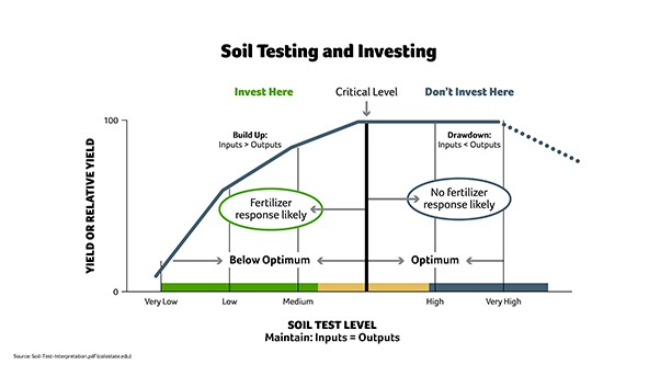
Figure 4: A graph demonstrating when you should invest in fertilizer based on soil test levels.
Better data leads to better decisions
With your soil test data in hand, you can rank risks, prioritize investments, and put fertilizer dollars where they are most likely to pay, eliminating the cost of assumptions and turning data into greater returns.
Because great soil fertility programs aren’t built on assumptions, they’re built on data.
Learn more about the value of soil testing and the cost of soil assumptions in a presentation from Nutrien Director of Agronomy, Dr. Karl Wyant, at the 2026 Top Producer Summit. Watch the full video to see him walk through real examples of the yield penalties caused by underapplication:
Explore the following eKonomics resources to dig deeper into soil testing and fertilizer management:
Deciding When to Apply Phosphorus Fertilizer Based on Soil Test Results
How to Analyze Your Soil Test Results
How to Use Soil Sampling to Improve Nutrient Levels and Crop Yield
The Dirt PodKast: How Soil Testing Helps Maximize Your Input Dollars
The Science Behind Maximizing Yields and Profits
Sources:
Yara. 2026. Potassium Deficiency – Corn.
Havlin, J. L., Tisdale, S. L., Nelson, W. L., & Beaton, J. D. (2013). Soil Fertility and Fertilizers.