




Read Full Transcript
Mike Howell (00:08):
The Dirt, with me, Mike Howell, an eKonomics podcast where I present the down and dirty agronomic science to help grow crops and bottom lines. Inspired by eKonomics.com, farming’s go-to informational resource, I’m here to break down the latest crop nutrition research use and issues helping farmers make better business decisions through actionable insights. Let’s dig in.
(00:40):
Well, hello again, everyone. Welcome back to The Dirt. Glad you’re joining us again this week. We have a familiar face coming back to help us out today. Eric, we haven’t had you on yet this season and part of it is because we’ve just been full of different guests coming on and I didn’t want to overburden you having you on too much. But I have had some requests, “Where’s Eric Snodgrass? We miss Eric.” Eric, before we get started, if you will, reintroduce yourself to our new listeners. Let them know who you are and what you do.
Eric Snodgrass (01:05):
Yeah. So again, name is Eric Snodgrass. I am senior science fellow at Nutrien Ag Solutions, and most of my responsibilities are around weather analysis and forecasting and trying to understand how it’s going to affect production agriculture from the field all the way up to the globe. So I spend my days knee-deep in weather information trying to figure out what the atmosphere is up to next.
Mike Howell (01:23):
Eric, as always, we appreciate you being with us and we’re going to start off talking about some big words today. There’s a lot of stuff going on and I don’t understand everything that’s going on, so hopefully you can enlighten us a little bit. We’re recording this episode, the 21st of May. Last week there was a big event that came through southern Texas, specifically the Houston area, and I think they called it a derecho event, and I had not heard of that until a couple of years ago, and now it seems like I hear about them more and more. So could you tell us what a derecho is to start with and then tell us a little bit about what happened in Houston a week or so ago?
Eric Snodgrass (01:56):
A derecho is a term that we in atmospheric sciences have been using for a long time, and it’s just a term that we assign to these long damaging squall lines of thunderstorms. A lot of us have heard of a squall line of thunderstorms. Well, if you get one to reach a certain length characteristic and it does damage over a certain amount of area, we can qualify it up to become a derecho. It’s a Spanish word. The Spanish word means straight. That’s one of the interpretations of it. And it’s really just reflective of what it’s capable of doing, and that is to develop what we call a rear inflow jet. So let’s get nerdy here for a second. You’ve seen the big long lines of storms and often have that real low hanging cloud that’s right out scraping the ground coming toward you.
(02:35):
It doesn’t rotate, it just moves towards you very quickly. We call that a shelf cloud. And that shelf cloud is sitting on some air rushing out from the top of the storm to the bottom, out ahead of the storm. And we call that the gust front. So the shelf cloud lives on top of the gust front. What creates the gust front is the downdraft of the storm on its backside, and that’s where we get this rear inflow jet. So it’s coming from the back to the front, kicks the legs out ahead of it, and it’s what makes the storm bow outwards on a radar image. So if you ever look at one of these, they look like a big arcing line of storms moving toward a particular area. Now, they feed on themselves. So what starts them is just the fact that they’ve got the right wind shear profile to get that set up where the leading edge can just race out ahead of the rest of the storm. And it can do it at speeds well over a hundred miles an hour.
(03:23):
So there were some storms in central Texas that lined out in those overnight hours. And what happens is throughout the forward progress that kept bowing farther and farther until the apex of that bow or makes its greatest turn, went straight into Houston. Hit the downtown area, did a lot of damage. And we’re still getting back a lot of estimates. But not to make any light of the fatalities, but this particular event will likely be well over a billion dollars of insured loss. It was a terrible event that rolled through parts of Houston and they will continue to be cleaning up for this for quite some time. These things can happen. They happen quite often. We just hear a lot more about them because of this pace of news. Derechos have been a thing. But we’re trying to understand if there’s an increase or change in frequency of them, and there’s been some preliminary research done to understand that.
(04:11):
And overall, the answer to that is yes, we’ve seen an increased frequency of these, especially throughout the Mississippi basin, north to south and then also into the southeastern United States. That doesn’t mean they don’t happen in the plains. Of course they happen in the plains. This is certainly one of the more powerful ones we have on record. By the way, we had a project sponsored by several universities, but I was a part of it with the University of Illinois. Now, I hope I don’t drive a line through your listeners today, but we called it PECAN. We come up with fun names for all of our different weather field campaigns, so we called it PECAN.
(04:43):
But I’m from Illinois, so it’s not PECAN. What it is we were studying these nocturnal, the N in PECAN is nocturnal storms that look like these and how they propagate all night long, continue to do damage. There’s been some big research effort to try to understand when they form, how they form, how they maintain themselves and what kind of damage they can do because. And this is where I’ll stop with you here. When it comes to the most common type of damage from thunderstorm events, it’s not hail, it’s not tornadoes. It’s straight line winds, by far.
Mike Howell (05:13):
The first time I heard about one of these events was what, three or four years ago? There was one that came up through the corn belt and blew down a lot of corn. It was the wrong time of year for that corn and made a pretty big impact on the corn belt that year.
Eric Snodgrass (05:24):
Yeah, that would’ve been August 10th, 2020. And honestly, the really worst time for these is usually in June when the corn is growing so fast that the cell structure gets really long. When you make the cell structure of the corn plant long, it’s more susceptible to snap. So it’ll get green snap out of that. In August when you expect to have a good, healthy, strong stand, we had 130 mile an hour winds that just raced across Iowa that day and laid down. I don’t remember the official number, but I want to say it was approaching seven to eight million acres of corn, just flattened. And to be honest, if you go up there and drive 30, that’s the name of the highway through that area that it hit, you can still to this day see places where the trees have been leveled and not grown back yet almost four years later. And by the way, that same spot is getting hit today with nasty storms. So interesting that you bring that up on a day when we’ve got a moderate risk of severe storms for that same spot.
Mike Howell (06:15):
Farming isn’t farming without questions. And now, there’s a place to go for answers. At eKonomics, an entire team of agronomists is waiting and ready to help for free. No question is too big or too small. Visit nutrien-eKonomics.com and submit your question with the ask an agronomist feature.
(06:38):
Eric, you did a great job explaining the derecho to us. And there was another event that happened a day or two before that. A lot of people actually had to quit planting. They couldn’t get satellite signals to run the GPS in their tractors. And I looked out one night and saw some strange lights up in the sky and had no idea what was going on. And then I started getting all these alerts from my weather apps talking about the Aurora Borealis. I’m pretty far south in Mississippi and I never recall seeing that. What was going on with that? And tell us what that is.
Eric Snodgrass (07:06):
Yeah, so basically our sun goes through different periods of having we call CMEs, coronal mass ejections, or solar flares. These are just what happens when you have a big convective sphere, which at its heart, is a giant nuclear furnace. And so what ends up happening is every once in a while, these big coronal mass ejections will outdo the sun’s gravity and they just flare out. And it all matters as to where the earth is when they flare. These things happen all the time, but you’ve got to be in the path of one of those flares, and this one was a really strong one, which means we were able to see the Aurora pretty clearly almost down to the Gulf of Mexico. In fact, there were people in Mexico reporting that they saw it as well. Where I was here in Illinois, it’s first time I’ve ever seen it in Illinois. Actually, the first time I’ve ever seen it, period.
(07:49):
And it was all sorts of greens and pinks and just incredible colors when the first one came through. Now, what protects us from the really negative effects of a big coronal mass ejection is our magnetosphere, which is we think the result of our iron core and the convection in the iron core creating this magnetic field around Earth, which protects us from a lot of things. It’s an amazing, amazing thing.
(08:13):
Now, I’m not a hundred percent sure what I’m going to tell you next, but I will say this. I think that if we did not have the protective magnetosphere, right, this thing that deflects these big solar storms and gives us the Aurora Borealis … Which is really just the ionization of particles way up high in the sky, in the ionosphere. Anyway, if we didn’t, then there could be enough radiation that comes from these coronal mass ejections to really do a lot of damage to single celled organisms. And if that happens, that would break down everything. We don’t get to live on Earth. But instead, we have this protective thing and we get to see it. It’s a beautiful thing we get to watch in the nighttime sky. So I’ll need to double check that for you. But you were right. Whenever we get these large coronal mass ejections, they can have a lot of negative impacts on small microelectronics. It’s too much of a surge across them. And therefore, we can lose them. They can be damaged. So we have to be very careful.
PART 1 OF 4 ENDS [00:09:04]
Eric Snodgrass (09:03):
… across them and therefore we can lose them, they can be damaged. So we have to be very careful when things like this occur. They typically shield those electronics deep in space from these things, but that doesn’t always prove to be the case. It’s expensive to put shielding on everything.
(09:13):
Man, what an interesting go of it. And by the way, don’t forget, before this, what was that, April 8th, we had the total eclipse, which was just amazing as well. So our sun has been up to some pretty interesting antics here as of late.
Mike Howell (09:24):
Yeah, it’s been an interesting year. And for somebody that studies the weather like you do, I imagine you’ve been running wide open this year.
(09:30):
Eric, let’s get in … I know we’ve talked about a lot already and if we cut it off right here, I’m sure our listeners would get a lot out of this episode, but everybody wants to know what the weather’s going to do as we’re moving into the summer. Most people have got the crop planted or trying to get the crop planted. That was kind of a challenge. We had some wet areas, we had some dry areas, and some areas were just right and got crops planted at record pace.
(09:51):
What are we looking at this summer? Every time I turn the television on, I hear something about La Nina is ending and El Nino is coming and what’s going on with that?
Eric Snodgrass (10:00):
You’re right about the planting pace, it was a wild mix this year. I mean, we’ve had people, like the state of Iowa, who have been extremely wet. They’ve had delays. While you have other folks in Iowa saying, “Oh man, it was just ideal and perfect. I got in at the right time.” We saw some delays in some of the crop progress numbers in certain areas.
(10:17):
But the reality is that I struggle with doing this, I struggle balancing the production delays and the delays of our work plan with hydrology. And the reality of it is is that all of this wet weather we’ve had in the spring throughout a big section of the country has undone a lot of drought. Now that’s not everywhere. Now, if you go to Central Kansas, you go down to the Southern and High Plains, not the case. They’ve been extremely dry. Even with some of the storms that have come through, they follow with hot, windy days of evaporating a lot of that water. So the Central Kansas area, into the panhandles of Texas, down into Mexico, very concerned about that. And we’ve got wildfires are already going in parts of Arizona.
(10:52):
Now you ask, where’s this all going and how does El Nino or La Nina play a role into it? And I’ll tell you something, your neck of the woods down in Mississippi, do you remember last fall? You were in record-setting drought. That’s all gone. It’s been extremely wet. Some places in eastern Texas have had over 1,000% of normal rainfall in the last 30 days. And you could just stretch all that wet weather straight across the southern tier of the US, clear to the Carolinas. We’ve reduced drought area down to 13% across the lower 48.
(11:20):
And now you say, where’s this all going? Well, first of all, we don’t have that strike against us for the whole country. Drought areas down. Big western snowpack this year in California, in the Great Basin area, in the Southern Rockies, a little bit less than normal in the Northern Rockies, but we still have major drought in Mexico and there’s drought in western Canada. Now the reason why I bring that up is because some of the haziness that you’ve seen down there in the sky in Mississippi, that’s been from Mexico wildfires. We’ve actually had smoke over the skies here in the Midwest from Northern Alberta wildfires. And the reason why I bring this up is if we are trying to figure out where the atmosphere is advertising greater risk of either too wet or dry, I got to think about those two areas flanking the United States with drought.
(12:03):
So here’s the thought process. El Nino is gone, it’s out. It was peaking back around Christmas, it’s done. We’ve already got a cold tongue of water coming back. Trade winds have resumed their normal behavior, even gotten strong at times. Cooler water showing up, El Nino over. How quickly we transition into La Nina is one of four things you got to think about for summer, so here they are. Transition to La Nina, most models have us by a weak La Nina late summer. The second area, look off the Baja of California. We call that the PMM area, Pacific Meridional Mode. If that stays cold like it is now while the North Pacific up in the Gulf of Alaska, where we call the PDO, the Pacific Decadal Oscillation, goes warmer, most of the heat stress and the drought stress will live in the southwestern plains, in the southwestern United States, and run up the spine of the Rockies. Meaning that if you’re east of there, we have a better chance of seeing very active summer thunderstorm activity. It’ll be a hot and stormy summer.
(12:59):
Now where’s my fourth area? The fourth area is in the Atlantic. And you need to be on the lookout for this, Mike, because the Atlantic right now is extremely warm and what we call the MDR, the Main Development Region, that references the Hurricane Alley. And we see right now with all that above normal ocean temperature, plus the development of a La Nina in the Pacific, plus active early thunderstorm development coming off of Africa, that the risk this upcoming year of having an above average hurricane season is elevated. And could we finally get storms into the Gulf of Mexico? I think we could. Last year we didn’t, we didn’t get them in the Gulf of Mexico. We got to see if that’s going to be the case this year.
(13:33):
So if I just named off four wild cards to you, that’s exactly what they are. We got to watch how all four of those things reposition over the next 45 days as we start to work into early summer here. But I’ll say this right now, I think the greatest risk for drought is going to be in the southwest in the Southern Plains, bridging up toward the Northern Plains as well. I’m talking Montana side of it, not necessarily the Red River of the north side of it.
(13:56):
So that’s a mouthful, but man, that’s what I’m watching. And boy, it’s May 21st. We’re still a month away from the solstice, so we’re still technically a month away from the official start of summer, but there’s already been some pretty hot temperatures down along the Gulf Coast, also into western Texas. We’re already starting to see those temps really start to climb. So there’s a lot to be watching.
Mike Howell (14:15):
Yeah. And, Eric, I’m not going to argue with you one bit, but you said the drought was over in a lot of places. We were as hard hit as anybody down here. Ponds were dried up. All the ponds did fill back up during the winter. I think our soil was so dry and crusted over, we didn’t get a lot of these rains into the soil like we needed to. We had a lot of runoff from a lot of these storms.
(14:35):
And while the ponds and rivers are filled back up, I’m already seeing ponds getting lower than they should be at this time. And I’ve had to irrigate my garden a time or two already this year. I don’t think we got as much into the subsoil as we may have needed. I’m hoping we’re not getting-
Eric Snodgrass (14:48):
Now are you in northern Mississippi?
Mike Howell (14:50):
No, I’m in southern Mississippi. I’m about an hour north of New Orleans.
Eric Snodgrass (14:53):
Southern Mississippi. Okay, got it. Okay. Yeah. What’s funny is you mention that, and I’m telling you, 100 miles away from … You guys are like, “Shut this off. I don’t want another drop of water.”
(15:02):
But I’ll say something about the south. You are always a week away from drought. I mean, you could be super wet, super wet, and then you get a stretch of days that’s 97 and all of a sudden there’s no rain. You’ve just zapped the soil of everything it had. And now we’re back to that discussion again. Thank goodness cotton can handle it. But I’ll tell you, the corn, the beans, everything that’s grown down there, cannot handle that very well, which is why some of those rains cause some early delays throughout the delta that could be problematic come later.
Mike Howell (15:27):
Here on The Dirt, we’re dedicated to offering the best agricultural knowledge. I’m happy to share that free CEU credits are now part of that offering. Check out the available podcasts CEU credits and other learning opportunities by visiting nutrient-eKonomics, with a K, .com and clicking on the Agronomics tab.
(15:50):
Well, Eric, let’s shift gears a little bit and move over to the east. What’s Europe and Asia looking like this year?
Eric Snodgrass (15:56):
Throughout much of the end of winter and into early spring, we had good moisture return to a lot of Central Europe. I’m specifically talking about in and around Germany. Let’s just put Germany on the map and think the areas surrounding it. We saw some problems in the Russian wheat belt, which of course is to the east of there. Go to Ukraine, and then you get into the Russian wheat belt, and the problems there were primarily with dry conditions to finish a crop. And then it got really cold at the end of April, beginning of May, like a frost event, a late one hit a big section of the central and northern Russian wheat belt. Then they’ve gone back over drier.
(16:29):
And I’m getting a lot of folks asking me, “Is this a repeat of 2010?” Now I get why folks are asking that. Most of these people ask me that are from the US, by the way. And the reason why they’re asking for that is if you remember what happened in 2010, we had such heat and drought problems on the Russian wheat belt that their wheat was catching fire. They had no good summer crops that went in. Russia said they were stopping all export of all grains. And the markets, we got the benefit of that in the US, the market shot through the roof. And so people are like, “Is it going to happen again”
(16:58):
Well, we’re not there yet, we can’t make that full call just yet as it is. But some of the longer-range models continue to show a drier risk over those key acres where they grow wheat, corn, soybeans, they grow all those crops in what we call the Russian wheat belt area. So it’s been a bit drier over there, but the rest of Europe I’m not overly worried about just yet.
Mike Howell (17:14):
What about South America? I know they’re in their summertime or coming into their fall time now, is that right?
Eric Snodgrass (17:20):
They’re headlong through fall. They’re getting ready to get into their winter dry season. But you said summer a moment ago, but I want you to know, their winter is not cold. Brazil’s winter, it kind of feels like our summer I guess at times. It’s a little colder than that. But my point behind it is the safrinha growing areas, the monsoonal moisture slowed down about two and a half weeks early. We are not right now being able to pick up on major, major problems from that. But it certainly meant that some of the spring acres didn’t get all of the rain we wanted them to get for grain fill.
(17:52):
Where the flooding has been is down in southern Brazil, a state called the Rio Grande do Sul, and it’s a big state down there. They grow safrinha crops, so it’s all full-season crop down in Rio Grande do Sul, but I’ve got places there that in the last-
PART 2 OF 4 ENDS [00:18:04]
Eric Snodgrass (18:03):
… all full season crop down to Rio Grande do Sul, but I’ve got places there that, in the last 40 days, have picked up over 20, 25 inches of rain. And the flooding problem is just… You remember 1993 here in the States, like we turned Iowa into a great lake? That’s the kind of flooding that we’re talking about there, but it’s a fall flooding event, which means we’re hurting the crop at the very end.
(18:19):
Go south of there to Argentina. They peel back some of their numbers over what they thought they could get this year. And then they just had a couple of big pushes of cold air come up out of the South, giving their first fall frosts. Haven’t heard a lot about damage yet from that, but I think it’s a bit on the early side. So the big story is right now in South America how much damage was done to full season crops in Rio Grand do Sul and Paraguay, which kind of butt up against one another, with some places picking up 20, 25 inches of rain in the last 30 to 40 days. It’s rough down there.
Mike Howell (18:48):
Eric, while we’re in that part of the world, I think the last time we had you on, we talked about the Panama Canal and how dry the situation was around there. Are we getting some water back in the canal? Can we get ships through there a little easier now?
Eric Snodgrass (19:00):
Yeah, it’s much better than it was. The problem is that many of our global shipping companies made major adjustments to stay away from the Suez and the Panama Canal. Not completely away, but it became actually more economically feasible just to take ships across the southern tip of South Africa. So the Cape of Good Hope or Cape Horn, which is the southern tip of South America, it actually became easier to have the guaranteed route with the slight delay than to have to worry about waiting in front of a canal and paying a large bid price to get through. I remember that reached its worst back in December and maybe a little bit into January.
(19:34):
They’re about to get into their wet season, which means we’re probably going to see that lake fill back up. And if we also see active hurricane season, you can get some tropical moisture that gets into that area as well. Most long range models are projecting the next five months to see normal to above normal rains for that region, which means it will likely recover. It’s just how long does the shipping industry take to readjust back to having that canal open? Interesting to see the avoidance of major canals because of delays. Some are geopolitical, some are weather.
Mike Howell (20:02):
Eric, I guess the last part that we need to get to is Australia. We always go down under and talk about the weather down there. What’s happening in Australia?
Eric Snodgrass (20:09):
Australia was odd this year because whenever you have an El Nino… So their summers are winter, right? So when we were in winter, they were at peak of their summer. Now they grow a lot of winter crops down there. But in the middle of the peak of this El Nino, we continued to forecast rain form. Normally they’re bone dry. I said, “This is not that type of El Nino.” A lot of places picked up a lot of precipitation during their summer. But as we’ve now transitioned out of El Nino to La Nina, they would actually expect to get wetter and only a few places have gotten wetter in parts of Queensland, New South Wales and Victoria. There’s a spot in there that looks pretty good. But there’s drought in South Australia. There’s drought in Western Australia, some places up to the severe and exceptional drought.
(20:52):
I’ve got a lot of growers that are telling me, “Things don’t look good.” Some growers on the headwaters of the River Murray or Darling River, they’re like, ” Hey, things are fine. We’re doing okay.” But you get farther down that river system and you find people that are really struggling.
(21:06):
You also have to remember how Australia ag works. You got the Outback in the middle, so it’s all around the periphery, around the edges where people live and where the agriculture is, and it’s incredibly diversified what they grow down there.
(21:18):
So there is a mixed bag. You’ve got some very happy farmers in Australia, and you’ve got some others that are just praying for a drop of rain.
Mike Howell (21:25):
And that’s the way it is everywhere. We can get all the rain we want and go 10 miles down the road and somebody needs the rain. That’s just the way it is with the weather. Eric, I know we covered an awful lot today. We always appreciate you giving us your insights on this. Is there anything you want to leave our listeners with before we sign off today?
Eric Snodgrass (21:41):
We all love free resources, right? And I built a website for Nutrien. It’s just called ag-wx.com. That’s ag-wx.com. All my weather content goes there and Nutrien pays for it. They sponsor it. It’s yours for the consumption. You need to see maps and analysis, point forecast, plus my videos, ag-wx. com. We abbreviate weather with wx. That’s a throwback to Morse code. We used to tap out weather in morse code. So you can get everything from point forecast to all my maps, and even get signed up for my weekly weather report completely free. It’s all there for you provided by Nutrien.
Mike Howell (22:13):
And Eric, that’s a great website. I was going to plug that myself at the end, but we appreciate all the hard work that goes into that. And I’m sure our listeners are familiar with our eKonomics website, that’s nutrien-eKonomics with a k .com, and our weather tools that we have on there. Those are all coming out of the same systems that you built.
(22:29):
Eric, we sure appreciate you taking time to be with us today. Listeners, we hope you enjoyed this segment. And stick around for segment two, which will start here in just a few minutes.
(22:38):
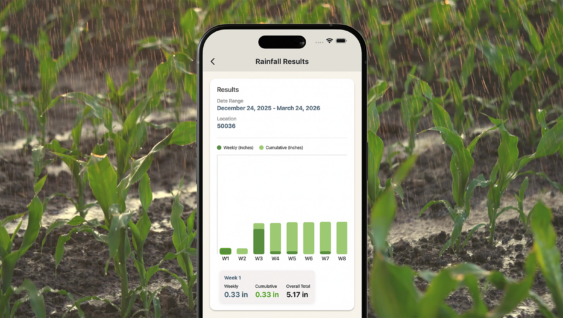
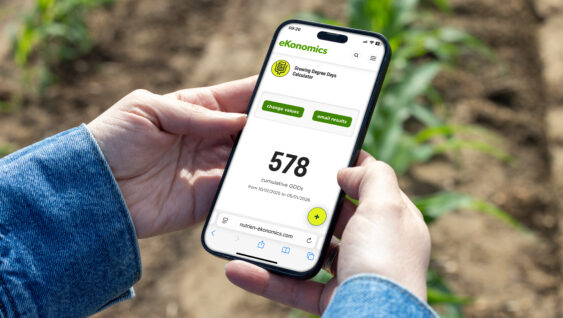
Listeners, I hope you enjoyed the first segment of today’s show. If you did, please take a minute and give us a rating on your favorite podcast channel or app, and give us some feedback as well. We want to hear from you to help make the show even better. And don’t keep it to yourself. Please share these episodes with coworkers, family, friends, anyone you think may benefit from the information we’re sharing here. Don’t forget to visit our website, nutrien-eKonomics with a k .com to help find the latest crop nutrition news and research information, as well as market updates, a growing degree day calculator, a nutrient use calculator, a rainfall tracker, and much, much more. It’s all at nutrien-eKonomics with a k .com. Most episodes of The Dirt are now available for CCCA credits. Visit our website and click on the agronomics tab to find these CCA credit opportunities. And if you have a question, you can ask one of our agronomy team members. Simply ask your question and one of us will get back with you. Thanks for listening. Now segment two of The Dirt.
(23:47):
Listeners, we’re glad you’re tuning in for segment two of today’s episode. We’ve got another research spotlight from North America. We’re highlighting the Land Grant University research farms here in United States. And today, we are traveling to the great state of Montana. Now, Montana is one of the few states that I have not had the privilege to visit yet, but it is definitely one of the ones that I want to get to in the next few years. Today, to help us talk about one of the research farms with Montana State, we have Dr. Jessica Torrion. Jessica, welcome to the program.
Jessica Torrion (24:17):
Thank you, Mike, for having me. It’s unfortunate that you weren’t able to visit the God’s country they call.
Mike Howell (24:24):
I am looking forward to the day I can get up there. We were talking before we started recording, and you said it was still kind of cool up there. I was in my garden at 5:30 this morning and it was 85 degrees. I have already sweated down twice this morning. So let’s go ahead and get started. Jessica, if you will, introduce yourself to our listeners, let them know what you do and where you are in Montana, and introduce the research station that we’re going to be talking about today.
Jessica Torrion (24:48):
Yes, so good day to everyone. Just to ensure that everybody’s listening, I’m not saying good morning or good afternoon, but anyway, it’s always morning. My name is Jessica Torrion. My specialization is field crop physiology. Basically what it meant is that it is looking at how crop grows and how they are productive in terms of their inherent genetic characteristics with water and nutrients, and all of those non-living condition that affects plants. As a researcher also, I am also doing a lot of administrative job. I am a department head currently of the Department of Research Centers and also a superintendent of the Northwestern Ag Research Center, which is located in Kalispell, just 40 miles away from Glacier National Park. This is the research center that we are going to talk about today.
Mike Howell (25:49):
That’s wonderful, Jessica. We appreciate you joining us. If you will, tell us a little bit of the history about the research farm.
Jessica Torrion (25:56):
There are seven research centers that are spread across Montana. And as I said, I’m going to focus on the Northwestern Ag Research Center just 40 miles off of the glacier. We are located northwest of the region, as the name says.
(26:13):
This research center was established in the 1947 legislature of Montana. Montana State is a land-grant institution and our primary goal is to improve the lives, not only for the citizens of Montana, but also the nation and around the globe. And we do three major functions in land-grant. We have education, research, and extension, and most of our research is funded through public funds, mostly in federal and local level. The Northwestern Ag Research Center conducts ag research based on the needs of the farmers and our clientele around us, and we are very responsive to that needs in the agricultural industry.
Mike Howell (26:57):
Jessica, if you will, tell us a little bit about the scientists that are working there at the farm. How many scientists do you have on staff and what kind of special-
PART 3 OF 4 ENDS [00:27:04]
Mike Howell (27:03):
Working there at the farm, how many scientists do you have on staff and what kind of specialties do they have?
Jessica Torrion (27:05):
Yes, so the Northwestern Ag Research Center is relatively small in size compared to perhaps other research centers that you may encounter around the United States. Our appointments are usually 80% research, so we’re heavy on research, but even then we are still doing a lot of those outreach or extension type activities. So there are two main programs in this research center. One is the program that I take good care of, looking at nutrients and water and plant traits and the interaction of these three things to ensure that we will have a sustainable production and profitable at the same time.
(27:51):
The other program, which the new scientist will start in July, that program is called Cropping Systems Research. So they will be looking at alternative crops, what are the other crops that are good rotationally with the very popular crops here that are cereals or oil crops. This scientist will be leading on alternative crops, but also their way of producing better by controlling, for instance, weeds and diseases and other kind of infections of the plants, the living infections of the plants, as they say, and then I’m doing the non-living aspects of the plant production. So it’s kind of a tandem, we’re working together to address those two things, the biotic or the abiotic stress, we call in science.
Mike Howell (28:42):
Jessica, you mentioned that the farm was established back in the 1940s, so it’s been around close to 80 years now. Tell us about some of the significant research that has happened there at the farm in the last 80 years.
Jessica Torrion (28:54):
I will try my best because I’ve only been here for over 10 years, but the history of this research center actually started with small animals, small ruminants with four range type of research. Then over time there were high volume crops like mint and other non-cereal type of plants, and then when cereals started, the price was better than the wheat, barley came back, and so that’s the king here is wheat, spring wheat and winter wheat. So the one thing that I could recall in the last perhaps 15 or 20 years, there was a significant impact of this insect called midge. In our area here we are very productive and we could produce 100, 130 bushels per acre of wheat very easily. But 15, 20 years ago, there was wheat midge that impacts wheat production to a point that the yields were two bushels per acre, and so it was from 130 to 2.
(30:03):
The weeds were standing, but there’s no grain in there, and so it was ground zero. One of the example of the response to the research center to this kind of events where farmers are losing productivity is research and participatory research is very important. We work, or the other scientists in the past, Dr. Bob Stougaard, who is now at the University of Georgia, worked with breeders to come up with a variety called Egan that is resistant to midge. Then after that, we learned how to combat this midge through planting a resistant variety or control the midge through early monitoring of this pest. So just one of the examples.
Mike Howell (30:48):
That is quite a feat there, we know how devastating some of these insect pests can be, and that was a major accomplishment to be able to still produce wheat in the region. Jessica, we always ask this question to our research people when they’re talking about their farms. We know that things are changing in agriculture. We’ve got all kind of new technology coming and we have less and less farmland around as well. But how is the research farm going to have to change in the next 50 years to keep up with agriculture and where do you see the farm going in the next 50 years?
Jessica Torrion (31:16):
That is a very good question, Mike. It’s not only that we’re losing grounds, but there’s also a current challenge. We don’t have a lot of help also, support. As you know, Montana is less populated, and so it’s a challenge. I’ve heard this from producers where say for instance Bozeman or in Kalispell, Northwest Montana, it’s a tourist destination. A lot of people would want to move here. There’s an encroachment to farmlands because of the value. I think there is this need to maybe perhaps consolidate small acreages are left managed by bigger farmer, and because the smaller acreage now left from the conversion of lands to other uses, it’s tough to farm it yourself and it’s becoming small.
(32:06):
One of the things that we are really looking forward to is to adapt to technology considering that things can be expensive. We are challenged with the land, but also the inputs are expensive like nutrients, or the lack of manpower because we don’t have a lot of population in Montana. The precision agriculture component, that technology side is what we’re looking forward to. Montana, we do not have currently a strong precision ag program, but that is changing because we are hiring new faculty members to lead this precision agriculture to help the farmers be more efficient, use the technology to continue doing farm and improve efficiency with the use of farming inputs.
Mike Howell (32:56):
Well, Jessica, we sure appreciate you joining us today and talking a little bit about the Northwest Research Center there. Do you have any field days coming up this summer that you want to let our listeners know about?
Jessica Torrion (33:07):
Yes. There are several field days across Montana, and it starts from June 20 to there’s one in September, but for here at the Northwestern Ag Research Center, our field day is July 11, and that’s a Thursday. We are having actual field day demonstrations where you have an opportunity to meet with the experts of the field and just hang out with the producers and be curious about what’s going on here in Montana when it comes to production and what’s our strength and challenges. So I encourage you to go to our website at the Montana Ag Experiment Station and all of those field days are listed in there.
Mike Howell (33:52):
Jessica, we sure appreciate it, and that sounds like a really good excuse for me to come visit Montana this summer. I’ll have to see if I can work that into my schedule.
Jessica Torrion (34:00):
You don’t want to miss it.
Mike Howell (34:02):
Listeners, we appreciate you joining us this week, and as always, if you have any questions about anything we’ve talked about on today’s episode, you can find out more at nutrien-eKonomics, with a K, .com. Until next time, this has been Mike Howell with The Dirt.