



Rice Development and Growth Staging
Rice (Oryza sativa) is the most popular grain crop grown around the world that has made its way onto the plates of more than half the world’s population.¹ It’s a gluten-free grain that’s rich in B vitamins, potassium, folic acid, magnesium, iron, fiber, zinc, and selenium.¹ This complex carbohydrate is grown in more than 120,000 varieties worldwide categorized by size (short-grain rice, medium grain rice, and long grain rice). It’s grown in more than 100 countries with more than 90 per cent of production occurring in Asia.²
In the United States, more than 5,000 farmers produce 20 billion pounds of rice every year adding more than $34 billion to the U.S. economy.³ Key producing states include Arkansas, California, Louisiana, Mississippi, Missouri, and Texas. These states all produce sodium, cholesterol, and GMO-free rice.
Producing high-yielding, quality rice requires a strong understanding of its growth throughout production. A deep understanding of each stage of development will help you better manage the crop from planting to harvest. Certain fertility decisions are only effective at specific stages of development, and factors like the climate and soil conditions can impact the evolution of growth. Thus, it is important to better understand rice’s growth stages and development cycle to make more informed management decisions while meeting your productivity and profitability goals. Knowing what stage of growth your rice crops are in will also allow you to better manage their health, assess crop quality, and determine the best time to harvest.
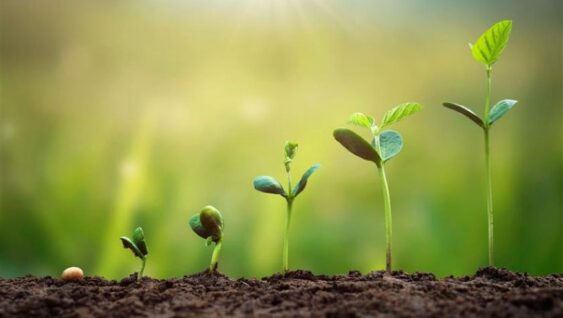
Rice is grown as an annual plant that begins at germination and ends at the formation of grain. Its growth stages can be divided into three parts: vegetative stages, reproductive stages, and ripening stages.
Click through each of the MORE buttons below to learn more about each stage of development and considerations to make in each stage.
Rice Classifications
Rice can be classified as:
- Rough/Paddy Rice: 100 per cent unprocessed rice harvested in the husk—this form of rice is not digestible and is never used for human consumption.⁴
- Whole Grain Rice: Also referred to as brown rice, whole grain rice is processed in the mill to remove the hull and maintain the bran—it’s classified as 100 per cent whole grain.⁴
White Rice: Milled to remove the husk, bran, and germ.⁴
Sources:
²National Library of Medicine, Rice: Importance for Global Nutrition
⁴USA Rice, U.S. Rice Varieties
University of Arkansas, 2025 Rice Management Guide
Breeding, Biotechnology and Seed Production of Field Crops, Rice (Oryza sativa L.)