



Sorghum Development and Growth Staging
Sorghum (Sorghum bicolor) is an ancient grain and non-GMO protein source that’s rich in nutrients and can be grown as a grain, forage, or sweet crop.¹ Known for its versatility, sorghum is a high-energy, drought-tolerant, and environmentally friendly crop.
It’s become the fifth most important cereal crop around the world after maize, rice, wheat and barley.² In the United States, sorghum is planted on dry acres throughout the ‘Sorghum Belt,’ running from South Dakota to the South of Texas.¹ Sorghum grain is most commonly used for livestock feed (including poultry, beef, dairy, and swine) and ethanol production. It’s also grown for human consumption and has become a popular addition to a variety of recipes around the world. It is gluten free and rich in fiber, antioxidants, protein, iron, phosphorus, magnesium, vitamin B6, and niacin.¹
Producing high-yielding, quality sorghum requires a strong understanding of its growth throughout production. A deep understanding of each stage of development will help you better manage the crop from planting to harvest. Certain fertility decisions are only effective at specific stages of development, and factors like the climate and soil conditions can impact the evolution of growth. Thus, it is important to better understand sorghum’s growth stages and development cycle to make more informed management decisions while meeting your productivity and profitability goals. Knowing what stage of growth your sorghum crops are in will also allow you to better manage their health, assess crop quality, and determine the best time to harvest.
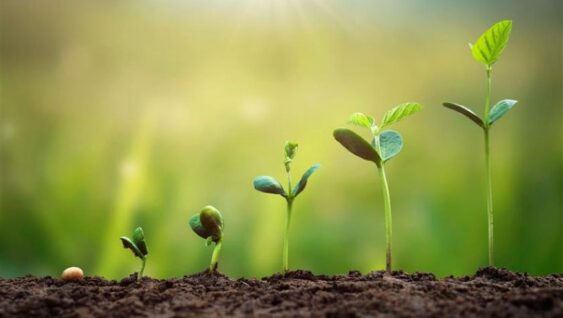
Sorghum goes through nine stages of growth, beginning at emergence and ending at maturity. The growth stages can be broken into two main parts: the vegetative stages and the grain-filling stages. In the vegetative stages, the number of fully expanded leaves on the plant is used to establish which stage of growth the plant has achieved. The grain-filling stages begin once growth has reached 50 per cent. Click through each of the MORE buttons below to learn more about each stage of growth.
Sources:
¹United Sorghum Checkoff Program, Sorghum 101
²World Crops Database, Sorghum
3Kansas State University, How a Sorghum Plant Develops
4Kansas State University, Sorghum Growth and Development Poster
5Texas A&M University, Sorghum Growth and Development
6United Sorghum Checkoff Program, Growth and Development
Additional Resources: