


Soybean Development and Growth Staging
Soybeans belong to the legume family of plants. Historically, soybeans have been considered one of the five crops essential to human life (soybeans, rice, wheat, barley, and millet). They have been an important source of dietary protein and oil for centuries and have played a key role in our growing world—Civil War soldiers used soybeans to brew coffee, farmers have used it as a forage crop, and they have also been used as a green manure source. Today, more than two billion bushels of soybeans are produced in the United States every year.
Sometimes referred to as the ‘miracle bean’ for its many uses, soybeans are the only beans with complete protein. Their high protein content makes them a healthy choice for both humans and other animals. Soybeans are grown for a variety of food, feed, and industrial uses. Most soybeans are processed commercially and divided into components of meal and oil. They normally contain about 18 to 20 per cent soy oil and 38 to 40 per cent soy protein. These two components are used in hundreds of different foods eaten throughout the world.
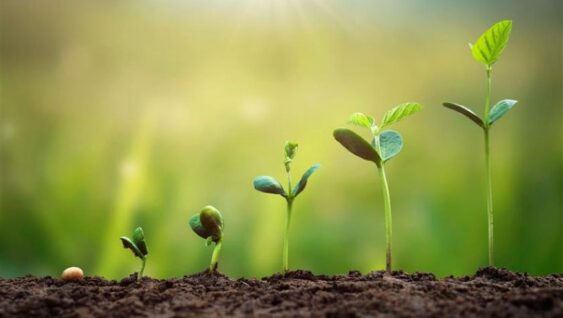
Producing high-yielding, quality soybeans requires a strong understanding of their growth throughout production. A deep understanding of each stage of development will help you better manage the crop from planting to harvest. Certain fertility decisions are only effective at specific stages of development, and factors like the climate and soil conditions can impact the evolution of growth. Thus, it is important to better understand soybean’s growth stages and development cycle to better manage crop production while meeting your goals. Knowing what stage of growth your crops are in will also allow you to better manage their health, assess crop quality, and determine the best time to harvest.
The interactive diagram below demonstrates the various stages of soybean growth and important considerations for each stage. Read each of the MORE buttons below to learn more.
After soybean crops are harvested, they are processed for use. Soybeans are cleaned, cracked, dehulled, and rolled into flakes. This ruptures the oil cells for efficient extraction. After soybean oil has been extracted, the remaining flakes are processed into various soy protein products.
Additional Resources: