





Read Full Transcript
Mike Howell (00:08):
The Dirt with me, Mike Howell, an eKonomics podcast where I present the down and dirty agronomic science to help grow crops and bottom lines. Inspired by eKonomics.com, farming’s go-to informational resource, I’m here to break down the latest crop nutrition research, news, and issues, helping farmers make better business decisions through actionable insights. Let’s dig in.
(00:38)
Well, hello again, everyone. Welcome back to The Dirt. Things are a little bit different today. We are actually in studio for the very first time. We’re not trying to record this from my office or with a handheld microphone. We’re here in Fargo, North Dakota. We’ve got a few events going on this week, and we decided we’d get in the studio and try to add some video with this. Now this is something we’re going to try to do when we’re recording in our home office as well. We’re trying to get all of that set up, so stay tuned and hopefully we’ll be able to bring you some video with some of these a little later on. Today, we’re happy to have Dr. Karl Wyant with us. Karl’s been on The Dirt several times. He’s the Director of Agronomy. It has been a while though, Karl. Welcome back to The Dirt.
Karl Wyant (01:16):
Thank you for having me, and thanks for bringing me into the studio. I feel like a real pro now.
Mike Howell (01:21):
Well, I don’t know if I feel like a pro or not. There’s buttons and knobs and cameras and lights all over the place, all of this soundproof stuff on the walls. I kind of feel a little trapped in here this morning, but we’ll see if we can get it all figured out. They’ve already told me, “Don’t touch any buttons.” We’ll keep our hands to ourselves and see how this works. Karl, I know we’ve got a lot of stuff to talk about this morning. Let’s start off and talk about the current crop conditions. I know we both travel a lot and see crops all around the country and even in Canada. Tell us where you’ve been lately and what the crops are looking like.
Karl Wyant (01:53):
It’s been a busy spring. Lots of variation in folks’ cropping experience. Had a great plant for corn and soybeans. Soybeans went in at a record pace. But we’ve had some trouble here. We’ve had a drought for the last three years. Significant improvement nationally and in Canada in drought conditions, but we’ve still got some spots that are just a little hungover from drought, dry soils, some challenges with the winter wheat crop, particularly in Kansas and Oklahoma. And then we’ve also had some areas that have gotten a little too much rain recently. For example, Texas Panhandle got 20 inches of rain here in the last few days. That’s a lot of rainfall.
Mike Howell (02:29):
A lot of rain.
Karl Wyant (02:30):
A little too much maybe. And then we’ve got some dry soil setting up across the Midwest, which made it so that planting could get done, but now that the crop’s in the ground, we’ve got to make sure that we meet those moisture needs early. And I’ve had some reports from growers having to plant a little bit deeper in the soil, find that sub-soil moisture, and get the crop up.
(02:49)
If you go north to Canada, we kind of have a have and have not situation on the Alberta side. Very dry, lots of dry soils and wildfires, of course, but as you make your way east into Saskatchewan and Manitoba, gets much greener and a little more soil moisture to work with and you’ve got a crop that’s rapidly emerging and coming up.
Mike Howell (03:06):
I was travelling through the Mississippi Delta in Mississippi and Arkansas last week and the corn is already tasseling. It’s looking great, but I don’t think I passed a field that didn’t have the irrigation running. They had been about 15 days without a rain at that point, and this is the critical stage for that corn. And I heard reports later in the week that soybeans are starting to get irrigated as well, and that’s a little early on those beans.
(03:30)
We like to hold off until they go into the reproductive stage. Gets to the point they had to start irrigating and then heard on the news this morning, it’s going to be a hot, dry summer across the entire southeast. Looks like things are just getting set up. It’s funny, we talk about hot and dry. You’re from Arizona, I’m from south Mississippi, and I thought it was rather comfortable outside this morning. Everybody around here is talking about how hot it is in Fargo. I’ll tell you, 90 degrees in Fargo is not 90 degrees in south Mississippi.
Karl Wyant (03:57):
That’s right. It was 107 in Phoenix when I left the other day, and very dry as well. It’s a dry heat, as everyone always likes to remind me.
Mike Howell (04:04):
Yeah. Yeah, so’s an oven.
Karl Wyant (04:06):
So is an oven. Yes, that’s right. So’s a hairdryer.
Mike Howell (04:08):
Karl, we’re here in Fargo, North Dakota, this week. We’ve got several events going on, but I hear you’ve been invited to come speak at a conference here. Tell us a little bit about the conference you were speaking at in North Dakota and what you told the group.
Karl Wyant (04:20):
That’s right. Well, the Cultivate Conference is a gathering of innovation and ag technology, and the talk that I’ve been asked to give is a sort of a TED Talk style, if you watch those on YouTube or podcasts. And I spoke about the need for sulphur and finding the right sulphur formulation for your field.
(04:39)
If you follow the ag media and ag media articles, you’ll see a lot more news about sulphur nutrition that’s come out in the last 90 days, and even if you go back a few years, and just a lot more focus on getting the sulphur fertilizer right on your crop. And there’s lots of great reasons why we need sulphur, and that’s what we chatted about during the TED Talk.
Mike Howell (04:58):
Karl, I think this is going to be the fourth episode of The Dirt that we focused on sulphur this year. That seems like an awful lot to me. And I’ve been asked to do other talks about sulphur as well. Why are we getting all the emphasis on sulphur here in the last couple of years and specifically this year?
Karl Wyant (05:14):
At a macro level, we’re seeing more sulphur deficiencies than we ever have before. The same fields five years ago weren’t showing sulphur deficiencies, which is generally that yellowing of the top of the crop, whether it’s corn, soybeans, and alfalfa, things like that. So we’re seeing more deficiencies and really at the heart of it is something that happened 53 years ago, believe it or not. And that was President Nixon signing the Clean Air Act. December 31, 1970, the Clean Air Act was introduced.
(05:43)
Lots of regulations and the goal was how do we grow our economy without driving externalities like air pollution? The Clean Air Act has been a wild success. We’ve grown our GDP since 1970 by 64%, and we’ve also reduced six major air pollutants by 41%. We’re rebalancing and restructuring and it’s been a wild success, but one of the unintended consequences is we’ve lost some of the free sulphur that came from industrial activity and was deposited onto the crop.
(06:14)
We’ve lost that sulphur. For example, if you measured in 1990, depending on where you were in the United States, typically in the eastern side of the United States, you were getting up to 27 pounds an acre of free sulphate just coming from the air. And now recent measure from 2015, that’s dropped to 13 pounds an acre. So almost chopped that free sulphate in half. But we’ve had that input, that free stuff in the air has gone away. If you kind of do your budgeting, from a sulphur nutrition perspective, our yields are higher. We’re producing 53 more bushel an acre corn than we were in 1990, and we’re pulling almost 34% more sulphate out of the soil with the crop.
Mike Howell (06:53):
So we’ve cut our amount of sulphur that we’re getting free in half and we’ve doubled crop yields, so that’s going to necessitate some fertilizer applications of sulphur.
Karl Wyant (07:01):
That’s right. And right in the middle of that, the reduction in the sulphur inputs increasing in the sulphur outputs, you have that soil and the organic matter that contains sulphur. We’ve also seen with erosion and some other decreases in soil organic matter less just stored sulphur in the soil as well. So the whole budget’s been kind of adjusted and now we’re seeing that consequence of more sulphur deficiency.
Mike Howell (07:24):
Are we seeing it in one place more than other places? How can we predict where we may see sulphur deficiencies?
Karl Wyant (07:29):
If you’re in an area of the United States that was getting a lot of free sulphur out of the air, and that’s typically east of the Mississippi River moving into places like Ohio and Wisconsin and Michigan and some of them where you had heavy industrial activity, a consequence was you got the free sulphur in the air. If you move out west where we don’t have as much industrial activity, we had less sulphur in the air.
(07:50)
In these places where we’ve got a lot of high yields, high corn production, high soybean production and alfalfa, we’re pulling a lot out of the soil and we’re also have decreased inputs, that’s where we’re starting to see the sulphur response trials really shine and show the advantage and the economic return on making that investment in sulphur fertilizer.
Mike Howell (08:10):
So Karl, we’ve talked in previous episodes about why crops need sulphur and the importance. Let’s take just a minute and remind our listeners again why these plants need the sulphur. What is it used for in the plants?
Karl Wyant (08:21):
Yeah, lots of reasons. There’s a reason why it’s one of the macronutrients. You take a sulphur ion and the plant uses it for a lot of different processes, including the construction of chlorophyll. I mentioned the symptoms of sulphur deficiency, the yellowing, and that’s due to that decrease in the green pigmentation that comes from having enough chlorophyll. If you don’t have enough chlorophyll, the plant will not be able to take the sunlight and turn it into useful biological energy.
(08:45)
So once that plant goes yellow, you’re revving down that engine, you’re gearing it down a little bit, and you won’t be able to get as much work done. If you look at your nitrogen fertilizer program, sulphur is a key driver of your plant’s nitrogen metabolism. Taking that fertilizer that’s in your urea, UAN 32, you can list other nitrogen fertilizers if you want, but turning it into something more useful, and sulfur’s a key part of that.
(09:08)
If you’re into eating, sulphur is one of your friends here. If you think about garlic and onions, just to name two crops, one of the reasons they taste the way they do is because of sulphur. The sulfur’s driving the flavour. If you’ve ever had a garlic bulb that didn’t taste quite right or wasn’t quite strong enough, maybe check that sulphur nutrition program. Maybe call a grocery store, let them know. But you also have in baking, breads, sourdough breads need sulphur as a part of the baking process to make the bread. So really going from that crop level all the way up to what we experience in terms of our diets, you’ll need sulphur the whole way through.
Mike Howell (09:43):
Karl, one thing we like to talk about a lot here on The Dirt is the 4R Nutrient Stewardship program. How does sulphur fit in with the four Rs? We want to talk about the right place, the right rate, the right time, and the right source. If you would, talk a little bit about nutrient stewardship as it relates to sulphur.
Karl Wyant (10:00):
Sulphur, as we mentioned, we have that nutrient budget, fewer inputs of the free sulphur and more extraction on the backend from yield. You’ve got to meet those crop needs somehow, and what we found is that the soil supply is not often enough with these new hybrids that we have with new yield goals. So we’ve got to supplement, and that’s where fertilizer comes into play. The 4R nutrient management, the right time, the right place, the right rate, and the right source are keys for driving sulphur efficiency and getting the most out of your fertilizer investment.
(10:30)
One piece that you have to think about with sulphur is that the way that sulphur is often applied is in the sulphate form. Sulphate, SO4, if you see those letters and numbers on a fertilizer bag. Sulphate is the form that plants want and that they can take it up, but you have a hard time managing sulphate because it’s prone to leaching just like nitrate is.
(10:53)
So we have this choice to make. Do I put out this readily available form of sulphur in a sulphate form? Think about products like calcium sulphate, magnesium sulphate. There’s a whole bunch of sulphate products on the market. So you can provide that sulphate, but am I going to lose it to leaching? You’ve got to think about the timing. In Texas, where they just got 20 inches of rain, they’re probably thinking about sulphate leaching.
(11:17)
The other piece with sulphate, remember, that’s the form the plants want, is if your soils are too dry, that sulphate can’t get into the crop. Just like nitrogen, most of your sulphate moves into the plant through the mass flow mechanism going through that water stream through the soil into the plant. If your soils dry down, you won’t be able to pull the nutrient in, so your dry and overwet sulphate can be hard to manage.
(11:41)
A way around that is to make another formulation choice, and that’s what we spoke about at the Cultivate Conference. You can go into what’s called elemental sulphur. So when you apply elemental sulphur, that’s where you can apply a form of sulphur that’s fairly inactive in the soil, is not going to leach, but you need time on your side. One of the other 4R nutrient bullet points here. You need time. That elemental sulphur needs to be transformed by the soil microbes into sulphate before it can be taken up by the crop. So you’ve got some choices to make depending on your field, your weather conditions, whether it’s overwet or too dry, you can think about how you want to deploy your sulphur formulations in a fertilizer program and make sure that you’re hitting those 4R nutrient management tenements.
Mike Howell (12:27):
Yeah, and you kind of hinted on something there, Karl. You talked about the source and the timing. The timing may be altered depending on the source. If we’re using elemental sulphur, we need to make sure we get that out maybe sometimes several months early. And if we’re using sulphate, we need to get it applied when the crop’s actually going to be taking it up.
Karl Wyant (12:44):
That’s right. The elemental sulphur, you need to have time on your side because the microbes in your soil are the middlemen. They need to work on that elemental sulphur and oxidate it into the sulphate form that the plant can pull in. So if you want to apply in the fall, it’s a great time to get your elemental sulphur out and make sure that it’s ready for the spring when your crop needs it.
(13:06)
The sulphate form, because it’s so highly leachable, putting it out in the fall, well in advance of planting, probably not a good idea. You’ll lose it to fall rain or fall snow and then snow melt when the weather warms up. So you’re better off putting that out closer to when the crop’s growing and maybe even in season in the side dress.
Mike Howell (13:24):
Now, Karl, we’re seeing a lot of emphasis these days, a lot of people are talking about micronized sulphur technology. Talk a little bit about that. It seems like there’s several products out there. I know Nutrien has their micronized sulphur technology. If you will, talk a little bit about that and when can we apply that?
Karl Wyant (13:40):
Yeah, Nutrien has the MAP+MST product, and that’s that micronized sulphur where we’ve taken elemental sulphur and we’ve made it much, much smaller. So what we’re trying to do is balance out this time thing. If you go out into a field and you just put a big chunk of elemental sulphur out, the microbes are going to have a hard time oxidizing that elemental sulphur and turning it into that useful sulphate that you need for your crop nutrition.
(14:04)
But if you can make that elemental sulphur small particle size, now the microbes have a food particle size that’s much easier to work with. You can kind of balance out this reducing the risk of leaching because you’re putting out elemental sulphur, but you’re making sure that particle size is small enough so that the microbes can turn it over into sulphate in a way that matches up with your crop uptake here months after you apply the initial product.
Mike Howell (14:31):
Karl, another thing that we spend quite a bit of time doing is digging into the literature and looking at new research reports. And you were just telling me before we started recording this about a new study that you had seen that came out here recently. You want to talk a little bit about that research?
Karl Wyant (14:45):
Great set of studies out of Purdue recently testing sulphur on corn, and we’ve got that linked on our Nutrien eKonomics website, if you’d like to take a look at it. But taking a look at where does sulphur respond across Indiana soils and how does corn yield respond and what conditions drive a sulphur response.
(15:03)
What these researchers noticed is that they studied, I think, 55 sites. And out of those 55 sites, 47% or so responded to a sulphur fertilizer application. Not every site responds the same, like what we’re used to with nitrogen, and P and K to a lesser degree. So 47 sites responded and when they did respond, the average bushel an acre increase averaged 11 bushels an acre, so it was a big home run.
(15:31)
Really interesting work just showing that identifying on your field, identifying, “Do I need the sulphur?” is a great place to start so that when you do make that investment, you can have a high likelihood of getting that yield increase and solving a crop nutrition issue.
Mike Howell (15:48):
And that’s what it’s all about. We want to make sure we have that probability of getting that result. Karl, you mentioned 47 of those sites responded. Now, Indiana, that’s going to be we typically think about good, rich soils, high organic matter soils when I think about Indiana. Where I’m from and probably where you are as well, we don’t have that blessing of organic matter, so we don’t have the organic matter to be releasing this sulphur. If they did that same study in your area or my area, do you think that probability of seeing that response would increase because of the lack of organic matter?
Karl Wyant (16:19):
Yeah, you see a lot of sulphur issues on that low end of the organic matter range. And, of course, Indiana’s range is a little bit higher than Mississippi and Arizona’s. Organic matter in the study, they claim that there’s about a hundred pounds of organic sulphur for every 1% of soil organic matter on your test. So that’s a general rule of thumb. 100 pounds of organic sulphur for every 1% SOM. So, Mike, where you and I are from, where we’re barely scratching in at a half a percent, there you go, 50 pounds, thanks. But some of these areas where they’ve got three, four, 5%, they’ve got something to work with. I mentioned that the microbes earlier, these microbes are also crucial for converting the sulphur in the organic matter into something that’s plant available, and it’s thought that only two to six pounds is freed up by those microbes from that organic fraction.
(17:08)
So you can see our pool to work with in the low organic matter soils just got even smaller. You got to make up for it with the fertilizer program because the 200 bushel an acre corn needs about 10 to 25 pounds of sulphate an acre. So we know there’s a tremendous need. We know some of our soils can’t keep up, and that’s looking at where are my fields going to respond, and that’s refining the fields. Low organic matter, high sand content, maybe a big reduction in the sulphur inputs over the years because of the Clean Air Act. Lots of extraction of sulphur, so maybe silage corn versus grain corn. You’ve got some different sulphur extractions coming out of the soil with silage taking everything.
(17:47)
At least, with grain corn, you’re leaving the stover behind. And then places, I think, where you’ve noticed symptoms before. You have a great season ahead of you in your truck. Keep those notes. Where are you seeing the yellowing of the tops of the plant so that when you have that opportunity to either fertilize, maybe side dress, this year, you can come in and see that response yourself or make that different plan. If the symptoms show up too late relative to your fertilizer logistics, you can come in next year.
Mike Howell (18:12):
Karl, I recently heard a podcast that Dr. Ron Heiniger out of North Carolina State had done, and he was talking about some early season symptoms of sulphur deficiency, and he encouraged growers to make sure you plant that corn more than an inch and a half deep. He had some research that showed if you got it below an inch and a half, a lot of times you could pick up more sulphur and that corn plant would do great. If that seed was planted at an inch or less, the probability of seeing that sulphur deficiency was a lot greater. Have you seen anything like that before?
Karl Wyant (18:41):
That makes total sense because sulphate can move. You’re moving that seed into where the sulfate’s at, down lower in the soil profile, and there’s more moisture down there generally. So you have that mass flow mechanism where the sulphate can get into the actual plant. You’re leveraging the two different mechanisms that control sulphur. And we’ve seen some issues with sulphur deficiency on some of these very shallow-seeded crops, these lettuces and things like that where you’re barely scratching them in the ground, and you are prone to some of those issues with seeding depth. So, yeah, that research sounds spot on.
Mike Howell (19:13):
Well, Karl, I sure appreciate you taking time out of your busy schedule to visit with us today. Is there anything else that we may have missed that you want to talk about before we wrap this up?
Karl Wyant (19:21):
Yeah, I mentioned the Nutrien product. It’s smartnutritionmst.com, if you need sulphur resources. We mentioned a number of these papers, and if you go to that website, we have a whole page full of resources, just a toolbox to help you with your sulphur nutrition needs and knowledge. And you’ll also find a copy of my presentation as well that I gave at the Cultivate Conference.
Mike Howell (19:42):
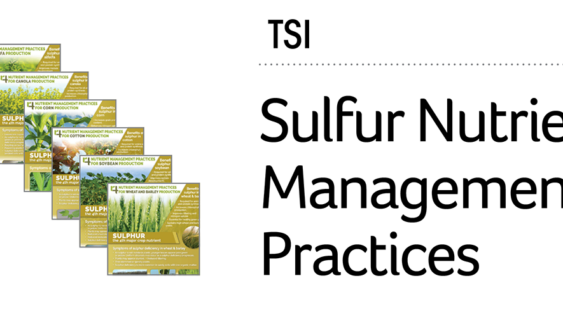
Okay, great. And some new information that I know that was just put on that site is some links to The Sulphur Institute’s crop use guides. These are some guides that Agronomic Steering Committee had been working on and just got a lot of those published here recently. Some really helpful information on sulphur use if you want to check those out as well. And that’s Nutrien-eKonomics, with a k, .com.
(20:05)
Well, listeners, if you’ve been tuning in for very long, you know that now’s the time that we start talking about our famous person in agriculture. Now, this week, I’ve decided that we will talk about John Franz. Now John was born in Springfield, Illinois. He spent his entire career working for Monsanto Company. He started off, he focused his research on process research, new polymer synthesis, and the development of polymer flame retardants.
(20:31)
Early in his career, he actually received two patents, one for nitrates in 1960, and another for a fire retardant in 1967. In 1967, he transferred over to the agriculture division of Monsanto because he was excited about their emphasis on publishing, about academic contacts, and the freedom to pursue new ideas. A lot of the research that was going on at Monsanto at the time was searching for a new herbicide that was going to be effective against annual and perennial weeds, and they had been working on this for about nine years and had very limited success.
(21:09)
Franz began working on this, and after a few false leads, he was able to discover a herbicide named glyphosate in 1970. And I’m sure everybody has heard of Roundup these days, but he was able to get the patent for Roundup. Monsanto took that patent and paid him for it. He got the grand sum of $5 for the patent on Roundup. Seems like he gave that away to them, but he went on and worked for Monsanto for the rest of his career. He published over 40 scientific papers and wrote a book entitled Glyphosate: A Unique Global Herbicide.
(21:44)
He focused his research after that on some oxen chemistry, cell membrane chemistry, plant hormone chemistry, and nitride and sulphide chemistry. In 1975, he was promoted to Senior Science Fellow, and in 1980, he was promoted to Distinguished Fellow within Monsanto. And he finally retired in 1991. Now in 2007, he was inducted into the National Inventors Hall of Fame, and one of the quotes from his speech at that induction ceremony, “That was in recognition of the entire team of scientists who worked on and supported the development of Roundup herbicide.”
(22:24)
I understand there’s a lot of pros and cons going around about Roundup now, but I think farmers all can see the benefit from his developments there at his time at Monsanto. Listeners, we want to really thank you for tuning in again this week. Without you, we wouldn’t be able to do this, and we hope we’re bringing you timely, research-based information. If there’s a topic that we haven’t picked up on that you want to hear more about, please let us know about that. And as always, if you need more information, please check out our website. That’s Nutrien-eKonomics with a k.com. And until next time, this has been Mike Howell with The Dirt.