





Read Full Transcript
Mike Howell (00:08):
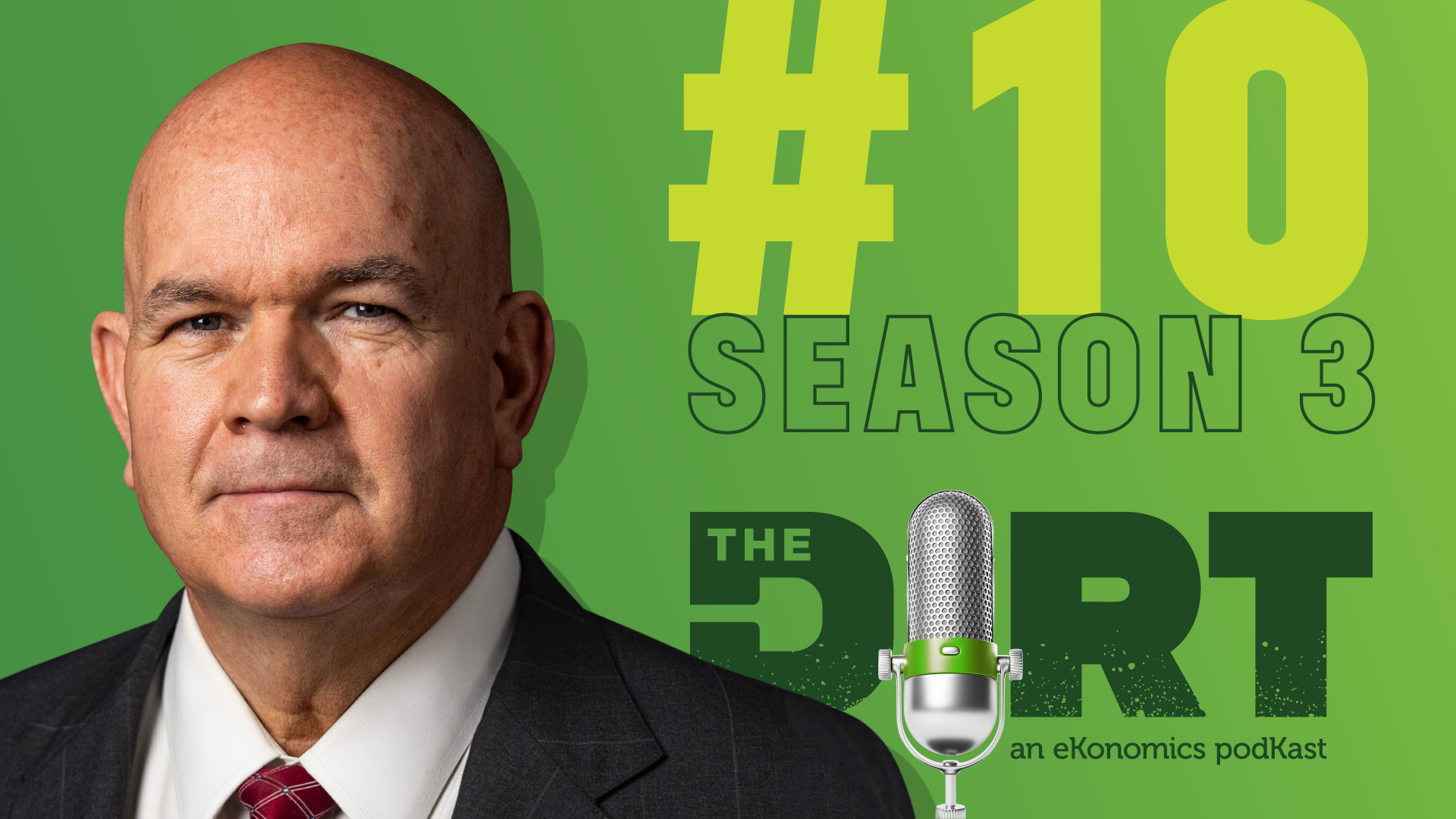
The Dirt with me, Mike Howell. An eKonomics podcast where I present the down and dirty agronomic science to help grow crops and bottom lines. Inspired by nutrien-eKonomics.com, farming’s go-to informational resource, I’m here to break down the latest crop nutrition research, news, and issues helping farmers make better business decisions through actionable insights. Let’s dig in.
(00:39):
Well, hello again everyone. Welcome back to The Dirt. Glad you’re tuning in again this week. I think we’ve got another outstanding topic that’s going to be of interest to a lot of people. Now in the past we’ve talked a lot about soil sampling and the importance of soil sampling and why everybody needs to be taking soil samples every two to three years on their farms. Today, we want to dig in a little deeper about soil sampling and some of the procedures. To help us do that, we’ve got Dr. Bryan Hopkins with BYU with us today. Dr. Hopkins, welcome to The Dirt.
Dr. Bryan Hopkins (01:06):
Thank you. I’m excited to be here today.
Mike Howell (01:09):
Dr. Hopkins, if you would introduce yourself to our listeners and let them know what you do.
Dr. Bryan Hopkins (01:13):
I’m, as he said, Bryan Hopkins. Originally from Idaho. I’m a professor at BYU, I’m also the director of the North American Proficiency Testing program that is operated under the guidance of the Soil Science Society of America, and I run that program in cooperation with an advisory committee that’s involved a lot of folks from laboratories and government agencies and the soil organization. It’s a great program, and we offer a good service to laboratories and also to growers and others who use soil, plant, water and environmental testing.
Mike Howell (01:48):
Well, Dr. Hopkins, that’s exactly what we wanted to talk about today was the North American Proficiency program and what that is. I used to work with the extension service, then and still today I get calls about growers wanting to interpret their soil test and they don’t really believe the results that they got back and say, “This lab’s got to be wrong. They don’t know what they’re talking about.” When we start digging in, it seems like most of the time these labs got it right. But as I understand it, the North American Proficiency program helps to ensure that everybody’s running on the same set of standards and we’re calibrated correctly. Is that right?
Dr. Bryan Hopkins (02:20):
Yeah, I mean, we do the best we can. There’s no guarantees, but essentially what the program is that laboratories that sign up, they can sign up to receive soil, plant tissue, water, or any combination of those, and then they can run tests on the soils. They can choose kind of the agronomic side and or the environmental side. So we really have four programs, if you include the environmental soils, and every quarter we send out samples.
(02:47):
They don’t know what the values are. The labs run those, they report that back. We’re right in the middle of that for quarter one for 2024 right now. All the labs have submitted their data, we’re in the middle of processing that then determining if the labs are in or out in terms of their accuracy. And so it essentially, what it does is it allows those laboratories a tool to make sure that they are capable of doing good work.
(03:11):
Now, it doesn’t guarantee that they will always do good work, but it just says, “Yeah, this laboratory is capable of doing nitrate nitrogen or Mehlich-3 phosphorus or whatever the tests. And we have many dozens of tests that they can choose from. They do not have to do any, they can choose one or all of them, or they can choose to participate in doing whatever analyses that their labs routinely do. Anyway, then we report that back.
(03:36):
The added part of that that would be good to know is that there’s also an accreditation called the PAP, which is the Performance Assessment Program. That’s more of an accreditation, which is required in some cases like by NRCS in some instances for example. And then some states use our program. There are some states that require proficiency testing, and they use our program for that, and so we cooperate with them as well.
Mike Howell (04:00):
So Bryan, how many labs participate in this program?
Dr. Bryan Hopkins (04:04):
We have about 150 labs that are participating.
Mike Howell (04:07):
And I’m assuming this is strictly a voluntary thing, they’re not required to do this?
Dr. Bryan Hopkins (04:11):
Well, in most cases it’s voluntary, in some cases it’s not. Like I said, if you want to do business in some states, you’re required to participate. If you want to do testing for NRCS, in some instances you’re being required to do that. Most of the time it’s voluntary, but in some cases mandatory.
Mike Howell (04:31):
I mentioned that I got a lot of questions about soil reports. Another question that I get is, “Which lab should I be using?” Different labs use different testing techniques, and you mentioned the MA-III earlier. I know there’s several ones. There’s Mehlich, there’s the Bray. I know here at Mississippi State, they use the Lancaster method, and I’m not sure if anybody else in the world is using the Lancaster method anymore. But if you would talk through some of those different testing procedures and how they’re different, why a grower may be more likely to use one than another.
Dr. Bryan Hopkins (04:59):
There are a lot of extractants and digests that you can choose from. And in some cases, it kind of doesn’t matter. For example, plant tissue, we have three different digests that can be used and labs can report to any one of the three. And you can do a nitric acid peroxide or a nitric perchloric acid or a dry ash. And for most things, you get the same number regardless of which one of those you do. But especially in the soil testing side of things, if you run Mehlich-3 versus a bicarbonate extraction, you’re going to get a different number. And I always liken that to Fahrenheit-Celsius. We’re measuring the same thing, but we have a different scale. So in the case of these indexes like phosphorus, potassium, and soil testing, we just need to make sure we’re using the right scale. And it’s important that the test that we’re using has been validated scientifically.
(05:53):
Mehlich-3, for example, it’s got a lot of validation for phosphorus. We use Mehlich-3 though for some other things like iron, and that’s not as validated. So there’s kind of a sliding scale of how useful these tests are, and I have a pretty good handle on that. There’s others that have a good handle on which tests actually work and which are not as good. And I would say, if you want to go back in history, with soil testing, one of the first things that happened was the development of the Bray and Kurtz where the scientists that developed that, it happened in Illinois. And they discovered this great tool that showed growers likelihood of fertilizer response, and it was well correlated and it started to spread because it was this great opportunity to do things better and make more money as farmers. It absolutely fit that description.
(06:38):
Well, it started moving west and hit Colorado, and all of a sudden they realized this test doesn’t work in Colorado. Different soils, different pH. Illinois, mostly acidic neutral soils, and Colorado mostly calcareous alkaline soils. And so that test doesn’t work on those types of soils. So they developed a new test, the Olson. Professor Olson, he developed this bicarbonate test. It’s still in use today. Later on, Alfred Mehlich developed the Mehlich extractions. Mostly, not because Bray and bicarb weren’t working, but with the advent of the ICP, it allowed multiple nutrients to be analyzed simultaneously. So that was an advance in soil testing. They developed that test. In the case of phosphorus, those are the three main tests that are done throughout North America is Mehlich-3, bicarb, Bray. They all work pretty well. We’ve got good correlation data for all of them. Some don’t work in some soils.
(07:28):
The bottom line is do we have data that validates the method, that we can use it to interpret? And I get frustrated, even scientists. I’m reading a paper the other day published by a scientist, and he’s like, “Okay, it’s 20 part per million phosphorus.” Well, what is that? I don’t know what that is. That’s just like you telling me it’s 32 degrees. If you don’t tell me what scale it is, I have no idea how to interpret that number. Because if it’s Celsius, 32 degrees is pretty darn hot. If that’s Fahrenheit, that’s freezing. So the scale is important. I need to make sure I’m operating with the proper data set, and know that I’m doing it so it’s validated using the right method. Like I said, in some cases, we’ve got good numbers that we can depend on like phosphorus. I’m very confident in those numbers. Other things, there’s less data. And some things, almost a complete absence of data. So that’s important to realize too.
Mike Howell (08:19):
Bring the trends from the field to your field. eKonomics features the latest crop nutrition research, tips, and tools to help keep your soil and bottom lines as healthy as possible. See it all at nutrien-eKonomics.com.
(08:35):
Dr. Hopkins, another thing I get a lot of times is growers will actually send samples to two different labs. Sometimes they do this on purpose and sometimes they just out of convenience do that, but they get slightly different results in terms of a recommendation of what they should be doing. Talk a little bit about how they should go about determining how much fertilizer they should put out, and why recommendations from one lab may differ from that of another lab.
Dr. Bryan Hopkins (08:58):
That’s a complicated question, and I’ve run into that many, many times. I’ve run four different laboratories in my career, so I’ve had plenty of experience operating a lab. And I’ve also farmed, and I understand that side of things. I have family who are still farming, so I get it, and it’s important and they deserve good data and they also deserve good interpretations. I think it’s important to remember that it’s a three-phase process when you’re going to do that. Number one, you have to have a good sample. And sometimes I’ve run into it. In fact, when I used to run the lab at ServiTech, their Nebraska lab, and we had people who would send me a sample and then they’d send it to one of our other laboratories, and then they called us on it because it was different. And we actually sent the samples back to each other, and we found that they hadn’t split the sample accurately.
(09:50):
So that’s one concern is, did you get a good split? Because that’s hard to do sometimes, to do it right. The second thing is, is the laboratory doing a good analysis? And I do it all the time. I work with laboratories and if I see a number that I don’t think is right, I’ll call them up and say, “Hey, can we redo that?” And sometimes it comes back different. So sometimes the lab does make a mistake. If I was those growers, I might say, “Hey, could you rerun that? That doesn’t quite look right.” And just make sure that it wasn’t just an honest mistake. And then the third thing is the interpretation. And there’s a lot of room for discussion there, and there are a lot of philosophies out there. Laboratories have different philosophies on fertilization, scientists have different fertilizer companies, and so it kind of depends on who’s giving you the advice.
(10:36):
And quite honestly, I’ve run into laboratories that I just feel like they’re recommending kind of high. So I would dig into that a little bit, but that’s part of what you need to ask is, “Where are you basing your recommendations on?” You need to find a lab you’re comfortable with that they’re doing legitimate work and that the recommendations aren’t too wild and crazy. But there’s been a number of studies, including recently here in Utah and Idaho, Matt Yost up at Utah State, good friend and colleague, he did a study similar to what you were just talking about. He sent the samples to different labs and got very different numbers, and then he actually went out and did the science and tested that and found that some labs were closer to the economic optimum than others. And so that absolutely exists, and I wish I had an easier answer, but you’ve really got to think about all three of those things.
(11:25):
I would even invite growers to call me. It would be inappropriate as the director of the NAPT program to recommend laboratories, but I can give people some guidance. We can even sell soil samples with known values, so I think that’s a viable option. They’re not very expensive. You can buy soils from us or plant tissue, and you can send that to the lab. Then it’s like, “Well, are they getting the analytical part done?” That eliminates the problem with the grower splitting the sample, because we’re going to send you a well-homogenized sample that’s all ready to go. And you send that to the lab and you know the pH of this one is supposed to be 7.2 plus or minus 0.2, so that’s a nice tool that someone can use. I do that. I actually, when I’m sending off samples sometimes, I’ll just include one of those as a control so that I know the lab’s giving me the right data, but even if they are, again, it doesn’t solve the issue of fertilizer recommendations. And are those fertilizer recommendations based on science or are they based on pseudoscience?
Mike Howell (12:29):
That’s exactly right. These fertilizer prices are as high as they’ve ever been. Fortunately they’re coming down a little bit for the growers, but they’re still expensive and we don’t need to be making over-applications for any reason. It’s going to cost us money, it’s going to harm our environment. We need to make sure we’re getting what the crop needs in order to produce a crop, but we don’t need to be applying any extra in most cases. So really important that we know how these labs are making their recommendations and we understand that.
(12:56):
Hey guys, if you like what you heard today, do us a favor and share this podcast with someone else. It could be your neighbor, your friend, your crop advisor, or whoever you think would enjoy it. Your support helps ensure future episodes, so please like, subscribe, share, and rate the show wherever you’re listening from.
(13:19):
Dr. Hopkins, you mentioned you would talk a little bit about quality at some of these labs. What do you have to say about that?
Dr. Bryan Hopkins (13:25):
Yeah, well, one of the main ones was mentioning that you can buy a soil and check on their quality yourself. I think that’s one of the things, but you can also just call them up. I think burden of proof is on the lab. If I’m the customer, I think it’s a legitimate thing. And I used to be the director of, like I said, four different labs. I’d have customers ask me, it’s like, “Okay, well, tell me about your quality assurance, quality control program.” They didn’t usually say it in those words, those are my words. But they’d say, “Tell me about how you know you’re doing work right in the lab.” And I can sit down with them and show them, “Here is our documentation, this is what we do.” That’s not a bad conversation, especially if you’ve got a lot of dollars riding on this thing.
(14:07):
It’s an important thing. We check out a lot of other things in life, so maybe we ought be taking a peek at the quality of our lab and asking those kinds of questions. I think that that’s something that can be done is asking that. And again, people are welcome to reach out to me and I can give general direction on if I was the customer, what kind of questions would I be asking the laboratory in terms of do you use an instrument blank and a method blank? And what do you do for known solutions and control samples? And do you participate in Proficiency Testing Program, and do you run some samples in duplicate? Those would be kind of the questions that I would ask and hopefully would get a reasonable answer back on.
Mike Howell (14:47):
Dr. Hopkins, it seems like a lot of this comes down to communication between the grower and the lab, and they need to establish that line of communication, get to know the people in the lab and understand how everything’s working. A lot of these issues they’re having may just be a lack of understanding from one to the other, and knowing what they’re actually asking for. I think if these growers would spend a little extra time and not just send it to the lab and get the results back and try to go off of that, they may understand these results a little bit better.
Dr. Bryan Hopkins (15:14):
Yeah. And one of the things I was going to mention and failed to, but related to what you just said is I’ve had situations where somebody’s comparing my lab to another lab, and again, they’re running a different test than we are. And sometimes the number, again, comes back very different because I’m running bicarb and they’re running Bray or something like that. So it’s important to communicate those kinds of things as well.
Mike Howell (15:36):
So Dr. Hopkins, you’ve given us a lot of information today. Is there anything else you want to leave our listeners with?
Dr. Bryan Hopkins (15:42):
Well, I do think it’s important. Sometimes that gets frustrating and people just sort of throw out the baby with the bathwater, so to speak, because it’s not a perfect science, but it’s better than not doing it. I can tell you that. I will fully admit that it’s not a perfect thing, but it’s better than not testing. We’re talking hundreds of thousands of dollars of fertilizer. I mean, that’s a lot of money and it affects yields and it’s important to get the nutrients right. And so I say that and I’m about ready to say something, and I don’t want anybody to misinterpret me because again, I think soil testing is important, but sometimes I think we’re a little too short term in our vision, especially if I own the land. If I’m leasing ground for one year, that’s a tougher deal because I’m really just looking at this short term.
(16:26):
What do I got to do to just get by this year and make the most money? But if I own the ground, it’s an important thing to maintain the fertility, and there’s a lot of things with regenerative ag that are not based on science. I mean, fertilizer is important. So with that in mind, a lot of times what I’m doing on ground that we own and farm, I make sure that I build my soil up to where it’s fertile, and then I try to just pay attention that I’m keeping it fertile. I’m not over-fertilizing, building it up to ridiculous levels, but at the same time, I’m not letting it dwindle either. I’ve done lots of research on that, and sometimes in one year I don’t get a fertilizer response. But if I just stop fertilizing, eventually the data shows clearly that we’re going to suffer.
(17:16):
And so it’s a long-term game. I think it’s important to realize that. So sometimes we’re stressing out about the soil test result came back two part per million different in one lab versus another. It’s not that important. It’s just not that important, guys. What’s important is I build it up to a reasonable level of fertility and I maintain it there. I pay attention to the nutrients that are being removed to some level, that’s not a pure doctrinal thing that we ought to just follow a hundred percent, but I do pay attention to those kinds of things and just try to maintain it and realize that I’m in it for the long game.
Mike Howell (17:51):
Dr. Hopkins, you went all around the subject that we recorded a podcast on just a couple of days ago with Dr. Alan Blaylock, we talked about potassium levels are diminishing across the country. And that’s a trend that’s been going on for many years now, and we talked about a lot of those same issues. For our listeners that may not have heard that episode, I would encourage you to go back and listen to that because it drives home a lot of the same points that Dr. Hopkins just mentioned.
Dr. Bryan Hopkins (18:15):
Well, I’ll say that I’ve worked with Alan for many years. He’s a good friend and colleague and he knows what he’s talking about. I don’t know what he said the other day, but I’m pretty sure he’s right.
Mike Howell (18:23):
We always get a lot of good information when we have him on the program. Dr. Hopkins, thanks for joining us. And listeners, we want to invite you to hang around for our second segment in just a few minutes.
(18:33):
Listeners, I hope you enjoyed the first segment of today’s show. If you did, please take a minute and give us a rating on your favorite podcast channel or app, and give us some feedback as well. We want to hear from you to help make the show even better. And don’t keep it to yourself. Please share these episodes with coworkers, family, friends, anyone you think may benefit from the information we’re sharing here. Don’t forget to visit our website, nutrien-eKonomics.com, to help find the latest crop nutrition news and research information as well as market updates, a growing degree day calculator, a nutrient use calculator, a rainfall tracker, and much, much more. It’s all at nutrien-eKonomics.com. Most episodes of The Dirt are now available for CCA credits. Visit our website and click on the agronomics tab to find these CCA credit opportunities. And if you have a question, you can ask one of our agronomy team members. Simply ask your question and one of us will get back with you. Thanks for listening. Now, segment two of The Dirt.
(19:41):
Well listeners, we’re glad that you joined us back for segment two. And we don’t always do this, but today we happen to have the same guest talking about our research farm of the week. Now, in the past, we’ve been talking a lot about the land-grant university system and the land-grant research farms across the United States. It happens that BYU is not a land-grant university, but they are doing a lot of agriculture research. And we wanted to spotlight one of the research farms that they’re working with. Dr. Hopkins, tell us a little bit about the research farms and how y’all work a little differently than the land-grant universities.
Dr. Bryan Hopkins (20:13):
Thank you. I appreciate the opportunity to do this. When I was a student, I got my undergraduate and my master’s degree at BYU back in the 1980s. BYU had a research farm at that time and did more agriculture. Decisions were made over time to reduce that a bit, and there’s still some of us that are doing agricultural research, but we’ve phased out our farm over the years. In fact, this last year is the first time that I didn’t have any plots at all on our research farm. So that’s gone. And in some ways that’s a sad thing, but also, honestly, I have done on-farm Research my whole career. I used to be at Kansas State University and University of Idaho. And then at BYU, I do a lot of on-farm work. My family owns a company, Sci-Scapes. We do a lot of contract research and some of that’s on our own family’s farm, but also we do things on-farm as well.
(21:05):
In cooperation with BYU, we have several growers that we work with. I’d actually like to spotlight just one, and partly because we just do so much work with this farm. This student, he’s a former student. His name’s Ryan Christensen. It’s Christensen Farm in Grace, Idaho, his father, grandfather’s farm. They broke that farm out of the sagebrush bag a long time ago. Well, long time in Utah standards, pioneer days. Anyway, Ryan was a phenomenal student. He actually published a research paper with me as an undergraduate student with him as the lead author, just one of these phenomenal people. My experience with Ryan is that he is progressive, but he’s not so progressive that he hurts himself. He’s looking at things all the time. When he’s driving tractors and got auto steer going, he’s not watching reruns of whatever show. He’s digging in into the technology and looking at things.
(22:01):
He does a lot of his own research, but he’s allowed us and facilitated us to do so many projects. Dr. Neil Hansen and I from BYU, and also Matt Yost from Utah State University and others, but mainly the three of us have done quite a bit of work up there, including a lot of work with nutrients. ESN, polymer coated urea. And Ryan, he collects economics data. He’s adopted some of the practices, and he’s been able to say to us, “I am making $900 more an acre by using some of these fertilization practices”, which is phenomenal. I’m a soil chemist and most of my work through my career has been with fertilizers. Neil Hansen is mostly a soil physicist and does a lot of irrigation work. And along the way, I started realizing that water and fertilizer interact so much, and sometimes they get in the way of each other if you’re not factoring them both in.
(22:57):
So he and I do a lot of work together. We’ve done irrigation work up there with Ryan, and he’s been able to go in there and use some of the sensor technology that we’ve done, variable rate irrigation, and has been able to show a return on investment on some of the things that we have researched. It’s just really a phenomenal thing. I wish every researcher had a Ryan Christensen that they could work with, because it gives us a reality check. It gives us a place to work. He’s so accommodating. He just bends over backwards to help us. I hesitate every time I ask him because I know how busy he is, but he just is so willing to help us with things. But the bottom line is, it’s helped him too. He’s a better farmer. He’s making more money, and that’s what we want, right? We want our growers to make more money. I don’t want to just publish papers, I want to have a positive impact on the agricultural community. I’m kind of long-winded, as you’ve guessed, but that’s Ryan Christensen and Christensen Farms.
Mike Howell (23:51):
That’s what it’s all about. I think you hit the nail on the head. If we’re not doing things to help these growers make more money, neither one of us are going to be in business very long. Back in my university days, I relied on farmers to do a lot of cooperative research with me as well. It builds that relationship. It builds the trust between the farmer and the researcher, and if they’re out there with you doing this, they’re going to take a better interest in it and learn from the practices that you’re trying to teach them there and implement. And you mentioned Ryan Christensen, and we didn’t plan this. I had no idea what farm you were going to talk about. But I think you listen to The Dirt pretty regularly, but we had Ryan Christensen on last year, and he talked about potato fertility and how growers should fertilize their potatoes among other things. Brings back another episode again, Dr. Hopkins. So we appreciate you putting in a plug for us like that.
Dr. Bryan Hopkins (24:37):
I had forgotten that he had done that. But yeah, That was a good episode. I did listen to that one.
Mike Howell (24:42):
Yep, we got a lot out of that one. I know very little about growing potatoes down in South Mississippi, but sure learned a lot talking with Ryan about that. Dr. Hopkins, once again, thanks for joining us today and giving us all this information and spotlighting this research farm that you’re working on.
(24:56):
Listeners, thanks for tuning in. We hope you got as much information out of this as we did today. If you need any more information on anything, you can always visit our website. That’s nutrien-eKonomics.com. Until next time. This has been Mike Howell with The Dirt.