Amanda Mitchell, Ph.D. Student, University of Guelph
Summary of what you'll find
What do soils with improved nutrient availability, greater drought resistance, better tilth, lower density, and better drainage all have in common? More organic carbon—in other words, more organic matter.
We typically think of these soils as healthier as they provide many of the functions and services that we are looking for. Healthy soils are crucial for both agricultural productivity and the health of the environment, a win-win for farmers and the rest of the world.
What is soil health?
Soil health is defined by Doran et al. (1996) as “the capacity of a soil to function within ecosystems and land-use boundaries to sustain (i) biological productivity, (ii) environmental quality, and (iii) plant and animal (including human) health.”¹
By creating healthy soils, we ensure the resiliency of our farms for generations to come. Soil health is very closely tied to organic carbon in soils, and most soil health management practices aim to increase organic carbon in our soils. This article will discuss what organic carbon does in our soils, how carbon flows through the soil, and key management practices for improving organic carbon in our soils.
What is organic carbon, inorganic carbon, and organic matter?
Before we get into the discussion, let’s review a couple of quick definitions that will help you better understand the insights shared in this article:
Organic Carbon: Includes only the carbon found in organic material in the soil.
Inorganic Carbon: Includes any non-organic carbon, including carbon found in carbonates (CO3).
Organic Matter: The carbon and other elements, including nutrients, found in organic material in the soil. Organic matter is often a measure of organic carbon multiplied by a pre-determined conversion factor (i.e., the general standard is 1.73, but it can vary depending on the lab).
What does organic carbon do in our soils?
There are many benefits to increased organic carbon and organic matter in our soils:
- Organic matter increases the water holding capacity of our soils, which can help our crops mitigate drought stress.
- Organic matter plays an important role in soil aggregation, and more aggregation can decrease soil erosion and improve soil drainage to reduce flooding of the soil surface.
- Soils with more organic matter have more active microbial communities that aid in the breakdown of persistent herbicides, decreasing your risk of carryover injury to rotational crops.
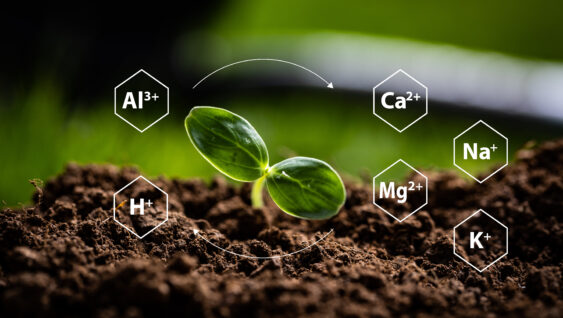
- Organic matter inherently contains nutrients and can bind them to prevent nutrient loss. For example, 95 to 99 percent of soil nitrogen is part of organic matter, and cations such as potassium (K+) can adhere to the edges of organic matter.
- Higher organic matter soils are less prone to compaction than low organic matter soils.
However, after organic matter enters the soil, it does not just sit there. Microorganisms— bacteria, fungi, and archaea—that live in the soil consume organic matter as a food source and release some of the carbon back to the atmosphere through respiration as carbon dioxide (CO2).
So why does so much carbon remain in our soil?
How does organic carbon flow through our soil and what makes it stay?
As we study the “black box” that is the microbial community in soils, researchers have shifted away from the idea that some organic matter is completely stable and cannot be further broken down. Instead, they are shifting towards a continuum of decomposition theory, which suggests that all organic matter can be broken down given the right environment with the right microorganisms.
There are two main types of limitations to microbial decomposition of organic matter in soil:
- Physical limitations, such as separation within the soil matrix of microorganisms and organic matter, or aggregation physically excluding microorganisms from the organic carbon inside the aggregate.
- Metabolic limitations, which focus on microorganisms, can be due to a lack of nutrients, oxygen, or too little or too much water for microbial decomposition. Sometimes, microorganisms near organic matter don’t produce the right enzymes to further break down carbon, or they can be energetically limited. Microorganisms that are energetically limited may not have the resources available to produce the energetically costly extracellular enzymes required to break down more challenging organic matter, such as organic matter bonded to the mineral surface (i.e., mineral-associated organic matter, often referred to as MAOM).
In a typical agricultural surface soil where plants are actively growing, there will be pockets of soil where organic matter may have been repeatedly decomposed and are now fairly persistent or very challenging to decompose further in soil. This could be inside an aggregate.
There will also be other areas of soil that are rich in organic matter, which is rapidly consumed by microorganisms who will then die and be consumed over and over again. This is common in the rhizosphere—the soil directly surrounding a plant root. But we also see this inside smaller aggregates and on a larger scale if organic matter is buried due to erosion.
Over time, as organic matter is repeatedly decomposed and no new carbon enters that area of the soil, the chemical and energetic composition of the carbon will shift, and the microbial community left will be a slow-growing, highly efficient community that is adapted to decomposing this challenging organic carbon.
While there are clearly many processes happening in soil, some of which lead to long-term persistence of organic carbon, does increasing carbon sequestration mean we need to increase these processes that stabilize carbon?
Improved nutrient availability may be one of the easiest benefits of having more organic matter that you can see a clear economic return from. But these nutrients become plant available when organic matter is decomposed by microorganisms. When there is decomposition, carbon is going to be lost to the atmosphere, decreasing the amount of carbon in your soil.
So, when it comes to increasing carbon in our soils, it is less about stabilizing more carbon and more about how we can increase the flow of carbon into our soils.
How do we increase carbon flow in our soils?
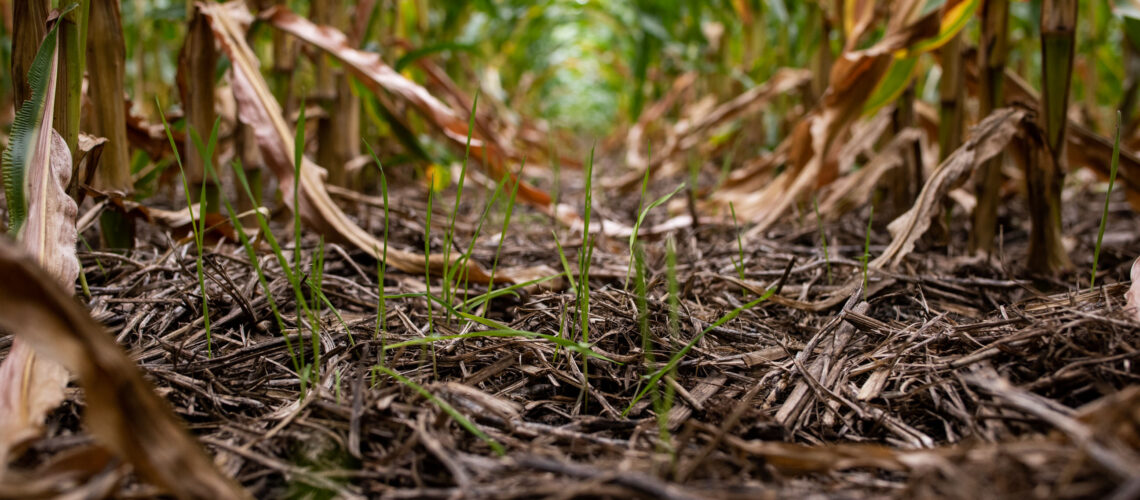
To increase the organic carbon in our soils, we want to maximize carbon inputs and minimize carbon losses.² This can include maximizing soil cover, such as increasing the duration of living plants and reducing tillage.
Increasing carbon entering the soil from plant photosynthesis focuses on improving plant growth, such as growing a cover crop, adding a short-term forage into the rotation, or growing a winter crop. Growing larger biomass crops, especially with larger root systems, can also increase carbon entering the soil. For example, corn adds significantly more carbon to the soil than soybeans or wheat. However, this is not to say you should only grow corn-on-corn for optimal soil health, but rather that the diversification of plants and animals is a key principle of soil health.²
Part of increasing soil organic matter is managing your crops for optimal plant growth, which typically translates to improved yield. One aspect of this is to be conscientious about compaction in your fields to reduce compaction as much as possible.² Click here for more information about managing and reducing compaction in your fields.
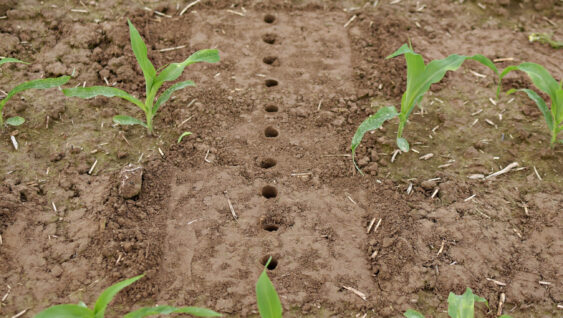
Tillage breaks up soil aggregates which can protect organic matter from decomposition, aerating the soil, and leading to rapid decomposition of organic matter. For both optimal soil health and increasing organic carbon in soils, minimizing tillage as much as possible is one of the best management practices.
Finally, carbon amendments, such as adding manure or compost, will directly add carbon and other nutrients to the soil, which can be a good option for farmers with access to these resources.
A far deeper explanation of the three principles of soil health management can be found in this downloadable textbook from Saskatchewan Open Education Resources.
Organic matter – a cornerstone of soil health
Increasing organic matter in your soils is a slow process that occurs over many years, but it will always be an important element of soil health, and therefore long-term farm resiliency.
Sources:
¹Doran, J.W., Sarrantonio, M., and Liebig, M.A. 1996. Soil Health and Sustainability. Adv. Agron. 56: 1–54. doi:10.1016/S0065-2113(08)60178-9.
² Van Eerd, L. L., Congreves, K. A., Arcand, M. M., Lawley, Y., and Halde, C. 2021. Soil Health and Management. Saskatchewan Open Education Resources.