



Eyes On the Sky: Weather Outlook For The 2024 Growing Season With Eric Snodgrass

Having a clear picture of upcoming weather patterns and trends, from rainfall events to changing drought conditions, allows you to make better decisions in the field. As the summer season unfolds, it is time to take a closer look at what weather lies ahead for 2024.
In a recent episode of The Dirt Podcast, we dug a little deeper into the global weather forecast to understand the outlook for the 2024 growing season and how it will impact agricultural production. Eric Snodgrass, a crowd favorite and Principal Atmospheric Scientist at Nutrien Ag Solutions, joined us to share his expert insights.
“I spend my days knee-deep in weather information trying to figure out what the atmosphere is up to next,” says Snodgrass.
Eyes on the Sky: Derecho Events
Looking at 2024 weather patterns, it is important to discuss the recent derecho event that unfolded in Houston, Texas. The term derecho comes from the Spanish word for ‘straight,’ and it is used to describe widespread and pro-longed windstorms caused by long-damaging squall lines of thunderstorms. Let’s simplify this.
A shelf cloud is often associated with long lines of storms and can be defined by its low position in the sky as it heads towards you. That shelf cloud hitches a ride on some air that is rushing out and ahead of the storm – forming a gust front. The storm then bows outwards and can cause seriously destructive winds reaching up to 100 miles per hour.
“These things can happen. They happen quite often. We just hear a lot more about them because of this pace of news. Derechos have been a thing. But we are trying to understand if there is an increase or change in frequency of them,” Snodgrass explained.
The recent derecho in Houston, Texas resulted in some very devastating damage. With several fatalities and over one billion dollars in estimated insured loss, the area will be working through the impacts of this event for quite some time.
“When it comes to the most common type of damage from thunderstorm events, it’s not hail, it’s not tornadoes, it’s straight-line winds by far,” says Snodgrass.
Eyes on the Sky: Solar Flares
If we are analyzing the 2024 weather outlook, it is impossible not to mention the recent viewing of an eclipse and the Aurora Borealis. Snodgrass explains that these events happen because our sun experiences coronal mass ejections (CMEs), otherwise known as solar flares, that will outwork the sun’s gravity until they eventually flare out. If you are in the path of one of those flares, you will see the sun light up with incredible shades of green and pink – what we call the Aurora Borealis. It is important to note that these CMEs can cause issues with electronics on the farm and disrupt the use of certain equipment. This is why monitoring the weather is more important than ever to ensure we make the most out of our productive hours in the field.
The Shift From El Niño to La Niña
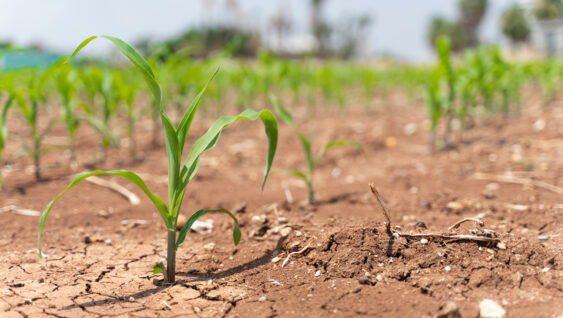
With an increase in rainfall and some wet weather throughout the spring, quite a bit of drought has been relieved across the country.
El Niño peaked around Christmas time, and now the colder water is coming back as it is once again on its way out. Snodgrass says he expects us to have a weak La Niña by late summer. Several factors will affect this. If the Baja of California continues to stay cold while the North Pacific in the Gulf of Alaska gets warmer, most of the heat stress and drought will live in the Southwestern plains and run up the spine of the Rockies. According to Snodgrass, anyone east of there will have a hot and stormy summer. He also says we need to keep an eye on the Atlantic in relation to hurricane season.
“And we see right now with all that above normal ocean temperature, plus the development of a La Niña in the Pacific, plus active early thunderstorm development coming off of Africa, that the risk this upcoming year of having an above average hurricane season is elevated,” Snodgrass explained.
Global Outlook Highlights
Weather trends around the world can help us predict upcoming patterns and better prepare for what is next in the field. Here is what you need to know about the weather in our world today:
- Great moisture returns in parts of Central Europe.
- Risk of drier conditions over key acres in the Russian wheat belt where they grow corn, wheat, and soybeans.
- South America is preparing for their winter dry season.
- Flooding in Southern Brazil, in Rio Grande do Sul, during their fall season could affect crops as they start to come out of the ground. Some areas saw 20-25 inches of rain in the last 40 days.
- As we transition to La Niña, Australia is expected to see wetter conditions, but there is still drought in the west and south.
Get ahead of the weather this summer. Visit ag-wx.com to access free weather intelligence maps and analysis, point forecasts, weekly weather reports, and videos brought to you by Eric Snodgrass and Nutrien Ag Solutions. We are here to support your farm’s productivity and profitability with specialized forecasting and detailed maps to help you stay ahead. Ready to learn more about the weather outlook for 2024? Listen to the full podcast episode here.