






Read Full Transcript
Mike Howell (00:08):
The Dirt with me, Mike Howell, an eKonomics podcast where I present the down and dirty agronomic science to help grow crops and bottom lines. Inspired by eKonomics.com, farming’s go-to informational resource, I’m here to break down the latest crop nutrition research, news, and issues, helping farmers make better business decisions through actionable insights. Let’s dig in.
(00:41)
Well, hello again, everyone. Welcome back to The Dirt. Glad you’re tuning in with us today. We’re going to do things a little bit different this morning. I’ve been traveling around the country all summer and I have met several people that are brand new in their roles with different universities, and I thought it would be a great idea to get some of these people on and let them introduce their self to our listeners and find out a little bit about what they have planned in their new roles. Today we have Dr. John Jones with the University of Illinois joining us. John, welcome to The Dirt.
Dr. John Jones (01:10):
Thank you, Mike, I appreciate it. It’s great to be here.
Mike Howell (01:12):
John, before we get started, if you will, introduce yourself to our listeners. Tell us a little bit about where you’ve been and what you’ve been working on.
Dr. John Jones (01:18):
I’m in at the University of Illinois in the Department of Crop Sciences. I’m assistant professor of Agronomy and State Soil Fertility extension specialist for the state of Illinois. I arrived at Illinois from UW-Madison, that’s University of Wisconsin-Madison. I was a soil fertility researcher up there. I’m originally from a farm in Wisconsin. Hopped around the corn belt and went to Kansas State University for my undergraduate and then Iowa State for my master’s in PhD in soil fertility.
Mike Howell (01:45):
John, if you will, I know you’ve been doing a lot of research. You mentioned Wisconsin, but I know you’ve done research at other places as well. If you will, tell us a little bit about some of your past research interest and what you’ve been working on.
Dr. John Jones (01:56):
Well, I cut my teeth, so to speak, in soil fertility research, and really applied agronomy research in Iowa in graduate school. I was fortunate enough on my master’s to work on challenges and soil acidity and liming. I was looking at liming material efficiencies, how can we relate certain soil properties to crop and soil responses to liming, to hone liming recommendations and provide more information for growers. So that was really where I started to get really engaged in the process of applied agronomy and soil fertility research. To continue that work in applied agronomy soil fertility space I continued on with my PhD at Iowa State, working on phosphorus in a few different directions. Always said that about half of the work was in agronomic soil test calibration for fertilization guidelines, and the other half was really looking at what management practices maintain or optimize crop yields and reduce phosphorus loss with surface runoff.
(02:53)
So investigating really the components of the four R’s, so looking at phosphorus, different sources, rates, timing, and application methods, all in the context of different tillage practices and crop rotations. So really trying to tackle both agronomic and water quality challenges for phosphorus management in Iowa. That was my grad school experience. Really enjoyed working under Dr. Antonio Mallarino there, and he put me in a good place and I was able to find what was really my passion. When I was finishing graduate school, I was fortunate enough to work at the Fertilizer Institute, directing the Foundation for Agronomic Research. Was engaged in some higher level nutrient management research and accounting and budgeting, and balancing work that was really exciting to get to look at nutrient use on a really large scale, whether it’s state, county, nation, and that was wanted to put things in the context of the decisions I was involved with in my research on the very finite subfield scale and look how that translates to large trends and nutrient use.
(03:51)
When I went to UW-Madison, my research portfolio was in soil fertility and plant nutrition, really focusing on soil test calibration for phosphorus and potassium guidelines for the state of Wisconsin, but also nitrogen management in winter wheat, corn, and forage crops as well. That was a lot of fun to build some work there that went in place to provide guidelines for farmers around the state. It was really enjoyable to have a small research program that represented all the diverse soils and cropping systems and even farmers around the state of Wisconsin. So that’s how I landed to where I’m at today. Most of my work is really focused on north-central Midwest corn and soybean cropping systems, but certainly did quite a bit of forage work as well in Wisconsin.
Mike Howell (04:35):
John, you mentioned some of your work at Iowa State and working with Dr. Mallorino calibrating the phosphorus and potassium curves. It’s interesting you mentioned that. I’m sure our listeners will pick up on this pretty quickly. We had Dr. Mallorino on for a couple of episodes not too long ago talking about some of the changes that were made, and I’m sure you were involved in some of that research. Your name’s probably on the paper that we were looking at when we were discussing those changes that they made and their recommendations.
Dr. John Jones (04:59):
Yeah, that was really fun to see that process from the inside. I was fortunate to be able to work every day, hop over to my advisor’s office and ask what the process was like of refining or creating nutrient recommendations. It’s not always something that’s discussed in the world of applied research, publishing papers, getting necessarily extension outreach materials out there, but that’s really a fun process to be involved in, and I’m looking forward to during that to here and Illinois as well. Really it’s about looking at the whole process, from soil test analysis all the way to how we can provide guidance and just information for farmers to manage nutrients better.
Mike Howell (05:38):
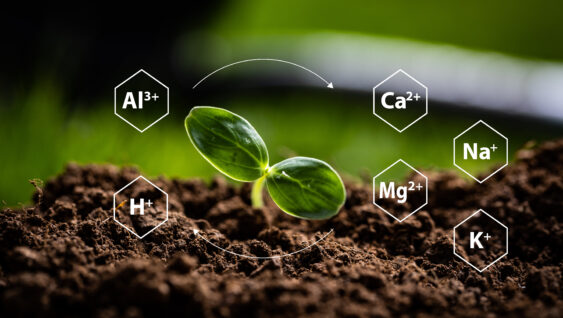
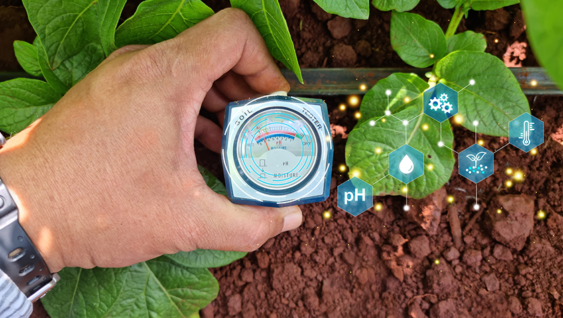
John, something else I picked up on, you said you did a lot of work with soil acidity and liming and looking at different liming products. Now, when we first started doing The Dirt, seemed like everybody we had on talked about the importance of soil pH and knowing what those levels were, and we’ve done several episodes talking specifically about soil pH and making sure we have the right soil pH, but we have not done an episode talking about the different liming materials. Do you want to take just a second and cue our listeners in on the different types of liming materials and why you may choose one versus the other?
Dr. John Jones (06:08):
Sure. I’ve got a special place in my heart for soil acidity and liming research. It was a lot of fun during my master’s work. So that work was really focusing on addressing some unknowns of information that are baked into a lot of liming recommendations, specifically how liming materials are analyzed. There’s usually some component where you’re looking at liming materials that focuses on a chemical metric. Usually it’s the ability for a liming material to neutralize acidity in relation to calcium carbonate, a reagent grade calcium carbonate you get in the lab, but then there’s also a physical component that sometime is termed fineness factor or different states use different terms. And what my research was doing was trying to address specific fineness factors to lime particle sizes in relation to some other sources as well, including pelletized lime.
(06:58)
And so what we looked at were specific liming sources of ag lime, and when I’m referencing ag lime, ground and crushed quarry lime, that’s applied to the field, considering both higher calcium content ag lime that’s sometimes called calcitic or higher magnesium content lime that’s sometimes called dolomitic ag lime. And those percentages vary depending on what state you’re in. There’s some official definitions in the Soil Science Society of America though. But essentially looking at those different liming sources and saying “What are the efficiencies of those to increase pH?” And that was a nice process of looking at that over time because there’s always some arguments around in the country, “Well, we want really fine lime to increase soil pH quickly to get over that hump or maybe we need more larger particles to slowly react throughout the cropping season or three or four cropping seasons.”
(07:49)
What we really found was some laboratory work and then it was corroborated with some field research as well, was that correcting that acidic pH or that low pH immediately usually had a benefit, where you were really trying to get to that target pH as quickly as possible. And that really led and connected to the fact that we’re thinking about we’re raising a pH. If you think about this process over time, we’re trying to get to a target soil pH, and then essentially that pH number that buffering within the soil then is fighting against different acidifying processes. Maybe it’s precipitation, maybe it’s different dynamics with nitrogen, but we have to get to a point where our soil pH levels can then endure the acidifying processes that accompany a cropping seed. And then hopefully we’re still at a place that’s optimal for crop production. At the end of the season and we’re not aiming to lime again.
(08:42)
So those were some of the dynamics. And what really we found was that there was a difference between higher calcium versus a higher magnesium limestone in their efficiency even at different particle sizes. And so usually the speed of reactivity of a higher calcium limestone benefited that early change in soil pH, where even though a lot of our chemical analyses look at higher magnesium limestones and say they’re actually have a higher neutralizing capacity or ability to neutralize acidity, the rate of reactivity of the high magnesium limestone was a lot slower. And we looked at that in relation to pelleted limestone as well.
Mike Howell (09:21):
Well, that was something else I was going to ask you about. Back in my extension days, and even today I still get questions pretty frequently about pelletized lime. And most of these questions seem to be coming from smaller producers that don’t really have the equipment they need to spread lime. They may have a fertilized spreader and think they can apply the pelletized lime with a fertilized spreader, and looking for a quick, easy alternative for that. What’s your opinion on pelletized lime? Is it worth that for production agriculture?
Dr. John Jones (09:47):
Well, the pelletized lime that we looked at in the incubation study and again field study, and I actually conducted two liming studies in Wisconsin as well, looking at different rates of lime application. And then the same question, was it better to fix that OPH immediately or do you spread it over four years? And overwhelmingly, through the research in Iowa and Wisconsin, fixing the soil pH as soon as you can was worth it. And now that’s in the framework of an acceptable liming application. That’s usually the liming applications were lower than let’s say eight tons of ECC per acre. What we looked at in terms of the need to correct that soil pH was really the most important thing. And so some of those lower rates of lime that, like I said, had to fight against different acidifying processes that are cropping season, weren’t necessarily giving us the yields that we would if we would have corrected that pH immediately.
(10:41)
If you look at the products on a per calcium carbonate equivalence basis, so let’s say we had a, and the nomenclature changes per state, but let’s say we had the same quality of lime, whether it was pelleted lime, reagent grade powdered calcium carbonate or ag lime, the product really wasn’t as important as the amount of neutralizing power that was applied all at once. And so we didn’t really see a large source effect when we take into consideration that calcium carbonate equivalence. Now if you’re looking on a pounds or tons of product, most pelletized limes are very fine and agglomerated into a pellet, and so sometimes those would react a little bit faster. But it all has to be taken into consideration and taken in the framework of per calcium carbonate equivalence. That was the most important thing that really came out that work.
Mike Howell (11:30):
How much potassium should you be applying? What’s the best form of nitrogen for sandy soils? Should you be applying sulfur? Sometimes you just got to ask an agronomist. eKonomics has an entire team of agronomists ready to answer all of your questions for free. Find your answers with the Ask an Agronomist feature at nutrien-eKonomics, with a k.com.
(11:53)
John, let’s move forward a little bit. I know you’ve been at the University of Illinois for a couple of months now and trying to figure everything out there. I know that may take more than a couple of months to figure everything out, but what are you seeing as the biggest challenges facing producers in terms of soil fertility in the state of Illinois?
Dr. John Jones (12:09):
Well, actually I’m on with my one-month anniversary today, so we’re plugging along really well though, and I’ve had the opportunity to get around the state quite a bit. It seems like usually once a week I make a nice transect across the state in some form of either breakfast or lunch meetings and looking to get their input. Some of the things that have popped up, talking with the agronomists and farmers around Illinois is, how do we use measured variables or conditions to create adaptive management strategies for nutrient management? And what I mean by that is, what soil and plant properties or maybe it’s weather conditions or soil conditions such as moisture [inaudible 00:12:46] can be used to start adapting nitrogen management, maybe even within the season? Can we look at monitoring or modeling soil nitrogen dynamics early in the season to look at, let’s say, the ratio of pre-plant in season applied nitrogen?
(13:01)
Can we start to use a lot of the technology and data that’s out there to hone our management, maybe at the field or subfield scale as well? So really looking at soil plant and then weather conditions are something that I feel keeps coming up as things that are worth investigating, ways that we can use them a little bit better. Certainly right now a lot of the conversation pops up around commodity prices and input prices, and how do we navigate priority decisions in this certain scenario. And so, one of the interesting things to take out of that is when we start to look at research that can inform those type of discussions, it really has to represent the different combinations of decisions farmers make.
(13:42)
And so that will lead eventually into something we’ll talk about later about one of the research efforts that I’m interested in bringing down, that was working in Wisconsin, and will look to bring to Illinois as well, is looking at how all of our nutrient decisions interact with each other. How do our base P and K rates interact with our optimal nitrogen rates that we may choose? Even things as simple maybe as soil pH, how does the return on your investment to applying lime to get to an optimum pH affect your nutrient use efficiency of your other nutrients? So that’s maybe a long-winded answer, but it’s certainly some of the feedback I’ve been getting primarily at this point across the state of Illinois.
Mike Howell (14:18):
John. Those issues aren’t just isolated there in Illinois. Traveling across the country this summer, I’m hearing a lot of the same concerns no matter where I am, and price always seems to go to the top. Everybody’s worried about the price of all the inputs and “How in the world am I going to make a profit with corn prices as low as they are?” Hopefully we can get these markets turned back around and get a little bit more for our crops these days, but a tough situation in agriculture right now. John, let’s move ain and talk a little bit now about some of the planned research you’ve got. I know you’re getting geared up for next year already. You mentioned one study you were already considering putting in. Talk a little bit about what you have planned.
Dr. John Jones (14:54):
Sure, I can talk about a little bit what studies are actually already initiated and some of the plans going forward. One of the things that I really prioritize and enjoy working on is looking at long-term trends of, not just crop yield response, soil test changes. Things like that, I think, are really valuable because they put everything in context of what is the growing season? What are the last three growing seasons? Can we segment out wet versus dry years? I really see a lot of value in that. So a few of the research efforts that I’m working on immediately here in Illinois are putting in long-term trials, looking at corn yield response to nitrogen in different phases of the rotation, different tillage practices and systems. Essentially, I’m setting these up around the state so that we can add different experimental variables that we want to ask questions of.
(15:42)
So large enough research in terms of the scale that we can say, “Well, we really need to be addressing what is our optimal nitrogen rate and these tillage practices when we have cover crops.” Can we work with answering questions about sulfur nutrition within the framework of response to nitrogen and different tillage practices. Because we know those affect things like early season soil temperature and things like that. That’s a component that I’m really excited of to bake into my research program that will help feed a lot of questions.
(16:10)
One other component that I really enjoy, and that’s really why I’ve enjoyed getting around meeting with farmers around the state, is to set up trials, on-farm trials around the state that will be looking at optimum nitrogen rates given their specific soils, cropping systems and conditions. And those will support different reports and refinements of fertility recommendations within the state of Illinois. But then really trying to get at the question I mentioned that I’ve heard from farmers are “What other sources of information can we use to hone our management?” So there’ll be a lot of soil and plant monitoring that’s done on those on-farm trials, but it’s all on production scale work on farms.
(16:46)
Another component that you mentioned, Mike, that I will focus on, is soil and test calibration of phosphorus and potassium for the state of Illinois. Looking at working with some ongoing work that’s already being done here in the state, but then also collaborating to get a network that’s working on. Around the state we can have trials that are examining nutrient kinetics, buildup and drawdown rates, looking at the variability within crop removal. Those will be some larger collaborations that are going across Illinois. Those are some first efforts that I’m working on. I’ve been fortunate enough to have a lot of support down here and a lot of great collaborators and farmers and agronomists to work with. So it’s just how many hours of the day can I squeeze in the amount of research work to answer questions for growers. And that’s something that I’m really enjoying so far.
Mike Howell (17:33):
Sounds like you’re getting that plate pile pretty full these days. John, you mentioned the interaction between nutrients, and that’s something that I’ve been learning a lot about here in the last six or eight months. One of the keys that pops out is the interaction between nitrogen and sulfur and we seem to be finding more and more of the need for those two to be in the right proportion and in the plan in the right amount. So is that something you’re going to be looking at a little bit, how these two nutrients work together?
Dr. John Jones (17:58):
I think those will be two nutrients that certainly are in the suite of management decisions that are included in some of these trials. And really trying to answer again, what are the environmental cues in the soil and plants that we can pick up to hone that management and affect those interactions? So are we getting to the right place with nitrogen management that we do or we don’t need to be concerned about sulfur deficiencies or can we get by? Those are interesting questions, I think. Most of the nutrient interaction work that I’ve done has been looking at phosphorus or potassium and then soil test levels of P and K in relation to optimum nitrogen rates or corn response to nitrogen. And a lot of that is really, again, connecting back to questions receiving from farmers, what do we prioritize and situations like right now where margins are tight?
(18:46)
What’s nice to find from that work is that we can identify that when we look at a economic response for N, P and K fertilizers as a whole, a lot of times we talk about return to nitrogen or P and K ROI, but we look at return to fertilizers as a whole, maintaining optimum P and K levels for optimized yields really lead to the most profitable fertilizer system. It leads to a better efficient use of nitrogen, but it also leads to the minimized amount of residual soil nitrogen that’s left in the soil after harvest. And so there’s a lot of win-wins in those different cases, so I expand it upon your nitrogen and sulfur question, and I think that will be certainly represented in the studies that I’m looking at.
Mike Howell (19:30):
John, we appreciate you taking a few minutes to introduce yourself to our listeners, and let them know what you’re doing there in the state of Illinois. Look forward to getting to work with you a little more as we move forward. Is there anything you want to leave our listeners, with any take home message before we wrap this episode up?
Dr. John Jones (19:45):
Well, thanks Mike. I really appreciate being able to come and talk with you today. I would say… I’ll leave with the final thing is I’m really excited to work across the state of Illinois, and if there’s any Illinois listeners on here, which I’m sure there are plenty, please feel free to reach out, and I’m excited to get to know farmers and agronomists around the state, and tackle some pretty fun challenges to work on.
Mike Howell (20:04):
Well listeners, we appreciate you tuning in for our first segment. If you will, hang around for just a couple of minutes and we’ll be right back with segment two.
(20:11)
Listeners, I hope you enjoyed the first segment of today’s show. If you did, please take a minute and give us a rating on your favorite podcast channel or app, and give us some feedback as well. We want to hear from you to help make the show even better. And don’t keep it to yourself. Please share these episodes with coworkers, family, friends, anyone you think may benefit from the information we’re sharing here. Don’t forget to visit our website, nutrien-eKonomics, with a k.com to help find the latest crop nutrition news and research information as well as market updates, a growing degree day calculator, a nutrient use calculator, a rainfall tracker, and much, much more. It’s all at nutrien-eKonomics, with a k.com. Most episodes of The Dirt are now available for CCA credits.
(21:00)
Visit our website and click on the Agronomics tab to find these CCA credit opportunities. And if you have a question, you can ask one of our Agronomy team members. Simply ask your question and one of us will get back with you. Thanks for listening. Now segment two of The Dirt.
(21:19)
Listeners, welcome back to segment two. Today we are traveling to the great state of Texas. Now Texas is an awful big state, and we’ve got research farms scattered all over the state. To help us talk a little bit about one of the research farms in the state of Texas, we’ve got Dr. Todd Baughman. Todd, welcome to The Dirt. If you would, introduce yourselves to our listeners and tell them a little bit about what you doing now.
Dr. Todd Baughman (21:41):
Todd Baughman center director here for Texas A&M AgriLife Research, our center at Lubbock. Originally from Oklahoma. Actually got my PhD at Mississippi State University with David Shaw when I was there. And then worked for Texas A&M for 15 years as an extension agronomist and state peanut specialist. Went back to Oklahoma where I was working as a weed science, which is my training, and then had the opportunity to come back to Texas A&M. Been here since April one as the center director here at Lubbock. So exciting times and changes for myself.
Mike Howell (22:16):
Todd, if I knew you were at Mississippi State, I had forgotten that, but Dr. Shaw was on my research committee at one time. Great man. Glad to see he’s still around and doing a lot of good things. I guess that’s where we first met when you were at Texas A&M as the peanut specialist and I was doing a similar role in Mississippi. So that’s been quite a few years ago now.
Dr. Todd Baughman (22:35):
Yeah. Year or two ago for sure.
Mike Howell (22:37):
Todd, we wanted to have you on today and talk a little bit about one of your research farms. I know you’ve just started in this position, but you’ve been around the Texas A&M system for a long time, and I’m sure you’re well versed on the research farms there. But before we get into that, there is a little bit of confusion out there among some people that don’t really know the system and think that there may be two land-grant universities in Texas. There is one in Lubbock that is not a land-grant university. And we’re not downing them in any way. They do some great agriculture research, but set the stage there how the two universities are separate and work together sometimes and things like that.
Dr. Todd Baughman (23:13):
Okay, so just to familiarize your listeners, we have 13 research stations that are located across the state. And probably unique to most of the universities, those stations all are housed with faculty so we have university professors research and extension. And those are located based on the needs of that region or that area for the state of Texas. So that is unique. Lubbock is one of those, is the largest. We have 23 faculty members that are either research extension or dual-role. And then probably the most unique thing about this center is we actually have faculty that have split appointments with Texas A&M and Texas Tech University. And as you mentioned, Texas A&M is the land-grant University for the state of Texas. Texas Tech is an agriculture university, but they are not in fact a land-grant university. So a little bit different there, even though, as you mentioned, have some excellent [inaudible 00:24:14] there. And we’re fortunate enough, again, to have that working relationship with them, not only on shared research or shared outreach programs, but actually faculty members that are actually employed by both Texas A&M and by Texas Tech.
(24:30)
So that’s definitely something that’s unique. Obviously offer some challenges when you’re working with two different systems, two different sets of paperwork, that sort of thing. But we’re fortunate that we have some really great faculty members that are bought into that. And what it does for our center faculty that’s involved in that is it allows them to interact with students to fulfill that teaching role that is part of the land-grant mission, and then obviously gives them some excellent access to a lot of those students at an earlier age where they’re interacting with them in the classroom. So it works out really well, I think, for both systems and for our faculty members that have that opportunity to be in that joint appointment with both systems.
Mike Howell (25:15):
Todd, well let’s get in and start talking about the research farm there in Lubbock. I’m assuming that’s the one you wanted to talk about today. Tell us a little bit about the research farm and a little about the history there.
Dr. Todd Baughman (25:26):
I’m actually going to talk about one of our other farms, if you don’t mind.
Mike Howell (25:29):
That’s fine. That’s fine.
Dr. Todd Baughman (25:31):
We have four research locations that are under the Lubbock Center. We have the main facility here at Lubbock. We have the Halfway and Helms farm, which is north of us. Then we have the [inaudible 00:25:44] farm that falls under our area, that is south of us. And then the farm I’m going to talk today about, and there’s a reason why that, and I’ll explain that, is our AgCares facility at La Mesa, which is in the southern part of our Southern High Plains district here. I also might mention we also have a working relationship with, what is referred to as, the Barker Farm, and that’s a farm that Dole Barker has allowed both our extension and research faculty and staff to do research on. So we’re appreciative of that. And I think that probably was built a little on the AgCares philosophy. So the AgCares facility started in 1990 as a joint relationship with La Mesa Cotton Growers, an organization in that La Mesa area, the cotton gins and in growers that are involved in that area.
(26:34)
They came to A&M and were wanting to develop some research that could help with cotton based cropping systems, and obviously to optimize cotton profitability in the Southern High Plains. So we went into a partnership with them. They leased a farm in that area. Provided a lot of the initial equipment and a lot of the initial cost to operate it, as far as seed costs, those typical production costs. So that’s been an ongoing relationship now I guess for 34 years. So I would say again, unique in the fact that it was a joint venture, and they picked up a lot of those costs, but allowed us to do production research in more of a larger farm type setting. And then I’d say obviously being able to continue that for 30 plus years is I think a real honor to those guys for that commitment to trying to address the answers for themselves and their customers in that area.
(27:36)
So that’s been ongoing. Been a lot of neat research that has went into that. And it’s definitely kind of changed over those times as the needs and the agriculture in that area changed. One of the examples you mentioned, I was a state peanut specialist, and actually did some different peanut work, row spacing work, harvest timing work on that farm many years ago when peanuts were a little bit of a larger part of the production in that Dawson County area. Unfortunately, with declining water, there’s not as many peanuts being produced in that area, so we’ve revolved away from that, not being a part of that rotation on the farm there. I think at one time there were some sorghum-based rotation in that. There’s been a lot of cover crop work. Obviously that’s an important part of our cropping systems here in West Texas. That’s been really, really important.
(28:33)
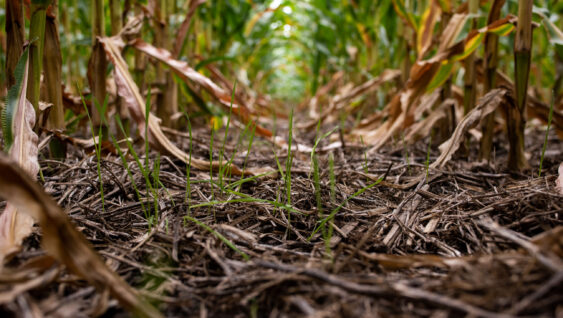
Irrigation management, timings. I think they did some of the termination timing work on irrigation at that farm when they were working on that. Now we’re in a cotton, wheat, fallow rotation on the farm there with the current water situation that we’re dealing with, and with the thoughts that that’s probably going to be one of the areas that we’ll see more acres go to that. One of the things that we’re doing is when we pull that wheat crop off, we’re leaving that stubble for additional year. That’s how we’re managing that as a cover crop. Obviously one of the issues, our concerns that we have with cover crops in this area is the moisture that they potentially use for that following cotton crop. So that’s one of the things that we’re looking at now at AgCares.
(29:22)
Can we bring an actual wheat crop into that, use it as part of a actual return cash return crop, but then also use that stubble somewhat as a cover crop situation? So that’s a big part of the research that’s ongoing there. The cotton breeding program, we have an active cotton breeding program here at Lubbock. They’ve been doing quite a bit of breeding work. Our plant pathologists have done work there working with nematodes. We’ve had some weed sites work there. And then our cropping system’s agronomists and our soil nutrient management, soil conservation groups are both working there at the station. And one of the things that’s come out of that work is that we’ve actually reduced the recommendation for nitrogen per bale in the Southern High Plains from some work that was done there.
(30:11)
A lot of interesting work that’s gone on through the years, and definitely I think has been a benefit, not only to our center and to our scientists, it gives us another location, obviously, to work on, a little bit sandier soil than what we deal with. And you started dealing with some of the first water issues to some degree there with the declining aquifer also. That’s been ongoing and I think that’s been a really unique opportunity that our center has had, and we’re obviously appreciative of the growers and the gins in that area for working with us.
Mike Howell (30:43):
Todd, that sounds like a great relationship that you have there with the growers in the community. And that’s what it’s all about. These land-grant systems, they can do all the research and education they want to do, but if we’re not getting it back out to the growers, we’re still not accomplishing what we need to do. That works really well. We had Dr. Bryan Hopkins with BYU on the program a few weeks ago, and he talked about a relationship. They don’t have any research farms anymore, and he talked about a similar relationship they have with an individual farmer. And we talked about how special that is and how good it is to be able to work with farmers in their own fields to get that done. It sounds like y’all are doing some of that stuff as well.
Dr. Todd Baughman (31:20):
Oh yeah, most definitely. When we go back to the 13 research centers, and that’s one of the things that A&M, I think, has done well is having these centers in the different areas. Of course, Texas being a large state, a little bit more difficult maybe than some of our other land grants in some of our smaller states, but being able to put those centers in those strategic areas and work on the problems that those areas, that are unique to those areas, and I think that’s something as center director obviously that I’ll strive for is to make sure that at least the crutch of what we’re doing goes back to addressing the issues of our producers and our industry in this area, and make sure that we’re relevant to those needs.
Mike Howell (32:04):
Well, Todd, one last question I want to ask you, and I’m asking this of all of the people we have on talking about the research farms. We know agriculture is constantly changing. There’s a lot of technology coming online these days. There’s not any more land available out there. We keep losing more and more farm acres every year. What are the research stations going to have to do to adapt and keep up with the change in pace in agriculture? Where do you see the farm in the next 50 years?
Dr. Todd Baughman (32:29):
Well, I wish I had a crystal ball. Probably if I did, I’m not sure I’d be sharing that with you necessarily, Mike. I’d probably be making some money off that. I think back to, unfortunately to some degree, and I think some of the producers would agree with this, and I know you’ve seen this. When I think back to when I started at Vernon, probably the average size farm was somewhere between 500 and 1500 acres. And when I say that, that was a grower, that that’s what he did. He didn’t have a job in town and farmed 500 acres or 1500 acres on the side. Depending on what he was doing, that’s what he did for a living. Now, I don’t think I could find a grower that small that did it a hundred percent, that you didn’t have some other type of income. We’re probably getting closer to the 5,000 acre mark in a lot of cases.
(33:18)
If that trend stays in play, we’re just going to see these farms get larger as we move forward, and so the ability to be able to make those decisions, I think, on that large acres are going to be part of what we’re going to have to, I think, help those growers address. The other thing, interestingly enough, and I never really thought about this through my career, it’s probably unfortunate that I didn’t, but visiting with the grower as farm programs, conservation changes, things like Climate Smart, helping those producers determine which one of those are actually beneficial to them and which one of those either pay or, worst case scenario, break even type situation. I think some of those types of things, we’re going to have to help those growers address. And I would say when you start looking at those types of things, cropping systems, those types of management decisions, probably we’re the best set to be able to help those with those questions.
(34:19)
Individual companies do a really, really good job on their specialty, but when we start blending these together and looking at how they affect farm programs and overall farming practices, I think that’s a part that we’re going to have to be there to address. The other issue obviously in our area is going to be water. We’re going to have to continue to develop best management plans to manage the water resources we have, and that goes both on dry land and irrigated. So making sure that we’re making every dollar we can out of every inch of water we have out here will continue to be a big issue for us.
Mike Howell (34:56):
Todd, one final thing, and it came to me as you were given that last response. I do a lot of work in Mississippi with the research station there, the Delta Research and Extension Center, and been around Stoneville all my life, and actually worked for a chemical company in Stoneville when I first started, but I also realize that Lubbock is the home for a lot of these corporate people as well. There’s several people that are based there in Lubbock. Talk a little bit about the relationship between private industry and a university, and how that’s so important.
Dr. Todd Baughman (35:25):
Well, I think probably the simplest answer to that, Mike, is the fact that a lot of our technology, because of the cost of development, is going to come from private industry. There’s no way, unfortunately, that a university is going to come out with a cotton variety, with some type of genetic advantage to it. It’s just too costly to do that. Or to develop a herbicide or an insecticide or a fungicide. That’s going to have to come through private industry. Both in my career and I think in the land-grant system, we’ve been fortunate enough to have a really good relationship with both those basic suppliers and the retailers, who have become even more important as we move through my career. And being able not only to test those for them in some different environments that they may not have the ability to look at, to put those through some challenges, and then be able to also be a voice from a recommendation standpoint, how best to use, whether it’s that variety or that product.
(36:23)
They’ve been supportive of our research, obviously. With the trending down in public support for research, those dollars have been really important for a lot of our program, to be able to do some of the things that they do and answer some of the questions. And I will say that’s one of the reasons I was interested in this position, was there are some key manufacturers that have some major investments in this region, and the opportunity to work with those guys and to continue to build upon the relationships that are already here, I think, are going to be key, because it’s going to take all of us to be able to answer these questions and make sure that we keep our producers in business going forward.
Mike Howell (37:03):
Todd, we really appreciate you taking a few minutes to visit with us this morning. Listeners, we thank you for tuning in, and as always, if you have any questions or need more information about anything we’ve talked about here today, you can visit our website. That’s nutrien-eKonomics, with a k.com. Until next time, this has been Mike Howell with The Dirt.