





Read Full Transcript
[00:00:00] Mike Howell: The Dirt with me, Mike Howell, an ekonomics podcast where I present the down and dirty agronomic science to help grow crops and bottom lines. Inspired by ekonomics.com farming’s go-to informational resource. I’m here to break down the latest crop nutrition research use, and issues helping farmers make better business decisions through actionable insights. Let’s dig in.
Well, hello again listeners. Welcome back to the Dirt. Glad you’re tuning in. I think we’ve got a really important topic to bring to you. This week we’re gonna be talking about the importance of soil sampling, and you may be wondering why in the world are we hitting this Again, we’ve already talked about that.
Everybody knows about. The importance of soil sampling. Everybody knows these tough economic challenges that we’re facing on the farm these days, and some people are thinking this may be a time to cut back on some of these soil samples. So we have a couple of gentlemen here with Waypoint Analytical that are gonna talk to us and remind us about some of the important factors with soil sampling, and let us know some of the economics behind that.
Gentlemen, welcome to the Dirt. I’ll let you introduce yourself and tell us what you do there at Waypoint. Alan, welcome. Tell us who you are and what you do.
[00:01:22] Alan Meijer: Hey, glad to be here. My name is Alan Meijer. I’ve been with Waypoint a little over two years now. I’m the East Coast agronomist, for lack of better term, so pretty much cover all the East Coast states and the labs that fall in that geography.
[00:01:35] Mike Howell: Okay. And Mick, will you introduce yourself to our listeners.
[00:01:38] Mick Goedeken: Mick Goedeken. I’m the, for lack of better terms, the Corn Belt agronomist, so I’ve been tagged with that from my coworkers. I’ve been here for just a little over a year, and I cover from. Basically Idaho to Ohio, right in the heart of the corn belt there.
[00:01:55] Mike Howell: So before we really get in and start talking about soil samples, can y’all tell us a little bit about Waypoint analytical, where your offices are located around the country, and how many soil samples go through the labs?
[00:02:06] Alan Meijer: Waypoint analytical has seven agricultural labs. We’re based in Memphis, our largest lab is there.
Then we have labs in Champaign, Illinois, Atlantic Iowa, grand Island, Nebraska. That’s a new lab that we just opened. Then on the east coast, we have labs in Wilson, North Carolina, Richmond, Virginia, and Loyola, Pennsylvania near Lancaster. As a company across those labs. For the last few years, we’ve been getting close to two and a half million soil samples a year.
The numbers have been steadily increasing over time and hence, well the expansion into Nebraska recently.
[00:02:41] Mike Howell: That’s quite a lot of samples coming in. I would not have guessed it would’ve been quite that many, but that’s good that we’re getting that many samples coming through, and I hope everybody is taking advantage of these and doing what y’all are suggesting.
This is quite valuable information. Waypoint has been looking at these samples for quite a while now. This isn’t a brand new company. Are there any trends that are developing over the years? We’ve talked in the past on the dirt about declining soil test K levels over the last few years. Are y’all seeing any trends developing through what you’re seeing there at Waypoint?
[00:03:10] Mick Goedeken: Yes, we’ve been around for a while. Our roots go back to 54 years ago, so you think about that. That’s a lot of data and a lot of history we have, and we’ve watched that potassium decrease over the years, I would say in the last five years, we’re starting to see that become more stable. Or even in some locations start to rise.
And I think part of that is growers are getting smarter and starting to realize, hey, we can’t get enough potassium out there to raise this crop. Or in high potassium testing soils like the Western corn belt. Hey, I’m starting to deplete this. I better start putting money back in the bank. So we’re starting to see those types of things.
It varies on geography. I do a lot of summarization of data for the sales staff, and when I look at things, I look at phosphorous, and there’s some areas that we’re trending our phosphorous down. There’s some areas where we’re trending that phosphorous up, and then there’s other areas where we’re trending phosphorous as just holding stable, and certainly we’ve watched zincs tend to follow the phosphates.
The one thing that amazes me that. We still have a problem with pH and Alan lives in a area where pH is out of this world low to me, and I’m wondering how he manages to gross things. And he looks at me and he goes, well, you don’t lie him every year. So geography plays a lot into the soil testing world.
[00:04:38] Alan Meijer: Definitely. I took a look at some data I had shared at the Mississippi Row Crop short course last year looking at trends. For, let’s say the states that are most represented at that Mississippi and Louisiana and Alabama, that area down there. And what I recall seeing, if we look at the ratings, we provide sufficiency ratings based on the soil test value.
So if we look at that, that’s a way to help understand are we low, are we high? Are we where we want to be? And the trends, let’s say it was from 2020 to 20 24, 2 trends I thought I’d mentioned. One was. Sulfur. We saw less samples rated very low and more rated at optimum. So that’s a shift in higher sulfur levels.
And then for potassium, since interesting that you brought that up, fewer samples were rated very low or low. As well as fewer samples rated very high and an increase in the optimum. So this isn’t a real dramatic shift, but when you compare the two graphs and go back and forth, you can really see where things were changing.
So that’s a regional trend. Mick mentioned regional differences.
[00:05:52] Mike Howell: Alan, that sounds like really good news. We’re bringing the low end up to where it needs to be, and we’re not over applying on the high end. We’re bringing everything kind of closer to the middle where it needs to be. Is that what you said?
[00:06:03] Alan Meijer: Definitely, and I think that’s definitely a result of soil testing and the kind of work we do. It’s the work of farmers that are taking care of their land and thinking hard about their inputs, and the credit can go on down the line. Research and extension, everybody.
[00:06:18] Mick Goedeken: Probably one of the most alarming things that I’ve seen in looking at some of these trends is in certain geographies I start seeing organic matters going down, and I think that that’s probably happening because.
We’re pulling more crop off and we’re not fertilizing to the extent of the removal rate, so we’re actually mining organic matter to provide nutrients for us. We need to really be careful of that because in all honesty, organic matter is precious to us and we need to keep it where it is.
[00:06:50] Mike Howell: Mick down where I am, we’re lucky if we can even get organic matter to register on the scale. I joke all the time about it must be a blessing to have as much organic matter as y’all do up in the corn belt, but I understand what you’re saying. Anything we can do to keep that organic matter where it needs to be, we need to be working on that.
Great point. And Alan, back to your point about the sulfur, that’s something that we’ve been talking about for several years is the need for sulfur since the Clean Air Act, and it looks like the growers are listening to that and starting to get those sulfur applications out there and get those levels back up where we need those as well.
[00:07:22] Alan Meijer: Yeah, definitely.
[00:07:23] Mike Howell: So guys, it’s no secret that there’s some tough economic challenges in agriculture this year. Farmers are looking to cut every dollar they possibly can, make sure that every dollar they spend can be justified. One thing that they’re looking at is soil sampling. Is soil sampling something that growers could consider cutting out in this year’s budget?
Or is this something that they really need to make sure they take care of this year?
[00:07:45] Alan Meijer: It seems a little self-serving for a guy from the Soil lab to tell the listeners, yeah, you need to do more soil sampling or need to keep up with it. But there’s a reason we did soil testing in the beginning, right? You don’t want to guess at what you’re putting out there to start.
And when we develop technologies to measure what’s in the soil and help us understand exactly how much we need, that’s when soil testing and sampling, et cetera, grew. So it doesn’t change. We don’t want to guess with these costly inputs we need to know. What we need so that we spend our dollar as wisely as possible and get the best out of it.
I don’t think when times are tough, that’s the dollar you wanna put back in your pocket and start guessing at that. That’s where you still want to be sure of what you’re doing. It’s the basis for growing a good crop in my opinion.
[00:08:36] Mick Goedeken: I’m all for return on investment. Everything has to have a return on investment, and I look at soil sampling and the return on investment is always ignored.
Growers don’t acknowledge it. Retailers don’t acknowledge it. Even myself working in its soil testing lab or for soil testing company, I probably don’t acknowledge it as much as I should. That return on investment is huge. If we actually test the soil and know what. Our goal is versus throwing stuff out there and seeing what sticks, it makes a lot more sense.
And in a year like this, where we’re talking about record high fertilizer values and we’re dealing with the farm economy, that doesn’t look very good. Crop prices are not the greatest. It’s hard to be positive, but we have to go and use our best technologies to move forward.
[00:09:28] Mike Howell: We’ve got some great technology.
We need to take advantage of this. I’ve got a good friend used to be at Mississippi State, Dr. Bobby Golden. I know a lot of our listeners are familiar with that name, but I hear Dr. Golden say quite often, fertilizer is one of the very few inputs that is gonna make you yield. All of our other inputs are gonna be protecting that yield.
Our fungicides and insecticides are protecting that yield. So we’ve gotta first make that yield before we have anything to harvest. So don’t skip on the fertilizers. And the only way to know if we’ve got the fertility out there is to. Get these soil samples in and make sure of what’s out there before the season gets started.
We’re right in the middle of harvest now, depending on where we’re at, some people are getting close to finish, some people are right in the middle. But when do y’all recommend for brewers to take these soil samples, and how often should we be taking soil samples?
[00:10:13] Mick Goedeken: So taking soil samples, when should they take them?
Consistency is the key. If they want a sample in the spring, continue to sample in the spring. The cool thing is, is we can shift from spring to fall and not see much difference in soil test values, but trying to be consistent as the time of year that we’re taking those samples. Now the how often? It depends on where you’re at.
That’s a geography question. If you are in an area where you’re gonna need to lime every single year, you better be sampling every single year. Other places, like in the corn belt, every two to four years might be adequate for taking soil samples. I’d love to say sample every acre every year, but in all honesty, economically, we can look at that in certain geographies and say, Hey, every two to four years is enough.
That we can justify those soil sampling events.
[00:11:09] Alan Meijer: In the southeast here, North Carolina, Virginia, et cetera. Generally, people get to soil sampling right after the combine is finished picking corn. Let’s say some farmers wanna see that four wheeler in the field. Behind the combine almost. And then we could end up with a really wet fall or winter or early spring.
So guys don’t want to wait too long to get started in case things turn really wet. And then since we’re also applying lime, a lot of lime, generally, people want that lime out as soon as possible so it can start working. And then as we get closer to the spring growing season. Guys tend to switch over to fertilizer at that point.
So it’s beneficial to everybody to get sampling as soon as possible in the fall. And like Mick said, the difference in frequency again in the Southeast, in my experience over the years, it’s drastically different than versus let’s say the corn belt. We’re sampling most land almost every year and applying lime every year and fertilizer.
[00:12:09] Mike Howell: Y’all have alluded to this a couple of times, and I probably have not even asked this question now, but I’m, I’m going to throw it out there anyway because it’s one that I get on a regular basis. We take these soil samples, we get the report back from the labs. What is the most important thing that somebody needs to be looking at on this soil sample report?
And y’all may have a different answer than what I’m thinking, but what’s the first thing somebody needs to look at when they get that report back?
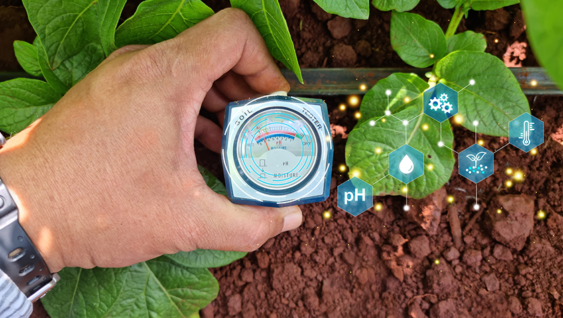
[00:12:32] Mick Goedeken: I don’t know what Alan’s gonna say, but my first thing that I look at is pH. pH is the driver of every nutrient. And if our pH isn’t right, we can’t get all of the nutrients out of the soil.
So to me, that’s the most important thing that we look at. And so that’s the very first thing I look at.
[00:12:49] Alan Meijer: I agree, same thing, and a lot of our reports have some colored bars. There’s a lot of things to look at. The pH isn’t this big thing in the center that will draw your eye to it, but it is by far the first thing I look at.
And I’m surprised at the number of conversations I’ve had with clients and they’re really curious about the result of some Bray phosphorus or something else, and I’m staring at a pH number that’s way low. Compared to what I’m used to seeing in that area. And I said, what about your pH? Oh, yeah, okay. But right now I wanna know about this.
I’m like, no, really? Do you guys apply lime? Well, we’re gonna apply some lime. I mean, we’re talking, it’s two points off. It’s in the low fives. When I expected it to be in the upper sixes, let’s say, for that area. And maybe there was a reason at that time for that client to be hung up about a certain reading, but it was clear that th wasn’t on his mind and it really needed to be addressed.
So, like Mick said, it drives the availability of so many of these nutrients.
[00:13:54] Mike Howell: That’s the exact way I would’ve answered that question. I always wanna look at that pH first because it is so important to all the other nutrients. Every number on that report is important. They’re all gonna be telling us something we need to know.
But that’s the first thing I wanna look at. And I can’t tell you how many growers have told me when we look at a report, I can’t afford Lyme. I. Put out my nitrogen, my phosphorus, my potassium. I can’t afford lime this year. And my answer to that is, if you can’t afford lime, you can’t afford to be farming.
We need to make sure we get these pH issues right to start with.
[00:14:26] Alan Meijer: And if I could add onto that, you remember Oscar Ruiz, you’ve had him on as a guest before?
[00:14:31] Mike Howell: Oscar was our very first guest ever on the Dirt.
[00:14:34] Alan Meijer: Yeah, that’s right. And he’s still with Waypoint. He’s based in Memphis. And I was talking to him yesterday and one thing that he, and possibly Mick and I will be looking at in the coming year or years is testing Lyme lime quality because we feel there’s a chance that some clients aren’t paying attention to the quality of Lyme that they’ve got and how that affects when they look at our prescription, our recommended amount of Lyme if they’re not taken into account.
Both the CCE and the quality. So let’s say, I mean, different states have a different term for it. Effective neutralizing value effective CCE, different ENV, whatever. If you’re going to be considering pH to be so important and Lyme to be important, we need to be aware of how effective that Lyme is that we’re using and how to adjust and compensate for that.
[00:15:30] Mike Howell: Alan, while we’re on this subject, we’ll throw this one out there because it’s a question I get asked all the time. What about Pelletized Lime? Is that something we can use to help get these phs back where they need to be? I know my opinion on this, but since y’all are the experts, I’ll ask y’all, what’s your opinion on Pelletized Lime?
[00:15:46] Alan Meijer: I don’t know if I have an opinion on it, to be honest with you. I’ll punt it over to Mick. I think we have high quality lime in the east, so it’s not something that I’ve seen guys even dabble in, per se. I’ve dealt with it more on the homeowner level, obviously, and usually I think the recommended amount is you need to increase.
Maybe 10% to account for that hell nature. But really, Mick, I don’t know if you’ve got a different opinion on it.
[00:16:12] Mick Goedeken: My opinion is ag lime is where we need to start. Now if we get pH I’m gonna use a a corn belt example. Our soils in the corn belt are not naturally acidic like Alan’s are, and we’re driving that acidity through nitrogen use using nitrogen based fertilizer.
So if we can get our phs right with ag lime. Then come in with maintenance levels of pelletized lime. I think we can do that and manage it as far as getting our PHS corrected with a Pelle line. We can’t do it. We can’t apply enough because it becomes way too costly to try to do that.
[00:16:53] Mike Howell: Mick, that’s exactly what I’d seen over the years.
It takes a little bit longer for that pelletized line to neutralize that acidity, and we just can’t get enough of it out there cost effectively enough to make it justified. I’ve got another question. This is gonna be my last question for you guys. We’ve talked a lot about making sure we’re applying these nutrients at the right rates.
Is there a nutrient that y’all are seeing that people are under applying or over applying based off of the data that y’all are getting in through these labs?
[00:17:20] Alan Meijer: I don’t know exactly how to answer that question. We’ve talked a little bit about the trends that we’ve seen, but I did look at some data yesterday.
I was asked to provide some for our client, so it covered two states and a number of locations, let’s say. And it was interesting, the phosphorus in the one state, there was a steady increase over the last five years, six years. In the average phosphorus test level and in the other state. For the first three years, it was a steady increase and it dropped over the next two just as substantially.
I looked at that last night, wasn’t able to take a deeper dive into it. I would need to think about where that P is coming from, from poultry litter or whatever. Certainly in the east, we do have a lot of poultry in North Carolina, Turkey and chicken, so it’s worth a harder look at by me for sure.
[00:18:10] Mick Goedeken: I would kind of agree with Alan.
Maybe we’ve seen a shift with the use of PHI taste in hog’s diet, and these guys, for years, they were putting on hog manure for the phosphate, and now we don’t have that phosphate in the hog manure. So now we started to see a little bit of a slip in the phosphate values and they realized, oh no. Now I’m starting to see that slip.
I’ve gotta apply some commercial fertilizers in that case. The other one that I can think of besides, we’ve talked about potassium a little bit, Alan mentioned sulfur. I think we’re doing a better job today with sulfur than we have. In the last four or five years prior to that, I would say that sulfur was always the one.
I grew up in the Western corn belt in Nebraska. We’ve been using sulfur for my entire career, and before that 25, 30 years we’ve used sulfur and managed those sulfate deficiencies where it wasn’t till recently as you go east from Nebraska that we started using a lot of sulfur and started seeing those sulfur deficiencies.
And so I think that’s one that we’ve gotten better with. Are we there? A hundred percent? I don’t think so. I think there’s still a lot of sulfur deficiencies. As I drive across my territory, I’ll see a sulfur deficiency and shake my head and go, gosh, we just need to educate these people and help these people out.
[00:19:36] Mike Howell: Mick, that’s one nutrient we’ve spent a lot of time talking about over the last four years we’ve covered. Probably as much as we’ve covered any nutrient, I’m seeing the same thing. Sulfur deficiencies are pretty prevalent, but I think we are gaining on that problem. Guys, I really appreciate you taking time to visit with us today.
I think we’ve covered a lot of topics here. Is there any closing comments you have for our listeners before we wrap this episode up?
[00:19:58] Mick Goedeken: I would like to tell listeners we’re going into some tough times, some unknown things this coming year. Continue to do what you planned to do for the past several years.
Utilize those soil tests. Don’t change your sampling intensity. Stay the course because if you go backwards, it’s harder to come back forward.
[00:20:19] Alan Meijer: I agree and just wanna thank everyone for their business, and we’re adding more capabilities at Waypoint and Mick and I, Oscar, we’re excited to always help out those that want to call and ask questions.
It’s a great job and we’re just thankful to be a part of it.
[00:20:35] Mike Howell: Guys, once again, I really appreciate it. Listeners, thank you for tuning in this week, and if you’ll hang around for just a couple of moments, we’ll be right back with segment two. Farming Isn’t farming without questions, and now there’s a place to go for answers.
At economics. An entire team of agronomists is waiting and ready to help for free. No question is too big or too small. Visit Nutrien-ekonomics.com. And submit your question with the ask an agronomist feature.
Listeners, welcome back for segment two where we ask one of our agronomists a question of the week. Today. We’ve got Lyle Cowell in the studio with us. Lyle welcome back.
[00:21:14] Lyle Cowell: Thanks again, Mike, for having me.
[00:21:16] Mike Howell: Lyle, it’s getting into the fall now, and a lot of people are thinking about taking these soil samples and making sure that the nutrients in the soil are what they need to be going into this next year’s crop.
The question this week is, how deep should I take my soil sample and does the crop that I’m intending to grow next year make any difference in the depth of these soil samples?
[00:21:34] Lyle Cowell: When you first mentioned this question, Mike, I think I said that I could give you any answer and it will be both right and wrong.
You can ask 10 people what the right answer is to soil depth for taking a soil sample. You’ll get different answers and they’re not necessarily wrong. Probably the bigger question is, why aren’t you taking soil samples to most farmers? So first step, take a soil sample. Do it properly, do it topographically, do all the good things in taking a soil sample.
When it comes to depth, there’s two risks I think. And honestly, over my career, I’ve taken thousands of soil samples, both in research plots and in farm fields, and there’s two mistakes a person can make, I think in terms of depth. One is to sample too shallow. To me, we’re trying to explore and measure the amount of nutrients that are available in the root zone of the crop that you are going to grow in your growing season, in your crops that you grow.
If most of the nutrients are taken up in the top foot of soil, top 25, 30 centimeters of soil. Take your soil sample from that depth. You might want to split it. You might wanna split that into two different depths, but think about that. That what we’re trying to do is measure the nutrients that are available to the crop, to the rooting depth that that crop may grow that might be different for a wheat crop, or compare that to a very deep rooted corn crop that might access deeper nutrients.
So don’t go too shallow. What is too shallow? I don’t think that there’s any crop that should be depending on only a. Sample of only 15 centimeters, six inches. We need to go deeper than that. We know that almost any crop will access nutrients deeper than that. Too shallow means something less than 25 or 30 centimeters.
I think you might wanna split that. There might be a more concentration of nutrients like phosphorous or potassium near the soil surface, and you may wanna sample even deeper to access and measure the. More soluble nutrients like nitrates and sulfates to greater depth. But I think that’s our starting point now.
Can you sample too deep? You actually can, if your crop takes up 90% of its nutrients in the top 30 centimeters of the soil. Then why would you sample to 120 centimeters? Because if the crop is never going to root there, you might be measuring things that you’re not going to use anyway, and that happens a lot.
There might be an accumulation of nitrates and sulfates a hundred centimeters down or 70 centimeters down. If the crop can’t use it, it just doesn’t matter. So think about that in terms of going too deep. The other problem with going too deep. Is it just gets hard. It’s hard to do a good sample to a greater depth than mistakes are made.
People mix up their sample depths. They don’t actually get to the depth they say they did. There’s more mistakes made when it gets hard to do the sampling. I think within that context of being too shallow. And too deep. I think we can find a happy medium for most people to get it mostly right. And again, there’s no perfection in soil sampling.
We just need to be mostly right in getting a good sample.
[00:24:37] Mike Howell: Great information Lyle, and wanna encourage everybody. If you haven’t taken a soil sample in the last two or three years, make sure you get out there and get those soil samples this fall so you know what’s in the soil for next year. Listeners, we wanna thank you for tuning in again this week.
As always, if you have any questions about anything we’ve talked about, you can visit our website. That’s Nutrien-ekonomics.com. Until next time, this has been Mike Howell with the Dirt. Hey, guys, if you like what you heard today, do us a favor and share this podcast with someone else. It could be your neighbor.
Your friend, your crop advisor, or whoever you think would enjoy it. Your support helps ensure future episodes. So please like, subscribe, share, and rate the show wherever you’re listening from.