



Six Reasons Farmers Should Apply More Potassium Today
Summary of what you'll find
- Potassium drives yield and profitability
- Potassium removal is exceeding application
- High-yield years accelerate potassium removal
- Potassium deficiencies are on the rise, requiring higher fertilizer rates
- Deficiencies are driving greater yield responses to potassium
- Application recommendations are increasing
- Your potash strategy should evolve
Potassium has always been essential to crop production, but its role in modern agriculture is becoming more critical every year.
Across North America, farmers are removing more potassium than they’re replacing, steadily drawing down soil reserves and increasing the risk of yield loss. At the same time, higher yields and more intensive production are increasing the demand for this nutrient.
The result is a widening gap between potassium removal and replacement; a gap that’s driving increased potassium application across North America and reshaping how fertility programs are managed.
1. Potassium drives yield and profitability
Potassium plays a critical role in crop performance. It regulates water use, supports enzyme activation, improves standability, and enhances crop quality.
When potassium levels are sufficient, crops are better equipped to manage stress and disease, use water efficiently, and convert nutrients into yield. Without it, crops cannot reach their full yield potential.
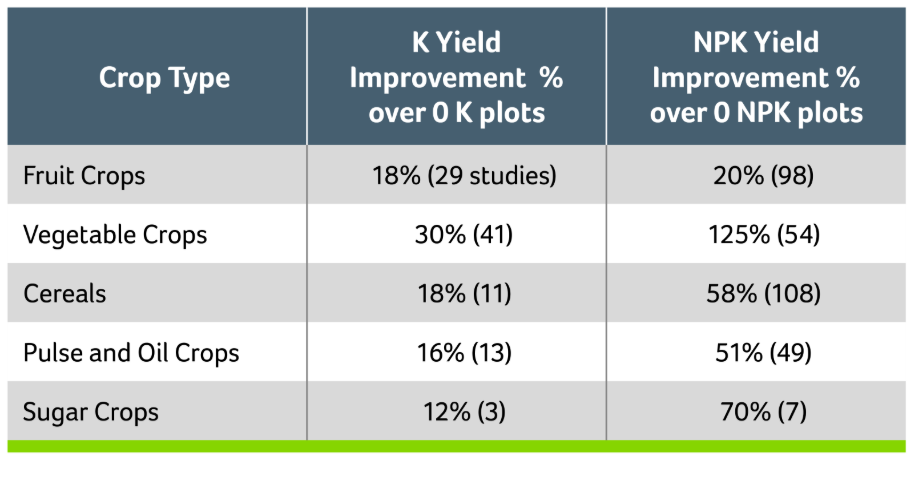
A recent review study found that potassium can increase vegetable crop yields by 30 percent and fruit and cereal crop yields by 18 percent, reinforcing its role in maximizing yield potential and profitability (Table 1 – center column).1
In more real-world terms, adding potassium (K) into a full nutrient management program (NPK) consistently supports even higher yields due to crop demand being met by a variety of sources (Table 1 – right column).
2. Potassium removal is exceeding application
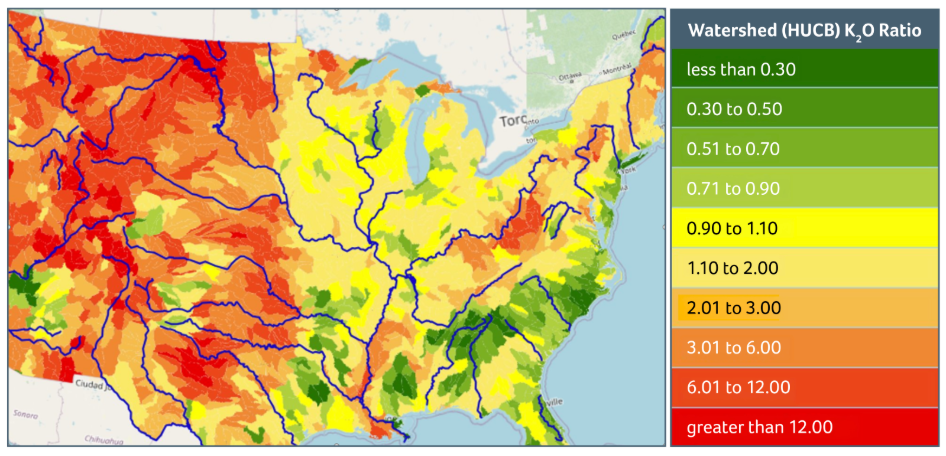
Today, potassium removal is outpacing application in most areas of the U.S. and Canada (Figure 1 – red and yellow areas below).2 This imbalance has drawn down soil reserves of potassium over time, creating deficiencies and increasing the need for potassium applications across much of North America, particularly in areas with intensive ag production (e.g., Corn Belt).
3. High-yield years accelerate potassium removal
As yields continue to rise, this imbalance between removal and application becomes even more pronounced.
Higher yields remove more potassium per acre, accelerating our drawdown of reserves (Table 2). The table below shows the total tons of potassium oxide (K2O) removed from the grain in each Corn Belt state in 2024 and 2025 (corn only). In areas that had more corn acres planted and higher year-over-year corn yields, potassium oxide removal has been particularly high. This has resulted in several hundred short tons of potassium oxide removed from the soil at harvest (see Minnesota for an exceptional example of year-over-year changes in potassium oxide removal).
As yields continue to increase, our application rates must increase to keep pace.
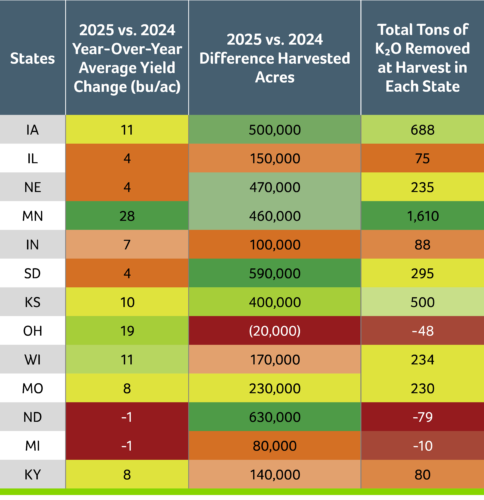
Table 2: State-level yield differences from 2024 to 2025 and the amount of potash applied.³
4. Potassium deficiencies are on the rise, requiring higher fertilizer rates
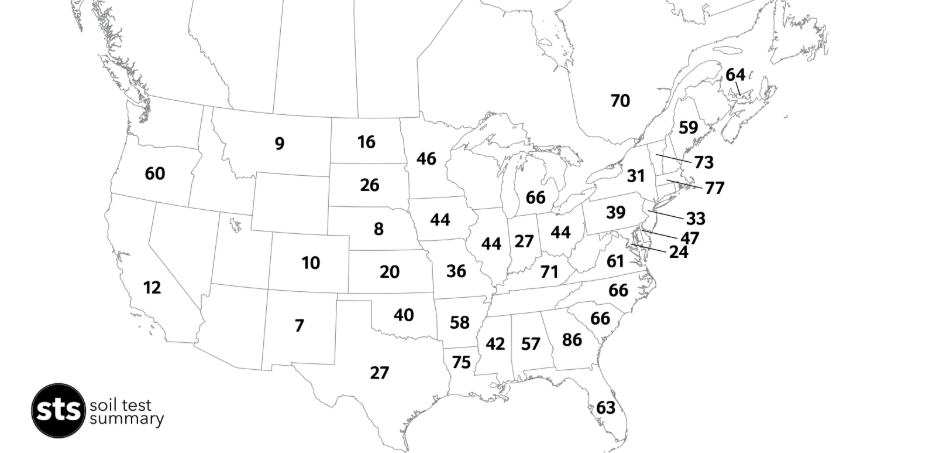
More and more soils across North America are testing below the critical level for potassium (Figure 2). As soil test levels decline, higher application rates are needed to rebuild and maintain soil fertility.
In the figure below (Figure 2), the bold, black number in each state or province indicates the percentage of soil samples in that area that returned a value below the established critical value, indicating potassium deficiency.
5. Deficiencies are driving greater yield responses to potassium
As soil test levels decline, yield response to fertilization increases. In these situations, potassium applications are more than beneficial; they’re necessary to maintain yield and crop performance.
6. Application recommendations are increasing
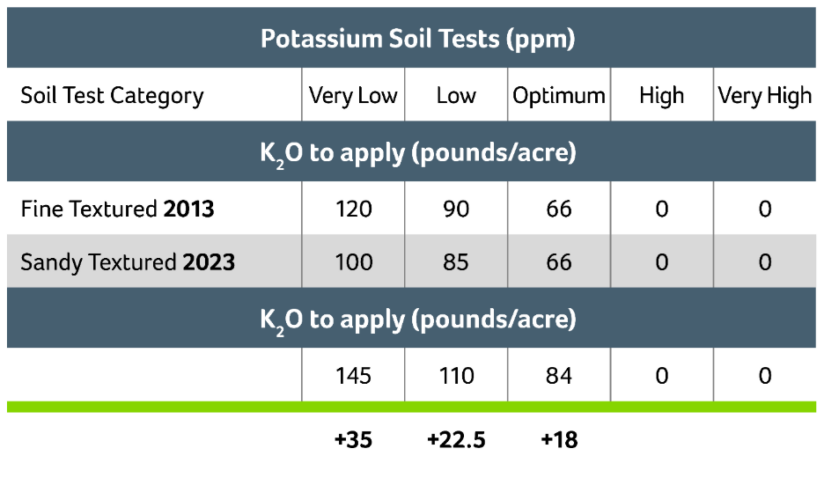
University extension recommendations are already adjusting to reflect these growing deficiency trends and higher yields. Revised potassium guidelines are calling for higher potassium application rates to support increased removal rates and higher yield potential.
See recent updates to the Iowa State soybean recommendation below as an example, with an increase in applied potassium between 2013 and 2023.
Your potash strategy should evolve
As potassium removal continues to outpace replacement, the risk of yield loss will only increase. If we don’t replenish what we remove, we’re leaving yield in the field and money on the table.
The gap between removal and replacement isn’t just a trend; it’s a signal that fertility strategies and application rates need to evolve to meet modern demands and protect long-term soil productivity.
Learn more about the growing demand for potash and the important role potassium plays in crop production and yield potential:
- Episode 36: Everything You Need to Know About Potash
- Episode 8: Where Has All the Potassium Gone?
- IPNI NutriFacts – Potassium
- The Growing Demand for Potash: Time to Replenish
- The Importance of Potassium Fertilizer
Sources:
1 Ishfaq, M., Wang, Y., Xu, J., et al. (2023). Improvement of Nutritional Quality of Food Crops with Fertilizer: A Global Meta Analysis. Agronomy for Sustainable Development, 43(74).
2 The Fertilizer Institute. Nutrient Use Geographic Information System.
3 USDA. (2025). Crop Production (August 2025). National Agricultural Statistics Service.
4 The Fertilizer Institute. Soil Test Summary Tool.
5 Mallarino, A. P., Sawyer, J. E., Barnhart, S. K., & Licht, M. A. (2023). A General Guide for Crop Nutrient and Limestone Recommendations in Iowa. Iowa State University Extension and Outreach.