



Sulfur Nutrition in Midwest Soybeans
Sulfur deposition from rainfall has fallen dramatically across the Midwest from the mid-1980s to today. In the mid-1980s, farmers across much of the Midwest could rely upon more than 22 pounds of free sulfur from rainfall every single year. Today, most of the Midwest now receives less than seven pounds annually as sulfur is being scrubbed from emissions at energy production facilities. This means that many of the crops being produced today are more likely to experience sulfur deficiency than they were three decades ago.
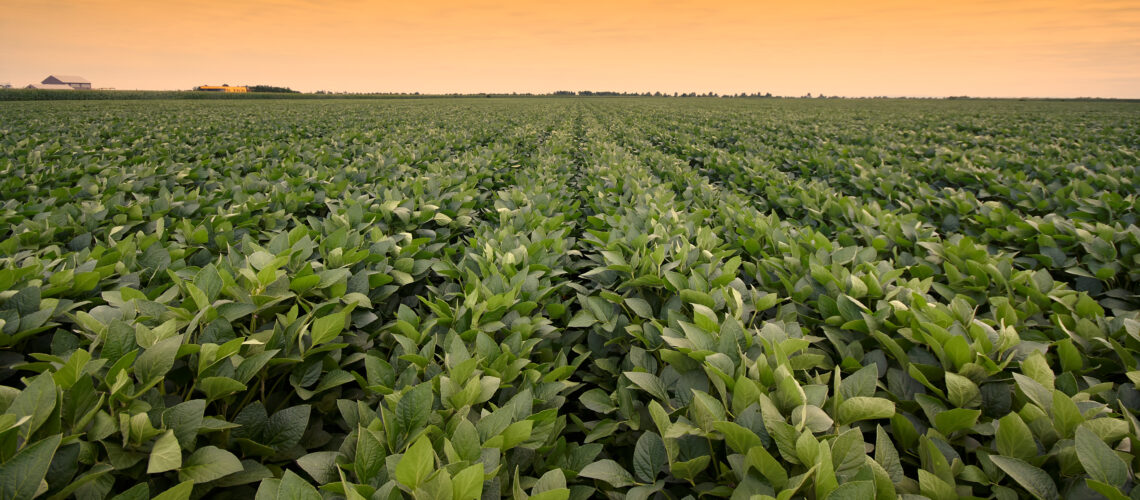
In an interview with Agronomy and Farm Management, Dr. Robert Mullen, Ph.D., CCA, CPAg, discusses sulfur deficiencies. One of the crops that can experience sulfur deficiency today is soybeans. Traditionally, sulfur deficiency was thought to occur primarily on coarse-textured, sandy soils that were low in organic matter (those soils are still much more likely to experience sulfur deficiency today, but now we can observe sulfur deficiency on finer-textured soils also). Sulfur deficiency was also much more likely to occur on high sulfur using crops like alfalfa, but soybeans are not a crop that are high sulfur users. In fact, a 60-bushel soybean crop only takes up around 18 pounds of sulfur per acre and removes about 11 pounds per acre when the grain is harvested.
Research conducted by Purdue University over the last few years is identifying soybean response to sulfur. In some cases, yield responses are as high as 13 bushels per acre. Obviously, not every field is going to demonstrate this type of responsiveness. Dr. Shaun Casteel recommends that soybeans that have a nitrogen to sulfur ratio approaching 18:1 (or higher) are more likely to respond to sulfur fertilization. Sulfur fertilization rates are still relatively low with recommendations ranging between 10 to 20 pounds of sulfur per acre.
Take home message – keep an eye on your soybeans. While we have not historically focused on sulfur nutrition in soybeans, it is a crop that is beginning to show some responsiveness.


Changes in sulfate deposition from 1985 to 2017 (measured by the National Atmospheric Deposition Program).