

Commodity Prices
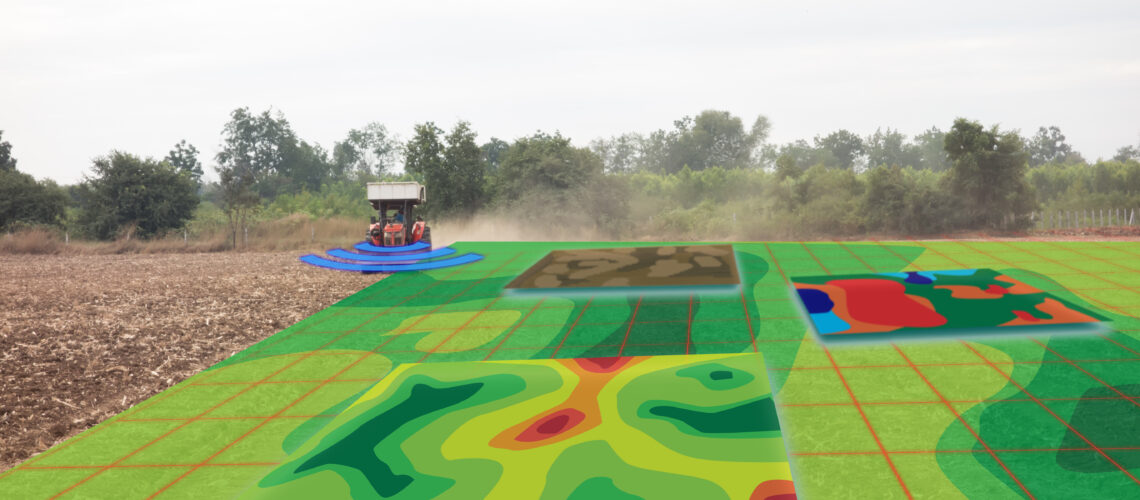
Infrared in tractor with high definition soil mapping, deep soil scan during a tillage pass.
Alan Blaylock, Ph.D.

With the fast pace of technology advancements in agriculture, farmers can find great value in systematic on-farm testing of new products or practices. The universities have been the backbone of agricultural research and education in the United States, but they can’t possibly test every new product or practice locally. Routine testing on the farm can provide the farmer local results with specific products to help make better decisions for the farmer’s own operation and conditions.

A recent University of Minnesota Extension release describes how on-farm research is being used to fine-tune the University’s nitrogen recommendations for specific soils and conditions. One of the notable observations of these on-farm trials is that optimum nitrogen rates for a “corn-on-corn” rotation seem to be increasing, while optimum nitrogen rates for corn after soybeans is remaining stable. The trials also confirmed that the University’s Maximum Return To Nitrogen (MRTN) recommendations generally provide reasonably good estimates of nitrogen fertilizer need, although the recommendations for corn after corn may need some adjustment for higher yielding hybrids. You can read more about the Minnesota on-farm trials and nitrogen recommendations.

Farmers can conduct their own quality trials by keeping the variables limited and using proper techniques. There are lots of great resources to get help design on-farm trials. There are collaborative networks like Minnesota’s Agricultural Fertilizer Research and Promotion Council (AFREC), which organized and conducted the trials described above with the help of independent agronomist Matt Wiebers. Most land-grant universities have published information on conducting on-farm trials, including proper replication and even some simple statistical analysis. Proper trial design assures your trials properly account for field variations. Of course, treatments should be replicated so statistical probabilities can be established. Cooperative Extension staff, consulting agronomists, or your Nutrien agronomy team can also help ensure your trial is properly conducted.

Today’s modern equipment with yield monitors and satellite guidance systems can greatly simplify on-farm trials. Most growers will have the basic equipment to do their own testing and get answers to their specific questions on a particular product or practice. It’s a great tool to get the answers you need for your farm and validate results of others’ research.

Other resources and how to conduct on-farm research:

On‐Farm Research: Experimental Approaches, Analytical Frameworks, Case Studies, and Impact. 2019. P. M. Kyverga. Agron. J. 111: 2633-2635.
https://doi.org/10.2134/agronj2019.11.0001
https://acsess.onlinelibrary.wiley.com/doi/full/10.2134/agronj2019.11.0001

On-Farm Research. USDA National Agricultural Library. https://www.nal.usda.gov/

A Practical Guide to On-Farm Research. 2008. R.L. Nielsen, Purdue University. https://www.agry.purdue.edu/CCA/2008/Proceedings/NielsenResearch.pdf

Some examples of on-farm research networks:

Nebraska On-Farm Research Network

Purdue Collaborative On-Farm Research

South Dakota Soybean On-Farm Research Program

+
ROI Icon
ROI Tools
One-of-a-kind data tools for free.
Podkast Icon
The Dirt PodKast
Season 5 Out Now. Listen today.
Agronomist Icon
Ask An Agronomist
Ask the experts. Free, No obligation.
Subscribe Icon
Subscribe Now!
Monthly updates from our experts.
Subscribe Icon

Stay Ahead of the Season

We respect your privacy. Unsubscribe any time. Don’t show me this again