



Balancing The Benefits And Risks Of Seed-Placed Nitrogen
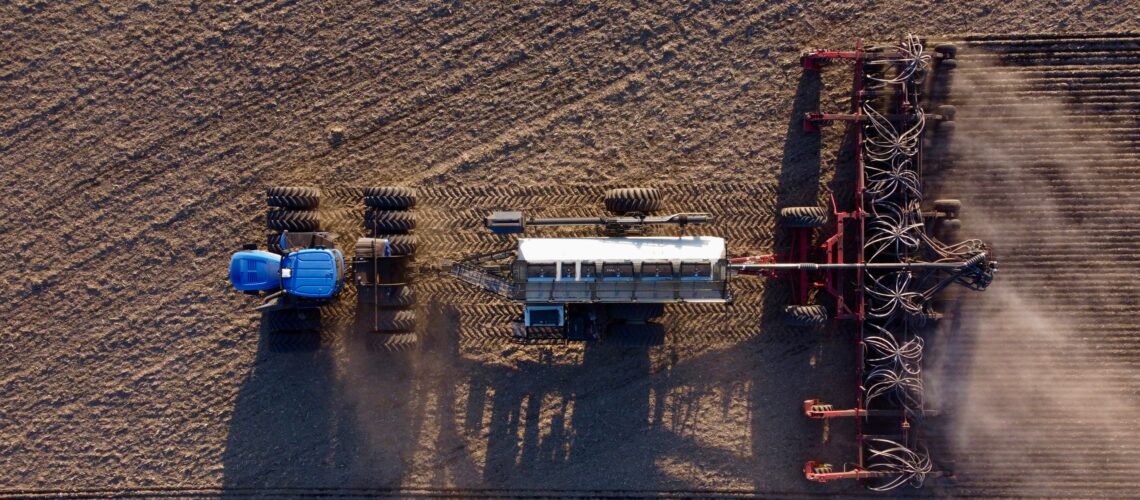
This spring, if you are thinking about placing nitrogen with your seed at planting, be sure to consider all the field factors that could impact your crop yield potential. Seed-placed nitrogen in cereals and canola can offer a great opportunity to double up activities, saving time and labor. But you need to consider row spacing, soil conditions, moisture content, and more to balance the benefits and avoid potential damage to seedlings.
Choose a relevant row width for seed safety
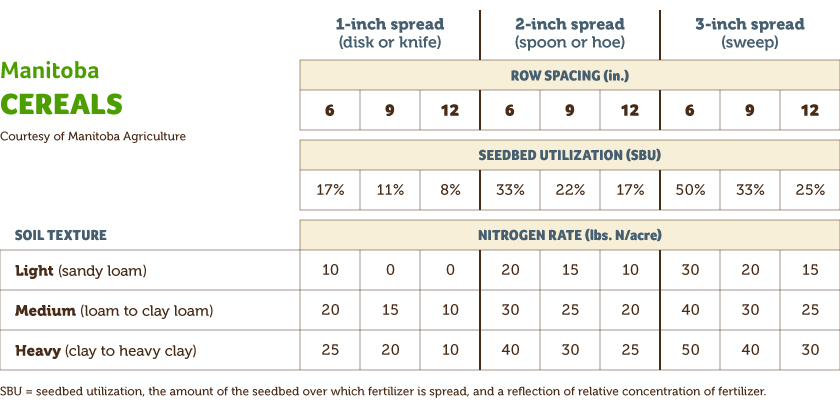
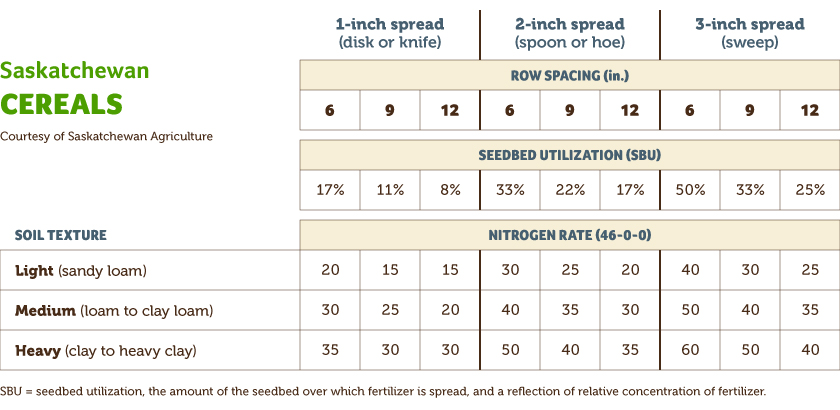
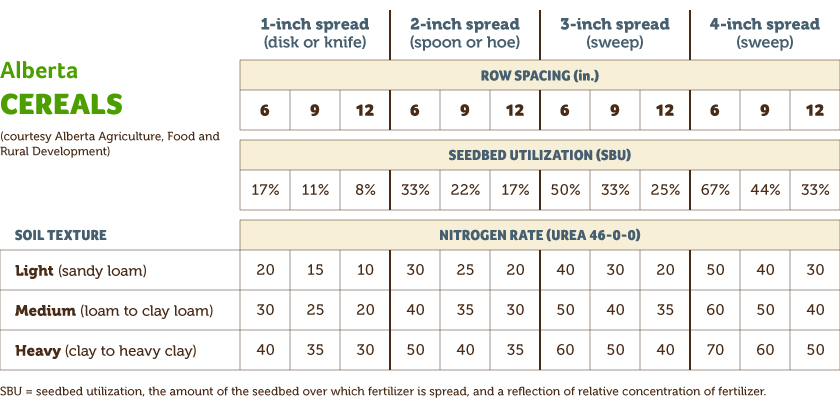
One of the most important factors to consider for safe in-furrow fertilizer use is the appropriate row spacing for your soil texture, moisture, growing conditions, and planting equipment. The guidelines for cereals and canola vary across the Prairies and are based on having good to excellent soil moisture levels at the time of planting. Soil conditions that tend to concentrate salts or stress the germinating seed increase the potential for seed damage. In general, lighter, sandy soils under dry moisture conditions have lower recommended seed-safe fertilizer rates than heavier clay soils.
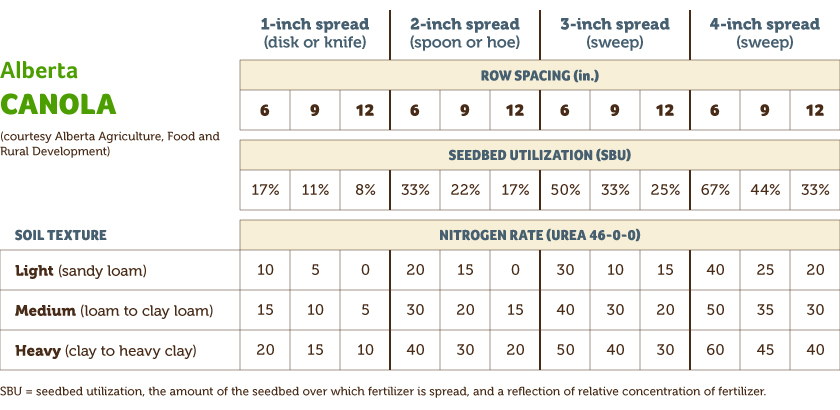
The following tables outline safe rates of nitrogen (as urea or 46-0-0) by row width for cereals and canola in Manitoba, Saskatchewan, and Alberta. All nitrogen rates are in pounds of actual nitrogen per acre. Divide the rate shown by 0.46 to calculate pounds of urea per acre.
Manitoba (courtesy Manitoba Agriculture)
Cereals
Canola

Saskatchewan (courtesy Saskatchewan Agriculture)
Cereals
Canola
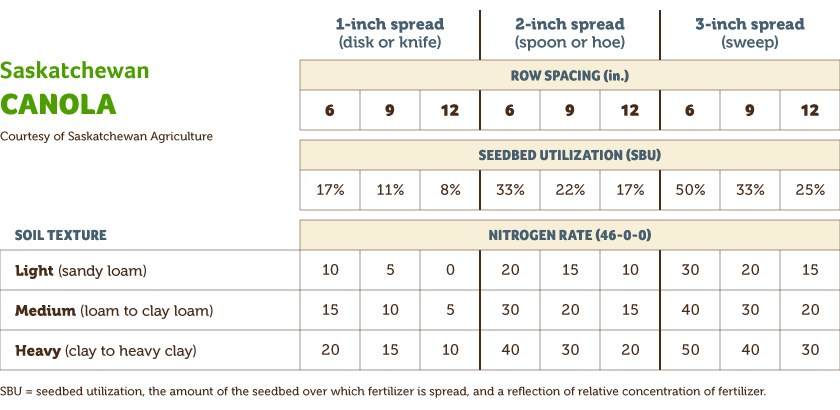
Alberta (courtesy Alberta Agriculture, Food and Rural Development)
Cereals
Canola
Consider local field conditions
As a salt, fertilizer can impact the seed’s ability to absorb the water needed for germination and growth. That’s why many additional considerations for safe-seed placement of fertilizer are related to field and environmental conditions.
Seedbed utilization
The type of planting equipment and seed opener used will alter the amount of direct contact between the seed and fertilizer. Seedbed utilization (SBU) provides guidance for fertilizer rates based on the amount of space between seed and fertilizer within the seed row. Seedbed utilization equals the seed-row width divided by the row width. As SBU increases, so does the safe rate of in-furrow fertilization that can be applied.
Salt index
Fertilizers vary in the amount of salt strength, and the salt index is a reliable measure used to determine the potential impact of a specific fertilizer material placed near seed. Coated fertilizers like ESN Smart Nitrogen offer significantly greater safe rates because the nitrogen is released over time. Find out more in this salt index webinar hosted by Dr. Robert Mullen.
Seed stress
There are several other factors that place additional stress on seeds that could increase the likelihood of damage from seed-placed fertilizer. These include seeding too deep, planting into cold soil temperatures and low soil moisture, and using poor quality seed.
For more information or specific recommendations for your field conditions, contact your local agronomist or crop advisor, or refer to these additional resources.
Resources:
Guidelines for Safely Applying Fertilizer with Seed Manitoba Agriculture
Guidelines for Safe Rates of Fertilizer Placed with the Seed Saskatchewan Agriculture
Alberta Fertilizer Guide Alberta Agriculture, Food and Rural Development