



Choosing The Right Liquid Nitrogen Fertilizer: Solutionized Urea Versus UAN

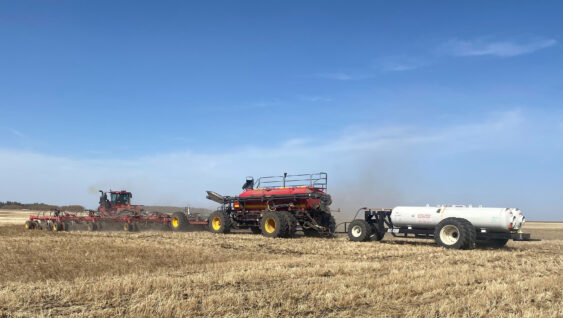
Liquid fertilizers that contain nitrogen have become increasingly popular in the marketplace as they can be used throughout the growing season to drive high crop yield and quality. Derived from common nitrogen sources, liquid fertilizers can be blended with other compatible ingredients (e.g., nitrogen stabilizers, humic acids, etc.) to create grower customized products (Figure 1). UN32 (32-0-0) is an example of a popular liquid fertilizer that has a high percentage of nitrogen. Some retailers have created their own liquid nitrogen products by dissolving urea into water to sell as a competitor product to UN32. Let’s take a closer look at the two approaches (dissolved urea versus finished UN32).

Challenges With Solutionized Urea
Solutionized urea can present several challenges to the agricultural retailer and grower alike. Consider the following factors when choosing the right liquid fertilizer for your farm:
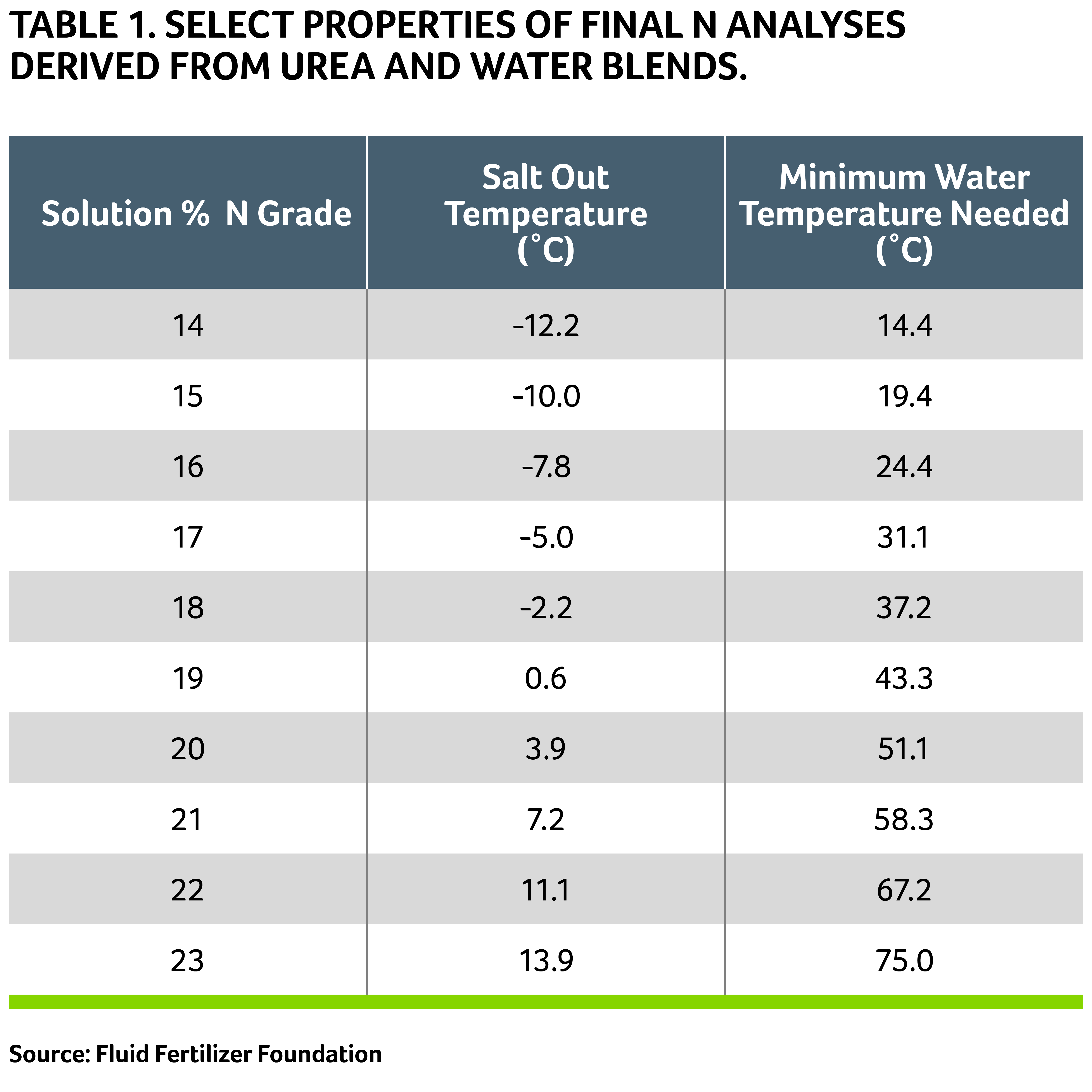
- Analyses (percentage of nitrogen) can change based on the proportion of urea and water that are mixed together (Table 1). Careful mixing must occur to ensure batch-to-batch variability in the finished solution matches grower expectations.
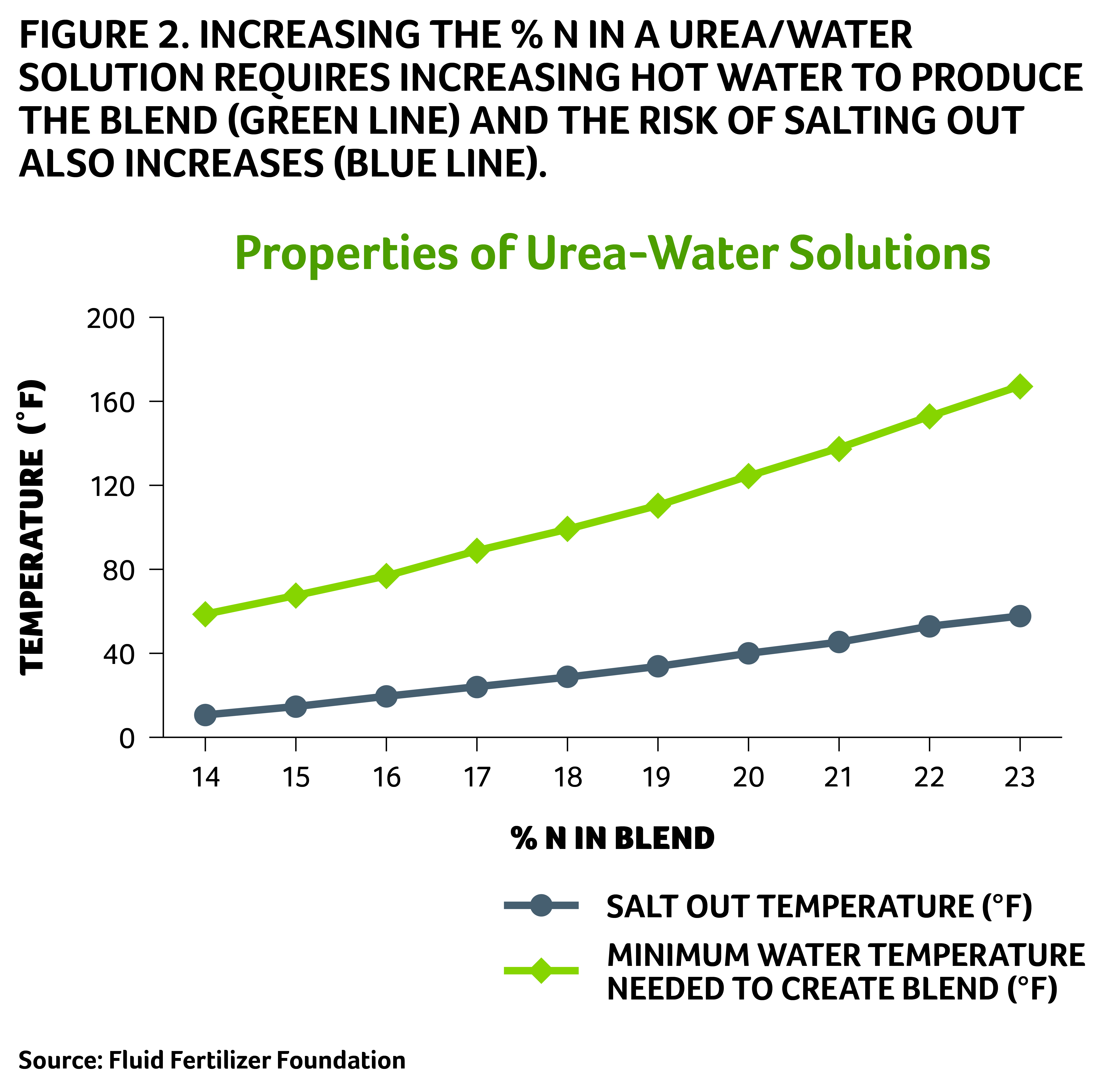
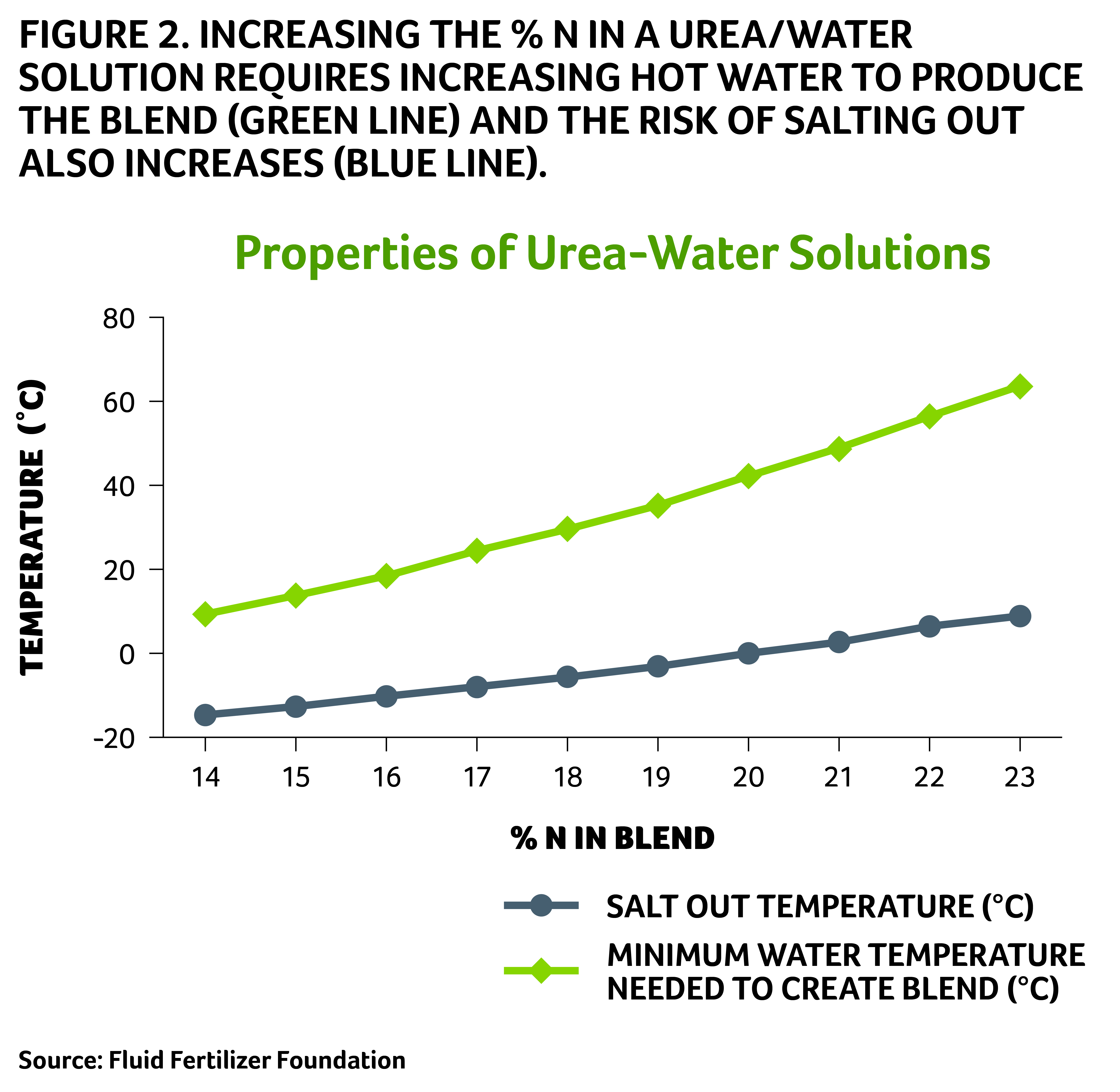
- Increasing the final nitrogen analysis of a urea:water solution (percentage of nitrogen) requires a relative proportional increase in the hot water required in the production process (Table 1, Figure 2). Careful monitoring of production conditions must occur to make sure the urea is dissolving in the correct water temperature. Under ambient to cool conditions, finished solutions of urea and water with a high percentage of nitrogen are hard to achieve relative to the 32 percent nitrogen contained in UN32.
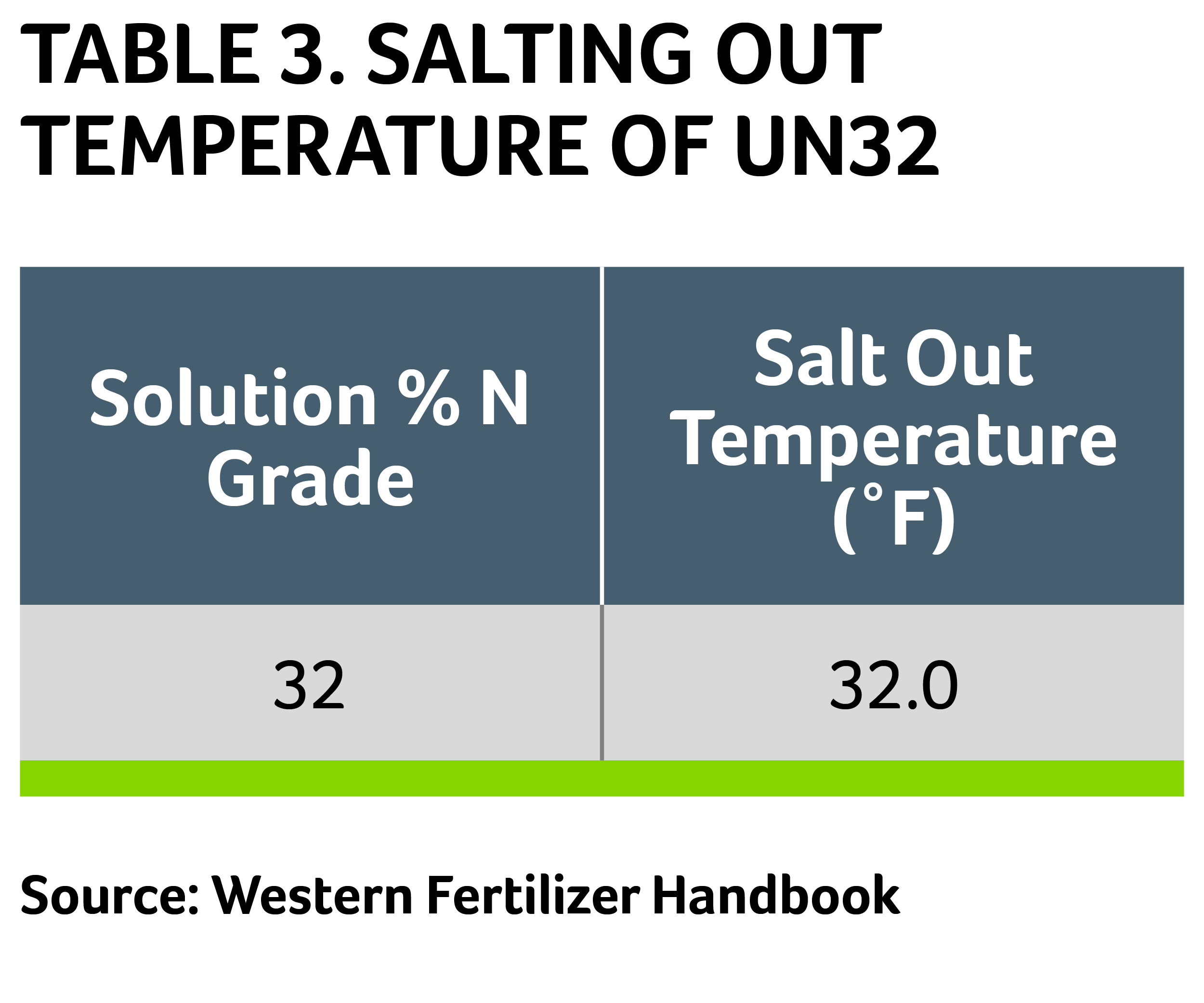
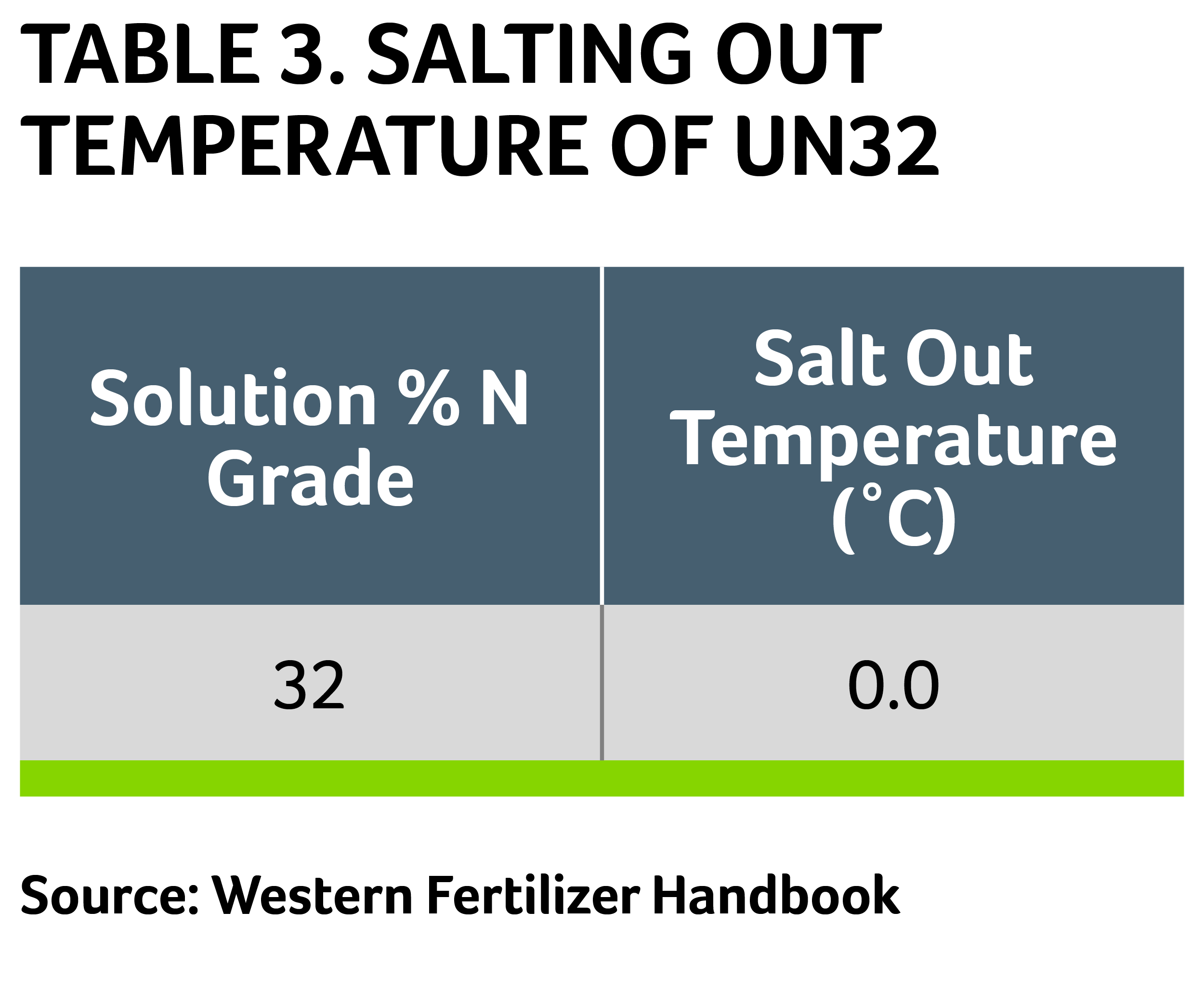
- Increasing the final nitrogen analysis (percentage of nitrogen) of the finished urea:water solution results in a proportional increase of the maximum salt out temperature where the urea falls out and separates from the water base. It’s important to note that at high analysis, the salt out temperature occurs under cool to ambient temperatures (Table 1, Figure 2). Careful monitoring of environmental conditions during extended product storage must take place to ensure the product does not separate out relative to UN32, which has a salt out temperature of 0°C/32°F (Table 3).
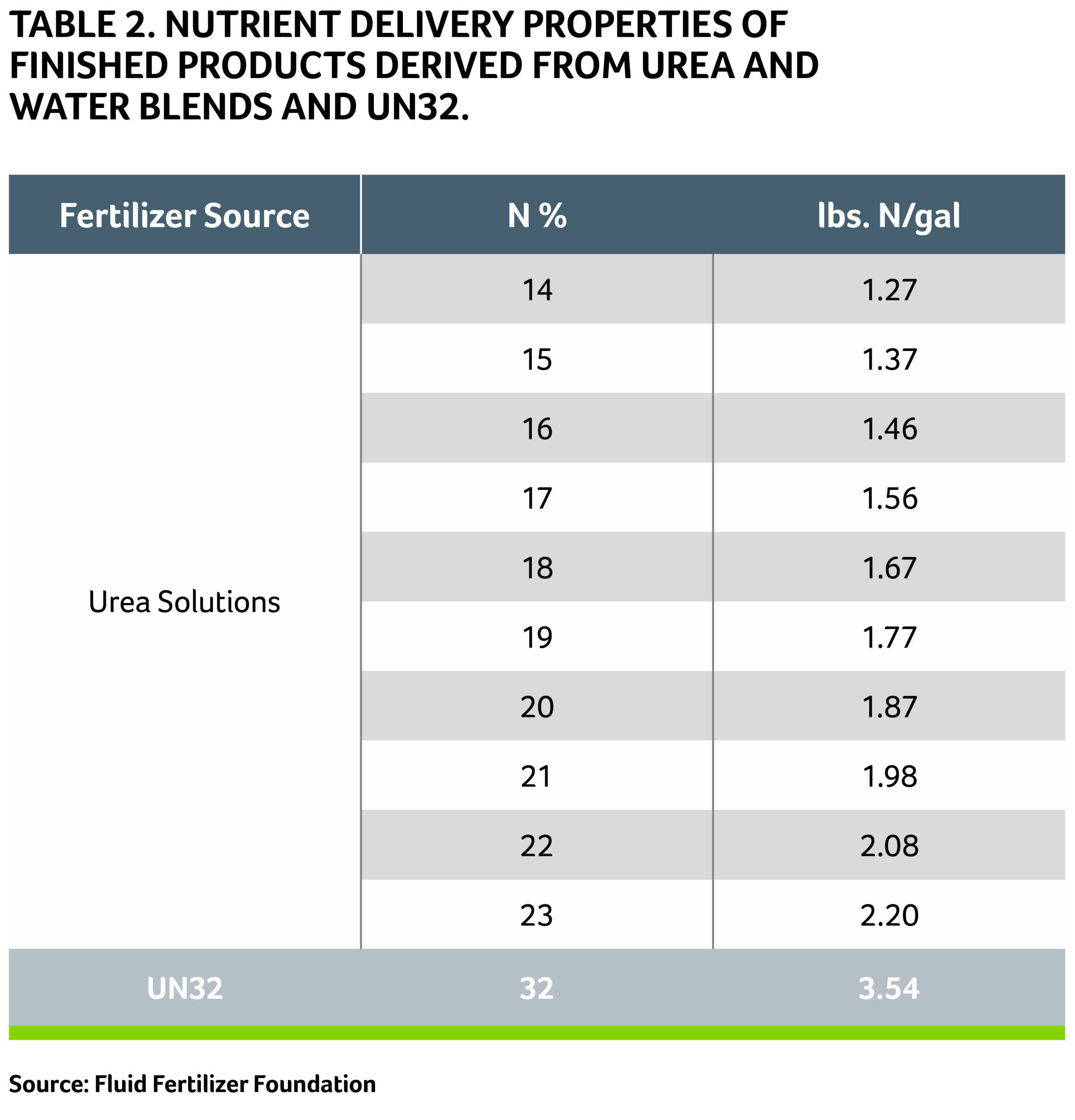
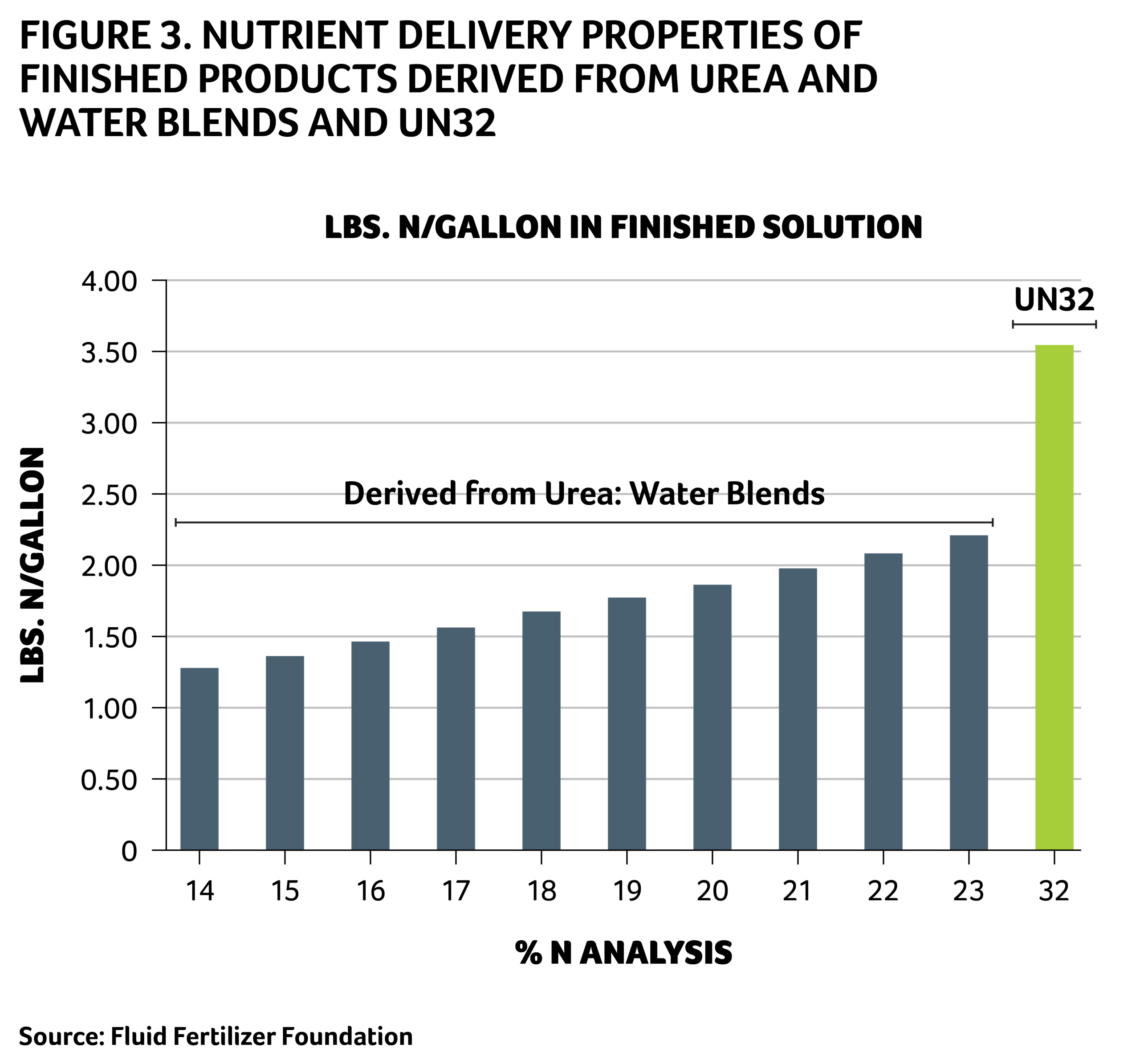
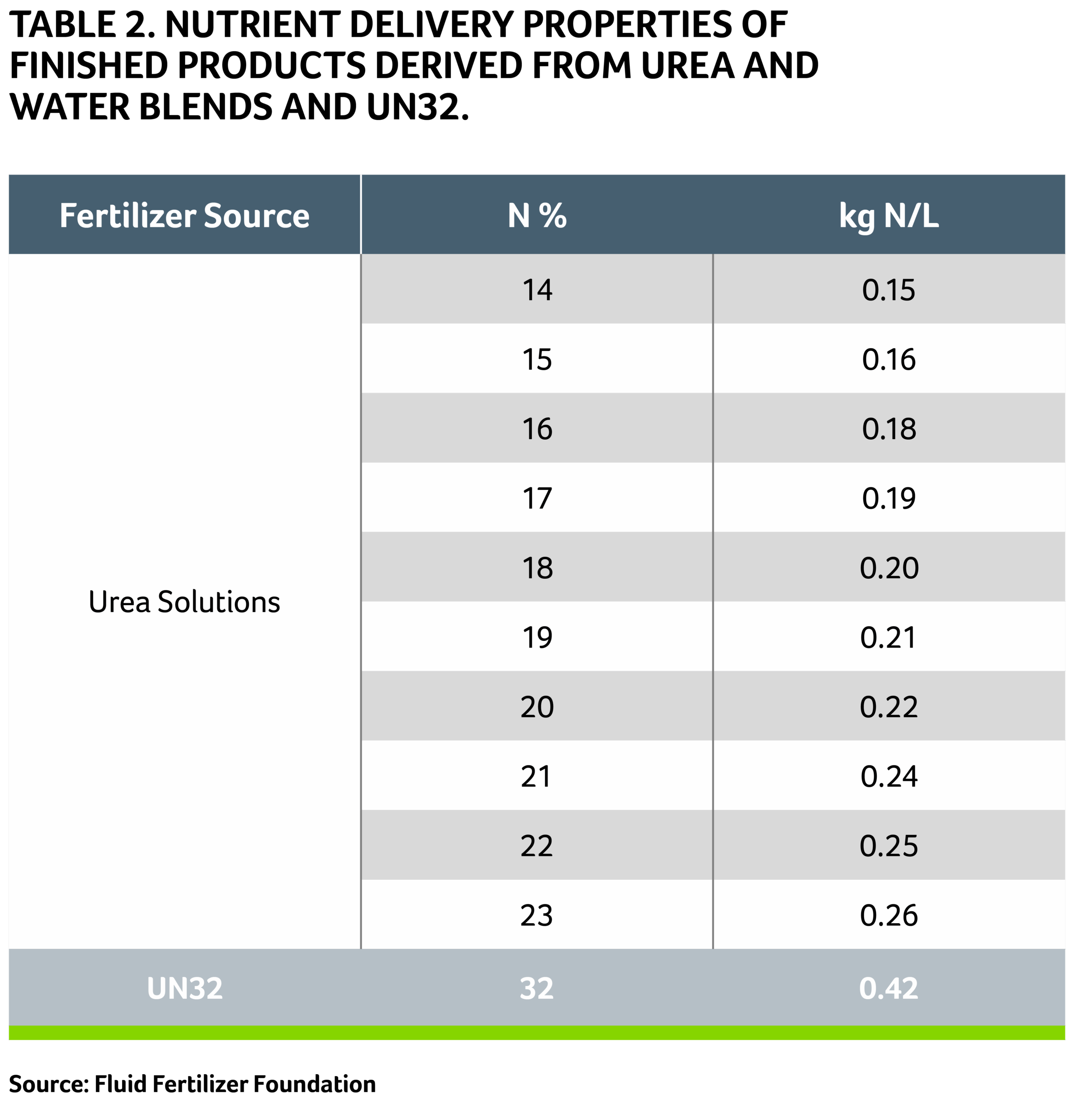
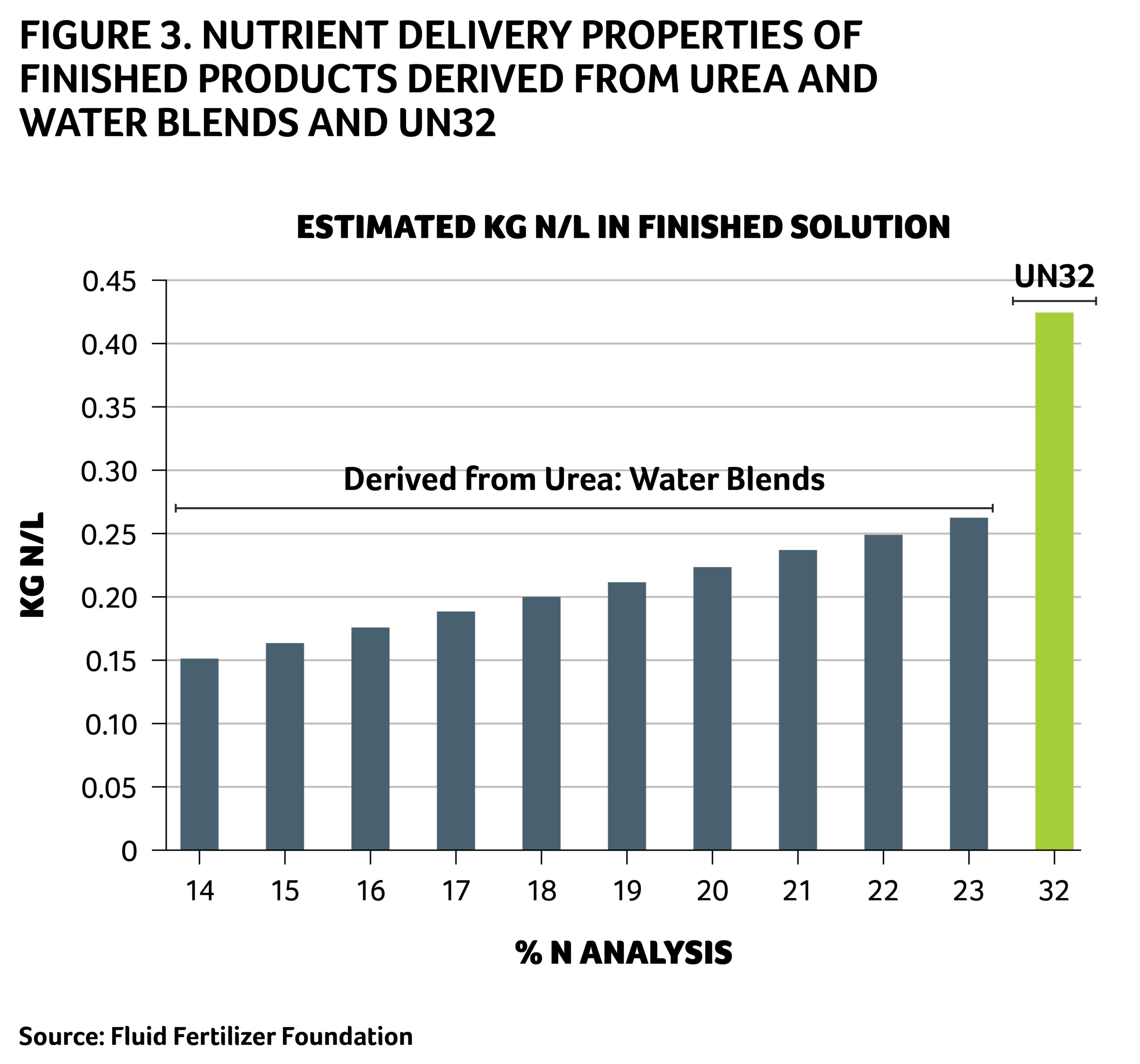
- When you dissolve urea into water, you have urea in water, a different solution from UAN. Whether applied as a granular or liquid fertilizer, urea is not immediately available to the plant but must be transformed in the soil by the urease enzyme to plant-available ammonium. The process proceeds rapidly after urea is applied and is usually complete two to three days after application. Ammonium is subsequently transformed by microbes to nitrate, the nitrogen form from which most plant-available nitrogen is taken up. Soil temperature, moisture, biology, and chemistry control these enzymes and microbial processes and therefore the rate of the reactions. UAN solutions, on the other hand, are comprised of a mix of nitrogen forms with roughly 50 percent being urea-nitrogen and roughly 25 percent ammoniacal-nitrogen and nitrate-nitrogen, respectively, some of which are plant available immediately after application (nitrate and ammonium) and some which become plant available soon after application (urea). There are typically fewer pounds of nitrogen per gallon of finished material in urea:water blends compared to finished products such as UN32 (32-0-0) (Table 2, Figure 3). As a result, a grower must apply more dissolved urea product to meet the same nitrogen recommendation as UN32. The differences in final product application rates and costs need to be accounted for when comparing products on a head-to-head basis.
Select a Measurement

Advantages of UN32
UN32 is an engineered product that provides several advantages:
- A guaranteed analysis of material (32-0-0).
- UN32 has a relatively high lbs. N/gallon of finished product compared to urea:water solutions (Table 2, Figure 3).
- There is safety documentation to help guide product handling and blending decisions (MSDS and SDS resources).
- You can predict storage and blending properties of the material (Table 3).
Select a Measurement
Moving Forward
Liquid fertilizers have become increasingly popular in the marketplace and are prized for their application and blending flexibility. However, there are several considerations to make before choosing the right liquid fertilizer source to help eliminate any unforeseen production costs (i.e., high water temperature), reduce negative product performance issues (i.e., salting out), and provide optimized value to the grower (price per pound of nitrogen a gallon).
Explore more about the value of benefits of solutionized urea and finished UN32 with the following downloadable brochures:
Imperial Brochure Metric Brochure
Learn more about liquid fertilizers and what to consider when blending and handling these solutions today with the following eKonomics resources:
Latest Practices for Use of Liquid and Dry Fertilizers
Liquid Fertilizers – Compatibility And Safety
Liquid Fertilizer Mixing Compatibility – What You Should Know
Mixing Liquid Fertilizers and the Impacts of Your Water Source
Sources: