





Read Full Transcript
Mike Howell (00:08):
The Dirt, with me, Mike Howell, an eKonomics podcast where I present the down and dirty agronomic science to help grow crops and bottom lines. Inspired by eKonomics.com, farming’s go-to informational resource, I’m here to break down the latest crop nutrition research, use, and issues, helping farmers make better business decisions through actionable insights. Let’s dig in.
(00:38)
Well, hello again everyone, and welcome back to The Dirt. This week we’re broadcasting live from Tampa, Florida. We’re here for the Sulphur World Symposium. I’m pleased to have with me this morning two different guests, one you’ve met before. Dr. Alan Blaylock, Senior Agronomist with Nutrien. Alan, welcome back to The Dirt.
Dr. Alan Blaylock (00:55):
Thanks, Mike. It’s good to be with you again.
Mike Howell (00:57):
And our next guest is Ron Olson. Ron is with the Sulphur Institute and is helping to put on this symposium. Ron, if you don’t mind, introduce yourself to our guests and tell us a little bit about what you do.
Ron Olson (01:07):
Certainly, Mike. It’s great to have you and Alan with us in Tampa this week at the Sulphur World Symposium. This is an annual event for the Sulphur Institute. This year we have 120 guests attending the conference. Our last time together was 2019 in Prague, so we’re delighted to experience the energy everyone has about getting together again and picking up where we left off, but also learning some new things about sulphur and how the world’s events are impacting and shaping the sulphur market. It’s good to have you here, Mike and Alan.
Mike Howell (01:38):
Thanks Ron. It’s great to be here. If you would tell us a little bit about the Sulphur Institute and what the purpose of the Sulphur Institute is.
Ron Olson (01:45):
I would be happy to. The Sulphur Institute is 60 years old. It has 60 members across the globe. At this conference we have members from Kazakhstan, from India, from China, European countries and Latin American countries, so it’s got a global reach. We think of ourselves as the global association for Sulphur and Sulphuric acid professional. As the Sulphur Institute we have members that are in the mining business. They mine Sulphur. They’re in the marketing business. They’re in the business of making fertilizers that have Sulphur contained in them, and we also have people that are in the various support service lines in terms of rail car linings and coupling. Sulfur’s a difficult product to handle and you need to handle it with the right equipment and the right types of materials. So those are the members that make up our institute.
Mike Howell (02:35):
Okay, and Ron, if you will, tell us a little bit about the symposium. Why are you hosting the symposium this week?
Ron Olson (02:40):
This is really an important activity for the Sulphur Institute. One of our working groups is our information and advocacy working group, and they focus on working to have a program that spreads the word about the importance of Sulphur in our daily lives and the importance of Sulphur to the economy of the globe. So we get together to allow everyone to get caught up what’s new in regulation, what’s new in the market strategy, and with the events going on in Ukraine, we have speakers that are going to be talking this week about how the global market is going to be impacted, the economy is going to be impacted. It’s a chance to have Sulphur experts addressing members who have various questions and needs to be expressed.
(03:25)
We have an Agronomy Steering Committee that’s meeting this week. This is made up of 11 member companies who are in the business of producing, manufacturing or marketing Sulphur enhanced fertilizers, and we’re so glad to have them here with us in Tampa. This is the first time that this group is meeting face to face. We formed the Agronomy Steering Committee in March of 2021. We meet quarterly by the wonderful Teams technology or Zoom technology. It just gives us a chance as Sulphur experts, these are all agronomists who’ve had I’ll say decades now in agriculture serving the agriculture community and they’re very much involved in using their company’s products to enhance the yield profiles and yield benefits that can come from Sulphur in their various retail and other areas. We have a chance for these agronomists to support each other, learn from each other, interact then with the overall membership that comes together here, as I said, on an annual basis to renew and grow from being together and gain some new ideas.
Mike Howell (04:29):
Ron, you mentioned that this is an annual event. This is my first time to be able to come to the symposium, but where will the next symposium take place?
Ron Olson (04:36):
Well, we’ve been asked that question several times already this week and we rotate. We work to rotate from North America to somewhere in Europe is what’s been our tradition. As I said before, we were in Prague in 2019, so we’re going to go back to Europe. What has surfaced just this week is possibly Scotland is going to be the host for our next meeting. We were in Ireland six years ago, but Scotland seems to have been raised as a real strong possibility, so stay tuned. That decision’s going to be made here in about six weeks.
Mike Howell (05:09):
That sounds great. I’ll go ahead and start booking my travel plans now. I’m looking forward to that.
Ron Olson (05:14):
Whether in Glasgow or whether we’re in Edinburgh or wherever we are, it’ll be a good event in Scotland.
Mike Howell (05:19):
Okay, Alan, let’s talk a little bit about Sulphur and what it does for plants. What is the role of Sulphur within a plant?
Dr. Alan Blaylock (05:26):
Well Mike, Sulphur is an essential plant nutrient, as many people recognize. It’s actually essential to all living organisms. It is the fourth major nutrient after nitrogen, phosphorus, and potassium, and it has been increasing in its importance in agriculture as a fertilizer, and we’ll get into that I’m sure in our discussion, but Sulphur’s main role in plants is as a component of some essential amino acids. There are some key amino acids that require Sulphur and Sulphur works hand in hand with nitrogen in forming these amino acids and therefore some essential proteins. There have been some recent studies done showing that proper Sulphur nutrition can enhance the plant’s disease resistance, so it can make the plant more resistant to some various diseases. So that’s a critical role that it plays, but we can’t lose track of the importance of Sulphur in crop quality. I mean, it’s not just yield. Certainly Sulphur is involved in photosynthesis and a variety of important plant processes, but also a critical role in quality of many crops.
Mike Howell (06:27):
Alan, you mentioned the relationship with nitrogen and Sulphur, and I understand that that’s really important. In fact, Dr. Hunter Frame was here yesterday and gave a presentation at the symposium and showed some deficiency symptoms where he was looking at Sulphur deficiency in that relationship with nitrogen, and he showed what he actually termed a nitrogen induced Sulphur response where he applied excess nitrogen in some situations and that showed up as a Sulphur deficiency. So if you would talk a little bit about this relationship and what proportions we need of each one of these nutrients in place.
Dr. Alan Blaylock (06:59):
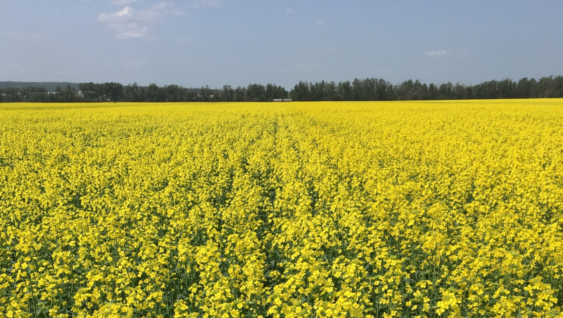
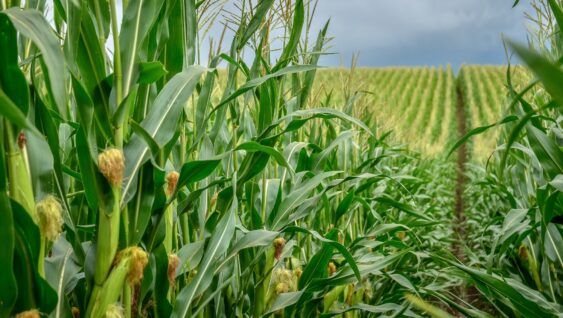
Yeah, let’s talk about that. If one nutrient is applied at higher levels and we don’t have enough of another nutrient, we can induce those deficiencies by imbalance. Sulphur and nitrogen are often looked at together in terms of the ratio, the nitrogen-sulphur ratio, and crops vary in the appropriate ratio. For example, some of the oil seeds, particularly canola that has a really high sulphur requirement nutritionally we’ll target a ratio of something on the order of five to one or seven to one nitrogen to sulphur. Whereas in some of our grasses like corn and wheat, that ratio is more around say 15 to one, just as an approximation.
(07:37)
When we’re looking at crop nutrition, we can identify this by plant sampling and when we see deficiencies occur in the field, that may be one thing to look at. Personally from an experience we had an example in a nitrogen study we were doing where we found that our higher nitrogen rates, our more efficient nitrogen treatments were causing a sulphur deficiency, and that really wasn’t revealed in the total sulphur in the plant, but in the ratio of nitrogen to sulphur. So that’s a really interesting interaction that we study in plant nutrition. Because sulphur availability from soils is a bit more difficult to predict maybe than phosphorus or potassium, we often look at that ratio and apply sulphur in some kind of ratio or relationship to the nitrogen and yield potential that we’re working with.
Mike Howell (08:24):
Okay, thanks Alan. We talked a little bit about deficiencies symptoms and seeing these deficiencies show up, and one thing we failed to discuss a couple of weeks ago when we talked about nitrogen was nitrogen deficiency symptoms. I know a lot of people get confused on these deficiency symptoms between nitrogen and sulphur. So if you will talk a little bit about both of those deficiency symptoms and how somebody can tell the difference in the field or think they can tell the difference in the field.
Dr. Alan Blaylock (08:48):
Yeah, there’s an important distinction between nitrogen and sulphur. In some cases they may look very similar on the plant, but the location on the plant where we see those deficiency symptoms is different. Nitrogen is very mobile in the plant, and so the plant will remobilize nitrogen from older leaves, move it up into the new growth and so we see nitrogen deficiency symptoms showing up first on the oldest leaves, generally working from the bottom of the plant up. Where sulphur is, we consider that immobile in the plant. We see those symptoms show up first on the new leaves that are emerging. When we’re looking at these symptoms, and again, they may look similar, but if they’re showing up on the newest growth and not on the older growth, then we’re going to suspect sulphur first. If they’re showing up on the older growth, then we’re going to point us towards nitrogen.
(09:39)
Now, sometimes sulphur deficiencies can appear similar to other deficiencies. I’ve seen cases where the sulphur deficiencies I observed looked very much like manganese deficiency. It was only through the actual tissue testing that we were able to differentiate that. It can appear as a very pronounced striping. It can sometimes appear as just yellowing. It can appear as a more broad stripe on the leaves. And in a crop like canola, it’s actually a reddening of the leaf. It takes a lot of practice and study to correctly diagnose nutrient deficiencies from symptoms alone. They can be a clue as to what to look at, but usually it’s best if we confirm those through tissue sampling as well.
Mike Howell (10:25):
Great point, Alan. I’m glad you mentioned that. A lot of people think they can tell the difference and it’ll get us a good idea of what’s going on and give us a place to start, but to really understand what’s going on inside that plant, we’ve got to do some tissue analysis and get a lab to tell us what’s going on inside that plant. Alan, you mentioned that sulphur is not mobile within the plant. What about in the soil? Is it mobile like nitrogen and can we lose sulphur similar to how we lose nitrogen?
Dr. Alan Blaylock (10:49):
Good question, Mike. And yes, we do consider sulphur to be mobile in the soil, and that’s because the primary plant available form of sulphur is sulphate and sulphate behaves in the soil very much like nitrate. It’s not attached to the cation exchange complex, so it can be moved with water, it can be leached out when we have excess water flowing through the profile. If we have saturated soils, sulphate/sulphur like nitrate/nitrogen can convert back to some gaseous forms that can escape. Say you’ve got a water logged soil that’s been saturated for a while and you smell that kind of rotten egg odor, you dig into the soil. That’s the sulphur gases. So yes, sulphate/sulphur being the plant available form in soil does behave very much like nitrate. Pay attention to the environmental conditions, the soil type, the water status of the soil, the amount of rainfall we’re getting, and we want to pay attention to that in terms of sulphur management.
Mike Howell (11:46):
You talked about the sulphate form of sulphur and I know there’s some growers that apply elemental sulphur and let it go through a breakdown process. Talk a little bit about the different sources of sulphur fertilizer and the advantages of using one over the other.
Dr. Alan Blaylock (11:59):
Yeah, we do have some choices in terms of sulphur fertilizers. Most commonly, we apply sulphur as ammonium sulphate. It’s readily plant available. It’s available from all our retailers. It’s a very common fertilizer. It’s produced directly or it may be produced as a byproduct of some industrial processes, but ammonium sulphate is widely available in the marketplace, so it’s a very common material and it does supply that sulphate form which is immediately planned available. Another option that is used and is a very economical sulphur source is the elemental sulphur that you mentioned. Now, there are certainly some things we need to understand about elemental sulphur, and that is that it’s not water soluble. It’s not immediately plant available. That elemental sulphur is converted to sulphate in the soil by some specific sulphur bacteria, so they break that down over a period of time and the elemental sulphur converts to a plant available form. Because that’s a biological process, it’s obviously dependent on temperature and moisture conditions.
(13:00)
There’s another really important fertilizer property that helps determine that rate of conversion, and that’s the particle size, so really fine particles will oxidize more quickly. We see on the market now a number of these so-called micronized elemental sulphurs. They’re taking a sulphur powder and mixing it into some of their fertilizer typically. The finer the particle size, the faster the oxidation. Coarser particles will take much longer to oxidize. When you’re planning on using elemental sulphur fertilizer, take that into account. Consider the oxidation time, and you may want to apply it further in advance of crop need, maybe in the fall of the previous year, to give it time to start oxidizing.
(13:39)
Now, one important thing to consider that can be a benefit of elemental sulphur is that it’s considered a slow release sulphur source, so it releases that sulphur to the crop over time. That helps prevent loss of that sulphur by leaching. We talked about potential loss of sulphate sulphur by leaching. The elemental sulphur would help reduce that. It’s just a matter of synchronizing the availability of those different sources with plant need.
Mike Howell (14:05):
Okay, great Alan. Thanks for going through that with us. One other thing I think we ought to talk about this morning, and maybe should have brought this up earlier in the program is while we’re using so much sulphur fertilizer these days, 30 years ago we didn’t use a whole lot of sulphur fertilizer and the Clean Air Act kind of changed all of that. Talk a little bit about that.
Dr. Alan Blaylock (14:24):
Yeah, Mike. This is real important because we’re now seeing fairly widespread sulphur deficiencies in places where we haven’t seen them historically. In the past, at previous decades prior to the Clean Air Act, there was quite a bit of sulphur emitted from factories, particularly coal burning factories or power plants. Coal contains sulphur so as you burn it that sulphur can escape into the atmosphere with the emissions. The Clean Air Act put into place requirements to clean that sulphur out of the emissions, to prevent that sulphur going into the atmosphere and then being subsequently deposited to the earth as acid rain.
(14:59)
As we’ve cleaned up our emissions, and that’s a good thing, the Clean Air Act has done some great things for our environment and our air quality, but the consequence of that is that we have very little sulphur in most areas being deposited from the atmosphere. It’s not coming back to the Earth and so over time, what that has resulted in is less sulphur being supplied by that source to crops, soils therefore becoming depleted, and particularly as yields have increased over time, we see more widespread need for sulphur application. We have to get that sulphur to the crop in some way. It’s not coming from those atmospheric emissions or atmospheric deposition. We now have to apply that as fertilizer. Again, we’re seeing that need over many areas where historically it wasn’t needed. It’s important to pay attention to that, and that has translated to significant increases in demand for sulphur fertilizers.
Mike Howell (15:54):
And Alan, we have several articles talking about this on our eKonomics website. That’s www.nutrien-eKonomics.com. We actually have some time-lapse photographs there of the US map and shows how these sulphur depositions are actually decreasing over time with the Clean Air Act.
(16:13)
Gentlemen, I want to thank you for joining us today. Is there anything that either of you feel that we haven’t talked about today that we need to discuss before we move on?
Ron Olson (16:20):
I just want to congratulate Nutrien on the effort that you’re putting forward with these regular podcasts. I think they are filling a really important need to let certified crop advisors and other interested industry participants get really firsthand updates from you guys in the field. It’s great to know that you’re doing this.
Mike Howell (16:38):
Ron, we appreciate your support.
Dr. Alan Blaylock (16:40):
Mike, just again, to reemphasize the importance of sulphur in crop nutrition. In the past, you go back to some of the old textbooks and sulphur was considered a secondary nutrient. That’s how it was classified, as a secondary nutrient, but we really consider it as a major nutrient. It’s one of the macronutrients. It’s equally as important as any other nutrient, and especially today, as we see, as I said, higher and higher crop yields, more efficient management of nitrogen, phosphorus, potassium, and other nutrients, we see that increasing need for sulphur and it is important to food quality. We think about protein quality in wheat and its baking properties. Well, sulphur plays a role in that. Better quality bread, better quality flours with proper sulphur nutrition. I mentioned the disease resistance from proper sulphur nutrition. So this really is an important nutrient that maybe a few decades ago we didn’t talk about nearly as much and has probably been neglected, and now it really has come to the fore in many of our cropping systems as really being critical to good crop performance and good food quality.
Mike Howell (17:49):
Gentlemen, I want to thank you both for joining us today, taking time out of your busy schedule here at the symposium to talk about sulphur and educate people more about the need for sulphur in crop production. Listeners, thank you for joining us this week. If you enjoy our programs, please leave us some feedback, some recommendations for things that you would want to hear on our upcoming programs and I want to invite everyone to tune in next week as we talk with Dr. John Havlin from North Carolina State University about the importance of calcium and how to get calcium into plants effectively. Until next time, this has been Mike Howell with The Dirt.