





Read Full Transcript
[00:00:00] Mike Howell: The dirt with me, Mike Howell, an economics podcast where I present the down and dirty agronomic science to help grow crops and bottom lines. Inspired by economics.com farming’s go-to informational resource. I’m here to break down the latest crop nutrition research use, and issues helping farmers make better business decisions.
[00:00:30] Mike Howell: Through actionable insights. Let’s dig in.
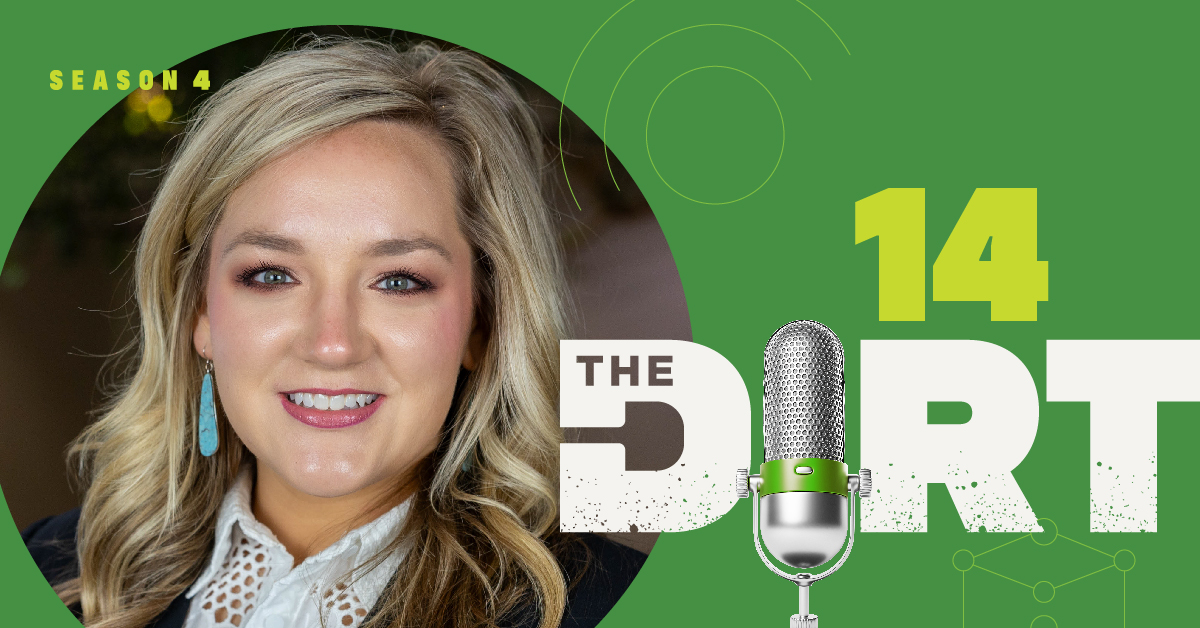
[00:00:39] Mike Howell: Well, hello again everyone. Welcome back to the Dirt. We’ve got an exciting episode coming for you today. I was recently in Oklahoma for the National Land and Range Judging Contest. During that event, I had the privilege of meeting Ms. Jan Lee Rollett at the award ceremony that night. She gave a presentation and talked about some exciting work going on with the Department of Agriculture there in [00:01:00] Oklahoma.
[00:01:00] Mike Howell: We have Jan Lee with us today. Jan Lee, welcome to the Dirt. Thank you. Appreciate the chance to get to join you. If you would take just a few moments and introduce yourself to our listeners and let ’em know what you do there in Oklahoma.
[00:01:11] JanLee Rowlett: Like you said, Mike, my name’s Jan Lee Rowett. I work as deputy commissioner here at the Oklahoma Department of Agriculture, food and Forestry.
[00:01:17] JanLee Rowlett: So get to work with our Secretary of Ag here in the state, Blaine Arthur, and help lead our team here at the Department of Ag to do lots of work on behalf of Oklahoma farmers and ranchers. We have kind of a. Dual role in the state in that we are a regulatory agency, so we are charged by our state legislature to make sure that we’re following all the rules to protect our natural resources and make sure that consumers are getting what they’re paying for.
[00:01:41] JanLee Rowlett: So we certainly have a regulatory responsibility, but we also balance that with. Our work to try to really promote Oklahoma agriculture and make sure that our farmers and ranchers also have access to new opportunities and a chance to develop new markets if they want to, to be able to market their products around the state or the country or even the world.
[00:01:59] JanLee Rowlett: An [00:02:00] interesting kind of combination and balance of a couple different things that we do here, but we really try to take as much of a farmer friendly, producer, friendly approach to our role as we can and do whatever we can to support. Our ag industry here in the state to make sure that future generations have a farm or ranch to come back to if they want to, and that Oklahoma agriculture can continue to thrive in the future.
[00:02:21] JanLee Rowlett: So I’m definitely a product of the ag industry and youth development programs. I’m not a native Oklahoman, but came up through four H and FFA and credit those organizations and the opportunities that they gave me with a lot of the things that I’ve gotten to do. So definitely have a love for agriculture personally, and just have had a chance to.
[00:02:40] JanLee Rowlett: Learn a lot more and grow that over the last several years as I’ve gotten to work here at the Oklahoma Department of Ag.
[00:02:45] Mike Howell: Very good. I’ve echo those sentiments. I grew up in four H and FFA and got the opportunity to travel across the country and see a lot of things. And quite honestly, if it wasn’t for the four H program, I probably wouldn’t be doing what I’m doing today.
[00:02:58] JanLee Rowlett: I can say with [00:03:00] pretty high level of certainty that I would not be sitting here if it weren’t for those organizations. And like you said, they definitely pave a path for a lot of kids and I feel lucky to be one of those.
[00:03:08] Mike Howell: Well, Jan Lee, one of the things you talked about in your presentation at the awards program a couple of weeks ago was that Oklahoma is celebrating the year of youth in agriculture.
[00:03:17] Mike Howell: Tell us a little bit about that and how that got started.
[00:03:20] JanLee Rowlett: Yeah, we were very excited. Earlier this year, right at the beginning of 2025, governor Stitt declared 2025 as the year of Youth and Ag in Oklahoma, and we’re excited to spend all of this year. We’ve done this the last several months. Joining partners like four H and FFA and our ag commodity groups and other organizations across the state that understand the importance of making sure that those opportunities continue to exist for kids that have an interest in the ag industry.
[00:03:46] JanLee Rowlett: Joined all those partners in just bringing more of an awareness, hopefully, to those opportunities, why it’s important. The role that agriculture plays and those organizations play in developing leaders, not just for the ag industry, but [00:04:00] really for our communities and our state, and celebrating that and just sharing that story more broadly.
[00:04:05] JanLee Rowlett: It really came about, it was an idea that Secretary Arthur had personally, and as we visited more thought that this would be a perfect opportunity to just shine an extra light on that. You know, we talk a lot in ag about we have to tell our story. We have to help consumers understand what we do and open the farm gate.
[00:04:21] JanLee Rowlett: And let people in. And we work really hard to do that. But part of that is helping share the story of what that means for the next generation, what being involved in your family’s farm, and that can look like so many different things. We know that it does. You know, sometimes that’s a show project and sometimes it is being on the combine the whole month of June, helping with Wheat Harvest or working in your family’s.
[00:04:43] JanLee Rowlett: Meat processing plant. It can look like so many different things, but really I think what we wanna make sure people understand and people that aren’t as familiar with agriculture and with those organizations know that it’s just a great way to develop young people and develop leaders for the next generation, and just [00:05:00] help make our state a better place to live and work long into the future.
[00:05:04] Mike Howell: Well, I really appreciate you talking about that. Appreciate these young people as well. They are our future if we don’t have these young people who’s gonna pick up the torch when we decide to retire. Absolutely. You know, that seems like a long time down the road, but every day it’s getting closer and closer.
[00:05:18] JanLee Rowlett: That’s right. We talk a lot about our farmers in Oklahoma, and I think this is true across the country, are getting older every year. The average age of farmers continues to increase and we have to provide opportunities for young people to come back. And they hopefully want to do that, but I think if we can help them see what those opportunities are and support them in that decision and make them prepared to do that, we’ll all be better for it.
[00:05:40] JanLee Rowlett: That’s one of our goals.
[00:05:41] Mike Howell: So talk a little bit about how someone is selected to be recognized in the program.
[00:05:45] JanLee Rowlett: So it’s really open. If you check out our social media, you’ll see, I think every Wednesday we highlight a different young person in ag and just try to tell their stories. There’s, to be honest, not really a selection process.
[00:05:56] JanLee Rowlett: We are just. Gathering all of the good inspiring
[00:06:00] stories and there are so many of them from across our state, and we wanna tell as many of ’em as we can. We are doing that on our social media platforms. We’ve invited our partners in this project I mentioned four H and FFA and our ad commodity groups and others.
[00:06:12] JanLee Rowlett: Really anybody that wants to be a part to do the same. So we’re seeing other groups pick up the torch too and continue to share stories from within their own industries or their own groups. So it’s really open and we have some information on our website for anybody that might be interested to be able to use the logo that we’ve developed and kind of brand whatever programs they want to do.
[00:06:32] JanLee Rowlett: That’s really been our goal from the beginning is to just make it as easy for other groups and organizations to grab onto this project and join us in that as we possibly can. So it’s really open. We just hope that people will use the opportunity to tell more of the stories. If you know a young person that has a good story to tell or has done impressive things, which we know, again, there are so many of those, we invite people to share those stories with us, and we want to just elevate that message and tell as many of those as we possibly can.[00:07:00]
[00:07:00] Mike Howell: So you’ve been doing this for several months now. Do any young people stand out? Any stories that you wanna share here today?
[00:07:06] JanLee Rowlett: They’re all so different. I think that was one of our goals in the beginning is especially here in Oklahoma, and I think given both Secretary Arthur and I both have a pretty strong livestock background.
[00:07:15] JanLee Rowlett: So immediately those are the kids that we start to think of just because we know a lot of them personally. But it’s so far beyond that. There are so many wonderful stories of success in the show Ring and at the Oklahoma Youth Expo, and those absolutely need to be told. But it goes so far beyond that too.
[00:07:29] JanLee Rowlett: There are kids that haven’t necessarily had those opportunities, or maybe that’s just not what they were interested in, but they really have a passion for row crop farming and are going back and implementing new practices on their family operation that they learn about through their involvement in some of these organizations or I mentioned meat processing and there’s so many different sectors and ways that kids are involved and they’re not all the stories that we hear about all the time.
[00:07:53] JanLee Rowlett: We talk about those that win speech contests or. When they’re county fair, the stories that get told, and that’s so [00:08:00] much a part of this and we want to elevate those too. But there are others out there that we don’t always hear about. So we’re trying to find those inspiring stories that really tell all the, the value that comes from being raised in production, agriculture, and just continuing that and taking an interest in as young people get older and learn more and have more responsibility on there.
[00:08:20] JanLee Rowlett: Operation when maybe it’s their family or maybe it’s a neighbor and they’ve kind of taken on some responsibility on their own. We wanna tell those stories too. So everything’s on the table. We wanna hear ’em all, and we wanna share as many of ’em as we can.
[00:08:32] Mike Howell: General Lee, you kinda mentioned something there and it reminded me that a lot of these young people are interested in other things.
[00:08:37] Mike Howell: There’s so much out there that grabs their attention and you may not wanna be out in the field sweating or being in the barn, feeding cows all day and things like that. But in agriculture there is such a broad area. There’s so much that somebody could do. We need accountants, we need attorneys, we need.
[00:08:53] Mike Howell: People to go through the taxes just because you may not be interested in production, agriculture and being out there, getting your hands dirty, [00:09:00] there’s still a place for you in agriculture if, if that’s where you wanna be.
[00:09:03] JanLee Rowlett: A thousand percent. Yes. And that is a huge part of this project too, is just letting people know that it might not look like what you think that it looks like.
[00:09:12] JanLee Rowlett: It’s such a broad field and each day there are new opportunities from, it needs with the evolution of AI and technology as it’s used in agriculture, all the way to some of those things that you mentioned, attorneys in. Tax preparers and specialists in so many different things. Agriculture is so broad that there really is a place for everybody, and we need all of those different skill sets.
[00:09:35] JanLee Rowlett: One thing that Secretary Arthur started when she came on board here at the Department of Ag in 2019 as secretary, was developing a group called the Agriculture Youth Council, which has been a small group. Every year we’ve selected about 15 high school seniors to spend their school year. Once a month they have a session.
[00:09:53] JanLee Rowlett: Usually those are based here outta the Department of Ag, but just a chance for them to. Kind of get some exposure to a different sector of ag that they maybe weren’t [00:10:00] familiar with before. And the purpose of that group has kind of been twofold to expose them to new opportunities, but also hear back from that age group about what are they looking for?
[00:10:09] JanLee Rowlett: What would help them go back to rural Oklahoma? What do they want in a rural community or in a job as they look down the road? And it’s been eyeopening to see. Hopefully for those students that have participated, I think it has. We’ve heard stories about kids that what they thought was gonna be their career plan has totally changed because they met somebody through this program and that really changed the trajectory of their college career or what they did after high school and has landed them in a position now that they maybe would’ve never considered before.
[00:10:35] JanLee Rowlett: And so much value in that. But for us, hearing from those kids, you know, what can we be doing now to help them? Go back to those communities and be successful and raise a family there and have their kids be in school one day in these small rural towns. I think that is really what Oklahoma, for sure, we’re such a rural ag state, but so many other states are as well.
[00:10:55] JanLee Rowlett: And that’s really kind of what our state is built upon, and we have to keep those rural communities [00:11:00] thriving. And that starts with having kids consider. A career in agriculture or that will take them back to those rural communities. This is one little piece of such a bigger picture, but something that we’re really excited to be focusing on this year.
[00:11:12] Mike Howell: Well, we really appreciate you focusing on the young people. We’ve mentioned that they’re our future and we need to do everything we can to help keep them interested in agriculture so we can be productive down the road. I know you work with a lot of other programs, and you’ve talked about Oklahoma agriculture and how important it is to the state.
[00:11:28] Mike Howell: Can you expand on agriculture in Oklahoma a little bit? Tell our listeners what type of crops you grow there. The livestock industry, things like that.
[00:11:35] JanLee Rowlett: Yeah, I think so many people, and I mentioned I’m not from Oklahoma originally, and I would’ve put myself in this category too. I think when people outside of our state and even here think about Oklahoma Ag, they think about cattle and wheat, and we certainly have a lot of both of those, but we are a very diverse ag state.
[00:11:51] JanLee Rowlett: I have gotten a chance to travel across the state over the last few years and learn so much about. All the different crops and things that we produce here from northeast Oklahoma to the [00:12:00] southwest and vice versa, from the panhandle to southeast Oklahoma. Everything from um, poultry to pork to certainly wheat and cotton and cattle to timber in southeast Oklahoma.
[00:12:11] JanLee Rowlett: Very diverse. I think our geographic location and our climate both allow us to be pretty diverse in the things that we do, so we have. A lot of variety in the things that we’re able to produce and grow here in the state. Also, something that I have been continually surprised by is the growing food industry here in the state.
[00:12:29] JanLee Rowlett: So we have a program here at the Department of Ag made in Oklahoma just as our state branded program, and there’s a coalition of food and beverage companies that have come together and have a really good example of what a public-private partnership can look like and that they. Invest and the state invest in really just promoting Oklahoma products, and that’s been a huge success for our state too.
[00:12:49] JanLee Rowlett: So everything literally from conception at the farm level, if you’re talking about livestock or planting the seed in the ground all the way through to kind of making final processing of a food product that’s [00:13:00] ready to hit the grocery store shelves and be purchased by a consumer and fed to somebody’s family, it all happens right here in Oklahoma.
[00:13:06] JanLee Rowlett: Very diverse state, one that I feel lucky to get to be a part of and get to work with our producers here.
[00:13:11] Mike Howell: Before I made my first trip to Oklahoma, I had that same misconception. It was cattle and wheat. And I’ve been to Oklahoma a bunch of times, more times than I can count now, and most of those trips were out there with land judging teams.
[00:13:23] Mike Howell: In the past, I used to coach a lot of land judging teams, but. We would get away from the city a little bit and try to get out and go every direction and there’s a lot to see and do around there. A lot of agriculture, and I did not realize that Oklahoma grew cotton until I went out there the first time.
[00:13:38] Mike Howell: I’m from Mississippi and I thought cotton had to be grown in the Southeast and Oklahoma just seems a little bit away from that. I know cotton is really picked up the last few years out in that area.
[00:13:48] JanLee Rowlett: Yes, huge crop, especially for the southwest part of our state, but it seems like it’s grown more north than I would’ve even expected to.
[00:13:54] JanLee Rowlett: So yes, huge industry for us as well.
[00:13:57] Mike Howell: Well, Jan Lee, we’ve talked a lot about the youth program that [00:14:00] you’ve been talking about. Are there any other programs going on in Oklahoma that you wanna mention while we have you today?
[00:14:04] JanLee Rowlett: There are a lot of different things that we focus on. I think when I kind of step back and look at the big picture, and this program is certainly a part of this, I, I mentioned we really want what’s best for Oklahoma agriculture in so many ways that is so linked with our rural communities.
[00:14:18] JanLee Rowlett: We talked a lot about workforce challenges in the state over the last few years, and that’s not a secret to anybody in agriculture. It’s hard to find people to do jobs kind of at every level. So in thinking about how to solve that, we have kind of zeroed down into a few more specific. Areas that we know, we have severe shortages right now.
[00:14:35] JanLee Rowlett: Certainly at the farm level, we need more available workers. But when we think about looking down the road, we know that we need rural and large animal veterinarians. So we’ve been working on that. Um, we need more ag teachers. We need more four H and extension educators. Those have kind of been the three areas that we’ve really started to focus and we’ve made some great strides.
[00:14:55] JanLee Rowlett: I think very supportive legislature and other partners in the state that also [00:15:00] see the need and the importance of filling those gaps. I mentioned the large and food animal veterinarian piece. That’s something that we’ve really focused on here over the last several months. Been working with our livestock industry and also current practitioners and our vet school and again, our legislature to just make sure that we are as well equipped as we can to be, um, producing veterinarians that will go out and serve those rural communities and serve our livestock industry.
[00:15:25] JanLee Rowlett: Because so much depends on their availability, and that’s gotten more and more difficult over the last several years is. That industry has kind of evolved and there are fewer practitioners that are out there and able and willing to do that work. And then competing, of course, with more companion animal side.
[00:15:41] JanLee Rowlett: It makes a lot of sense as to why somebody that’s coming out of vet school would wanna go into a mixed animal practice or a small animal practice. But we just have such a need for large animal practitioners. That are specifically interested in food animal work. So we’ve been working on that as well, and something that we’re encouraged by some of the strides that we’re making and just looking at [00:16:00] assessing that challenge and putting some real numbers to that, and then starting to chip away at some solutions that we hope long-term will really help alleviate that problem for our state.
[00:16:09] Mike Howell: Well, Jan Lee, I really appreciate you taking time to visit with us today and share your story about everything that’s going on there in Oklahoma. Listeners, we appreciate you tuning in and we wanna remind you to hang around for just a couple of moments and we’ll be right back with segment two. Farming Isn’t Farming without questions, and now there’s a place to go for answers.
[00:16:28] Mike Howell: At economics, an entire team of agronomists is waiting and ready to help for free. No question is too big or too small. Visit Nutrien Economics with a k.com and submit your question with the ask an agronomist feature. Listeners, welcome back for segment two. As you know by now, segment two is where we ask one of our agronomists a question of the week dealing with agronomy and soil fertility.
[00:16:55] Mike Howell: Today we have Dr. Carl Wyatt back in the studio with us. Carl, welcome back to the [00:17:00] Dirt. Hi. Thank you for having me, Carl. Today’s question is a little bit unusual. We’ll throw it out here and see what you have to say about it. Our question of the week is, what is the most unusual thing you’ve seen in the world of soil fertility in your desert environment out there?
[00:17:14] Dr. Karl Wyant: So the listener that might not be familiar with my sort of journey into agriculture, I have a desert soil scientist, and then I joined ag retail and made my way through that system. So lots of crops that folks just are are way off a lot of people’s radar, but we can grow ’em in the climate. Down here, we just add water, right with our irrigation and a lot of sunlight.
[00:17:33] Dr. Karl Wyant: I’ve got some great soils, great alluvial soils to grow in. So probably the strangest thing I’ve ever seen. I went to a Dragon Fruit Farm one time. If you go to certain coffee shops, you’ll see they’re selling like this bright, fluorescent pink caffeine drink, and that’s called dragon fruit, something or other.
[00:17:50] Dr. Karl Wyant: So that fruit grows on this. Strange cactus looking thing and you grow it and then they harvest the fruit at the end of the year. But it’s like, I don’t know, if you were to imagine some sort of
[00:18:00] alien planet farm, that’s what it would look like. So just get on your favorite search engine and just type in Dragon fruit plant.
[00:18:06] Dr. Karl Wyant: You’ll see what I’m talking about. Took some research, took some extension visits, but we got a plan figured out and we made those dragon fruits happy and got a good yield, but just way off the beaten path for most folks. Adventure and agronomy. I
[00:18:18] Mike Howell: don’t think I’ve ever seen a dragon fruit plant, Carl, but you know, the basic principles of soil fertility doesn’t matter what the crop is.
[00:18:25] Mike Howell: Glad you were able to work that one out and figure out a plan for the producers. Carl, we appreciate you taking time to visit with us today and answer our agronomy questions. Listeners, we hope you enjoy this segment and if you have questions about anything we’ve talked about today, you can always visit our website.
[00:18:40] Mike Howell: That’s Nutrien. Economics with a k.com. Until next time, this has been Mike Howell with the Dirt. Hey guys, if you like what you heard today, do us a favor and share this podcast with someone else. It could be your neighbor, your friend, your crop advisor, or whoever you think would enjoy it. Your support helps since [00:19:00] your future episodes, so please like, subscribe, share, and rate the show wherever you’re listening from.