




Read Full Transcript
Mike Howell (00:08): The Dirt, with me Mike Howell, an eKonomics podcast where I present the down and dirty agronomic science to help grow crops and bottom lines. Inspired by eKonomics.com, farming’s go-to informational resource, I’m here to break down the latest crop nutrition research, use, and issues, helping farmers make better business decisions through actionable insights. Let’s dig in.
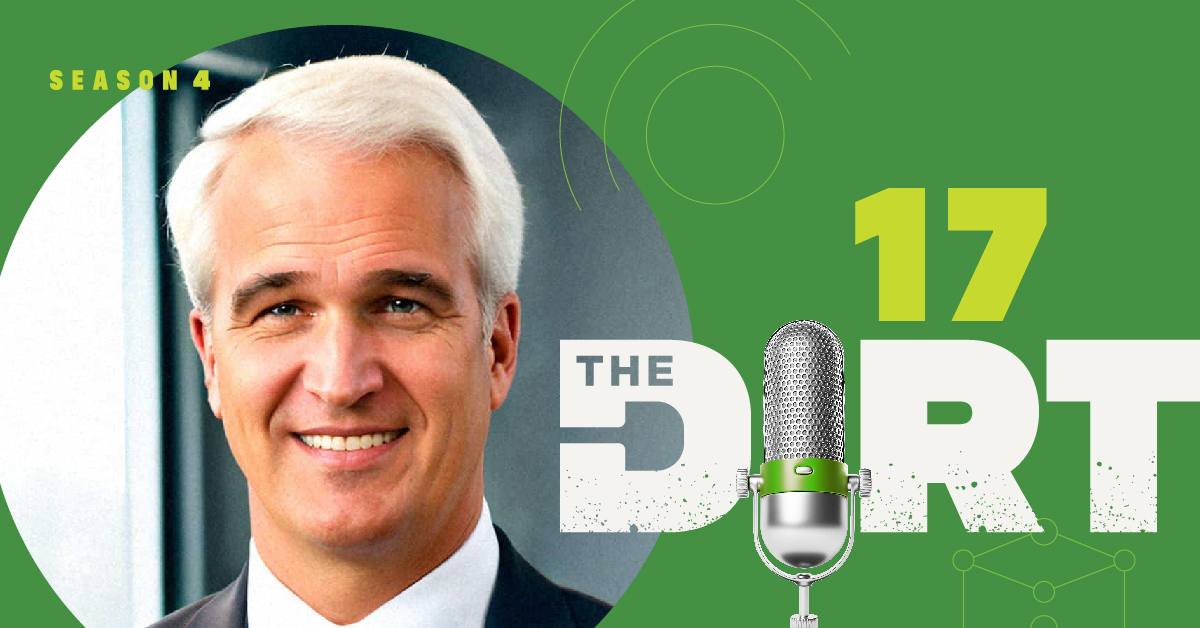
(00:38): Well, hello again, listeners. We appreciate you tuning into this week’s episode. I’m back at the International Symposium on Soil and Plant Analysis and I bumped into a good friend of mine, Dr. Rob Mikkelson. Now, if you’ve been listening to The Dirt for very long, you’ve heard Dr. Mikkelson on several episodes. He’s brought us a lot of good information, but I just learned that Dr. Mikkelson has recently retired. He also did a lecture last year at the American Society of Agronomy meeting where he did the Leo Walsh lecture. He talked about his roles as a soil scientist, and I wanted to take him back to that presentation and talk a little bit about that, his roles during his career, and we’ll see where this goes.
(01:16): Dr. Mikkelson, thanks for joining us. We appreciate you taking time to be with us today. If you will, take just a minute and introduce yourself to our listeners, remind them who you are and what you do.
Dr. Rob Mikkelson (01:24): Well, thanks, Mike. This is a real privilege to be with you today and share some thoughts, not in a technical way, but more of a career retrospective and a lookback and maybe what I’ve been able to accomplish, which is not that much and what I hope to do in my career. As you mentioned, I’ve retired recently, but give some advice to some of the up-and-coming students and some of the up-and-coming professionals on what an exciting and fulfilling career it is in agriculture.
Mike Howell (01:50): Dr. Mikkelson, if I remember correctly, back to your lecture, you talked about several places that you had worked and that started off with TVA. Then you went to North Carolina State University, was there for a while and moved to IPNI and I and then later moved to the African Plant Nutrition Institute, and I think most recently you were with YARA. If you will, let’s talk a little bit about each one of those positions and talk a little bit about how these roles were similar and how they differed.
Dr. Rob Mikkelson (02:15): Well, yeah, Mike, I’ve had a very interesting and maybe a varied career, and one of the lessons I think I would pass on is don’t be afraid to try new things. I changed from government job to an academic career to nonprofit and then doing some international work, and then ended my career really working with a commercial company. But if you don’t mind, Mike, let me go back a little bit earlier than that and tell you how I got into soil science to begin with. I’m a native of California and very fertile cropland in that area in Central California. So I was exposed to agriculture very early on, and my father was involved in agriculture as well. He was a specialist in rice production. And as a kid, my father had an opportunity to live in Brazil for a year. We moved to Brazil, then we lived in the Philippines for two years, and so I knew about agriculture and the importance of it, and I wanted nothing to do with it.
(03:08): So I went away to college and I took some geology class, and a physics class and a chemistry class and a biology class, and I liked the sciences. I was attracted to that, but what on earth am I going to do with all of this? I couldn’t really see myself working in a laboratory all the time. And then, on the advice of a friend, I stumbled into a soil science class and the lightbulb went off, and I thought, oh, this is great. This is what I’ve been looking for. This is environmental science. It’s water quality, it’s air quality, it’s producing healthy food. It’s everything I can think of, and you put it together to do wonderful things for people, for the benefit of the human family, I like to say. That just got me so excited about using all these applied sciences in a way that really helps people.
(03:56): So that’s not how I’d planned to get into agriculture, but I just thought this was so exciting and for the last 30 or 40 years I’ve been wondering why doesn’t everyone study soil science? This is just so cool. The interest in soil health and soil and healthy food that’s reemerged maybe in the last five or 10 years really gets me excited and I hope encourages people to realize there’s an exciting opportunity out there for new careers. Thinking about that as a graduating undergraduate, you’ve got to figure out where is your career going to take you? There’s some really exciting opportunities to go directly to industry, and I’ve worked closely with the Certified Crop Advisor program, and there are some wonderful agronomists all over North America that are working closely with farmers, working with the retailers and helping provide the best products and the best advice to their clients.
(04:47): So that was one opportunity I thought about. Another one was to go to graduate school, and I was excited about going even deeper into the field of soil science, so I decided to go to graduate school. Deciding where to go is a big decision because often where you go is what you end up specializing in. If you go to graduate school in Western Canada, you become an expert in Western Canada conditions. I ended up going to school at the University of California down in Riverside, which used to have a very large soils program. So I learned a lot about salinity and irrigation and drip irrigation and fertigation, and those are the issues that I really dug into and got excited about.
(05:25): After graduating from UC Riverside with a PhD in soil chemistry, then I was able to move on to one of the national research labs, which was run by the Tennessee Valley Authority in Muscle Shoals, Alabama, and wow, what an education that was. That was a national and international hub for everything related to fertilizer. There were economists, there were engineers, there were chemists, there were agronomists, there were lawyers, there was people that were running fertilizer plants.
(05:53): At one time, there were about 1,500 people working at this research lab, and that lab has now gone out of existence, but it continues on as the International Fertilizer Development Center that does work throughout the world and just a great organization located in Muscle Shoals, Alabama. The handwriting was on the wall and that institution was going to close. I decided it was time to move on, and I was able to get a job working in Raleigh, North Carolina in the soil science department at NC State University, and there I had an opportunity really to dig into the practical aspects of nutrient management. At that time, the swine industry was really exploding in North Carolina and they were trying to figure out what to do with all this manure.
(06:33): So that was one aspect of research that I was heavily involved with, but I was also doing a lot of education, and that’s what got me excited. I loved helping these young students get excited about soil science, whether it was in forestry or horticulture or crop science, agronomy, whatever, all of these people had to know about soil or they were not going to be successful in their careers. So I did that for a number of years. I was there almost 15 years at NC State as a professor, and then probably the only thing I would’ve left the university for because I liked it there very much, was this international group that was doing research and education around the world to help educate farmers on nutrient management, and that’s the International Plant Nutrition Institute. So I took a big leap of faith and left a tenured position and joined this IPNI, and there my mind was expanded in ways I never could have imagined as I visited with farmers and learned about crops and crop production around the world and had the opportunity to work with farmers globally.
(07:35): It was at IPNI during that time that we came up with the principle of 4R Nutrient Stewardship. We dug into the science, we wrote manuals and books and training and slide sets, and really tried to get people excited about that, and I think that’s probably one of the most significant contributions of my career is helping get that 4R Nutrient Stewardship program launched and really well-established. Now, when you talk to people in the fertilizer industry and say, 4Rs, they know that means right source, right place, right time, and right rate.
Mike Howell (08:08): Rob, that’s something we talk about on this program quite a bit. Last week’s episode we did on potatoes, we mentioned the four Rs talking about potatoes, so something that we try to keep going even today.
Dr. Rob Mikkelson (08:19): Yeah, it has universal relevance and it provides a framework that we can talk about nutrient stewardship without overwhelming people with all the facts and the data. Yet if you’re talking with an expert, you can spend days talking about each of those four Rs in great detail. So it works well at a introductory level and as a very deep level of understanding nutrient management.
(08:41): Well, then I was able to move to Africa and help develop these principles of 4R Nutrient Stewardship in Africa, and I joined the African Plant Nutrition Institute. And just getting that off the ground and teaching university classes in Africa. Wow, what an education that was too. I vividly remember the impact that a bucketful of fertilizer and a little handful of improved genetic seed can do to change the trajectory of a farmer. Here, they’re growing all their food crops on an acre. Usually it’s corn with a few vegetables and things, and the soils are inherently pretty poor in most of Africa because of the climate and the geology. By using a little bit of nutrient and some improved genetics, they would triple, quadruple, sometimes five or 10 times, increase their yields, and all of a sudden this family now not only had enough to eat, but they had a little bit of corn to sell, and that meant for the first time they could send their children to school.
(09:39): Then the children became educated, they became literate, and that just changed the whole trajectory of that family forever, and I wish farmers in North America could appreciate the magic that fertilizer is really. That just a bucket of fertilizer and a handful of seeds, how that changes a family forever. But what an inspiration that was to work with that. And interestingly, I’m helping now APNI to develop a new 4R manual strictly for African crops. So how do you apply four R’s for cassava and for millet and for teff in Ethiopia? So that’s a really exciting thing to see how 4R continues to grow around the world.
(10:17): Sorry to make this long, Mike, but after that, then COVID came and it wasn’t very fun to be in Africa anymore. So my wife and I moved back to North America to California where our home was and joined YARA as their agronomist for North America. And that again was a really nice perspective working with a commercial company to see how they could get their products introduced into the marketplace. So working with the government, academia, nonprofits, and then a commercial company, I was able to see how all of these organizations are trying to help farmers solve the same issues, but they all approach it from a very different viewpoint.
(10:55): For example, for a commercial company, they need to get products that are effective to the farmer as quickly as possible. They want to be early in the marketplace and be successful with that. If the university professors are rewarded for writing academic papers, that’s how they get advancement. In a nonprofit organization, you have to keep your donors happy or you cease to exist. With the government, you need to help implement good policy, and you’re trying to produce data that can help with good regulations. So all of these have to work together, which I didn’t truly appreciate how all these needed to fit together. They all played a unique role and sometimes we point the finger and say, “Well, you’re not doing a good job,” or, “You’re not being effective,” or, “You’re being a stumbling block.” But really I can see how we all need to be part of this to help the farmers be successful.
Mike Howell (11:40): Rob, I have had several similar positions to what you have. I’m with Nutrien now, obviously and working as an agronomist. Before that I was with the university and really appreciated my time there, but I understand what you’re talking about and we all have to work together. We’re all in it for the same good. We may see things a little differently from time to time, but we all need to work together for the good of everybody.
(12:01): Rob, one other thing that I have just recently learned is that you used to TA a class back when you were in school, and one of your students back when you were a TA was Alan Blaylock. Our listeners are familiar with Dr. Blaylock. How in the world did you ever teach Alan anything in class?
Dr. Rob Mikkelson (12:16): I guess he passed by the skin of his teeth, but no, Alan and I go way back. He’s helped me in lots of projects and I hope I’ve helped him once in a while. That illustrates one of the things I wanted to mention is the importance. If you want to be successful, you have to surround yourself with good people. You can be as smart as can be, and I’m not in that category, but some of these really brilliant people are not effective at getting things done. But if I know Alan and I know Mike, and I know someone from different companies or I know someone from the government or I know someone at a university that we can partner together, like Mike said, we all have a role to play and we need to work together. So that’s something that I learned is it takes people to get things done, not just being smart and I’m pretty good with people, but not the smartest. So I think we can do the two and make things happen.
Mike Howell (13:03): Rob, that reminds me of a saying that I’ve heard basically all my life. It’s not always what you know, it’s who you know and knowing the right people, you can get a lot of things done.
(13:12): Rob, I do a lot of traveling as you have and go around the country, and if I go to a university campus and meet with a professor there, they’re always talking about how hard it is to get the top quality students, to get them interested in agriculture, agronomy, soil fertility. If I’m out at a retail location, they say the same thing. They’re having trouble getting students that are coming out of these programs that have a knowledge about agriculture. What can we do to attract more of these top quality young people to get into the field of agriculture, agronomy, soil fertility?
Dr. Rob Mikkelson (13:41): Well, as we get further away from the farm and fewer and fewer people even know about agriculture. That becomes a real challenge, Mike. People often aren’t even aware of career opportunities in agriculture. Farming has become so sophisticated that maybe the stereotype of a farmer walking around with their overalls and a pitchfork, those stereotypes are not true at all. A successful farmer has to be an expert in technology and equipment, and marketing and financing, and labor, and so many things. It’s a very high-tech industry, and because it is so complicated, farmers can’t be an expert in all of those things, and that’s the one thing that I learned to appreciate is how the Certified Crop Advisor program helps farmers be successful. A farmer can’t be an expert in every aspect of soil fertility, for example, so they need someone that they can trust to help them make those right decisions.
(14:38): And that was one difference that I saw leaving the university and joining a different organization. At the university, as we were teaching things, the students would say, “Is this going to be on the test?” Yet, when I was teaching certified crop advisors, they were saying, “I need to make a million-dollar decision this afternoon. I have got to get this right.” And those trusted relationships between a crop advisor and a farmer are essential. Their kids may go to school together, they may go to ball games together. They’re in civic organizations together. They have that bond of trust and friendship, and I didn’t really appreciate how important that is in getting things done. I thought if you just give people the right information, they’ll do it. Well, people are a lot more complicated than that. We need some kind of motivation and confidence to make important changes, so I think this is a really important career.
Mike Howell (15:27): Rob, I couldn’t agree more. I think we’ve brought a lot of this on ourself. There’s so many people out there that are just trying to make a quick sale and they don’t know the science behind it. They don’t know how to build those relationships and establish that trust, and the growers just don’t understand. They don’t trust these people, and they may try it one time, but they’re not going to keep coming back if they don’t have that level of trust.
Dr. Rob Mikkelson (15:48): That’s right, and I think getting a good education, I think we can attract some of the brightest students. Often when they think about agriculture, they immediately think of biotech because that’s sort of glamorous and it’s in the news a lot, but without a proper foundation in agronomy, the biotech world really can’t go anywhere. I see it just as a great opportunity for bright students that are interested in science. There’s a place for you in agriculture, and there’s lots of opportunities and openings like you mentioned, Mike, but they pay well. You’ve got to learn to work hard, especially during the summer, but there’s great career paths. You meet wonderful people, and if you’re interested, these careers can take you all over the world, meeting people and making a significant difference to the food supply of the world and to environmental productivity and environmental quality and providing livelihood for those farmers that we want to keep in business.
Mike Howell (16:44): Rob, my last question is, you’ve been around for quite a while. You’ve seen a lot of things. If you could go back to when you were a young person first going into college, what advice would you give yourself? What could you wish you had done differently back then?
Dr. Rob Mikkelson (16:56): Maybe Mike, coming out of school, I looked up to some really amazing mentors and thought they have it all together and they know it all. I realized they didn’t know it all, but they knew how to get the answers. It’s easy to be intimidated and say, “Oh, I can’t do all those things. I’ll never accomplish all those things that those people that I admire will do.” Yet you just learn. You surround yourself with good people. You ask questions, you get experience, and you can be successful. So don’t be shy, don’t be intimidated. My career path has been blessed with many great mentors that I give all the credit to of helping me achieve the things that I’ve been able to do. So don’t be afraid to make friends and talk to people and ask questions and don’t feel like you have to know it all or you’re not a real professional. Nobody knows it all. I’ve been around a long time, Mike, and the longer I’m around, the less I know and I’m pleased to admit it.
Mike Howell (17:49): I understand exactly what you mean by that. Dr. Mikkelson, we appreciate you taking time to visit with us today. Before we let you go, is there anything else you want to talk about today?
Dr. Rob Mikkelson (17:58): Just encourage you to open your mouth and tell people about the exciting careers in agriculture, whether it’s in soil science, which I’ve been fascinated with my entire career in nutrient management. I find that so fascinating and so relevant to global problems in the world, whether it’s agronomy, environmental science, all of these things, as Mike mentioned, have to come together and work together, and there are some amazing career opportunities out there. So let’s not be shy about telling people about this, and I love the name of your podcast, you call it Dirt, but this is a whole exciting world of soil science out there, so thanks Mike for letting me talk a little bit about myself and my career path.
Mike Howell (18:36): Anytime, Rob, and we hope you won’t be a stranger. We hope we can get you back on The Dirt as things move on. Rob, once again, thanks for being with us today.
(18:43): Listeners, thank you for tuning in this week. I hope you’ve enjoyed this segment. If you will, stick around for just a moment and we’ll be right back with segment two.
(18:52): Farming isn’t farming without questions, and now there’s a place to go for answers. At eKonomics, an entire team of agronomists is waiting and ready to help for free. No question is too big or too small. Visit Nutrient- eKonomics.com and submit your question with the Ask an Agronomist feature.
(19:14): Listeners, welcome back for segment two. If you haven’t been tuning in this year, segment two is where we ask an agronomist our question of the week. This week we have Lyle Cowell, senior agronomist with Nutrien covering the Canadian region back with us. Lyle, welcome back to The Dirt.
Lyle Cowell (19:29): Thanks a bunch for having me, Mike. Always great to do this segment with the questions from the farm, and it’s just that great opportunity to connect with farmers.
Mike Howell (19:37): Lyle, this week’s question is dealing with the hot topic. We see this in the press all the time, and I think there’s a great disconnect here between the average person out in the communities and the people that are actually growing our food and fiber. But the question this week is what is meant by the term soil health and do the fertilizers play a role in the health of the soil?
Lyle Cowell (19:56): Mike, I’ve heard this topic. I’ve read about this topic so much in the past year or two. It’s an important topic. We grow healthy crops with healthy soil. What is soil health though? There’s a lot of words being coined to describe soil health. It’s like it’s been reinvented often with people who don’t have a great understanding of farming or growing crops, to be honest. To me, soil health is just what are the limiting factors on the soil on your farm? What are the factors that are reducing crop potential? Because to me, the best measure of soil health is your yield. The crop will tell you if the soil is healthy. We often miss the mark on what is soil health then. The public get wrapped up in microbial activity within soils, the biological health of the soil, and that’s certainly important. But what if the primary factor reducing your crop potential is soil compaction?
(20:53): What if it’s salinity? What if it’s acidity? Those are health factors that we often miss if we just focus on the soil biology. Again, soil biology is certainly critical, but when we bring all these soil factors together, the plant will tell us if the soil is healthy again, by how well it will yield.
(21:11): Now, can fertilizer be part of the equation in terms of soil health? And one of the primary factors that crops don’t reach their yield potential is having adequate nutrients. And adequate nutrients are important for the crop, and in the end, added nutrients, no matter where they come from, be they from fertilizer or manures or from nitrogen fixation by legumes. In the end, those nutrients also support the bacterial life, the microbial life within the soil. Microbial life is important, it helps retain and cycle nutrients. Microbial life helps improve soil structure. Microbial life is extremely important to the soil, and when you combine all these factors that we’ve just talked about, that then brings us to a healthy soil. And certainly if soil is deficient in a nutrient, then adding that nutrient with fertilizer or any other source is going to improve that soil health, and you will see it expressed with a healthier, better, higher yielding crop.
Mike Howell (22:12): Lyle, great information. Really appreciate the way you explain that to our listeners.
(22:16): Listeners, we hope you’ve enjoyed this episode. If you need more information on anything we’ve talked about today, you can always visit our website that nutrien-eKonomics.com. Until next time, this has been Mike Howell with The Dirt.
(22:32): Hey, guys, if you like what you heard today, do us a favor and share this podcast with someone else. It could be your neighbor, your friend, your crop advisor, or whoever you think would enjoy it. Your support helps ensure future episodes. So, please, like, subscribe, share, and rate the show wherever you’re listening from.