



The Importance Of The 4Rs: Asking The Next Question

The 4Rs is a concept that encourages growers to make efficient and effective fertilizer applications – and is an important part of any integrated fertilizer Best Management Practices (BMPs) plan.
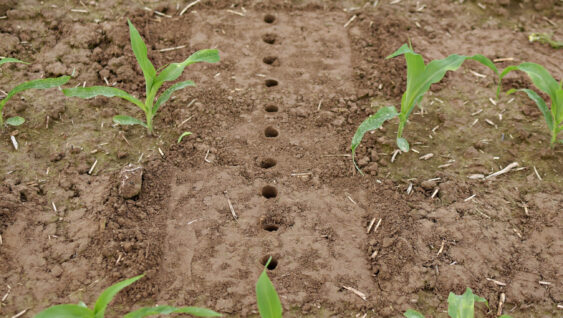
The 4Rs are the Right fertilizer applied at the Right rate, at the Right time, and with the Right placement
The overall goal of the 4R Nutrient Stewardship program is to help crops get the most out of input applications by applying the right product using the right amount when the crop actively needs nutrients the most, whether broadcasting or banding.
“There are a lot of misconceptions around the 4Rs. I think people look at it as a program that they have to follow, and it’s really a framework of questions to help growers maximize their cropping system goals by increasing productivity, increasing farm profitability, ROI, and the bottom line,” says Dr. Cristie Preston. “Other benefits include protecting the environment by reducing excess nutrients and improving overall long-term sustainability.”
Questions that growers should answer when making their fertilizer plan include:
- What is working well right now?
- What didn’t work well or needs improvement?
- What are the deficiencies in the soil that must be addressed for the next crop?
- What are BMPs that I could adopt to improve efficiency and stewardship?
The 4Rs don’t stand alone. They should be used as part of a fertilizer BMP plan which includes low- or no-till, cover crops, and other agronomic and conservation practices. The goal of fertilizer BMPs is to match nutrient supply to the crop’s needs, reduce nutrient losses, and maximize farmer profitability. This information and more can be found at www.4rfarming.org.
Ongoing assessment and improvement
On-farm research is useful when a farmer is questioning the value of current practices. “I advocate for side-by-side strip trials in the field just to see if there are any changes when adopting a new practice. Then you have the comparison right there in front of you,” says Preston.
Often, the biggest benefits are focused on productivity improvements. With the rising cost of fertilizer, optimizing nutrient management is a priority. Higher crop yields, reducing environmental impacts, and improving soil management also top the list.
The Fertilizer Institute has created a collaborative platform to bring both the retailer and the grower together as a team. The platform promotes the 4Rs of stewardship, and the goal is to bring together and inform fertilizer manufacturers and retailers, growers, and other agriculture stakeholders about nutrient stewardship and how to work together to become better stewards. More information is available on the website.
Enhanced efficiency tools
Enhanced efficiency products help growers make the most of fertilizer applications. Nitrogen stabilizers and other products like polymer-coated urea that protect against leaching or volatility losses all have one main goal: To prevent nitrogen from being lost by the various transformations of nitrogen within the soil and to protect that nitrogen so it is available when the crop needs it.
Nitrogen and phosphorus are the primary nutrients that are considered when looking at the environmental aspect of the 4Rs of Nutrient Stewardship. Both nutrients have the greatest risk of causing environmental impacts if they are left in the field. In recent years, the 4R program has expanded to include some secondary nutrients and micronutrients. Sulfur also fits well into the 4R program.
“Nutrien has a new product, Smart Nutrition™ MAP+MST®, and the sulfur is in the elemental form. The sulfur is actually mixed into the MAP granule, and that allows for maximum fertilizer to soil contact, which also maximizes oxidation rates,” says Preston.
“Smart Nutrition MAP+MST is a great choice for fall applications because with cooler soil temperatures, the oxidation rates decrease and it will stay in the elemental form, less likely to have leaching losses and be available next spring when the plant needs it as the soil warms back up,” says Preston.
“Farmers are already doing great things. They’re taking soil samples, using variable applications and managing nutrients. But the environment is constantly changing, fertilizers are changing, and farmers need to be willing to evolve with those changes. I believe that the 4Rs offer a good framework for asking the next question,” says Preston.
To learn more, tune in to The Dirt podKast with Dr. Cristie Preston, where she discusses the importance of the 4Rs with host Mike Howell.