




Read Full Transcript
Mike Howell (00:08):
The Dirt with me, Mike Howell, an eKonomics podcast where I present the down-and-dirty agronomic science to help grow crops and bottom lines. Inspired by eKonomics.com, farming’s go-to informational resource. I’m here to break down the latest crop nutrition research, use, and issues helping farmers make better business decisions through actionable insights. Let’s dig in. Well, hello again everyone. Welcome back to The Dirt. We’re glad you’re tuning in this week, and I am not in the studio. I am in sunny San Juan Puerto Rico. I am here attending the Soil Science Society of America summer meeting, and I have caught up with Dr. Michael Thompson. He is the President of the Soil Science Society of America. Dr. Thompson, welcome to The Dirt.
Dr. Michael Thompson (01:00):
Well, thank you very much, Mike. I’m really glad to be here.
Mike Howell (01:02):
Dr. Thompson, we know this isn’t your full-time job. It may be for this year or so, but if you will introduce yourself to our listeners and tell ’em what you do back home at Iowa State.
Dr. Michael Thompson (01:11):
I’m Michael Thompson. I’m a professor of soil science at Iowa State. I’ve worked at ISU as a teacher and as a researcher since 1980. I grew up in Illinois and I went to school at the University of Illinois and at Ohio State University. And as you say, this year I’m serving as the President of the Soil Science Society of America.
Mike Howell (01:36):
Well, Dr. Thompson, a lot of our listeners are, may be familiar with the Soil Science Society of America or SSSA, and we’ll probably refer to it as that from here on in the recording, but some may not be familiar with SSSA. If you will take a minute and tell our listeners what the SSSA is and why it’s so important.
Dr. Michael Thompson (01:52):
SSSA, I would characterize it as the premier professional organization for soil scientists who work in the United States, but we also have many professional members of the society. SSSA was established in 1936, so we’re a relatively old scientific society. Today we have more than 5,400 scientists who come from academia, from industry, private practice, and government. SSSA exists, I like to say, we exist to serve our members, the soil scientists who are our members. But in a larger sense, I guess SSSA exists to serve soil science in general and all those who care about soil. In addition to the students and academics and government scientists who are our members, there are around 600 certified professional soil scientists around the country, and these are soil scientists who work for environmental consulting companies, fertilizer companies and the like, or soil scientists who are in private practice for their own companies.
Mike Howell (03:07):
Dr. Thompson, a lot of our listeners are familiar with soil fertility and soil conservation, but they may not be as familiar as some of the other disciplines of soil science. We have a lot of disciplines that are gonna be represented here at the meeting. If you would kind of go through some of those other areas and why they’re as important as soil fertility and soil conservation are.
Dr. Michael Thompson (03:26):
Okay. Yeah, I’m really glad that you asked this question because soil science is really a broad discipline and involves a lot of different sub-disciplines. Yes, plant nutrition and soil fertility, soil conservation, those are really vital things for soil scientists across the country. We also have a number of soil scientists who work on other aspects of soil science. The society is divided into different divisions. We have a total of 14 different divisions, and I’m not gonna go through all 14. But examples of those divisions that your listeners might be interested in would be the Forest Range and Wildland Soils Division, the Wetland Soils Division, the Urban and Anthropogenic Soils Division.
(04:19):
We also have a division that consists of members of the SSSA who are practicing professional soil scientists, and then we have a number of members of SSSA who are pedologists. Those are the soil scientists who are mainly interested in how soils form and how they are distributed across the landscape. And then we’ve got soil scientists who look at the very basic aspects of soil processes, soil chemistry, soil biology, soil physics. And there’s just an enormous variety of soil scientists and the kinds of work that they do.
Mike Howell (04:58):
And each of these categories are just as important as any of the other categories, and they all need to work together to make up the whole program of soil science. We appreciate everybody getting to come together at this meeting, and thank you for putting this meeting on. I know we don’t have this meeting every year, but glad to see this meeting happening in San Juan this summer.
(05:16):
Farming isn’t farming without questions, and now there’s a place to go for answers. At eKonomics, an entire team of agronomists is waiting and ready to help for free, no question is too big or too small. Visit nutrien-eKonomics with a K dot com and submit your question with the ask an agronomist feature.
(05:38):
Dr. Thompson, let’s go back and talk a little bit about the Soil Science Society a little bit more. Why is this organization so important to soil scientists? You mentioned that we had about 600 professional soil scientists in the United States, but why is this organization so important?
Dr. Michael Thompson (05:53):
Well, there’s a lot of things that the society does for people who are soil scientists, and I’ll give you some examples. Particularly for the professional soil scientists, we provide the certification that allows them to be at the top of their game and to promote what they do to other professionals working alongside engineers and sanitarians and others who have work that impacts soils or work that is impacted by soils. The society also publishes four scientific journals, plus we publish a lot of books every year and magazines related to soils and soil science. We provide online educational opportunities where our members can get CEU credits for keeping their educational levels up to date. One of the most important things the society does is, uh, it collaborates with the American Society of Agronomy and the Crop Science Society of America in putting on an annual meeting where all of these scientists gather. This year, our annual meeting will be in San Antonio, Texas in November.
(07:06):
We also have programs for students. One of the things that I really like to talk about is the collegiate level soil judging contests that occur throughout the year across the the United States where university teams of students compete with one another to describes soils and the landscapes that the soils occur on. Those, uh, competitions really not only generate a lot of interest among the students, but they encourage students to see soils from a very basic perspective, the variations that occur in soils across the landscape. So that’s always a fun thing for the SSSA to do is supporting the collegiate soil judging contest. And then we also have programs for teaching and helping teachers at the K through 12 level know more about soil. So that those teachers can work with the students in grade schools and high schools to help those students understand how important soils are to everybody who eats (laughs). And that’s kind of a message that we want everybody in the country to understand. Those are some examples of things that the society does to promote and support the work of our members.
Mike Howell (08:28):
Dr. Thompson, you kind of touched a soft spot with me there, talking about working with the young people and the collegiate land judging or soils judging at the collegiate level. I never got to participate in that in college, but I did coming up through 4H work with the land judging, and when I worked with extension, I got to train a bunch of the land judging teams and really had a good time doing that and took teams to Oklahoma City for the National Land Judging Contest multiple times, and they kind of got the idea that I was trying to bury ’em. They wanted to do the land judging, and we went and got in the pit and then they said they wanted to do horticulture judging, and I said, “We’ll just go practice at the cemetery. We’ve got a pit dug and there’ll be a lot of flowers around.” But I didn’t scare ’em off too bad. And a lot of those kids are now working in agriculture today.
(09:08):
But you really touched a soft spot working with those young people, and I really miss being able to work with them as much as I used to. Appreciate the society helping out with those young people, they’re our future. Dr. Thompson, we mentioned that we’re here in San Juan this week. We have a special conference. Tell us a little bit about what’s gonna be happening here this week.
Dr. Michael Thompson (09:25):
Well, we’ve got a three-day meeting Monday, Tuesday, and Wednesday of this week. The first day is going to be devoted to the theme of soils as they vary in space and time. And we’re gonna start out with learning more about soils in Puerto Rico. Puerto Rico is a very special place in itself. You may not know, I didn’t know this until just a couple of weeks ago. There are soils in Puerto Rico that span 10 of the 12 soil orders in our taxonomic system. Now, what I mean by that is we have a taxonomic system, we have a classification system that divides the soils across the world into 12 categories at very high level categories. Examples of that would be the mollisols in Iowa or the ultisols in Georgia, perhaps. Well, 12 soil orders, you can imagine that encompasses an incredible range of different properties of soils and processes that occur.
(10:32):
But here in Puerto Rico, there are soils that fit into 10 out of the 12 categories. That means the variety of soil parent materials, of climate, and the time for soils to develop that variety is just enormous here in Puerto Rico. And that’s one of the reasons why we chose this place, because we’re here to learn more about the soils in this beautiful place. Anyway, that’s day one of the meeting. The day two is going to be focused on soils and communities and how we communicate with others about soil science. During that part of the meeting, we’ll be talking about just actually what we were talking about a few minutes ago. How do we connect with communities like the K through 12 students about the importance of soils or how do we connect with farmers about the importance of soils and how can we improve our communication skills so that people who may not know much about soils to begin with can be better informed about how soils vary across the landscape and how soil management can vary across the landscape. So that’s day two.
(11:52):
And then day three is soils across disciplines. Now, I mentioned that soil science is a really diverse group of scientists to begin with. We’ve got pedologists and we’ve got conservationists, and we’ve got fertility specialists and we’ve got wetland scientists, but we also connect with other societies, scientific societies like the geologists or the hydrologists or the land use planners. And so it’s important for us as soil scientists to be able to speak to those other disciplines and connect with them so that, as you mentioned earlier, that we’re all kind of working together. We’re using the same language to improve our understanding and management of soils. Those are the three basic themes that we’re gonna be dealing with here in San Juan.
Mike Howell (12:47):
And it’s not everything just stuck here in a meeting room and trying to learn as much as we can in three days. I think there’s some tours and other fun activities scheduled as well.
Dr. Michael Thompson (12:55):
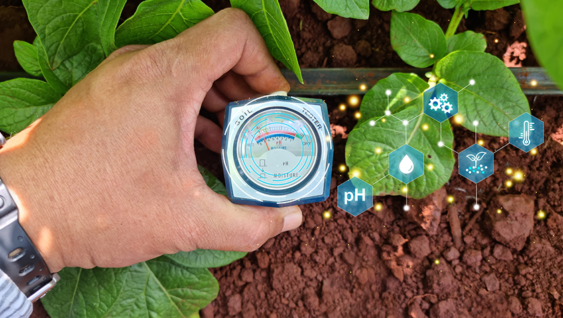
Oh, exactly right. Yeah. True, like most scientific meetings, there are going to be some lectures, but there will also be workshops where we will be teaching one another about how to do things differently, how to work with databases better than we can do now, how to do different kinds of statistical analyses. There will also be panel discussions. And then we have a bunch of fantastic field trips that are going on this week. One of them is a workshop that will be devoted to dynamic soil properties, that one we’re running in collaboration with our colleagues at the Natural Resources Conservation Service. They’re going to be demonstrating some of the analytical tools that can be used to monitor soil moisture, soil temperature, water movement, and soils in a very dynamic way that some of the new tools and new data capture techniques that we’re all interested in learning about. And that will be a field excursion to see how these tools can work in soils in Puerto Rico. We’ve got a lot of wonderful things planned for this week.
Mike Howell (14:08):
Sounds like it’s gonna be a great meeting. Dr. Thompson, is there anything else that you wanted to talk about today before we wrap this up?
Dr. Michael Thompson (14:15):
Well, one of the things that I’d like to talk about is what we are doing to look at the future of soil science. And of course, SSSA, as I said, has been around for many decades. We plan to be around for many decades in the future, and we know that the work that we do is primarily in the United States. Vast majority of our members are working in the United States, but we want to improve our connections with other soil scientists around the world too. And I’ll give you a couple of examples of that. For the last few years, we in the Soil Science Society of America have been working with our counterparts in the Soil Science Society of China to forge relationships that will help us improve our science.
(15:03):
Now, we’re all aware of the tensions that are going on today between the United States and China, and those are important issues. They have to do with trade, they have to do with technology and who controls what around the world. And those are important things to keep in mind. But that deterioration of the relationship is something that doesn’t have to extend across all phases of the relationship. In particular, we think that there are issues that soil scientists in the two countries can collaborate on, and those kinds of things relate to well, soil fertility, soil conservation, greenhouse gas emissions. These are scientific issues that transcend countries. They’re important for the entire planet. In fact, I like to say that these two countries, the United States and China are two countries that the relationship is important for the future of the entire planet one way or another.
(16:06):
So our two societies, SSSA and SSSC for the last few years have been working on ways to collaborate. We’ve produced some joint webinars together. We’re working on a book project. We’re trying to make it easier for soil scientists in the two societies to join the society, the other counterpart society at a discounted membership cost. We’re going to have a special joint symposium at our meeting in San Antonio to keep the scientists talking with one another. That’s, I think really vital. So that’s one thing that we’re working on. And I would say now we’re exploring doing basically the same kind of thing with the Soil Science Society of Brazil, another hugely important country in terms of agriculture, of course, in terms of its impact on the global environment. And so we think there’s a real opportunity, that is, where two scientific societies are working together to keep the scientists talking with one another so that we can all benefit from the new discoveries that we develop in science to make the whole world a better place to live. That’s our goal.
Mike Howell (17:19):
Well, Dr. Thompson, we sure appreciate you taking the time to step outta the meeting and visit with us today. I think you’ve given our listeners a lot to think about and a better understanding of SSSA. You mentioned the annual meeting is gonna be coming up with the tri societies, and I believe those dates are November 10th through the 13th at San Antonio. For anybody that’s listening that may be wondering if they should go to that, yes, you should. San Antonio is beautiful that time of year. It’s cooled off a little bit and they have the river walk all decorated for Christmas. If you’ve never had the opportunity to get there around that time of year, you’ll be in for quite a treat. Dr. Thompson, thanks once again for joining us. Listeners, thank you for joining in today. And as always, if you have any more questions about anything we’ve talked about today, you can visit our website that’s nutrien-eKonomics with a K dot com. Stay tuned and we’ll be back with segment two in just a few moments.
(18:08):
Listeners, I hope you enjoyed the first segment of today’s show. If you did, please take a minute and give us a rating on your favorite podcast channel or app and give us some feedback as well. We want to hear from you to help make the show even better and don’t keep it to yourself. Please share these episodes with coworkers, family, friends, anyone you think may benefit from the information we’re sharing here. Don’t forget to visit our website, nutrien-eKonomics with a K dot com to help find the latest crop nutrition news and research information as well as market updates, a growing degree day calculator, a nutrient use calculator, a rainfall tracker, and much, much more. It’s all at nutrien-eKonomics with a K dot com. Most episodes of The Dirt are now available for CCA credits. Visit our website and click on the agronomics tab to find these CCA credit opportunities. And if you have a question you can ask one of our agronomy team members, simply ask your question and one of us will get back with you. Thanks for listening. Now segment two of The Dirt.
(19:17):
Well listeners, welcome back to segment two. We’re gonna continue our spotlight of research farms around North America. Today we’re getting a little off of the mainland. We’re gonna go to Puerto Rico and talk about some of the research that’s going on there with the University of Puerto Rico. To help us do that, we’ve got Dr. David Sotomayor with us today. David, thanks for joining us.
Dr. David Sotomayor (19:36):
Thank you, Mike. Thanks for the invitation. Glad to be here.
Mike Howell (19:39):
David, if you would take just a few minutes and introduce yourself to our listeners and let ’em know what you do and, and talk a little bit about the University of Puerto Rico.
Dr. David Sotomayor (19:47):
Well, I am a research professor at the University of Puerto Rico in Mayaguez. The University of Puerto Rico in Mayaguez is a land grant institution, similar to anyone, other one in the continental US and it has a college of agriculture with, uh, three branches, extension, research and faculty. I teach soil fertility and nutrient management undergraduate and graduate courses, and I carry out research in the same area and also water quality, soil health and watershed management and soil microbiology, anything I can get my hands on. So that’s basically what I do here in Mayaguez.
Mike Howell (20:26):
Okay. David, well, before we really get into talking about the research farm, I know a lot of our listeners may not be as familiar with Puerto Rico as they are with some of the states and our provinces in Canada. If you would tell us a little bit about Puerto Rican agriculture and what types of crops you’re growing there.
Dr. David Sotomayor (20:41):
Yes. Well, uh, as you know, Puerto Rico is an island in the Caribbean of about 880,000 hectares. About 50% of the island is in slopes greater than 40%. So it creates different conditions in terms of, uh, topography than other parts of the US. Also, the climatic and precipitation regards may be quite different, especially in our southern coast. We have a semi-arid climate and we need irrigation to produce crops and those soils tend to be very fertile and deep mollisols and vertisols and that require irrigation for crop optimization. In the mountain region, there is no need for, in most instances, there is no need for irrigation, but the slope conditions are not conducive for mechanization. So a lot of activities need to be done by hand. In the northern part, there’s a similar topography as in the South where it can be mechanized, but there’s much more precipitation and the soils tend to be, uh, more varied in terms of the texture and the mineralogy. They tend to be oxisols and ultisols and some sandier inceptisols.
(21:54):
Puerto Rico agriculture is basically dependent on the United States in terms of economic and political structure. So Puerto Rico cannot enter into economic agreements with other countries unless it has been approved and passed by the United States political structure. So that creates some limitations in how our markets can function and how we can limit certain products to Puerto Rico. And as you can imagine, and the audience can imagine, that creates some price problems in terms of what we can produce and compete effectively with other countries that have a similar climatic conditions as Puerto Rico but that can produce these crops at a more economical level.
(22:44):
We produce many of the vegetables that are produced also in California and Florida in the same very similar agronomic structure, but we also produce important tropical crops, which you may not have in the US which are what we call farinaceous crops. For example, plantains and bananas and tubers such as [inaudible 00:23:06], which is [inaudible 00:23:07], which is, um… Oh, I forget the the name in English now and [inaudible 00:23:13] for example. All these are farinaceous crops that are produced in the soil and are very important from a tropical standpoint and very important for our diet. So that’s basically the different structure. And of course we cannot compete economically in grain production to the continental US.
Mike Howell (23:31):
Now David, early in my career I was working for a company and we had several seed companies working with us as well. And one thing we always did was sent different corn hybrids and soybean varieties to Puerto Rico for winter nursery just because the climate was so long there, we could get an extra crop in during the year and help ramp up that seed production. Is that something that’s still going on in Puerto Rico?
Dr. David Sotomayor (23:51):
Yeah, it has been going on. It was started about 30 years ago, uh, through the University of Puerto Rico [inaudible 00:23:57] nursery research program. And that expanded to, uh, major seed companies, Monsanto, [inaudible 00:24:04], all these other seed companies that established in Puerto Rico. They have been here for at least 20 years now, 25 years now. And they are important part of the agriculture economy because of the technology that is being used. They create high value jobs for our graduates. We have through the years maintained some research projects with some of these companies and I think they have, uh, an important function in our agriculture.
Mike Howell (24:31):
Okay. Well, David, let’s switch gears a little bit and talk about the research farm that you’re associated with. Tell us the name of the farm and some of the significant history associated with the research farm.
Dr. David Sotomayor (24:41):
Yes. I have a research project with University of Hawaii and, uh, Natural Resources Conservation Service, conservation innovation grants program. And in this research, uh, we, which we are in our third year, we are evaluating the effects of conservation practices on soil health at a commercial scale. So this is a bit different than what is usually done in typical research, which is done under control conditions, under optimization of all the variables. In this case, we have entered into agreements with farmers and we, uh, try to work with their ongoing production practices. We try to correct when these need to be corrected in order to try to showcase the optimal conditions for growing crops under commercial conditions. In this particular case, we are working with three farmers, one in the mountains and two in the southern coast of Puerto Rico. The two in the southern coast of Puerto Rico are carrying out similar conservation practice, which is the cover crop, uh, CPS 396, I believe.
(25:53):
What we are trying to do with these two farmers is try to have them incorporate the cover crop conservation practice as part of their commercial crop production schedule. So what is usually done in these farms of the southern coast is they produce crops during the winter and spring, which has a more favorable climate and less best pressure for the crop production. And then they have a long summer, part of fall fallow period. So what we are trying to incorporate is to have, if they wanna do two commercial cropping, that is okay, but we want to try to have them incorporate the cover cropping during the months of June, July and at the latest in August. That way we can have at least two months of cover cropping prior for their field preparation in the late fall and early December.
Mike Howell (26:56):
David, what are some of the results you’re finding in these research plots and how is that gonna help improve the farmer there in Puerto Rico? How’s it gonna help make those growers more profitable?
Dr. David Sotomayor (27:04):
Yeah, so we are working, one of the farmers is, uh, called uh, Finca Gonzalez, and it’s a farm of about the 150 acres and they grow, uh, watermelon, tropical pumpkin, tomato, pepperoni and papaya plants. So all these different crops are grown in different fields at different times of the year. And within that structure, we establish a six acre field, which we divided in three parts of two acres each. And we are testing conventional treatment of typical production conditions that the farmer would do, and then two cover crops. One cover crop is primarily a legume that promotes nitrogen addition. And the other cover crop is mostly a graminaceous crop such as sorghum Sudan grass or similar that can primarily provide carbon. So we’re getting different results in terms of agronomy of crop production and in terms of soil condition, depending on the treatment.
(28:03):
For example, we are in our third cycle concluding our third production phase. If… We have done three consecutive commercial crops of tropical pumpkin and watermelon. And we find that there are differences. In the, in the second year, we found differences in the crop yields of watermelon slightly higher with, uh, sorghum Sudan grass followed by crotalaria cover crops and a bit lower in conventional treatment. But then in the third year, we tried to reduce the tillage. We were hoping that with a reduction in tillage, we would have an improvement in the soil condition in soil carbon and soil health properties. But then our yields in the two, in the leguminous and the sorghum Sudan grass cover crops were slightly reduced conventional to conventional cropland.
(28:58):
So what we find is that the positive effects of the cover crop were positively offset by that reduced tillage during the commercial crops. So we find positive aspects in one year and not so positive in the second year in terms of agronomic, in terms of the crop yields. In terms of the soil condition and the soil health properties, that’s another aspect because we are exploring not only soil fertility variables, but also soil health properties.
Mike Howell (29:32):
That’s part of doing research. One year it looks really good, the next year you get totally different results and you have to figure out what’s causing those results to be different from year to year. I understand the challenges you’re facing doing that, and hopefully you can figure out what that variable is and help these growers make profit and increase those yields at the same time improving the soil health. David, we really appreciate the work that you’re doing down there. And before we sign off, you know, agriculture in Puerto Rico is a little different than it is in the United States or in continental US, you’ve got a different climate, but one thing we always talk about is some of the challenges that we’re facing. What are some of the unique challenges that the growers there in Puerto Rico are facing and what’s gonna have to be done to overcome some of those challenges?
Dr. David Sotomayor (30:13):
Yeah, I think as in the United States, we are seeing, uh, some climate change issues that need to be managed. We need to be aware how these, how precipitation and temperatures are changing and how that’s gonna be affecting our crops. And we need to work on that both from a research and from a outreach standpoint. Another important aspect that we have is labor. Being in an island, we don’t have that connection with other countries that can provide support for our field labor. So we depend on regulated visas for entry of farm workers, and that has an, a structure by itself. As many of your listeners that are participants of this program in the US, uh, greater producing farms have a bit of ease in bringing these farm workers because it takes a lot of economic effort to bring these people. So we need to find a way to improve labor availability to the farms.
(31:12):
A third and important aspect, which I don’t want to miss, is the issue of solar energy production in agricultural farms. Puerto Rico does not have the extension of land area that the continental US has, and the government and private enterprises are trying to establish the same model as in the US and it will not work because we just do not have the space to separate out farmland for solar or even do some co-location of agriculture and solar. We need to preserve our farmland in order to improve our food security because we need to improve the proportion of our consumption of our goods that are produced in Puerto Rico. So I think those are the three main issues that are important for Puerto Rico.
Mike Howell (32:03):
Well, David, we really appreciate you taking a few minutes and talking a little bit about agriculture in Puerto Rico and the university system there and how they’re helping the growers. Listeners, we appreciate you tuning in this week. As always, if you need more information on anything we’ve talked about today, you can visit our website. That’s nutrien-eKonomics with a K dot com. Until next time, this has been Mike Howell with The Dirt.