




Read Full Transcript
Mike Howell (00:08):
The Dirt with me, Mike Howell, an economics podcast where I present the down and dirty agronomic science to help grow crops and bottom lines. Inspired by eKonomics.com, farming’s go-to informational resource, I’m here to break down the latest crop nutrition research, news, and issues. Helping farmers make better business decisions through actionable insights. Let’s dig in.
(00:38)
Well, hello again everyone, and welcome back to The Dirt. We’ve got a special guest with us today, Dr. Tom Allen. Tom is with Mississippi State University and serves as a plant pathologist there. He is also the co-host of the Weekly podcast, the Crop Doctors. Now, if you haven’t listened to the Crop Doctors before, I highly encourage everyone to tune in. It’s a weekly podcast talking about anything related to crop production. They have weed scientists, entomologist, fertility specialist, economist, and much, much more presented on this program. Tom, great to have you with us. How are you doing this morning?
Dr. Tom Allen (01:13):
Mike, how are you this morning?
Mike Howell (01:15):
I’m doing great. Tom, if you will tell our listeners just a little bit about yourself, where you’re located, how long you’ve been with Mississippi State.
Dr. Tom Allen (01:22):
Sure. I am at the Delta Research and Extension Centre, which is nearest Stoneville, Mississippi. That is the main flagship experiment station within the Mississippi State system. I am an predominantly extension, 80% extension, 20% research plant pathologist, and I cover pretty much all of the row crops in the state of Mississippi with the exception of sweet potatoes. So I do corn, cotton, grain, sorghum, soybean, rice, wheat, and on the rare occasion I deal with some peanut issues as well. And if I didn’t say, I’ve been here 15 years, which some days kind of surprises me that I’ve been here that long.
Mike Howell (02:01):
It has been quite a while, Tom, and I guess we both started about the same time with Mississippi State more or less. I was down in the south part of the state working as a area agronomist and had peanut responsibility statewide. And I guess we first bumped paths when the sky was falling in the disease world with soybean rust. You had us all out looking everywhere in the world, kudzu patches and tromping all over rattlesnakes and everything else looking for soybean rust.
Dr. Tom Allen (02:28):
And we still do a good bit of that, the only difference is, back in those days we used to actually have sentinel plots that were dedicated for looking for soybean rust. And heck, I had three part-time retire rehires that did that, Andy Milling, Malcolm Broom, Billy Moore used to roam the state for me looking at things. And now it’s me with no sentinel plots. And at least I know a lot of the main kudzu patches throughout the state to go check. And there are some places that I frequent throughout South Mississippi starting about this time of the year. In the next two weeks, I’ll probably start looking at some things just to see where we’re at
Mike Howell (03:07):
Tom, just before we get kicked off good here, this is July the fifth. We’re recording this coming off of a holiday. I know you enjoyed your holiday yesterday. Anything special going on yesterday?
Dr. Tom Allen (03:19):
No, we hung out around the house and then I actually came to Stoneville to check on things and see how wet it was after we had a bunch of rain end of last week and then over the weekend just to see how dry we were in some places and start lining some things out for some more corn spraying and get some soybean plots started this week.
Mike Howell (03:37):
It’s definitely that time of year. We had all seven of the kids at the house this weekend, and somehow word got out that dad had the grill going and the swimming pool was open. So we ended up with quite a crowd at the house yesterday. And nothing wrong with that, at least we knew where everybody was at and everybody was having a good time.
Dr. Tom Allen (03:56):
We spent some good time with some friends throughout the weekend just hanging out and shooting off some fireworks here and there. It was a good prolonged weekend for sure, and I certainly got some relaxing in because now really starts the hardcore time of the year that’s not for the meek and timid moving forward.
Mike Howell (04:14):
That’s right. Your world is just getting cranked up, and the temperatures outside are getting cranked up a lot of humidity down here in this part of the world. And that’s what a lot of these diseases need to get going. Let’s get into the dirt and start talking about this relationship between soil fertility and plant diseases. When I was in school and taking plant pathology classes and learning all about this, we had the disease triangle. And I think that’s changed to a disease pyramid now, but the factors that are involved in that are, if I remember right, you’ve got to have a susceptible host. You’ve got to have the right environment. You’ve got to have time, and you’ve got to have a pathogen to get diseases in crops. And I think today what we’re going to focus mostly on is that susceptible host.
(04:55)
And one thing that we saw a lot down in South Mississippi when I was working in the row crop and you were coming around and we never could figure out was all this disease that was showing up in cotton. And it seemed like it started the first rain we got after the 4th of July and this year that would be today. We’ve already got our rain for today and it’s the day after the fourth. So I’m expecting to start seeing some of these foliar diseases show up in cotton. And that disease had a chance to get pretty bad back then. And we would actually defoliate cotton a month too early because of that disease. It just knocked all the leaves off of the crop. So we did a lot of soil sampling, we did a lot of tissue sampling back then and it always came back that we had a potassium deficiency. But we were pouring the potash to it and still couldn’t get the levels up where we need it. So Tom, what’s been going on with that? We still seeing those diseases show up and what can we do about that?
Dr. Tom Allen (05:47):
We do, Mike, you pointed out that we get to that point in the season, you start setting some pretty heavy fruit loads on a lot of these early maturing cotton varieties. And with that in mind it’s problematic talking about some of those foliar disease issues because a lot of cotton farmers will get upset about, “Well, I did plenty of fertility, I put out plenty of potassium on the soil.” And a lot of that ends up being related to how that plant accumulates and assimilates those nutrients. And when you start shifting all of your nutritional sources from leaves and moving that to bowl production, those leaves become ultra susceptible to what I just like to consider some pretty garbage fungal organisms that need that foliar potassium deficiency that’s in the cotton leaves to really get that disease initiated. And those are pretty broad group of organisms, that depending upon how the fungal taxonomy has changed over time. And as a plant pathologist, that’s one of the hardest things to really look into is how taxonomy has changed.
(06:53)
There used to be a genus called helminthosporium and they split that into several other genera over times, but helminthosporium, stemphylium, probably some cercospora and a few other just general basic organisms can jump on cotton foliage and end up leading to that premature defoliation. And then you’ll develop some of those really interesting reddish brown to maroon to just a reddish tint across some of those fields, whereby you see some of that foliar nutritional deficiencies. And then if you do go as far as sending in some foliage to have the nutrient lab test at with a comparable soil sample to look at the same thing, usually you end up with, not in every case, but in most cases you have plenty of potassium present in the soil and it’s how that plant uptakes that nutrient and uses it then throughout the season, whereby you end up with a deficiency in the actual foliage of the leaf tissue itself.
Mike Howell (07:52):
So Tom, back then one of the working hypothesis was that we were putting so much fruit on at one time that the plant just physically could not take up enough potassium, at any given time to meet the needs of the plant. Those roots are only so big, we can only force so much through it at one time. Is that still what we’re thinking just physically can’t get enough in?
Dr. Tom Allen (08:12):
In those situations where we see it, I think that’s definitely the main situation that occurs. And then lots of people try to point out, “Well, we should be putting out a fungicide to manage those or a fungicide would benefit us.” And I think a lot of plant pathologists have done some evaluations in some of their efficacy trials and point out that they still run across a lot of those disease organisms or at least some of the symptom expression that they’ll see associated with that regardless of which fungicide product they put out there. So to me, really, unless you can fix how that nutrient flow moves through that plant, or whether you can uptake just a little bit more and reduce the likelihood of ending up with a foliar deficiency, that fungicide isn’t really going to benefit you much. And there are probably some other things to look into, and I think a lot of that goes back to just basic plant physiology, and then overall balancing those nutrients within the plant itself.
Mike Howell (09:14):
So there’s no fungicides that’s really going to help us. And we’ve looked at even putting out some foliar applications of potash trying to force some of that into the leaves that way and get a little extra into the plant. We’ve increased the rates that we’re putting out. And we really just can’t find a way to get more into the plant to help out. So what can a grower do, if they know they have a situation where that happens every year, is there anything you found that can help reduce that situation or is it just something they got to live with?
Dr. Tom Allen (09:40):
I hate to say it, but I really come back to the fact I think most growers that run across that are just basically going to have to live with that situation. I’ve even gone so far as to evaluate varieties for some of those diseases and how some of those things appear in the field. And the hard part with that is, so many of these varieties are not around as long as we would like them to be to really gather some data. And the other thing there is that seed companies themselves choose those entries and variety testing programs, so we may only get a year or two to look at some of those. And as you know yourself, having done research in the past, it’s multiple years of evaluations for some of those things on specific varieties to really get a good feel for how that responds to our environment, and our general production practices, and whether that will be beneficial for cotton farmers to focus on some of those things.
Mike Howell (10:34):
Tom, we’ve talked a lot about these leaf diseases already. Is there any other diseases in cotton that are showing up this year or that you’re on the lookout for?
Dr. Tom Allen (10:43):
So far, it’s been quiet to be a plant pathologist and that’s a dubious thing to say this time of the year because usually I end up talking myself into way more work this time of the season. But the phone’s been pretty quiet, not a lot of people have been running across things in corn, soybeans, or cotton to this point. I do know that some of the other things that we could at least mention are things like the lower canopy diseases. So target spot of cotton, target spot of cotton can also be associated with some nutritional issues and the one there being over nitrogen fertilizations. So managing that, those nitrogen inputs and making sure that you’re not over fertilizing can actually help manage some of those things at just the basic field level so that you don’t end up with a situation whereby you need to make say a fungicide application to slow target spot down.
(11:35)
And then really with that in mind, the hard part is, and I know that you’ll have a lot of field related personnel listening to this, is that proper diagnosis goes a long way towards making sure that you can do something in a subsequent season or then making the right decision even in the season that you’re in, this being 2022. And I know that myself being a plant pathologist, you having enough plant pathology under your belt yourself, a lot of times it can be difficult to properly diagnose some of these things. So it’s important to make sure that we’re looking at the right disease, and we’re looking at the right thing within the plant canopy and not assuming that that we’re looking at say, target spot in the upper plant canopy, or one of these other things that is attributed to a potassium deficiency because in some cases they can look very similar to one another.
Mike Howell (12:23):
It’s hard to tell the difference. Then you throw the fertility picture in there and are we looking at a disease symptom, or are we looking at a fertility symptom, are we looking at a herbicide injury symptom? And it’s really hard to tell that, especially standing in the field. You got the sweat bouncing out of your eyes and rubbing your eyes, you can’t really see what you’re looking at. And my general rule of thumb, if I’m seeing something on a plant, I’m going to send that to a respectable lab, whether that be your lab, or one of the commercial labs, and let them run the diagnostics on that and figure out what’s going on. I think that’s money well spent for the grower and helps them know exactly what’s going on at that time of year.
Dr. Tom Allen (12:59):
Oh yeah. And for those of us that eat, sleep and breathe plant mythology, it’s really important to have a good feel for what you’re looking at and make sure that you’re looking at the right thing. So don’t be shy about sending pictures to somebody. And usually, what I tell people is take as many pictures as you want, that’s why have an unlimited phone plan to look at a lot of photos. And then the hard part is you mentioned the lots of sweat running in your eyes and everything else, make sure that those are as in focus as possible and then the greatest resolution. So I know that most cell phones will take something up to and including a four megabyte picture, and that helps because then somebody can zoom into that actual photo and look at the symptoms to see what they need to see.
(13:42)
And in a lot of cases, that can really head some things off at the pass and even reduce the need for sending some things to a diagnostic lab. Although, in a lot of cases, that’s the best thing to do because a high power, high dollar microscope sometimes is about what it takes to really properly diagnose some of these things unless you have a really good feel for what you’re looking at year over year and between fields. And in a lot of cases that can still even stump me. That’s not something to be shy about saying as a plant pathologist that, I think those of us that spend lots of time in the field know that you learn just about every year. And I still learn something new just about every week if not every day in this job.
Mike Howell (14:22):
Tom, so we talked a little bit about the possibility of having to send some samples in. If you would talk just a little bit about how you want them to handle those samples, if they need to send a sample into the lab so we don’t destroy it in the process of mailing it in and it’s still something viable when you get it.
Dr. Tom Allen (14:37):
First thing to consider is you’re better off sending a sample in with a dry paper towel in the bag, don’t add a wet paper towel. And if you’re taking a sample collection, you want the moisture and the leaf to be pretty well preserved. So Ziploc bags are fantastic for sending things in the mail or taking it to the lab. And usually what I tell people is, y’all got a water cooler or a cooler in the back of your truck, you would handle leaf tissue samples like you’d handle something that you’re going to eat later that day. Make sure it’s kept cool, don’t keep it in the cab of the truck, don’t put it on the dashboard. And if you’re shipping something, don’t ship it with a wet paper towel in that bag, you will absolutely destroy that plant tissue because if it sits in a hot mail truck, or sits in a mail room for two days, any of that moisture will get into that leaf and it’ll start growing all sorts of things that’ll just confound any plant disease diagnostician.
(15:32)
The other thing is rapidly send that sample, so overnight everything. And don’t overnight something on a Thursday and definitely don’t do that before a holiday weekend because more often than not, something shipped on a Thursday isn’t going to get there until Tuesday. And that’s really important. And I know soil samples can be handled a little bit differently. They’ll give you those nice little soil sample bags, but don’t put plant leaves in those because they tend to dry out too fast. And really, the faster you get it into a cool and environment, so sticking it in a cooler with some ice, the better off you are. And we store things in a refrigerator in some cases for seven to 10 days and it still stays pretty good. But we’ve taken it straight from the field, dropped it in a cooler, and then straight into a refrigerator. And that’s the best way to manage any of those things because you want somebody to diagnose something with the best and most fresh plant material that they can possibly get.
Mike Howell (16:27):
Okay. Tom, great information on that. Another thing you mentioned earlier was over fertilizations, especially with nitrogen. And we see that a little bit in cotton from time to time, and I think a lot of people do that because they know they can lose nitrogen, have the potential for losing that nitrogen. And used to they would put a little extra out, gets so expensive now I don’t think we’ll see that this year, but you start growing all of that under canopy and vegetation in this cotton crop and that’s going to set us up for things like bowl rot. A little early this year to start seeing anything like that, but talk a little bit about the bowl rots and those diseases and what we can do to manage those.
Dr. Tom Allen (17:03):
Boy, bowl rots that’s a wildly difficult situation to discuss. That’s a laundry list of just about every fungus in a cotton field that can jump onto a bowl and end up rotting that. And then you even have succession issues whereby something starts that rot, and you’ll have different organisms move in after that. I think the thing we all forget is cotton itself and cotton bowls have a tremendous amount of sugar in there. And what I like to tell anybody in a room that I talk to about plant pathology or plant diseases is you can grow just about every fungus that causes a disease on starch and sugar. So just straight potatoes and just almost table sugar mixed in a jar and run through an autoclave is what you basically grow any organisms in a laboratory on. So any of those bowls in the lower canopy, you can have organisms really impact those.
(17:55)
The hard part about managing those, and I think there’s always been the general thought that fungicides would really help in that situation, but you have to remember how, in most cases, at least in Mississippi, we put a tremendous amount of fungicides out by airplane. So expecting any of those products to actually get within the canopy or to the lower canopy where you really would need some of those to be most beneficial is probably not going to happen just based on regular application technology. And how we go about that. In a lot of cases, and something we talk about pretty regularly is that when you end up with some of that leaf shed in the lower canopy that may occur from something like target spot or something else, that’s actually not a bad thing because you might increase airflow and reduce the likelihood of bowl rot production. And any of those things whereby you’re doing a better job of managing your actual fertility inputs can, in essence, reduce the potential likelihood of that occurring.
(18:53)
Because then you start factoring in the use of PGRs, anything to really benefit that overall canopy architecture and keeping that plant stature short can help reduce the amount of moisture or humidity that you’ll keep within that plant canopy itself. And that’s really important because that’s the thing you touched on earlier when you talk about the disease triangle, the disease pyramid, your environment in this part of the world is really related to how much humidity you have within the plant canopy itself. And you know as well as I do, you get down to South Mississippi and you have a lot more frequent rainfall, and some of those field architecture situations are a little bit smaller. So you really constrain or limit the amount of airflow that you have in general across a lot of those fields. And whenever you have that situation, that can be a huge dumpster fire for plant disease, something like bowl rot definitely comes to mind down in that part of Mississippi.
Mike Howell (19:49):
Well, Tom, we’ve talked a lot about cotton this morning and that’s what our focus was going to be on, but what about any other crops this morning? Is there anything else you want to mention in soybeans or corn?
Dr. Tom Allen (19:59):
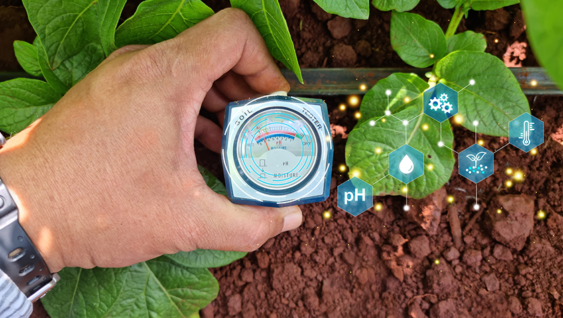
The one thing you and I talked about just briefly before we started recording was in the 1950s and 60s, the plant pathologist did a tremendous amount of work looking at the benefits of fertilizer in fertility and just general fertility practices and how that might reduce things from a standpoint of plant diseases. But the hard part is, a lot of those plant disease issues we have, whether it be pod quality issues in soybeans, or even general grain quality, a lot of those issues could be related to something as simple as a source sync relationship with potassium. So managing fertility from a standpoint of making sure that the plant has everything that it needs to finish its course and produce a good crop is really important. And then the other thing I would mention is, and definitely the key to fertility and good plant growth is just general soil pH. It’s so important to make sure that you’re monitoring those soil characteristics over time.
(20:58)
Because something as simple as soil pH can drive that entire picture and definitely change how things manifest themselves from a plant disease situation, or even just general fertility, and compound the whole entire situation when it comes to being diagnostically sound and looking at the right thing within that field setting. And heck, in the years I’ve been here, the number of telephone calls I’ve received in field situations that were related to pH were really low. But I think that’s something that staying on top of and spending those dollars to make sure that a soil laboratory looks at fertility and makes sure that you’re putting inputs back into that field situations really important, not just from overall agronomic crop growth, but even reducing the likelihood of something that could be misdiagnosed or even properly diagnosed as a plant disease issue in some of those field settings.
Mike Howell (21:52):
Tom, I’m really glad you mentioned soil pH. That’s something that we’ve done several podcasts on already this year, and different sources of lime, and how to get that pH right and maintain it for several years. But pH is critical and I’m glad you mentioned that. I didn’t pay you extra to mention pH this morning, so thanks a lot on that one. Is there anything else we need to talk about before we wrap things up this morning?
Dr. Tom Allen (22:14):
I think your listeners should be mindful that in each of their respective states, there probably is a plant pathologist that definitely would be willing to look at pictures or walk fields with them. And I know I do that with a lot of retailers. That’s something that I feel is pretty important because a lot of these kids that go to school and get hired and some of these jobs may not have a background in looking at some of those things.
Mike Howell (22:35):
Right.
Dr. Tom Allen (22:35):
So I know that leaning on people that have that expertise is important and I think that’s something that all of my counterparts are really willing to help in because it’s really important. And definitely to keep some of those things in the back of your mind that what you’re looking at either could or could not be a plant disease issue. And I know that, like I said, I get lots of pictures on my phone throughout the season, and that’s something I devote a lot of time to looking at things and talking to retailers off and on throughout the year about diagnostics and looking at specific plant diseases. And it’s not just necessarily, about making a fungicide application. In a lot of cases, we look at a lot of things in field situations that are not diseases and could be related to something as simple as just off target herbicide application.
Mike Howell (23:20):
Tom, we really appreciate you taking the time to visit with us today. You’ve shared a lot of information that directly relates to soil fertility, and plant pathology, disease management, things that these farmers are going to really be able to take home and apply on their fields. Want to also remind everyone if you have not tuned into the Crop Doctors Podcast, that’s a weekly production by the Mississippi State Extension Service. Tom is the co-host of that, and they present a lot of timely information on that podcast that I think everyone would benefit from listening to. Listeners, I want to remind you to join in again next week as we continue our series that we’ve started on the Essential Plant Nutrients. We’ll be starting this back again next week talking about zinc. Until next time, this has been Mike Howell with The Dirt.