





Read Full Transcript
Mike Howell (00:08):
The Dirt with me, Mike Howell, an economics podcast where I present the down and dirty agronomic science to help grow crops and bottom lines. Inspired by ekonomics.com, farming’s go-to informational resource, I’m here to break down the latest crop nutrition research, news, and issues, helping farmers make better business decisions through actionable insights. Let’s dig in. Last time on The Dirt, we talked about the importance of soil sampling and how to collect good soil samples. Today, let’s take what we’ve learned to the next level and talk about interpreting a soil test report. Last time, we discussed taking a soil sample can take some time and a little bit of work to complete, but all of that effort is for nothing if we don’t know how to properly interpret the reports and how to utilize the information that’s in them. To help us better understand how to interpret a soil test report, I’m pleased to have with us today Dr. Nathan Slaton with the University of Arkansas. Dr. Slaton, welcome to The Dirt.
Nathan Slaton (01:10):
Thank you for having me, Mike. It’s a pleasure to be here.
Mike Howell (01:12):
Dr. Slaton, before we begin talking about the importance of soil tests, tell our listeners a little bit about yourself.
Nathan Slaton (01:19):
Thanks, Mike. I’ve been here at the University of Arkansas in one capacity or another, ranging from a county extension agent starting in 1989 to extension rice agronomist for a few years in the late ’90s, and in the position of director of soil testing since 2001. My current position is the Associate Director of the Arkansas Agricultural Experiment Station and the Assistant Director of the Arkansas Ag Experiment Station.
Mike Howell (01:53):
Okay. Dr. Slaton, that definitely qualifies you to talk to our listeners today about interpreting soil test reports. Let’s jump right in and get to the dirt. First off, we know that growers have a choice in soil testing labs. Each lab is going to have its own format for reporting the data. Some of them may have graphs or some may just report numbers. These graphs may be different colours, the bars may go one direction or another. Are there really any differences in these reports or are they all the same information, just the way it’s presented to the grower?
Nathan Slaton (02:26):
Well, this is a great point to discuss. Mike. In our lab, and I’m sure this is true for most commercial labs and other land grant institution labs as well, a large percentage of the samples now really don’t get a hard copy soil test report. The grower or the consultant simply gets a CSV data file that has all of the analytical information in it, or they have programs that scavenge that information from websites. For the growers that do get an actual soil test report, I think, you characterized it pretty well in that most soil test reports contain some fundamental information about the grower and the field that was sampled. Most soil test reports hopefully include the information about the specific soil test and soil pH methods that were used by the lab. Generally, there’s a section that has numerical values associated with the analytical results such as pH, soil test P and K, and any other nutrients that might have been determined.
(03:38)
They also would include units, which is something that growers really need to pay attention to, whether they’re parts per million or pounds per acre, because those numbers differ from each other pretty substantially. A lot of labs, as you mentioned, have graphics that go along with the most important components of those soil test values along with what we would call a soil test level. The soil test level is generally just a common name that sometimes the numbers don’t mean a whole lot to us, but if we say that your soil test K is 60 parts per million, and out to the side of it, it says low along with some graphic representation that indicates where low transitions to medium and medium transitions to higher or optimum, that helps the end user, I think, understand the relative number in regards to plant nutrition, and yield potential, and the need for fertilizations.
Mike Howell (04:43):
Right. Well, Dr. Slaton, you just touched on something that raises another question. I’ve had growers in the past that will send a sample to two different labs. One lab will come back and say one thing and another lab will report a different numeric value. It may both be requiring fertilizer or both may not require fertilizer, but the numeric value is different. Talk a little bit about the difference in those numbers. Is one correct and one incorrect, or why are those numbers different?
Nathan Slaton (05:09):
Well, most labs today participate in proficiency testing programs that help the lab keep track and make sure that what they report to their clients is accurate and precise and information, meaning that if you send that exact soil sample to them again, they do the same extraction in the lab, that they should be able to reproduce that number. There’s really two sources, I think, of variation that come to mind with the scenario that you indicated. Number one is something I mentioned in the previous comment, and that is the soil test method. Not all soil test methods are the same, and we’re talking about rapid tests that are performed in the lab with different chemicals. A soil test such as a Olsen soil test for phosphorus extracts different sources of P in the soil than, say, the Mehlich 3 or the Bray 1 test. The numbers are going to be different, and each of those numbers have to be interpreted on different scales that are appropriate and specific to that method.
(06:22)
That’s why it’s really important for soil test reports to include the soil test methodology that is performed in the lab to help, whether it’s the end user, or their agronomist, or a state extension specialist, or county agent, to look at that and be able to give meaning to those numbers based on the method that was used. The other variation that could occur causing numbers to be different, again, is the units. Some labs report units in parts per million. Other labs report units in pounds per acre, with the assumption that the sample was collected from an acre furrow slice that weighs 2 million pounds per acre. If you think about an acre furrow slice weighing 2 million pounds as the units of pounds per acre and the other units of parts per million, parts per million is simply going to be one half of pounds per acre when that assumption is made about an acre furrow slice.
Mike Howell (07:26):
That’s an awful lot of math for this early in the morning, Dr. Slaton. Next question. What on a soil test report should growers be looking at? What are some of the most important factors that they need to be aware of?
Nathan Slaton (07:37):
Well, the most important factors, I think, obviously the numerical values that show up if you’re using the same lab and the same methods across time, the numerical values for pH, soil test P, soil test K, those are very important both within a single year and also to track across time. That would be, I think, the first thing. The second thing that I think is of paramount importance and really the reason why we’re taking soil samples is the fertilizer recommendations that are provided that specifically address the rate factor of the 4R nutrient management. Generally, your soil test information will also include, a lot of times, information about the other Rs of nutrient management, about nutrient sources, times of application, methods of application. But the primary thing that we’re looking at, most often, with soil test P and K is what is the soil test level? Is the soil going to be responsive to fertilizations? If it is, what rate of P or K should be applied?
Mike Howell (08:56):
That’s some great information. I know that’s one thing a lot of growers are definitely interested in this year, is how much P and K should they apply. We often hear people talk about applying nutrients and building that Soil Bank up. This year, we’re hearing a lot of people talk about maybe tapping into some of those reserves in the Soil Bank with these high prices. Dr. Slaton, what else is on that soil test report? I know there’s things on there, like the pH that’s really important growers need to take a look at. What else do we need to be looking for?
Nathan Slaton (09:25):
Well, depending on the lab and I guess the package sometimes that you get, soil test reports may include information on secondary and micronutrients such as calcium, magnesium, sulphur, zinc, copper, et cetera. We don’t always have great information to interpret all of those, but I do think it’s important that that information is listed on there, because if we’re ever trying to troubleshoot a field that maybe just isn’t performing right, sometimes when you start seeing problems over and over again, looking at those soil test reports, you may always notice that soil test zinc is always really low in a field that has really high soil test P. We know that there can be interactions there. Some information, we report, but don’t necessarily always have great meaning.
(10:21)
An example of that, at least here in Arkansas, is boron. Even though we have boron deficiencies in some of our crops, we have never really been able to find a good correlation between soil test boron with the Mehlich 3 method and whether the crop is going to suffer boron deficiency. Now, on the flip side, if your soil test comes back really, really high in boron, that can be telling. Again, that’s one of those examples where from making fertilizer recommendations for boron, it doesn’t, or at least in the past, it has not helped us. But maybe for another crop, identifying a potential boron toxicity problem, whether it’s industrial waste application or maybe a fertilizer mishap or misapplication in a field, that information can be important.
Mike Howell (11:19):
Okay. Dr. Slaton, earlier, you mentioned soil test would come back and the [inaudible 00:11:24] is high, medium, or moderate, or low soil tests for different nutrients. Tell us a little bit more about what those levels mean.
Nathan Slaton (11:32):
Well, those, again, are the soil test levels that help the end user understand the numerical meaning. Researchers, not just land grant institution, but also there’s a lot of private researchers out there that do this type of work. There’s a lot of research that we call correlation and calibration research that goes into giving those numbers meaning, and then assigning those soil test level names. Basically, this is not what we’re talking about as one or two tests a year here and there. To give those soil test values meaning and apply the labels of soil test levels to them, we’re talking about dozens upon dozens of test that allow us to look at fertilizer responsiveness at different soil test values that run the gamut from being very low to very high to identify, again, a break point, if you will, where soils are responsive to fertilizations, when the soil test value is below that point, and where the soils and the crops that are grown on those soils are not responsive when the soil test values are higher than that point.
Mike Howell (12:52):
Dr. Slaton, you’ve been looking at soil reports for a long time and helping growers in Arkansas and other states as well for an awful long time. What’s the most common mistake that you see growers make when they’re looking at a soil test report?
Nathan Slaton (13:05):
Well, it’s hard to place blame here, but probably the most common mistake that is made in examining fertilizer recommendations and soil test reports is not necessarily understanding the fertilizations philosophy of the lab that the samples are being sent to and the recommendations are being generated from. Typically, that information is not put anywhere on the soil test report. It’s what we call the fertilizations philosophy, and whether those recommended fertilizer rates are based upon a sufficiency type approach, which a lot of people consider conservative and maybe more apt to under fertilized crops, or compared to the alternative, which is frequently called the build and maintain philosophy, which I think you alluded to earlier when you talked about growers tapping into the reserves. That’s where either when crop prices are high or fertilizer prices are low, and I don’t know that we ever get those two combinations in the same year.
(14:18)
But where it may be more affordable to apply fertilizer in a particular year, you’re kind of using that as a bank roll and trying to maintain your soil test values at a level that is optimal for the plant, and trying to replace the nutrients that are removed by the harvested portion of the crop. When you split a sample and send it to two labs, a lot of times, if those labs are using the exact same soil test methods and the same units to report the values that come back for those soil samples can be almost identical, but the fertilizer recommendations can be vastly different. A lot of times, that is simply due to the fertilizations philosophy that the lab has adopted and is communicating out to the farmers. It’s the information that’s not easily transparent to the end user, and the end user really has to talk to the lab’s agronomist or the state extension specialist to fully understand the fertilizations philosophy that is being communicated with those recommendations.
Mike Howell (15:28):
I can’t think of a time that that’d be any more important than this year with the high cost of fertilizer and all the inputs that growers are going to be dealing with this year. I think it’s critical that they understand wherever dollar’s going and what they’re expecting to get out of that. Dr. Slaton, one thing that I see on a lot of soil test is the CEC or the cation exchange capacity. When I was working with the extension, that was one of the most common questions I got asked. Tell us a little bit about why that’s important and what it means to a grower.
Nathan Slaton (15:58):
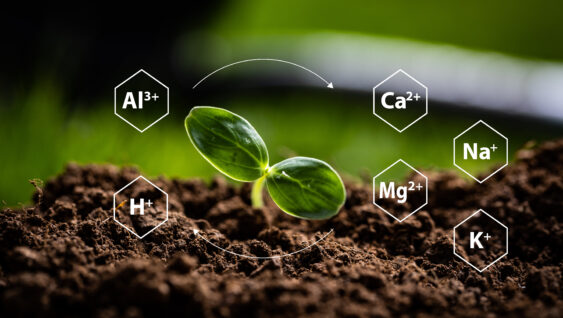
Well, one of the things that I did not mention earlier about information that’s put on the soil test report is the cation exchange capacity, buffer capacity, and very specific cation saturation ratios. This is important information to have. But specifically for cation exchange capacity, it’s a chemical property of the soil that’s largely influenced by the soil clay content, clay type, whether it’s a 1:1 clay or a 2:1 clay, a soil organic matter content, and to some degree, soil pH. As clay content increases or as soil organic matter content increases, cation exchange capacity increases. Really what cation exchange capacity communicates to the end user or their farmer is what is the soil’s nutrient holding capacity. The higher that cation exchange capacity number, the better able it is to hold cation, but really the same is really true for phosphorus as well. Typically, soil testing, as we know it, extracts and communicates what we like to think of as plant available nutrients. But if you think of it in a different way, total nutrient content of the soil, the soil’s total nutrient content also increases as cation exchange capacity typically increases.
Mike Howell (17:28):
Okay. In our last episode, we talked a little bit about zone sampling, and I know a lot of growers are utilising zone sampling and variable rate technology to apply fertilizer. Dr. Slaton, can you tell us a little bit about this and why a grower may want to use zone applications or variable rate applications?
Nathan Slaton (17:46):
Sure. A lot of our growers are at different points of evolution, I guess you could say, in how they are using grid soil sampling, zone sampling, variable rate fertilizer applications. Zone sampling is a technique that I think has kind of slowly evolved from grid soil samples, and that is where the farmers are typically making decisions on how to manage specific field areas that have similar properties. Typically, those zones are identified using some type of management or soil test information that is hopefully correlated with how the crop is going to respond to fertilizations. But I guess I would communicate that the soil test information and zones that may have similar soil test P or soil test K, to me, that’s just part of the puzzle. We’re at a point now, or many people are at the point who have been doing precision agriculture in regards to soil fertility of grid soil sampling and variable rate fertilizations, that they are also getting lots of other information, and that’s whether it’s field elevation, soil texture.
(19:05)
One of the probably most important things other than those soil properties is crop yield maps, and being able to look at those yield maps in relation to potential zones in the field that have similar soil test values to make a decision as to whether or not you need extra fertilizer because those zones are high yielding or less fertilizer because they’re low yielding sites that may have some other physical limitation to crop yield that’s just simply not related to fertility. There’s different decisions that can be made based on the characteristics of those zones. I don’t know if that completely answers your question. I may have complicated it by saying there’s a wealth of other information that I think has to go into the decisions about how we not only apply fertilizer across the field, but once we start isolating zones to make sure we’re making the correct decision.
Mike Howell (20:09):
Great explanation, Dr. Slaton, Dr. Slaton, we’ve talked about an awful lot of stuff this morning. Is there anything that we may have missed? Anything else you think we need to talk about this morning?
Nathan Slaton (20:19):
If we talked about anything else, I’d go back to what is another common mistake that we make when we interpret our soil test results. I touched on this a little bit earlier, but a lot of times, we think of our soil test P and K values was absolute values rather than availability index. In reality, those soil test values, that’s really all they are, is simply an index of availability. Most labs have put the part per million or pounds per acre units on there, and we tend to think if your soil test has 200 pounds K per acre, that that’s all there is there, but that’s not actually the truth. That is simply, again, just an index of availability for the depth of soil that was sampled.
(21:10)
There’s nutrients available to the plant below that sample depth, and if you were to extract that soil in the lab a second time, you would continue to get some nutrients out of it. Sometimes I think, and I’m not just saying this from the conservative university standpoint, because we definitely know that we have some really nutrient deficient soils out there that require a lot of nutrient management expertise to make them fertile and to grow a good crop, but in many instances, I think we shortchange or underestimate the amount of nutrients that a soil can supply. I think that’s a really important point to make in a year where we’re looking at $800 tonne in phosphate and potash sources.
Mike Howell (22:00):
Dr. Slaton, thank you so much for joining us today. I think you’ve done a great job explaining how to interpret a soil test report. There’s a lot of information that you’ve provided for us, but what if growers still have questions, or need more information, or just don’t understand all there is to know about this? Where can they go for additional help?
Nathan Slaton (22:19):
Well, I think there is a wealth of sources out there for additional help. We have excellent county extension agents, extension and research scientists within the land grant institutions, and certified crop advisors. There’s a reason why they’re certified. They’re highly knowledgeable. I would encourage farmers to reach out to them. Not just one, but sometimes it’s good to get a second opinion just to see the diversity of philosophies and expertise that exist out there, and consider everything when you’re making decisions, especially in a year where fertilizer prices are extremely high.
Mike Howell (23:01):
Okay. Dr. Slaton, thank you so much for all your information today. I know the listeners are really appreciating this. Join us next time on The Dirt when we’ll be talking with some growers from the 2022 Farm and Gin Show that took place in Memphis recently. Going to talk with them about challenges and opportunities they see for this coming growing season. Also want to remind everyone, if you need more information on any of these topics we’re talking about, you can visit our website at www.nutrient/ekonomics.com. I also want to thank our listeners for joining us today. Until next time, thanks for listening.