






Read Full Transcript
Mike Howell: The Dirt with me, Mike Howell, an economics podcast where I present the down and dirty agronomic science to help grow crops and bottom lines. Inspired by economics.com farming’s go-to informational resource. I’m here to break down the latest crop nutrition research, news, and issues helping farmers make better business decisions through actionable insights. Let’s dig in. Well, hello again everyone. I appreciate you tuning in this week for this episode of the Dirt. Uh, we have Dr. Eve Hinckley here this week to talk about the role Sulfur has in crop production and the interactions that Sulfur has with some other nutrients. Dr. Hinckley, welcome to the Dirt.
Dr. Eve-Lyn Hinckley: Thanks for having me, Mike. It’s great to be here.
Mike Howell: Now, I first met Dr. Hinckley about a year ago, uh, at the World Sulfur Symposium that was held in Edinburgh. Uh, Scotland, I guess that was close to two years ago now. Uh, time flies, but, uh, at that time, Dr. Hinckley was there as a guest talking about the role of sulfur and, and how sulfur interacted with some, uh, other nutrients.
And I thought it would be great to get her on the podcast. Uh, and share some of that information with us. Now, before we get off into that, uh, we were having dinner one night there and we got to talking a lot about our, our pets back home. My kids have had some unusual pets over the years. We’re not gonna get into that, but, uh, Dr.
Hinckley was mentioning that they were taking some classes to get a new pet and that kind of. Perk my attention, and I thought we may wanna talk about that just a little bit. Uh, I have not ever met anybody that was into falconry and, and much less out of Falcon. So, Dr. Hinckley, tell us a little bit about what, what you’re working on there.
Dr. Eve-Lyn Hinckley: I love that you bring this up, Mike. So my son, who’s 13, has a lot of really varied, unique interests and he came to me last year and said, you know what, mama? I really wanna take a falconry class. And I thought, perfect, let’s do it. So we took a trip down to Colorado Springs and we got to work with a falconer for a couple hours and it was really, uh.
Transformative experience, I would say, and for me as an ecosystem scientist who studies how all the parts of ecosystems work together to get to work with a bird like that where you’re using the ecology of the bird and you’re using its natural instincts. To work together to hunt rabbits. It was like a perfect extension of what I do in my work, and my son and I got back in the car after this and looked at each other and said, oh, we’re, we’re doing it.
And so, you know, it’s not the case that you can just get yourself a Falcon or a Hawk right off the bat. We’ve got about two years. Of classes and apprenticeship ahead of us. And we have not yet told the 20 chickens that live in our backyard that they will be cohabitating with a hawk one day. So we’ll see how this all goes in
Mike Howell: suburban boulder, Colorado.
That could be very interesting. Uh, the, the hawk and the chickens, I know what would happen around my house if the, if the hawk got around the chickens, but, uh, but you can figure out how to keep that from happening there. It’ll be our challenge. Yes. Let’s jump in and talk a little bit now about what we wanted to talk about today.
Uh, Dr. Hinckley, uh, give us a little bit about your background. I know you’re not an agronomist like most of the guests we have on here today. Uh, tell us what you do and how you got interested in sulfur.
Dr. Eve-Lyn Hinckley: Well, thanks for outing me as not being an agronomist. Mike, I can always count on you. And that is true.
I think about, um, elements and, and plant nutrition perhaps with a different lens than many of the folks in your audience, but will hopefully offer an interesting perspective. So I’m a professor at University of Colorado Boulder. And, uh, for the last 20 years I’ve been studying, um, many different elements in how they react in the environment.
But pertinent to our conversation today, I’ve been studying how our use of sulfur in agriculture is changing. And we do that doing, um, field and laboratory experiments in, um, farmlands, um, working directly with farmers. But more and more I’ve been getting interested in how. The use and the flows of sulfur are changing in agriculture at national to international scales because sulfur shows up everywhere.
It’s not just a plant nutrient, it’s also used as a fungicide and a pesticide and a soil conditioner and a change pH and uh, humans have been using it since the time of the Egyptian, so we have a long and tight relationship with sulfur, and that’s what I’m interested in really broadly.
Mike Howell: Okay, well we have spent a lot of time talking about sulfur, uh, here on the dirt.
You know, the first time I heard you speak, you were talking about sulfur and how it reacted with the different nutrients, and you showed a map and, and one thing on that map really caught my attention, and you probably don’t even remember the map you showed, uh, much less all the little dots on it, but there was a.at Greenwood, Mississippi right there on the Yazoo River.
That really piqued my attention. Uh, I’ve done a lot of fishing on the Yazoo River and, uh, consumed a lot of fish that came out of that river. And I, I had always heard that we may have an issue with Mercury from time to time, uh, in that river. But, uh, I never, never really paid much attention to it. It definitely hasn’t affected me that I could tell.
But, uh, uh, I got interested in that. Talk a little bit about, uh, how sulfur could affect the levels of mercury and, and some other nutrients.
Dr. Eve-Lyn Hinckley: So this is a really interesting feature of studying sulfur, and it is a critical plant nutrient. And I know you’ve had our good friend Alan Blaylock on the podcast talking about how critical sulfur is now to plant nutrition.
But the other part of this that we have to pay attention to is what happens when sulfur is in excess in the environment and what’s its fate after it has leached out of agricultural lands. And sometimes it’s from agriculture, sometimes it’s from other sources. But what you’re talking about in the Yazoo River is actually when sulfur interacts with organic matter and mercury in a flooded setting where there’s very low oxygen.
And what can happen in that situation is that you get the production of Methylmercury, which is a neurotoxin that Bioaccumulates and bio magnifies. In the food chain, and that means that if you’re phishing and you’re getting sort of higher order fish, you could have potentially very high concentrations of that neurotoxin in the fish tissues.
The reason for this is that the sulfate actually gets reduced in that environment. That organic matter is a carbon source. It’s an energy source that fuels sulfate reduction and that reduction of sulfur. Actually stimulates the Mercury methylators that do the work to change the form of Mercury from its inorganic form, which it’s all over an inorganic form because we’ve got a lot of mercury cycling from industrial sources.
But it changes it into this organic form that is potentially very dangerous, and in particular to the Yazoo River. There’s a big reforestation project that’s been going on there for some time that you might know about, which is great for river Health. It’s great for the health of watersheds, but what it also does is it adds organic matter to that river, which is gonna be one of those ingredients to stimulate the production of Methylmercury.
So this. The example that you have asked me to talk about that I know hits close to home for you, it’s actually a great example of the complexity of these interactions of elements and also how the decisions that we make on landscapes have both positive effects and can have unintended negative consequences.
Mike Howell: Dr. Hinckley, you mentioned that, that that was the one I asked you to talk about. That’s the one that hits close to me. But I also remember you talked about some other, uh, interesting situations, uh, where we can run into some, uh, issues if we have too much sulfur. Any other situations you wanna talk about today?
Uh, something we need to keep our eye out on?
Dr. Eve-Lyn Hinckley: Yeah, so there are a couple things. The other part of it is that if you have excess sulfate in aquatic ecosystems, so think about wetlands and other inundated areas. High levels of reduced sulfur can actually create toxicity for the plants, and it makes it so the plants can’t grow.
So that’s another management issue. The other one that hits close to home for farmers is that we have to pay attention to pH changes. So for example, if you’re using elemental sulfur as a fertilizer or as a fungicide, most likely in an oxygenated environment, it’s going to oxidize, and that process produces acidity.
Is then gonna have an effect on the soils. So long term use of sulfur in agricultural settings could have acidifying effects, which create another management issue for farmers. So there are a number of factors to look at. Along with that acidifying effect, when that sulfate leches out of a farmer’s field, it can take with it valuable micronutrients like cation, magnesium, calcium, sodium, potassium.
So that’s also another management consideration. So the balance of sulfur in terms of the forms, the amounts, and the timing that is going on to crops. Is going to have an effect on what those potential consequences are. And that’s, for example, what we try to understand in my research group so that we can work with farmers to minimize those effects that they don’t wanna have both on their land and in adjacent areas.
Mike Howell: You know, that’s something we spend a lot of time talking about, especially with, uh, nutrients like nitrogen. Uh, we’re we’re worried about nitrogen leaving the field and getting in places where it doesn’t need to be. And we’ve also discovered here recently that there’s an interesting interaction between nitrogen and sulfur.
Uh. We had Dr. Blaylock on last year, and we talked a good bit about that. But, uh, uh, talk a little bit about the, the interaction between nitrogen and sulfur and how they work together.
Dr. Eve-Lyn Hinckley: I am so glad that you asked me this. This is one of the most exciting areas of research related to our use of sulfur. I think both sulfur and nitrogen are really important for, um, a fundamental building block of all living organisms, which is the synthesis of amino acids and proteins.
So. Important stuff and they work together to do that. Um, and in the last year, there have been a couple of really interesting studies that have come out. You know, we tend to look at these elements like sulfur or nitrogen or phosphorus in isolation, but the reality. Is that they interact and they affect crop nutrition together.
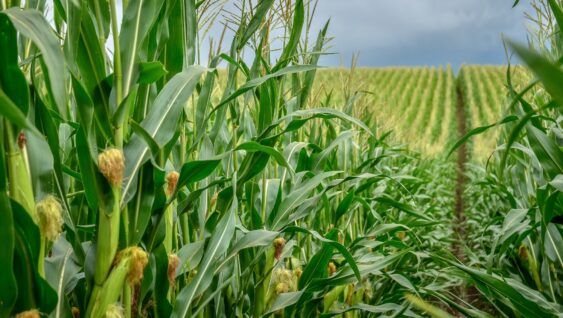
And what we’re finding about sulfur is that it can actually increase the nitrogen use sufficiency of crops like corn. And so there’s been some really interesting work that’s come out of the USDA, for example, showing that in corn systems. In, uh, the US and Mali and Ghana, that there is a better nitrogen use efficiency with the addition of sulfur and lower losses of nitrate from crops, which means fewer environmental consequences.
Because one of the things we worry about with nitrogen is that if you have nitrogen leaching outta your field. It can make it into an aquatic system with low nitrogen and actually stimulate lgal growth leading to eutification, which we don’t want. The other thing that’s coming out, and this was a new paper this year, is that sometimes we see a stimulating effect of adding sulfur in addition to nitrogen.
And this is in particular for, for early stages of growth in corn. But not only are we seeing more growth in the plant, we’re also finding that because of that increased nitrogen use efficiency. If you account for the full economics of it, it actually saves farmers money to add sulfur. And then if they’re timing their nitrogen additions and using the right form, they can actually reduce the amount of nitrogen that they have to add, and they’ve got more money in their pockets.
So this is a wonderful example of real sustainable farming by understanding the interactions of these nutrients where. It might not be a direct stimulating effect on the plant, but it actually makes the plant use the inputs more efficiently and reduce the amount that the farmer has to put on, which is great for the farmer and great for the environment.
Mike Howell: You know, Dr. Hinckley, the things you’re saying are, are going right along with a lot of things we’ve been talking about. Uh, we, we talk a lot about four R nutrient management and most of the time people think about that with nitrogen, but it’s, it’s not necessarily just with nitrogen. We can practice the four R’s with any nutrient that we’re gonna be applying to these crops.
And I think you’ve given several examples here where we can, uh, look at for r nutrient management in relation to sulfur. Sulfur is, is getting a lot of attention these days. Uh, talk a little bit about why sulfur is, is getting more and more attention and why we’re seeing so much more use of sulfur these days.
Dr. Eve-Lyn Hinckley: One of the major reasons is that we’ve cleaned up the air, and this is something we did as a result of the Clean Air Acts in amendments, and it used to be that in particularly polluted areas, we happen to be raining out exactly the amount of sulfur. That was needed by crops like corn. So take for example, the Midwestern us, but then you clean up those smoke stacks and you actually have no more free supply of sulfur.
And so farmers were right on top of this. They saw that sulfur deficiency and they knew what was going on and they’ve started to add it. And the research community is now catching up. To try to understand and dial in where sulfur is needed, when, and what the other factors are that affect sulfur availability in different soils.
So a big driving factor when it comes as a fertilizer is that change in air quality, which is not to say we should be polluting the skies again so that we can have free sulfur coming out. No, I think it’s that. We need to be learning how to manage that, um, sulfur that we’re adding really well, so that we can achieve our goals in the field and help reduce impacts on the environment.
The other places where it’s showing up is with greater intensification of croplands, with intensification of croplands. There’s more sulfur needed for other reasons, and as I mentioned, it does get added as a fungicide. For example, in wine grape. Or as a pesticide or, uh, to change pH. And so that’s gonna have some of the same effects in terms of plant nutrition, even though it’s added for a different reason.
So there are many reasons to be studying sulfur and paying attention to it. Now, in addition to understanding where that legacy sulfur from atmospheric deposition from acid rain, that’s still in some soils when that is becoming available to crops. If you can get it out of the organic pool, you don’t have to add it as an amendment, and that’s also a savings.
So there’s work to be done to understand the rates at which sulfur that’s already been stored in soils becomes available. So a lot of need for that. And you mentioned the four Rs, and I think one of the really interesting, um, opportunities with sulfur is that with nitrogen and phosphorus, we really were reactive about those issues in croplands in terms of dialing in how much nitrogen and phosphorus are are needed and trying to minimize environmental impacts.
The sulfur issue is relatively recent to the last couple of decades, and I think there’s a real opportunity to show how we can manage sulfur really well in croplands, where those lessons can be translated to other elements too, and we don’t have to be reactive. We know there are reasons to manage sulfur well, and so I say, let’s go, let’s work together and make that happen.
Mike Howell: The only way we can do this and, and figure things out is to, to do more research. Uh, you know, sulfur is one that we haven’t spent as much time researching as some of our other nutrients. And we learned at the last Sulfur World Symposium, uh, that there’s a new project coming out, uh, looking at, at the. The need for more soul for research and uh, I think that project is getting spearheaded now and, uh, I think you’re one of the key contributors to that.
Can you talk a little bit about this, uh, new project that’s going on and what y’all will be looking for?
Dr. Eve-Lyn Hinckley: This is true, Mike. This is really exciting. So this project is coming about by a collaboration between the Sulfur Institute and the International Fertilizer Association, and the International Fertilizer Association works together with.
The UN and the Food and Agriculture Organization. So this is really like a, a global forum here. And the idea with this collaboration is that I and my colleague, Patrizio Gini, who is at the University of Nebraska, are spearheading the first global analysis of sulfur deficiency. By crop system, looking at areas where, um, sulfur is going to be needed in the near future, and looking at the time series of fertilizer use over time in those areas, as well as the changes in atmospheric deposition.
So the idea is to create. A data resource for farmers, for scientists, for industry members to use to understand the flows of sulfur internationally and where it’s going to be needed in terms of crop systems around the world. And so we’re gonna be doing that by. Really mining available information from industry and from agronomists, from extension agents and from literature to pull together all this information.
And we’re using some really cool models too. Um, computer models to look at. Changes in atmospheric sulfur deposition. And so where sulfur is going to be needed in the future. And the combination of those approaches and tools is gonna help us to put together this picture that we don’t have. We’ve done this for elements like nitrogen and the International Fertilizer Association has just put together a really beautiful data set on nitrogen globally.
Um, but now is our opportunity to do it for sulfur and it’s, um, it’s because the sulfur community. Has come together to make this happen.
Mike Howell: Yeah, I think this is some real exciting, uh, information. Is this just gonna be for, uh, sulfur that’s used as fertilizer or is this gonna be looking at some, some other uses of sulfur as well?
You know, you mentioned, uh, uh, the, the, um, fungicide aspects of sulfur. Uh, we know we use sulfur as a, a soil amendment sometimes, and then we’ve got a bunch of other uses in industrial supply. So what all are we gonna be looking at?
Dr. Eve-Lyn Hinckley: The wonderful thing about this project is that there’s so much enthusiasm for it, and when we talk to different people, they say, oh, could you look at this?
Could you look at that? Could you look at the interactions of sulfur with something else? Could you do a field trial? And the reality is that for this first cut, we can’t do everything. So our primary focus is on sulfur as a fertilizer and on crop nutrition, however. I suspect that as we start to look for information, we’re going to find information and studies that have been done using sulfur for other applications like you mentioned.
And so we will include that in the data that we make available publicly as we are able to get it. But our primary focus is on. Sulfur as a nutrient and fertilizer.
Mike Howell: Well, Dr. Hinckley, we’ve talked about a lot, uh, related to sulfur today. Uh, I know you’ve spent, uh, as you said the last 20 years, uh, looking at sulfur in, in some way or another.
Is there anything else that you think we need to talk about today before we wrap this episode up?
Dr. Eve-Lyn Hinckley: I guess what I’d say is that, um, in my experience working directly with farmers that use sulfur and in trying to push this at broader and broader scales to use sulfur smartly, there’s resounding support for doing this really well, and I’m really excited about that.
So one of the primary things that I’m looking forward to is really. Helping to make sulfur. An example, an example of an element that interacts with multiple other elements in terms of improving crop nutrition. An element that has a big effect on our environment. We talked about its role in methyl mercury production and how.
Really good management of sulfur could actually reduce the consequences of, um, that problem. And I’m really excited about the potential to have an example in sustainable farming where if we work really smartly with sulfur. We can work really smartly with other elements like nitrogen, phosphorus, and potassium.
So for me, what I’d like to say is this is a great time to be thinking about this nutrient to be working on this nutrient and to be getting the global sulfur community together to provide that information. So I really appreciate having the opportunity to talk about this with you today.
Mike Howell: Hopefully we can have you back on after, uh, this project has, has wound down, and talk about what you found, uh, where, where this sulfur is gonna be needed the most.
And when, uh, Dr. Hinckley, once again, thanks for joining us today. I think we’ve got a lot out of this episode. Uh, listeners, if you will, uh, hang on for just a couple of minutes and we’ll be right back with segment two. Farming Isn’t Farming without Questions, and now there’s a place to go for answers. At economics, an entire team of agronomists is waiting and ready to help for free.
No question is too big or too small. Visit nutrien-ekonomics.com and submit your question with the ask an agronomist feature. Listeners, welcome back for segment two. Uh, segment two. Today we’re gonna be asking an agronomist, uh, another important question to help us with that. Today we have Lyle Cowell, senior Agronomist with Nutrien, uh, covering our Canadian region.
Uh, Lyle Welcome back. Thanks for having me,
Lyle Cowell: Mike. Always great to be part of your podcast.
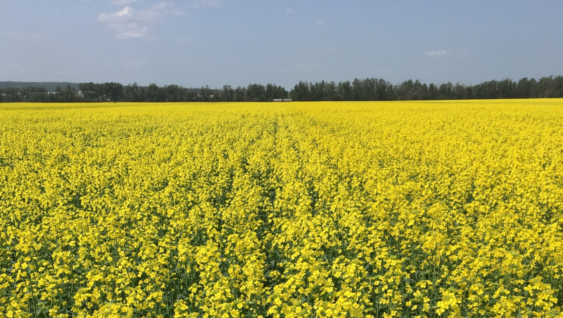
Mike Howell: Lyle. Today’s question has a lot to do with sulfur, and we’ve spent a lot of time talking about sulfur on the podcast. But more specifically, we’re we’re interested in canola production and the need for sulfur and canola to, uh, this week.
So, Lyle, our question is how much sulfur does canola really need and what are the best sources of sulfur to apply?
Lyle Cowell: You know, like, uh. Western Canada where I sit has a long history with application and understanding of sulfur because of canola. Uh, canola has a high demand for sulfur and a lot of our soils in Western Canada and in particular the northern prairies, what we would call the black and gray soil zones, were inherently low in sulfur.
And that’s where most of the canolas growing in the northern prairies. So we had a crop that had a high demand for sulfur and. Best suited for that cool growing regions in the northern prairies with soils that are deficient in sulfur. So the farmers and the, the soil scientist had to scramble a little bit quickly to better understand sulfur as a nutrient for canola and for other crops.
It’s been a long subject. People have been applying and studying sulfur in Western Canada now for 50 or 60 years. It’s a nutrient that is certainly becoming more important in other regions. Eastern Canada, Eastern states paying a lot more attention to sulfur. Now we can share a lot of what we’ve learned in Western Canada from what we’ve learned with canola.
Now canola has a high sulfur demand and how much does it need? Well, the recent Prairie Nutrient Removal Calculator, I would suggest that people are become familiar with that website. To understand the nutrient removal by each crop. It’s a new set of data to understand nutrient requirement for each crop in Western Canada, and the numbers there can be applicable to other regions as well.
Now, what did we learn about sulfur and canola in that project? First of all, we learned that the removal rate of sulfur by granola isn’t quite as high as we thought it was. The old numbers that we were using were probably heavily weighted towards actual rape seed. So canola is a rape seed plant, but it has been bred to have high oil quality, and the oil quality is called canola oil and the, and it’s removed some of those compounds that are very high in sulfur.
So canola as such, the seed has less sulfur in it than what rape sea would have. The number that we come up with in this project was about 0.22 pounds of removal per bushel, so 11 or 12 pounds of available sulfur for every 50 bushels of canola. That said, the uptake of sulfur is, is still remains very high by canola.
So yes, the removal rate’s not quite as high as we thought, but uptake numbers are still very high. The uptake number would be about 0.4 pounds for every bushel or about 20 pounds of sulfur for 50 bushel crop canola. So it depends where you’re at in terms of sulfur availability with your soil is if your soil is very, very deficient in sulfur and you intend to grow a canola crop, then you should probably apply at least 20 pounds of sulfur if you are in a rotation where you are frequently applying.
Sulfur where in Western Canada we’re probably usually applying high rates of sulfur anda. And if you’re in that type of rotation where we only need to apply what we are removing, then probably if you apply, say 12 pounds of sulfur per acre is probably gonna be sufficient for most farms. So that’s the range that we’re looking at, and it just depends on how really deficient your soil is in sulfur in the end.
It’s certainly a nutrient we have to focus on. And I’d make one other note. We get so obsessively focused on canola and sulfur that we forget that the other crops in rotation needs some sulfur too. So we often grow canola every fourth year or even every second year, sometimes every year. And. We have to apply enough nutrient for every crop in rotation, not just for canola.
And that’s a, that’s a point that we sometimes forget in terms of sulfur as well as other nutrients.
Mike Howell: Lyle, great advice on managing sulfur and, and not only canola, but in all crops. We’re seeing more and more sulfur deficiencies across North America these days and something we really need to be paying attention to.
Listeners, we appreciate you tuning in for this week’s episode, and as always, if you need more information on anything we’ve talked about today, you can visit our website. That’s nutrien-ekonomics.com. Until next time, this has been Mike Howell with the Dirt. Hey guys, if you like what you heard today, do us a favor and share this podcast with someone else.
It could be your neighbor, your friend, your crop advisor, or whoever you think would enjoy it. Your support helps ensure future episodes, so please like, subscribe, share, and rate the show wherever you’re listening from.