





Read Full Transcript
Mike Howell (00:08):
The Dirt, with me, Mike Howell, an economics podcast where I present the down and dirty agronomic science to help grow crops and bottom lines. Inspired by ekonomics.com, farming’s go-to informational resource. I’m here to break down the latest crop nutrition research, news, and issues, helping farmers make better business decisions through actionable insights. Let’s dig in.
(00:38)
Well, hello again everyone. Welcome back to the Dirt. I’ve got a full house with us today. Before we really get started, I want to introduce our special guest host today. We have Ms. Emily Donald with us today. Now, Emily is an intern with Nutrien this summer. Emily, if you would tell us a little bit about yourself.
Emily Donald (00:55):
Hi, Mike. I’m happy to be here. My name is Emily Donald. I grew up on a farm in Tisdale, Saskatchewan. I currently work at the Saskatoon Sales Office with Nutrien, and this is my second summer with them. I’m excited to be here.
Mike Howell (01:09):
Okay, Emily, well, if you will tell us a little bit about some of the projects you’ve worked on this summer.
Emily Donald (01:14):
This summer, I’ve done quite a bit of data analysis for our Canadian dealer sales team, helping sales managers with their previous sales history. I’ve also gotten a chance to do a competitor analysis review, so that focused on Sulphur products currently in the market and how that influences what we do here at Nutrien. I also got a chance to go and work at Ag in Motion, which is a farm show just northwest of Saskatoon, and then I got to spend some time with the specialties rep.
Mike Howell (01:40):
Sounds like you’ve had a busy summer. I remember back to my days and some of the internships that I had and always learned a lot of valuable information when those internships. Emily, what do you think is the most important thing you’ve learned during your internship?
Emily Donald (01:54):
I think the biggest thing I’ve learned so far is to not be afraid to tread into the unknown. I come from a science background and I didn’t have a tonne of experience in sales or marketing. After my first internship term in 2022, I learned a lot about the business and kind of came to the conclusion that you just got to go for those opportunities and not think twice about them.
Mike Howell (02:14):
That’s right. The only way you can ever succeed is to try at it. Emily, if you’re ready, let’s jump on in and get started with our guest today. We have two ladies with us today from Texas A&M Extension Service. We have DeDe Jones and Jordan Bell. Ladies, welcome to the dirt.
DeDe Jones (02:29):
Thank you.
Jourdan Bell (02:30):
Yeah, thanks for having us.
Mike Howell (02:31):
DeDe, if you will, go ahead and introduce yourself and tell us what you do.
DeDe Jones (02:34):
My name is DeDe Jones and I am a risk management economist. I’m based out of Amarillo at the extension service up here. I mostly work with farmers and ranchers, doing anything that has to do with crop profitability or marketing or keeping financial records. I’m the one that says, “Don’t buy that,” or, “Hey, maybe consider this financial alternative.” My job is really just to be the numbers man of the Texas panhandle.
Mike Howell (02:58):
Okay, and Jordan, if you will, introduce yourself to our listeners.
Jourdan Bell (03:01):
I’m Jordan Bell. I’m a regional research and extension agronomist with Texas A&M AgriLife, here in the Texas panhandle. I work with our farmers and our primary crops, of course, corn, sorghum, cotton, and wheat, as well of some alternatives. Because we know that just the cost of inputs ties directly to the producer’s profitability, I have an opportunity to work very closely with DeDe and evaluate our research as well as our extension activities across the region.
Mike Howell (03:29):
Ladies, thanks for joining us today. I was doing some research on the internet a few weeks ago and I ran across the paper that you’ve recently published entitled Deep Soil Testing Offers the Potential to Reduce Fertilizer Cost, and wanted to get you on the program and talk about that. Before we really dig into that paper, let’s talk a little bit about soil sampling. That’s something that we’ve covered on the dirt several times. We’ve had a special episode, one of our first episodes, talking about soil sampling, and we’ve mentioned it on a bunch of episodes, but why is soil sampling so important?
Jourdan Bell (03:59):
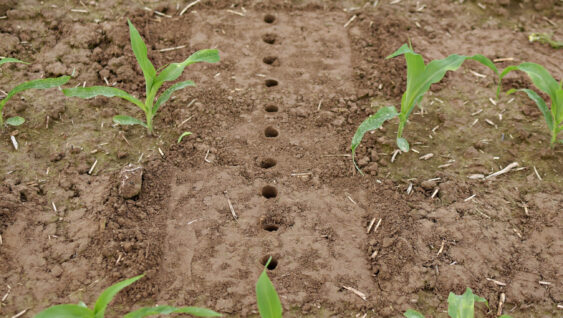
When we talk about, of course, soil sampling, we are increasingly talking about deep soil sampling. With deep sampling, we are recommending that producers sample deeper than what’s historically recommended. Most of our labs, especially public labs that are open, in addition to many universities have always recommended soil sampling from zero to six or zero to eight inches, and what we do see is that nutrients that have accumulated deeper in that profile are not properly accounted for. That’s why we like to start talking about deep sampling.
DeDe Jones (04:34):
Kind of along those lines, the reason we decided to do this paper is that it has not been a great few years for farmers and ranchers, especially in the Texas panhandle. The last three years we’ve had a drought, and then this planning season it finally started to rain, and then we got an entire year’s worth of rain in the month of May. We went from abnormally dry conditions where nobody could grow anything to abnormally wet conditions so nobody could grow anything. The people that are getting into the ground, now it’s turned very, very dry again.
(05:01)
That’s kind of the production side of it, but the financial side, fertilizer has gone up significantly. It more than triple during COVID. It is gone down some now, but it’s still running about $700 a tonne for anhydrous. Interest rates are probably the big story this year. Interest rates are running significantly higher than they did a year or so ago.
(05:20)
It’s a tough time to be a farmer, is what it boils down to. Anything that these guys can do that would help save them a little bit of money is something they definitely need to explore, and that’s one thing that Jordan and I basically found that deep soil testing can do, and it could be a big benefit as they go in and say start planting their crops.
Mike Howell (05:36):
Jordan, you talked about the deep soil sampling, and I know I’ve had trouble at times taking a regular soil sample to a depth of six inches. It just gets awful hard to get that probe in there. I know there’s some different tools that we may need to use for doing the deeper soil sampling. Can you talk a little bit about what kind of tools we need to do this soil sampling?
Jourdan Bell (05:53):
This is the caveat or the challenge that producers have getting the deeper samples is that special equipment is required. And so in research and extension, we do use a hydraulic probe that’s mounted to a tractor. Most producers do not have that type of equipment, and so it is really important that producers do reach out to their fertilizer dealers. Most fertilizer dealers who are selling fertilizer do have the ability to deep sample; they also have the ability to do grid sampling and specialty sampling with producers.
(06:25)
So just for producers, even though they recognize this as an extra expense, if they would go back to the principles that DeDe discussed and understand that that expense could potentially save them thousands of dollars on unnecessary fertilizer costs, it’s well worth the expense and the return on investment like she said is there.
Mike Howell (06:46):
Okay.
Jourdan Bell (06:46):
One thing in the Texas High Plains, many of our crop consultants also do provide this service, and so that might be an option for producers also to reach out to different crop consultants and see if they do have that option. Of course, we in research like to sample to 36 or even 48 inches; that can be challenging. Most of the crop consultants in this region who deep sample go 24 and some up to 36. When we’re talking about especially our corn crops, that really is sufficient to get a good understanding and a good handle on what’s in that profile.
Emily Donald (07:20):
In your guys’ paper, you talked about some of the assumptions you use to obtain the results. What are some of these?
DeDe Jones (07:26):
Our biggest one probably is we had to come up, we would consider to be a typical irrigated farm in the Texas hot Plains region. Talking with Jordan and visiting with some other farmers in the area, we decided maybe a thousand acre irrigated farm would be a reasonable number.
(07:41)
And then we had to talk about the cropping mix. We have guys that grow all year long. A lot of times, they’ll have a little bit of winter wheat, and then they’ll have a larger number of summer acres. We decided to make the crop mix being that thousand acre irrigated farm, 400 acres of irrigated cotton, 400 acres of irrigated corn, and then 200 acres of winter wheat.
(08:01)
That was really the first assumption we had to go to, and then the second one we had to deal with what is the normal amount of fertilizer that you could apply; because before we could assume that deep soil testing would help save you some of that fertilizer application, we had to figure out what is typical. I worked with Jordan on that pretty closely, and we really came up with what we consider to be normal applications rates for corn and cotton and wheat in this area, and we made that kind of our basis. We also developed some crop budgets for the area, and we incorporated those crop budgets as well as those fertilizer rates in order to build that model farm or that representative farm that we could run these different scenarios with.
Mike Howell (08:40):
Okay, so you got all your assumptions together and got your model farm set up. What kind of results did you find when you ran these analyses?
DeDe Jones (08:48):
The results were very interesting to both of us, just because it doesn’t take much at all residual in the soil to make a pretty significant economic impact. We looked at several different levels. We looked at assuming that the farm had no residual and they had to pay all their fertilizer costs upfront; and we just looked at nitrogen and we didn’t really look at any other fertilizer or chemical. Even at 25% residual, which means they saved just a little bit over what they did the year before, they saved over $30,000 on that thousand acre farm. And so that’s a pretty big number when you think about just, it could be the difference between getting your operating note renewed, and it could be the difference in having a profitable crop and a profitable farm versus struggling.
Emily Donald (09:28):
Definitely. What are some of the factors that would increase nitrogen deeper in the soil profile?
Jourdan Bell (09:33):
We always focus on water and water availability, and that is why the model farm being an irrigated farm was used. Most of our dry land producers, because of their lower yield potential, do not apply those higher nitrogen rates. Under irrigated scenarios, producers are always striving for high-end production. And with that, they’re then applying those nitrogen rates at a higher level. Even though we have seen farmers become better managers of nitrogen fertilizer, we still see that there’s a lot of nitrogen that gets pushed down in the profile, because it is very mobile. In addition to the irrigation, also in years like this year where we have a very wet period or rainy period, we see those nutrients move down deeper in the profile. So like DeDe said, a very small investment in soil sampling can save a producer thousands of dollars in input costs.
DeDe Jones (10:31):
And that is one thing I want to point out is that it really varies depending on what kind of testing they do, but we assumed about a dollar an acre, is all it costs a soil test. So a thousand dollars and even at the lowest level of residual, which we put in at about 25%, that saved on $30,000. That’s a return on investment of over 3000%, and there’s not much you can do in farming and ranching, which will be that low of an input or an investment that will give you that kind of return.
Mike Howell (10:56):
That is quite a return on that investment. Another question I have is, is this something that’s going to work for all crops? I know you mentioned cotton, corn and wheat. Is this something that’s going to work in all crops, or will it work in all geographies? Are there certain areas that it’s more likely to be beneficial than other areas?
DeDe Jones (11:14):
From an economic standpoint, the crops that apply more fertilizer obviously are going to have a more economic impact and have more savings. With corn, I think they apply about 225 pounds of fertilizer, at least in nitrogen and corn, so that’s going to have you some pretty good savings. I think the savings for that was about $125 an acre. But on the other hand, wheat only applies about 60 pounds, so their savings were significantly lower just because they applied less nitrogen. Typically, the higher nitrogen user crops are going to have the more significant savings if they’re able to take advantage of that residual, but any crop that applies nitrogen will have some savings.
Jourdan Bell (11:50):
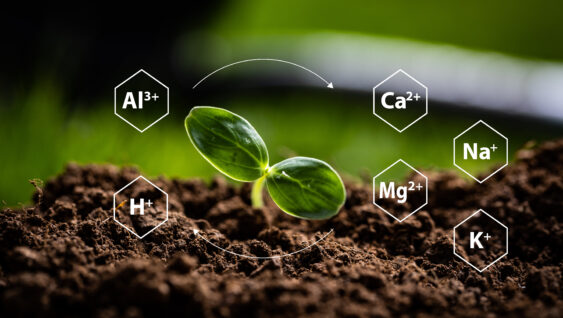
Just to follow up on that, in addition to the crops, you asked about the geography. What we do see of course across broader regions is that we have differences in soil texture, and we do know that especially with our coarser textured soils, those nutrients are going to be a lot more mobile than in our finer textured soils. Of course, in our finer textured soils, we have nutrients that come in and out of solution or can be bound. Especially in some areas, we have pH issues. For certain parts of the Texas High Plains, we have soils that are very alkaline, that have PHS in excess of 8.2. Even though that does not impact nitrogen, that does impact other nutrients. We definitely do see differences across geographic regions.
Mike Howell (12:34):
Jordan, we understand that there’s differences in the panhandle of Texas. What if we go outside of the panhandle of Texas? What if we go up into the corn belt and look at areas like Iowa and Illinois, where they have significantly more organic matter than we have down here in the south? Is that going to change things?
Jourdan Bell (12:49):
I would say it would. Now, of course, I do want to clarify for the listeners that I am not a specialist in Midwest fertility. But, I know they have considerations that we don’t have in this region. Of course, we do like to credit the nutrient availability that comes with organic matter, because we know that organic matter does contribute a lot to the nutrients in the soil. Also, they have rainfall and so they manage their nutrients differently than we do. They are really concerned about nitrogen losses and nutrient losses below that surface.
(13:22)
Now, of course, when we talk about deep soil sampling, we are concerned about those nutrients that are moving deeper in the profile, but usually that’s not for the same reason they’re concerned in the Midwest. We don’t have surface water in the Texas High Plains. The depth to the groundwater is at a depth that we don’t usually have nitrogen contaminating our water supplies. Most of our groundwater is 200 to 400 feet deep. And so when we talk about managing nutrients and soil sampling deeply, it’s just because of the economic loss and not utilizing those nutrients that could otherwise be available, not necessarily because we are facing the same challenges that they do in the Midwest.
Emily Donald (14:07):
Are many growers aware of the levels of nutrients that may already be present in their fields? And if not, does this ever lead to an overabundance of fertilizer they applied?
Jourdan Bell (14:17):
I would say that more frequently, people are aware, although we still have producers who are not aware, and that’s why we talk about deep sampling. Especially where we have high levels of manure applied, we see nutrient loading in fields, and that can really result in some problems.
(14:36)
But with regards to our synthetic fertilizers, we do see that producers are often not accounting for those nutrients deeper in the profile. When producers aren’t accounting for the deeper nutrients and they’re just basing their nutrient requirement based off of the surface samples, then they are applying more than they would have to, and nutrients in excess of the crop requirement, especially usually for their yield goal.
Mike Howell (15:04):
In the paper, you focused on the nitrogen; are there other nutrients that deep soil sampling could help with? The main one that comes to my mind right off the bat is Sulphur, since it acts so much like nitrogen in the soil.
Jourdan Bell (15:15):
Yeah, so I agree. Sulphur is a nutrient that we probably don’t give enough attention to, and it’s interesting to hear Emily talk about the work that she has been doing with Sulphur this summer in Canada. Sulphur is very mobile, just like nitrogen. We see Sulphur get pushed down in that profile. It’s not uncommon to hear producers talking about a field that’s chlorotic and automatically assume it’s a nitrogen deficiency. In some cases, it can actually be a Sulphur deficiency.
(15:45)
Sulphur is one of those mobile nutrients that we want to make sure we’re accounting for. For that reason, when I visit with producers who are doing their soil analyses, I always recommend that they try and get a complete analysis. Often, producers only get NP&K, and of course those are going to be our most limiting nutrients. But, we know that we have a lot of secondary nutrients that are really important and we’re not properly accounting for those if we’re only sampling at the surface and not doing a complete analysis.
DeDe Jones (16:17):
The reason we picked nitrogen is just because overall in the fertilizer profile, that is going to be the most expensive component of what they apply, at least in this area. I primarily did nitrogen, just because it is more soluble does go deeper, and then also it showed the most significant economic impact. But I think some of those other nutrients like Sulphur would definitely be something that we could replicate as well.
Mike Howell (16:39):
We started off, you said that you started doing this work because of the high fertilizer prices, and that happened 18 to 24 months ago. The markets just really took off and went skyward. About that same time, it seemed like every meeting that I went to, there’s multiple people that are talking to growers about how they can save so many pounds of nitrogen per acre, but they use their new product. Some of these are biological products or nitrogen fixing products.
(17:04)
But when we really get down and start looking at these products, it’s hard to find any third party university research that’s validating the claims that these are making. We actually had some people on and talked about this in an earlier episode. Dr. Brian Arnall at Oklahoma State was on and shared his thoughts on this with us as well. There’s several papers that have been published recently, talking about these products and whether they are effective or not. There’s a lot of controversy about them.
(17:31)
But when I was reading this paper, it came to mind that maybe there is more nitrogen down in the profile that we’re not accounting for. Do you think this is something that we may need to be looking at when we’re looking at the research on some of these biological products? Do you think that they’re actually pulling nitrogen from deeper in the soil profile that we’re not even measuring and don’t know that’s there?
Jourdan Bell (17:49):
We know that in order to achieve the yields that are being reported, those plants are getting nutrients from somewhere. It’s not to say that theoretically, soil fixing bacteria or microorganisms don’t have the ability to fix some nitrogen and make it plan available; but the probability in most of our agricultural systems of those microorganisms fixing enough nitrogen to meet the yield potential of these crops is pretty slim. So more than likely, they are utilizing those deeper nutrients.
(18:24)
There is some really good information also from the University of Nebraska where they have done some on-farm testing and validation of some of these products. I think that they are seeing that based on what they reported, there’s not a lot of consistency. One of the challenges that we do see with many of the microbial products is that in initial greenhouse testing and on a small scale, sometimes they do work and in theory, they are going to behave in that manner. But once we put them in a production scenario and under the extremes under which farmers operate, really wet environments, really dry environments, we just don’t see a lot of these specialty microorganism products behaving as marketed.
Mike Howell (19:09):
Okay. Well, ladies, we really appreciate you taking the time to share your insights with us and introduce us to the concept of deep soil sampling. I know our listeners are going to get a lot of benefit out of this, and I encourage everybody to dig into this a little deeper and see if it’s something that’s going to work on your farm.
(19:25)
Now, listeners, as you know, it’s now time that we’re going to move into our second segment of the day where we talk about a famous person in agriculture. Today we’re going to let Emily cover our famous person in agriculture. Emily, we are talking to these ladies from the High Plains of Texas. They have a lot of center pivot irrigation up in that part of the world, and I thought it would be appropriate if we focused in on center pivot irrigation a little bit today.
Emily Donald (19:49):
Yeah, Mike. So today we are talking about Frank Zyback, who was born in 1894 in Oregon. He developed a love from metalworking and learned blacksmithing from his father. At an early age, Frank began developing several inventions to help lessen the manual labor required of farm workers. Mr. Zyback was the inventor of the center pivot irrigation system, and this work transformed agricultural production worldwide. His machine provided farmers of semi arid regions a way to irrigate acres at a time, improving yields and overall crop growth. By 2013, nearly 28 million acres across 57,000 US farms were utilizing center pivot irrigation systems.
(20:28)
Zyback and a business partner sold the exclusive manufacturing rights to the enter pivot irrigation system in 1954 to Valley Manufacturing, which is now known as Mont Industries. Frank Zibo passed away in 1980 in Columbus, Nebraska. In his 86 years of life, Frank had 10 US patents.
(20:47)
I think it’s really interesting learning about someone who created these types of systems, as this isn’t something that we see a lot in northeast Saskatchewan. If we want to kind of get any glimpse of an irrigation system, it’s usually Southern Alberta. We might have some around Central Saskatchewan, but we don’t got a lot going on.
Mike Howell (21:03):
Okay. Well, ladies, we sure appreciate you taking the time to join us today. Listeners, I hope you’ve gotten something out of this, and for more information on this or any other topic, you can visit our website. That’s nutrien-ekonomics.com.
(21:17)
We will be posting the paper that we’ve been referencing today. We’ll have a link to that paper on our website, so go check it out and find out more about deep soil sampling.
(21:25)
Until next time, this has been Mike Howell with the Dirt.