





Read Full Transcript
[00:00:00] Mike Howell: The Dirt with me, Mike Howell, an ekonomics podcast where I present the down and dirty agronomic science to help grow crops and bottom lines. Inspired by ekonomics.com farming’s go-to informational resource. I’m here to break down the latest crop nutrition research use, and issues helping farmers make better business decisions through actionable insights. Let’s dig in.
Listeners, we’re glad you’re tuning in this week. We’ve got another exciting episode coming to you. This is gonna be an own location episode. We haven’t done one of these in a while, but I am in Indiana this week. We are traveling around with Dr. Dan Quinn looking at some research plots today. Thought it would be good to get him on the podcast and talk about the corn crop here in Indiana this week and some of the challenges they may be facing this year.
Dr. Quinn, welcome to the Dirt. Tell us a little bit about yourself and what you do here at Purdue.
[00:01:05] Dr. Dan Quinn: I’m assistant professor of Agronomy and extension corn agronomist for the state of Indiana and Purdue University. So all my work centers around Applied Corn Management. We do a lot of research in a lot of diverse areas of applied corn management.
A big part of that is fertility. Also do a lot of disease work, hybrid work, do a lot of work with equipment. There’s some irrigation and tillage and just all aspects of the corn production system is where we do a lot of our work. And a lot of that’s very applied both at research station and on farm. And I also have a large extension opponent as well.
So I do a lot of meetings, trainings. Do a lot of field days and get to work with a lot of farmers, not only with on-farm trials, but also on-farm trainings. So I get to spend a lot of time with a lot of farmers around the state of Indiana.
[00:01:52] Mike Howell: Dan, in all your travels, I know you look at a lot of corn fields, you know what’s going on, you know what our yields are looking like.
You know what problems we’ve had. Talk a little bit about this production season, what kind of issues the growers may have faced and how the crop’s looking at this point.
[00:02:06] Dr. Dan Quinn: Yeah, Indiana is highly variable. I keep stressing with people that it depends on where you are in terms of the crop condition.
Different areas of the state have had different struggles during the year. There’s a lot of good corn, but there’s a lot of areas You look at southern, Southeast and then into the eastern parts of the state. Kind of similar to Ohio Valley. Regions of Indiana really struggled to get planted on time. They just couldn’t catch a break from rainfall.
A lot of crops got. Planted in the month of June over there. A lot of ’em got replanted ’cause they planted it, they mudded it in. It just was a struggle. They got more rain and they had to replant. So really tough year in those areas of the state. I expect, well below average yields in those parts of the state.
Northwest Indiana had a really good start. They planted really early for them, but then they ran into, they had D zero D one drought. And it’s still up in that area. Pretty dry and stressful. Western part of the state is probably the best. Southwest has struggled some with kind of that western side of Indiana, west Central in this area where campus is at.
And West Lafayette, it’s probably some of the best, you know, good planting progress. We’ve had pretty good moisture, probably some of the best soils in this part of the state as well. It’s just all over the place. So I get asked that question, how does it look in the state? And I reiterate that it depends on where you are.
[00:03:18] Mike Howell: Dan, if I didn’t know better, I would say you were a farmer. The way you’re talking about how bad this crop is. While we were eating lunch today, we had the USDA report that came out. Looks like we’ve got an awful big number for a national average and an even bigger number for a Indiana average. Talk a little bit about those numbers and what you think.
Are those numbers gonna be realistic or where they gonna end up being?
[00:03:38] Dr. Dan Quinn: Yeah, so I’ll start with Indiana. Indiana I was. Pretty surprised with it was 205 bushels. That would be a state record. Our previous state record was 2 0 3 2 years ago. Last year was 1 98. I do think that number is, I would say way too high from my perspective being around the state.
You look at previous years, you know, Indiana has had some good years. Uh, the last about four outta six years we’ve had state record yields have been very close. And you compare those years to where we’re at now. I’ve been in my position here at Purdue almost five years, for about four and a half years.
This has been, I would say, the. Toughest year that I’ve seen. And we do a lot of research and do a lot of meetings around the state in a lot of different areas, and we’ve had a lot of stress with planting conditions, getting that crop planted. We’ve had a lot of disease move in as well, and a lot of other stressors where we’ve had flooding, we’ve had drought in areas.
But you look at that variability, it to me, it really doesn’t pencil out that it would be a state record. I’ve been in those years where we’ve hit state record deals and it doesn’t look like this. So I do think the number from Indiana is a little bit high. I expect it to come down as those numbers get to refined a little bit.
You look at the national average, that’s high as well. 188 bushel myo lean. Maybe that’s high, but I keep pointing to the State of Iowa, state of Iowa, state of Illinois, just outstanding crop conditions in those states. I mean, those states carry a lot of weight when it comes into those yield estimates, so it’d be real interesting to see how that number kinda shakes out over time.
Really, once the combines start going through, I think we’ll get a better look at the story. But Indiana, right now, i, I was pretty surprised it was that high.
[00:05:11] Mike Howell: Well back home, Dan, we’re already in the field. We’re harvesting some corn now and we’re hearing some big yields coming in already. We’re a good month or so ahead of where y’all are at this point.
I wanted to spend a little bit of time today talking about a condition that we’ve been hearing a lot about on social media, and I know you’ve been getting a lot of calls about it. Tight tassel wrap. And before we get into that a little bit, I thought it’d be good if we spent a few minutes just a general biology lesson talking about how corn pollinates and how this problem is set up.
So if you will just give us that lesson and talk a little bit about how a corn plant pollinates.
[00:05:43] Dr. Dan Quinn: The big piece with pollination and corn is timing and synchrony. You really have two components. You have the male genetic material, you have that pollen shed from the tassel, and then you have the female genetic material and the silks.
The big thing is we want to get the pollen from the tassel shed, and we want it to get in contact with the silks so that we can fertilize those. Les, which become kernels. So each one of those silks attach to the veles. They facilitate the movement of that pollen and the fertilization of those kernels.
So the big thing with corn is it is all about timing. And that’s also what makes it really challenging as well, because corn, you know, look at from a plant. Perspective, a single plant might pollinate for seven to 10 days, a whole field. It might extend to 14 days. In the grand scheme of thing, that’s a relatively short window.
You look at other crops like soybeans, that flour and continue to flour and abort flowers and flour. Again, corn is such a tight window. And corn is very sensitive, uh, tassel. And the R one growth stay is the silking stage and it’s peak water use in that plant, peak bile mass, peak root development. So it’s really sensitive.
Anything that stresses it can be consecutive cloudy days. It can be higher temps, it can be nutrient deficiencies, disease, all these aspects. And when they happen, even you think about. Foliar leaf damage, hail damage, R one pollination. That’s when we see the highest yield losses per day from stresses at that specific growth stage in corn.
So it’s just a really sensitive time period. And also any stress can throw off that synchrony of the pollen shed down to the silks. A common one is drought stress. Drought stress will delay silks. So the. Pollen is on the tassel shedding, but the silks aren’t there, so the silks then emerge and then, well, it’s done pollinating so that can cause issues.
Silks are only viable for about three to five days. They can be at 10 days max, but max peak viability is about three to five days. Pollen shed week to 10 days for a single plant. Everything is kind of dependent on pollination. It’s really critical stage. You look at data across the corn belt. July, which is typically peak pollination for Indiana, Illinois.
A lot of the eye states that month has the biggest influence on state yield averages. A lot of it has to do with July moisture, July temperatures as well. So big thing is it’s all about timing. Getting that pollen shed down to those silks, but also understanding that any stress. Can throw that off and if anything either delays the tassel or delays the silk, we can potentially have pollination issues.
[00:08:12] Mike Howell: Dan, in my part of the world, we worry a lot about pollen sterility. We get these high temperatures, especially nighttime temperatures, and that’s why we try to get our corn planted as early as we can so we can avoid that excessive heat during the pollination time. When we worry about that, we go in and we’ll shuck back the tip of that ear and we look right on the very tip to see if we’ve filled that cob out all the way.
I’ve learned a lot about pollination because of this tight tassel ramp, and it seems that all of these silks don’t come out at the same time, and I did not realize that the silks start at the lower end, the base of that cob and come out. So talk a little bit about that, how that progresses from the lower end up to the T up.
[00:08:48] Dr. Dan Quinn: Yeah, so the first silks to emerge correspond to the base of the year, and then the last silks that emerged correspond to the tip. Typically, the most common pollination issue that we’ll see is tip back, and that’s just a function of the silks. Were delayed coming out, so they begin. Silking after the pollen has started shedding the corn plant’s done shedding pollen, and then those last silks at the tip just never came in contact with pollen.
But you can also have the opposite happen as well. So one thing that we’ve tried to explain with a lot of people is that hybrids today silk much earlier than what they used to, and that’s built in through genetic breeding. It’s actually a drought tolerance mechanism. So you talk about drought conditions when it dries, so needs delayed.
So we say. Over time with breeding and drought tolerance. What that is built in is that those hybrids today, they silk much earlier than they have. So that can kind of account for if it is delayed. Well, they’re coming out a little bit earlier anyway, and, and we can count for that. Flip side of that is, is that we’ve had some issues primarily with this.
Tassel wrap is a big one. I’ve also seen it in other areas where the crop is in really good health. We have adequate soil moisture, everything’s going well, and then that plant just silks really early. And we’re seeing it in some cases where it’s silking super early. You bring in the aspect of this tassel wrapping, which is delaying the tassel emergence.
Then we’re seeing poor pollination at the base of the year, and the function of that is just those first silks. Correspond in the base of the ear. They’re coming out, that tassels not there, there’s no pollen. They eventually lose their viability. And then we have missing kernels at the base of the ear. So very similar to the tip, corn actually fills grain the same way as well.
So the first kernels to form and fill start at the base of the ear, and then it works it way up. So tip back can also be kernel abortion, so it can be poor pollination, but also kernel abortion where that plant’s filling, filling and it just kind of runs outta steam and it can’t fill those top kernels as well.
[00:10:49] Mike Howell: Dan. I grew up in the cotton world and spent a lot more time in the cotton field growing up than I did the corn field. But one thing we learned early on that the first bowls on the cotton plant were the money bowls. You had to set those first bowls. They ended up being heavier and worth a lot more money.
Going through your explanation there, it got me to thinking, is the base of that corn plant or those kernels worth more than the tip? It seems like sometimes those kernels are a little bigger down at the base, and those up toward the tip are a little smaller. Has any work been done on that or. Is it better if we lose ’em on the tip versus on the base?
Or are we losing more if we lose it at the base? Has any work been done on that?
[00:11:22] Dr. Dan Quinn: I don’t think there’s been any. That’s a great question. I don’t think there’s been any work differentiating, at least I’m aware of. There may be some out there that differentiating the importance of the base kernels and then the tip.
But typically back to your explanation, the base of the ears are the first ones that fill. They’re typically gonna be the bigger kernels. So you think about, this is a great question coming out of this. A lot of these poor pollination issues at the base of the ear, I would say are relatively recent. So that’s a great question from the aspect of if we’re missing kernels at the tip of the ear or we’re missing kernels at the base of the ear, which is worse.
I’m not aware of any work that has done that yet. It’s a great question. I would lean towards the base of the ear, those kernels, they are missing. Those are where we’re getting that initial grain fill, kernel development, and also a little bit bigger kernels up there. So if you’re losing bigger kernels, and that’s ideally gonna impact you a little bit more.
You know another thing about I also stress about missing kernels, corn, it’s not a one to run relationship. Where I’m missing a kernel, and that’s a reflection of a X yield percentage loss. Corn does compensate a little bit if you’ve ever pulled ears ahead, pollination issues, you’ll see those kernels next to those empty holes kind of get a little bit bigger.
They’ll kind of fill in a little bit of that space. If you ever see jumbled ears, mine kernels that had poor pollination, but kind of. Randomness of those kernels. So those kernels do compensate a little bit. Now how much they compensate? That’s another great question. I would tend to lean towards that, those bigger kernels.
If we’re missing more of those bigger kernels that could potentially impact the overall weight of a field.
[00:12:56] Mike Howell: So Dan, let’s get into the tight tassel wrap and talk a little bit about what causes it. I have not seen it with my own eyes. I’ve seen a lot of pictures. I’ve seen a lot of talk on social media.
I’m hearing all kind of theories and explanations, but you’re living through it. So tell us what you found and what you think, and.
[00:13:11] Dr. Dan Quinn: Yeah, it really started first week of July. The second week of July. What’s unique about it is that it’s something that I had never seen, but also I’m on the younger side of my career.
I had a lot of conversations with agronomists and specialists had been doing this much longer, and they had never seen it as well, or maybe they’d seen it once that they’ve recalled, so it’s. Kind of a rare issue and a unique issue. So that’s what makes it challenging to try and figure out, okay, why? Why did it happen?
So really the idea came from these tassels were emerging out of the top of the plant, but those top leaves were remaining intact and were unfurling to allow that tassel to release and then pollen shit. So it almost looked like there were spikes across the field that tassel, you could see it, but it was tightly wrapped in these leaves.
And that’s actually normal if you ever walk. Cornfield as it goes close to pollination, you kinda seeds those tassels coming out. But what was unique about it is that it was hanging on to that tassel for quite a long period of time to the point where it was noticeable. Talk about only having a maybe two week window.
So anything that throws that off, we get a little bit nervous about. So that’s where it was really what. Tassel wrap, and that really kind of explains exactly what it was. Tassels were just staying tightly wrapped in those upper leaves and weren’t getting released from those leaves. Those leaves were not unfurling in time, so then the pollen shed was becoming delayed.
So what we did is we looked at it from the standpoint of, you know, we have seen. Similar symptomology. When corn is younger, a really common symptomology is rapid growth syndrome. So when corn is much younger in the vegetative stages, V six V seven, we often see these tightly bound leaves, and that’s just the corn is in many cases, it has to do with.
Temperatures going up and down, and corn is thermal dependent on its growth cycle and growing degree days. So when you get these big swings, especially when it’s ramping up into a rapid growth phase, it’s almost as these leaves just can’t keep up as a plant. So they, they. Go from a period of slow growth, might have cooler weather, and then we ramp up and that plant’s trying to do everything it can to start taking off and growing.
And those leaves just can’t unfurl. There’s actually still a lot. We don’t know exactly why it happens. They kind of stay sticky. Sometimes. They tear. A lot of times they’re very tightly wrapped around that plant. So what I did is I ended up. Okay. That symptomology is very similar to this rapid growth. So we ended up going back and looking at all the weather conditions usually a week to two weeks before this happened.
In every instance in the fields that I’ve been in, we saw a pretty dramatic temperature change, usually about. Two to three days before this tassel wrapping was noticed. So both instances here in spots of Indiana, where I know we had tassel wrap, I knew it was significant fields. I walked, we had about a 30 to 35 degree swing from, we had storm system come through, we had some moisture, and then it dropped to 60 degrees at night, and then a couple days later it was back up.
To mid nineties, so that kind of made me think it may be a similarity where these big temperature swings and that’s something that’s becoming more and more common. It’s also something that I think we don’t have a great handle on in terms of these crops and how they respond and tolerate big swings in temperatures.
We understand. Heat and cooler, but big variability. I think that was a function of it. Um, another aspect was hybrid differences as well. And what we kind of pinpointed to, not only myself but some of my colleagues in other states was actually the tassel size. So it wasn’t so much this specific hybrid number, it was specific hybrids within different companies.
But what we noticed was the tassel size and the main branch on the tassel where we had significant. Tassel wrapping. It seemed like all those tassels were much larger and that main branch was much larger, which kind of makes sense, where if you’re having that wrapping a little bit bigger, tassel a little bit bigger, main branch might have more difficulty getting unfurled out of those leaves.
I do lean towards it primarily being an environmental aspect. Because a lot of these hybrids where we’ve had it this year, we had the same hybrids in the same spots last year and we didn’t have it. So I’d really pinpoint back to the environmental conditions being a big driver of it, but also the hybrid characteristics may be exacerbating the response and why it’s occurring.
[00:17:27] Mike Howell: Then I’ve seen another thing some people are talking about, maybe some micronutrient deficiencies. Talk a little bit about that. Is that a possibility? What do you think about that?
[00:17:35] Dr. Dan Quinn: I think really we just don’t know. You think about nutrients like boron and some of those that are important for pollination, but.
I really lean towards the environment and then also the hybrid characteristics. ’cause we’re fortunate enough as researchers is that we can have a lot of trials with a lot of different treatments and areas and a lot of different hybrids in different areas. And I couldn’t find any relationship between list specific nutrient treatments.
We have foliar micronutrient treatments. We have studies with fungicide and foliar micronutrients supplied at tassel and pollination, but a lot of it was really specific. To the time period, so back to planting date, but really where that crop was at in its growth cycle when these weather swings happened.
And then also the morphology of the tassel. So even in same exact areas of fields that we know, we handled the exact same way. Nutritionally, one area we had the tassel wrapping, we didn’t, and they were planted on the same day. Could it be a function in that specific hybrid? We don’t really know, but I do lean more towards the environment and then some of the hybrid characteristics as to why.
[00:18:37] Mike Howell: Dan, that’s a great explanation of what’s going on at this point. There’s absolutely nothing we can do about it. What are you telling growers? What do they need to be looking for? What do they need to do if they are concerned about it?
[00:18:48] Dr. Dan Quinn: Check pollination. You iterated to this earlier, pulling those hus back and looking at those kernels and looking at the base of the year.
We had some fields here in West Lafayette area that had significant tassel wrapping, and every single ear I pulled had poor pollination at the base of the ear. I’ve been. Telling farmers to get out and just check pollination and take a look, make note of what hybrids they are. So what hybrids are you seeing it in?
Are you seeing it in some hybrids or the others? Or is there maybe some fields or planning dates that maybe you’re seeing it or not? So just make note of it, but there isn’t much you can do about it. And the other challenge is that a lot. Areas where we’re seeing, this is where the corn looks really good.
A lot of the areas, there’s been a lot of these reports out of Iowa and Fields that have looked really good, Illinois, Indiana, a lot of our best looking fields have been where we’ve seen as tasa wrapping. You bring back to the conversation of the yield estimate. I do think what’s gonna be challenging with some of the yield estimates is they often look at imagery and the overall just.
Health of the plant and the greenness of the plant. But actually we’re seeing a lot of these pollination issues where corn looks great. You wouldn’t know it potentially had yield issues until you actually got out and peeled that husk back and look at that kernel development. And that’s a big thing that if you suspect that you had some TA wrapping go out in that field and take a look at that pollination.
It’s really easy to take a look at the year and see missing kernels or jumbled kernels. Another aspect of this that I didn’t touch on yet is that silks for corn will continue to grow. Until they come in contact with pollen, they can grow upwards, I think about a quarter of an inch a day. So what we’re seeing in some aspects were soaks.
Were excessively long. So that’s another thing that can happen, is when pollination is delayed, those silks will continue to grow until they come in contact with that pollen. You can have instances where those soaks get really long, and when they get really long and they start shading out one another, they start overlapping.
So you can have what we call it zipper ears, where you have missing kernels on one side. So that also. Could have been an impact. I’ve been in fields, I’ve had poor pollination and issues with pollen shed, and it’s noticeable with those silks. I’ve seen silks all the way down to my mid forearm before where we’ve had issues.
So be mindful of silk length. But big thing that you can do is just go out, pull ears, pull those hus back and take a look at the pollination, and look at different hybrids, look at different management, look at different fields, and see if maybe you can connect some dots to it as well.
[00:21:08] Mike Howell: Dan, you hit on something that I had not thought about.
You said they’re using a lot of imagery to check these fields and see how good they’re looking. If we had a pollination problem and don’t have as much. Kernels there pulling nutrients off of that, that corn’s naturally gonna look a lot better. It’s not pulling as much nutrients outta that plant.
[00:21:23] Dr. Dan Quinn: Yeah, yeah, exactly.
And that’s been the challenging part is the trouble with yield estimates is something like that. With pollination, you might not be able to see it. And another thing with yield estimates that I stress is that they’re really hard to get good estimates of grain fill and kernel weight and kernel sides that has big influences on yield, and that’s something that.
Really we don’t have a good handle on until we reach maturity and get close to harvest. And there’s a lot of things that can happen and it can impact that grain fill and that can swing yield pretty significantly. So yield estimates don’t really do a great job, and it’s really hard to do it, period, to get a good estimate of what that kernel weight is.
Because I’ve been in fields with farmers where the corn looks, eh, it’s okay. And then they get to the combine where we’ve had really good grain full conditions. And then they say. Where the heck did this yield come from? So that was the grain fill in the kernel weights. That has a lot of influence on yield and can be a big factor.
So if we continue with these high temps, high nighttime temps, and we get some of this foer disease moving in now, that could strongly impact some of that grain fill too. And also take some yield hits there.
[00:22:24] Mike Howell: Well, Dan, we really appreciate you taking time to visit with us today. I know I got a lot out of this.
I know our listeners will as well. Do you have any closing comments before we sign off today?
[00:22:33] Dr. Dan Quinn: I, I don’t think so. I think the big thing that I always stress with people is just learn every single year. Talk about tassel wrap. What can you do? Big thing is understanding what hybrids you’re having issues.
What hybrids, you’re not what management practices, you’re maybe contributing or not contributing. So just understand what works and what doesn’t work. Prices are tough right now. You gotta be a lot more cautious and careful and strategic with things right now. Just continue to learn. That’s the big piece.
That’s what we try to do. So we always stress that with farmers is. You can learn things and just tweak things and get a little bit better
as years. Go on.
[00:23:07] Mike Howell: Dan. Thanks a lot, listeners. We appreciate you tuning in this week. If you will, hang around for just a couple of moments and we’ll be right back with segment two.
Farming isn’t farming without questions, and now there’s a place to go for answers. At economics, an entire team of agronomists is waiting and ready to help for free. No question is too big or too small. Visit Nutrien-ekonomics.com at submit your question with the ask an agronomist feature.
Listeners, welcome back for Segment two. This is a segment where we ask an agronomist a question of the week, and to help us do that, we have Lyle Cowell back with us this week. Lyle is our senior agronomist with Nutrien. He’s covering the Canadian region. Lyle, welcome back to the Dirt.
[00:23:53] Lyle Cowell: Thanks for having me again, Mike. It’s great to be on
[00:23:55] Mike Howell: Lyle. Our question for this week has to do with micronutrients, and our question is, what are the micronutrients and why are they important in crop production?
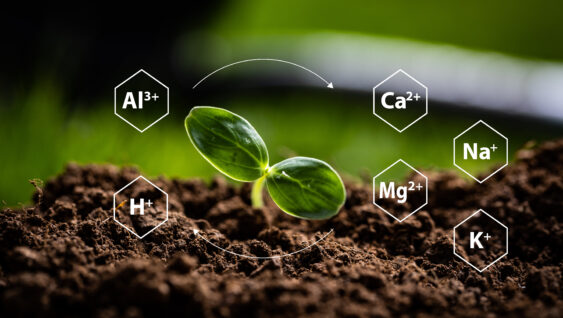
[00:24:03] Lyle Cowell: Micronutrients. By definition are just nutrients that are required in very small amounts, sometimes referred to as trace nutrients because they’re truly required by plants in a trace amount that doesn’t make them any less essential.
By definition, they’re an essential nutrient required for the growth. And reproduction of the continuation of the genetics of a crop. So they’re essential for growth, but required in tiny amounts. So you take a micronutrients such as zinc or copper boron and so on, there’s a long list of micronutrients.
The application requirements are very tiny, and yet the application requirements seem large compared to what we actually removed per bushel across. The amount of, for example, uh, throwing some metric into it, just ’cause the amounts are so tiny. A typical wheat crop would require a fractions of grams per bushel of, for production.
So we found, we’ve, and in Western Canada, the removal rate of copper by wheat is about 0.00. Zero, two pounds per bushel, just very tiny amounts. The only micronutrients that is aspired in somewhat higher levels, well, the primary one would be zinc, which is still tiny amounts. Uh, corn crop is perhaps removing about a gram or a bit more than a gram per bushel of production.
So required in very, very tiny amounts. But playing a big role in terms of an essential nutrient. They have an essential role in the plant as every other macronutrient does. And so if you are deficient in a micronutrient, it may be the determining factor of if that crop is successful in growth and reproduction.
So you have to keep an eye on it. We don’t use as many micronutrients because most soils can supply sufficient amounts of those trace levels of micronutrients. But nevertheless, keep an eye on and understand which micronutrients are most likely to be deficient in your soil for the crops that you are growing, and then take the next step to understand what is the best for our fertilizer practices to apply those fertilizers and apply what you need.
Don’t apply what you don’t need, but apply what you need, the nutrients you need at the appropriate rates.
[00:26:24] Mike Howell: Wow, great advice. We really appreciate you taking time to share your knowledge with our listeners every week. Listeners, we appreciate you tuning in. If you have any questions about anything we’ve talked about this week, you can always visit our website.
That’s Nutrien-ekonomics.com. Until next time, this has been Mike Howell with the dirt. Hey guys. If you like what you heard today, do us a favor and share this podcast with someone else. It could be your neighbor, your friend, your crop advisor, or whoever you think would enjoy it. Your support helps ensure future episodes, so please like, subscribe, share, and rate the show wherever you’re listening from.