





Read Full Transcript
[00:00:08] Mike Howell:
The Dirt, with me, Mike Howell, an eKonomics podcast where I present the down and dirty agronomic science to help grow crops and bottom lines. Inspired by eKonomics.com, farming’s go-to informational resource, I’m here to break down the latest crop nutrition research, news, and issues, helping farmers make better business decisions through actionable insights. Let’s dig in.
[00:00:38] Mike Howell:
Well, hello again, everyone. Welcome back to The Dirt. Glad you’re tuning in this week. Today, we have Dr. Bryan Hopkins with BYU back in the studio with us. Dr. Hopkins, it’s been a little while since we’ve had you in the studio, but glad you’re taking time to be with us again today.
[00:00:52] Bryan Hopkins:
Yeah, thank you for having me.
[00:00:54] Mike Howell:
Dr. Hopkins, today we wanted to talk a little bit about fertilizer management and some different strategies that go into building a soil fertility management program. Before we get into that, if you will, take just a couple of minutes and reintroduce yourself to our listeners. We have a lot of new people listening every day, so take a second and tell us who you are and what you do.
[00:01:12] Bryan Hopkins:
My name’s Bryan Hopkins. I’m a soil scientist. I’m originally from Idaho. I currently am a professor at Brigham Young University. I also am the director of the North American Proficiency Testing Program with the Soil Science Society of America.
[00:01:28] Mike Howell:
And remind our listeners, we talked about that last time you were on, but remind our listeners about the proficiency program and what it does.
[00:01:35] Bryan Hopkins:
Decades ago, we decided we needed to try to improve the quality control and quality assurance of our agricultural and environmental analytical labs. We developed this program that’s essentially, we collect samples of soil, plant, water. We send those out every quarter. We have about 150 laboratories worldwide that participate in the program. They analyze the samples and send them back and we give them a grade and let them know how they’re doing. It allows labs to try to spot problems and be able to give their clients some level of confidence in their ability to do good analytical work.
[00:02:11] Mike Howell:
Well, Dr. Hopkins, let’s jump right in and start talking about our subject today. Way back when I was in school and learning about soil fertility and how we manage nutrients, we talked about three different approaches to managing these nutrients. We had a build and maintain strategy, we had a sufficiency level strategy, and then we talked a little bit about base saturation. Today, I kind of wanted to touch on all three of these, talk a little bit about the pros and cons and the science that goes behind them. Let’s start off with the build and maintain. Tell us a little bit about that and the theory that goes in behind that strategy.
[00:02:43] Bryan Hopkins:
One of the concepts that I think is historically important is that we don’t run our soils out of gas, so to speak. Lots of examples throughout history where civilizations have even been destroyed as a contributing factor of not taking care of the soil. As we remove crops, we are, uh, removing nutrients, and those nutrients in some cases need to be replaced. Now, sometimes the soil is so loaded up in a nutrient that there’s millennia worth of it there. There’s some potassium feldspar soils, for example, that are just loaded with potassium and we’ve harvested potassium out of them for decades and just no end in sight.
[00:03:23] Bryan Hopkins:
In principle, we don’t wanna just run the soil fertility down so low that we have a problem. And so I think that’s a true principle. It’s one of the battles we do, especially with a lot of the talk with regenerative agriculture. The fact is, is that we have the law of conservation of mass. And if you remove something, it doesn’t just regenerate out of thin air. Now, in some cases, the soil is really rich in some nutrients, and so in some cases, that’s true, but in many cases, we can just drive a soil’s fertility down so low that it really becomes less productive soil. I don’t disagree with a build-to-maintain, as long as we’re being reasonable. And also, we have to think about our soils. There are some soils that you can’t build. They just don’t build. For example, there are some soils that have certain types of clays that fix potassium, and if you add too much potassium, it just gobbles it up. There’s those kinds of situations. There’s some other unique situations. I have to be a good agronomist and soil scientist and understand each soil.
[00:04:27] Bryan Hopkins:
But most soils, I can kind of build up the phosphorus levels, for example, to a reasonable level. And this year is a great example of that. I’ll be honest, Mike. I have family who farms and I no longer farm other than for my research, but I farm, and we kind of have that idea. It’s like, “Hey, when fertilizer’s cheap or reasonable, we’re gonna put some on, especially if we know that it’s going to be there in the following years.” Most soils like phosphorus, for example. I only get about 10 to 15% recovery of the fertilizer that I broadcast apply in the year that it’s applied. But over a course of a decade, that fertilizer will eventually get found by those soil roots and the chemistry of the soil will deliver it. So most of that ends up in the plant. So it’s a false notion that all soils just fix the nutrients permanently so that they’re lost. That’s just really not true. Again, there are exceptions.
[00:05:24] Bryan Hopkins:
But anyway, like I was saying, my family’s farm, we’ve kind of over-fertilized a little bit. Not a lot. We can’t afford to. But here we are with super high prices this year, and we can back way down. And we’re confident that it’s not gonna cost us any yield because we have the data that shows that. So buy low, sell high, good thing to do. I think about that a little bit with build and maintain. Anyway, I think that that’s kind of the idea, is that if your soil will let you and if you need it, that you add a little bit of extra nutrient there, uh, probably more than what you’re gonna get in that return for that year, and build your fertility up so that you’ve got it there when maybe you can’t afford to put on some fertilizer.
[00:06:00] Bryan Hopkins:
You can’t do that long term. You can’t just draw down. And I think that’s what a lot of folks are gonna see. We got a lot of folks who’ve just turned their back on fertilizer recently and they just think that it’s just gonna appear out of thin air. I’ve got data and lots of data out there that shows, like, yeah, you can get away with that for a while, but eventually that’s gonna bite you. You cannot do it forever. I think in general, it’s not a bad idea to build your soil up to reasonable levels and kind of try to keep it there if it’ll tolerate it.
[00:06:26] Mike Howell:
Dr. Hopkins, you mentioned research findings. Let’s talk a little bit about the research behind this build and maintain. I know it’s been around for a long time. Talk a little bit about some research behind that and why we know that this system works.
[00:06:37] Bryan Hopkins:
To be honest with you, it doesn’t usually pencil out in a one-year scenario. If you’re leasing ground, build to maintain is not a good thing unless you’re the landowner. And that’s something that ought to be part of a, a lease agreement. Like, if I own the land and I’m leasing it to somebody, I kinda wanna know what’s getting put into my soil and not just what’s taken out.
[00:06:57] Bryan Hopkins:
So in terms of the research, there have been a lot of studies. They tend to be focused on a one-year basis. And in that case, build and maintain doesn’t usually pencil out to be the best economically. So that’s important. Following a sufficiency approach, which we can talk about in a minute, typically does. But long term, build to maintain can be an effective strategy. Again, there’s some caveats, and I’ve already mentioned them, but one is my soil is capable of being built in a reasonable level, and two, I can afford to do that, and I do it in a reasonable fashion and not losing money.
[00:07:33] Bryan Hopkins:
I mean, I’ve got to make money every year, but I do generally like the idea of fertilizer prices are low. I’m gonna go ahead and put on at least a removal rate. I think that’s a good approach. If I’m gonna take out 60 units of phosphate, then I’m gonna maybe put on 60 units and try to keep my soil fertility where it’s at. And again, not everybody loves that. I’m gonna take some heat over saying that, but the fact is, is it does work in the long term.
[00:07:58] Mike Howell:
Dr. Hopkins, I like to think about this strategy as feeding the soil. Now, when we start talking about the sufficiency level, I think of that more as feeding the plant. Talk a little bit about the sufficiency level and the theory that goes in behind that system.
[00:08:10] Bryan Hopkins:
Yeah, sufficiency approach is just strictly, if I put on fertilizer, am I going to get a yield increase or a crop quality increase or both? And there’s no guarantees of that. We’re playing a game of probability. If I have phosphorus, Mehlich-3 phosphorus soil test of 12 part per million or less, I have a really high probability of seeing a fertilizer response. If my soil test is 20, maybe. And again, it kind of depends also economically, like if I’m growing corn, what’s the price of corn and what’s the price of fertilizer? All those things can play out, and it’s a moving target based on prices. But if my soil test is 30 part per million, Mehlich-3 phosphorus, I have a really low probability of seeing a response, and certainly if I’m much higher than that.
[00:09:00] Bryan Hopkins:
I see that more in the urban landscapes, I just see ridiculously high phosphorus levels. I’m trying to get people to listen. It’s like, “Hey, you’re just loaded in phosphorus. You don’t need any more.” And the data shows it, and it’s not if. Again, if we could argue at 20 that it’s fine, so if I’m talking with a grower or a sports field manager, it’s like, “Okay, you know, if you wanna put on the phosphorus, I’m not gonna argue with you too much at 20. You’re probably not gonna get a response, but you might. And so, okay, let’s do it maybe.” But the higher we get, there’s just some point you just gotta say, “Look, there’s just zero chance of seeing a response. And we have a good amount of data to show that. And in fact, in many cases, if we get high enough, we start seeing toxicities, and then putting on fertilizer actually harms my yield. We don’t wanna do that certainly.”
[00:09:50] Bryan Hopkins:
But your question is the sufficiency approach is based on the idea that at low soil test levels, we have lots of data, especially phosphorus, potassium, that show that we have a high probability of a response, a yield response to that fertilizer. And the higher we go, the less likelihood, and at some point, it approaches zero. So that’s the sufficiency approach. It’s based on just a one year, like, what’s gonna happen this year? Not thinking about what’s happening next year or am I building up the soil tests? In some cases, we’re applying higher rates based on research than the removal rate. Like, at low levels of soil tests, you’re actually building. Sometimes I get people arguing about these concepts, and they’re not as far apart as maybe they see. For example, uh, potatoes would be a great example. They just take a ton of phosphorus, and you’re putting on way more than the removal rate, especially if your soil test is low, and the data shows pretty conclusively that it pays. And if I do that, that’s a sufficiency approach, and I’m doing that based on the science.
[00:10:52] Bryan Hopkins:
But also, if I continue to do that, I will build that up. However, the other thing to know is, like, potatoes are typically not grown in isolation. They’re grown in rotation, wisely. We typically have at least a two-year rotation, better to have a three or four-year rotation. Oftentimes, we’re growing rotational crops that don’t need as much phosphorus. It’s not uncommon to just not put any phosphorus on my wheat, for example, because I just had so much extra with the potato. In that case, maybe I’m not building. It’s a little bit of a difficult thing to kind of just nail down exactly where you’re at, but at the end of the day, I need to look at the data. Without data, you know, I’m just another person with an opinion. We need to lean on the data.
[00:11:32] Bryan Hopkins:
And realizing the data is not perfect. It doesn’t explain everything. I acknowledge that and that’s important. And in some cases, we don’t have good data or we don’t have a lot. Do we have very much sweet potato data on copper? Not really. We’re kind of leaning on other crops and kind of our best guess based on what we see in other things. And in some cases, we got a ton of data, like phosphorus on potato. We got a lot of data on that. We have more confidence in our recommendations. I think those are important factors to consider in all this.
[00:12:01] Mike Howell:
Dr. Hopkins, we’ve talked about these two strategies, and you kind of mentioned rented ground versus owned ground. Do you see more people using the sufficiency level on rented ground versus their owned ground, or how does that play out?
[00:12:12] Bryan Hopkins:
Yeah, I mean, lots of different scenarios, but if you had to just say, “Well, I’m coming in on a one-year lease, I’m gonna be following a sufficiency approach if I’m the grower, and if I’m the landowner, I’m gonna build something into my lease to say for anything that soil tests that’s below, medium-high, I’m gonna require you to at least put on a removal rate as part of the lease.” And of course, that’s negotiable. Maybe that’s a deal breaker and you don’t do it. But ideally, if I’m the landowner, that’s what I would want. I don’t want you to harvest my phosphorus that I spent a lot of money putting into the ground. And then sometimes that’s a strategy that can be used by a landowner.
[00:12:50] Bryan Hopkins:
For example, in our family, we rent some ground from alfalfa growers, pretty low margins on most years on alfalfa, they can’t really afford a lot of fertilizer. And I’ve grown some organic potatoes, organically certified. That’s a small percentage of what I’ve grown in my life, but I have done that. And, man, I need to find a field that’s clean, that hasn’t had potatoes in it for a long time. Plus, I need some organic nitrogen, and so alfalfa’s gonna be a great source of nitrogen. We’ll go in and rent a alfalfa field, and that’s super beneficial to me as a potato grower. I don’t have to put on fungicides and I can get away with less inputs, but at the same time, I’m gonna have to load that thing up with phosphorus and potassium if I’m gonna grow a decent potato crop. I’m gonna do that, well, then, I’m gonna put on way more than a removal rate to grow my potato. The landowner’s gonna benefit in future years, his alfalfa, when he takes that back over after that one-year lease.
[00:13:43] Bryan Hopkins:
Again, lots of scenarios. So it’s important to understand or work with an agronomist that understands the true nature of the data of soil testing and crop nutrient management. I think it’s really a critical thing, especially with fertilizer prices the way they are. And it’s just silly or worse to not be working with somebody who’s an expert in this. It, it’s a lot of money, and it could be the difference between bankruptcy and not. If you don’t do this right, it potentially is your economic net.
[00:14:12] Mike Howell:
Dr. Hopkins, let’s move in and talk about this third strategy, the base saturation. And that’s one that I’m not as familiar with as I am the other two. Give us a little information about that. And I’m hearing more and more talk about that strategy for some reason this winter. Tell us a little bit about this strategy and why people are talking about it so much this year.
[00:14:29] Bryan Hopkins:
Yeah, it’s been around for a long time, and I wish it would go away. In contrast to the other two that have good arguments, this just doesn’t. We have a lot of data that says that this is not how you fertilize. There were some early studies that were done, we’re talking decades ago, most of them, and they had some false pretenses. We don’t have enough time to go into the nitty-gritty details of all of it, but there was a study done on alfalfa in greenhouse pots in New Jersey. (laughs) Like, you can’t base a fertilizer strategy on that. That’s just nuts. Some other ones that were really growing in very sandy soils, almost growing hydroponically, like there was hardly any cation exchange. And so in that situation, they were able to show that it kind of worked. But the overwhelming data shows, as well as the scientific principles behind it, it just does not stack up when you have to hold it under the light of data.
[00:15:26] Bryan Hopkins:
That’s my question when somebody wants to talk about this, is I respectfully just say, “Show me the data. And don’t show me Albrecht’s data from decades ago because that’s been debunked by good scientists.” And I’m not in the minority opinion here, by the way. Most quality scientists that I know would say similar. I’ve got my own dataset that has millions of acres built into it that show there is no relationship between the percentages of these cations and yield. There is none.
[00:15:57] Mike Howell:
Dr. Hopkins, I understand that it talks a lot about the cations and that we need to balance these different nutrients. It talks about the relationship between the specific nutrients. Can you talk a little bit about these relationships with the individual nutrients, which ones may be important, which ones may not be important?
[00:16:13] Bryan Hopkins:
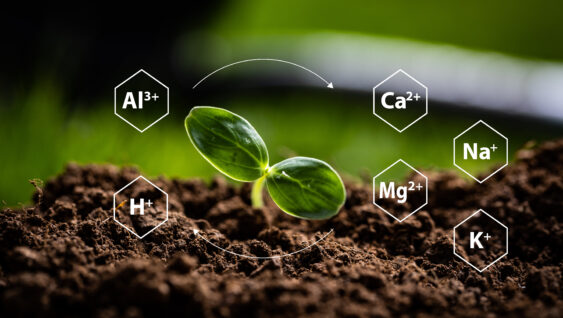
I think the general thing that I would say is that these relationships between the nutrients aren’t typically important in terms of soil fertility. That’s a pretty broad statement and it’s not completely accurate, but the one that really is important, it’s not fertility-related, is the sodium percentage. We look at the exchangeable sodium percentage compared to calcium and magnesium. We also measure that as sodium absorption ratio, which is also sodium compared to calcium and magnesium, and that is an important ratio. I don’t really care what the concentration is in terms of sodium. It’s almost an irrelevant number, but it is used to calculate the ratio of sodium to calcium and magnesium, and that is an important number, because if that percentage gets too high, the soil structure could be destroyed. For example, we would call a soil with exchangeable sodium percentages above 15% as a sodic soil, or maybe more accurately if we looked at the sodium absorption ratio, if that was above 13, and that’s a unitless measurement, if it was above 13, that would be a sodic soil.
[00:17:29] Bryan Hopkins:
I always tell people, though, we don’t wanna wait until you hit 15% exchangeable sodium percentage. I usually use 5% as kind of a flag. So if my exchangeable sodium percentages are above five, then I tell folks, “Hey, we oughta start looking at this and looking at the water quality for irrigation and those kinds of things, potentially adding a soluble calcium source to try to lower that percentage, get more calcium relation to sodium.” So that’s a really important thing, especially in some parts of the world such as the western United States where we do get sodic soils. However, this same idea is pushed quite often to sell potassium fertilizer or calcium and magnesium fertilizer, and the data shows pretty clearly that that’s just not the case. There’s a lot of data that shows that we get yields all over the place in terms of no correlation to the percent of potassium, for example.
[00:18:23] Bryan Hopkins:
And we have super high yielding fields with really low percentages and also really high percentages. Several studies have been done, and the preponderance of the data is that there is no relationship. Instead, we wanna focus on the concentration, the part per million of the potassium in the solution. And in that case, we do have relationships. They’re not perfect, but there is a relationship between, let’s say if I have low concentration potassium, I’m higher percent chance of getting a response to potassium fertilizer. If my potassium levels are extremely high on the soil tests, I’m very unlikely to see a potassium response. So that’s the general gist of …
[00:19:05] Bryan Hopkins:
There are some instances where, like, magnesium maybe gets a little bit high in relation to calcium, but again, that’s probably more of a soil structure thing than it is a nutrition thing. We do deal with, in some cases, the quality of feed when we get some percentages that are a little bit out of whack for magnesium and calcium. Those are things that are possibilities. There are some others that are commonly talked about, phosphorus with some of the micronutrients, and specifically zinc, manganese, iron, copper. But again, it’s not really the percentage. These ratios, they just don’t have any scientific backing. Now, if I have high soil test phosphorus, I’m more likely to create micronutrient deficiencies. That’s true. But again, I would focus on the concentration, not the ratios. They just don’t really hold up. And if somebody knows of some data that says otherwise, I’d like to see it.
[00:20:05] Mike Howell:
Dr. Hopkins, we’ve talked a lot about these three strategies today, and as you said, we could be here all day. Listeners, we’re trying something new today. Dr. Hopkins has got a slide, and we’re gonna try to put this on the recording for those that can’t watch it on YouTube. Dr. Hopkins, I think we’ve got this on the screen if you wanna talk us through this slide.
[00:20:22] Bryan Hopkins:
Yeah. So what you’re looking at are three of the bases. You got magnesium up there in the upper left and potassium on the upper right and then calcium on the lower left. On the X-axis, across, it’s the percentage of base saturation, and then on the Y-axis, the vertical axis, that is yield. What you’re looking at there is no relationship. There is no correlation. If there was a correlation, you would see those dots. Each one of those represents a different soil, a different field study, and it just shows there is no correlation. If there was a correlation, you would see an upward trend or a downward trend, some kind of a relationship. The little boxes that are showing there are kind of the ideal percentages that are proposed by many that we want to be in. And you can just see that those yields in those percentages just aren’t any better th- than if we had different percentages.
[00:21:19] Bryan Hopkins:
And this is just one dataset. There’s lots of other datasets out there that would agree with this type of information. I just have never seen a reliable dataset for typical soils in field conditions that shows any kind of a positive relationship with base saturation. This data would say we probably ought to be thinking about a different strategy.
[00:21:40] Mike Howell:
Dr. Hopkins, we really appreciate you taking time to visit with us today and walk us through these different strategies. We understand growers have a lot to think about, especially when prices are the way they are this year. Listeners, we appreciate you tuning in. We hope you learned something from this episode, and if you’ll hang around for just a couple of minutes, we’ll be right back with segment two.
[00:21:59] Mike Howell:
Farming isn’t farming without questions, and now, there’s a place to go for answers. At eKonomics, an entire team of agronomists is waiting and ready to help for free. No question is too big or too small. Visit nutrien-eKonomics, with a K, dot-com, and submit your question with the ask an agronomist feature.
[00:22:22] Mike Howell:
Thanks for joining us again today. For segment two, this is our ask an agronomist session, and we have our Canadian agronomist, Lyle Cowell, in the studio with us today. Lyle, this week’s question is about nitrogen, and it says, “What tips do you have for spring applications of anhydrous ammonia?”
[00:22:38] Lyle Cowell:
Thanks again, Mike, for having me today. Anhydrous ammonia in spring. Well, spring will come. There are probably places in the Midwest that are applying ammonia right now. In late February and going into March, we’ll start to see the application of ammonia. In Western Canada, spring will get here some day in April or May, and we will be applying ammonia in some portions of Western Canada. It is a significant source of nitrogen for the northern Prairies of Western Canada.
[00:23:07] Lyle Cowell:
So some tips. Well, ammonia is an excellent source of nitrogen, and the primary tips to utilize it in spring. First of all, every time you use ammonia, you use it safely, and I think we have a good culture of safety within farmers that utilize ammonia and to use it very safely. It can pose some risk if you have a release of ammonia, and I just want to always make sure that we’re doing this safely. Now, farmers who use ammonia usually are very aware of that, and we just need to keep an eye on that ball.
[00:23:39] Lyle Cowell:
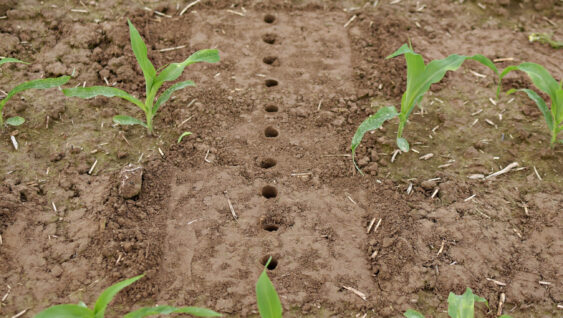
Otherwise, agronomic tips. Adequate depth. We are applying ammonia, which is either as a gas or has very high risk to turning back into a gas once it’s released from the pressurized tank. So we want to make sure it’s banded in the soil deep enough. What’s deep enough? Generally, you want the band to be a minimum of three inches under the soil. Ammonia doesn’t move too much in the soil. You can expect it to perhaps move about five centimeters from the center of the radius of application, but you do want to make sure it’s under the soil and it’s under the soil and sealed. So you apply that nitrogen in a band at least three inches, depending on your soil on farm, you may be five or six inches deep, and you need to make sure that that band is sealed behind it.
[00:24:30] Lyle Cowell:
With some applicators and in some soils, it might be hard to seal the band, but that is absolutely critical. But if you’re in very dry or very wet soil, you have to keep an eye on it to make sure that you have decent closure behind that ammonia. Because again, most of the ammonia that you place in the soil, it is as a liquid, but it quickly can form a gas because once it’s released out of the pressurized container, it has a high risk of forming a gas. Those are the primary things to think about really when it comes to applying ammonia. There’s a little bit less leeway, a little bit less room for air when we get to the proper application depth. Other than that, there’s lots of equipment that does an excellent job of applying ammonia. We’ve made huge advances in ammonia application rates, accuracy of application, doing it properly and safely, huge steps in the past 10 or 20 years compared to what it used to be. As long as we really keep an eye on it and do it properly and carefully, ammonia can be an exceptionally good source of nitrogen for your crop.
[00:25:34] Mike Howell:
Lyle, we don’t use that much ammonia here in the south anymore, but one of the claims to fame at Mississippi State is one of the experiment stations was the site of the first ever anhydrous ammonia application. And there’s a plaque on the wall in Stoneville, Mississippi, remembering that. Anhydrous ammonia has kind of moved out of our system for a number of reasons, but still a very important source of nitrogen fertilizer. Lyle, thanks for all that information.
[00:25:57] Lyle Cowell:
Absolutely.
[00:25:58] Mike Howell:
We really appreciate it. Listeners, thanks for joining us this week. As always, if you have questions about anything we’ve discussed, you can visit our website, that’s nutrien-eKonomics, with a K, dot-com. Until next time, this has been Mike Howell with The Dirt.
[00:26:14] Mike Howell:
Hey, guys, if you like what you heard today, do us a favor and share this podcast with someone else. It could be your neighbor, your friend, your crop advisor, or whoever you think would enjoy it. Your support helps ensure future episodes, so please like, subscribe, share, and rate the show wherever you’re listening from.