





Read Full Transcript:
Mike Howell (00:08):
The Dirt, with me, Mike Howell, an eKonomics podcast where I present the down and dirty agronomic science to help grow crops and bottom lines. Inspired by eKonomics.com, farming’s go-to informational resource, I’m here to break down the latest crop nutrition research, news and issues, helping farmers make better business decisions through actionable insights. Let’s dig in.
(00:38):
Well, hello again everyone. Welcome back to The Dirt. Joined again this week with Lyle Cowell. Lyle, glad to have you on the program. If you will, remind our listeners a little bit about you and what you’re doing now.
Lyle Cowell (00:49):
You bet, Mike. Well, I’ve been with Nutrien since June now as the Canadian agronomist and it’s been great settling into this job and getting to know a few more people in Western Canada or reacquaint myself with folks in Western Canada as well as the greater team within Nutrien. It’s been a great start to the position and look forward to continuing on. Fall is here, the crops are nearly completely off in Western Canada. And in Eastern Canada, they’re just nicely getting rolling on a lot of their harvest, but everything is going well.
Mike Howell (01:21):
Well, Lyle, that was where we were going to start today, talking about harvest. What kind of yields are you seeing this year? I know it’s quite a big territory, but tell us a little bit about how yields are coming in on these early estimates.
Lyle Cowell (01:32):
In Eastern Canada, probably pretty uniformly good yields. Some things can go wrongly of course in any place, but generally their crops have been very good. A little bit late, but very good. Western Canada is all over the place, as is the case with Western Canada pretty much every year, it’s dry land agriculture through most of Western Canada and rainfall drives the yields. Southeast Alberta, southwest Saskatchewan, and up along those borders the crops were pretty poor, another year of drought for them. The rest of Western Canada, the crops have been quite good. Across the Northern Green Belt, yields have probably been much higher than expected. Having a good surprise is always a nice thing at the end of the year for a harvest.
Mike Howell (02:18):
That’s exactly right, Lyle. I’m hearing the same things down here in the States. If we’re in an area where we got moisture, whether that be from rainfall or irrigation, crops are looking really good. If we didn’t get any moisture during the growing season, it’s a totally different story. That kind of brings us to the topic we wanted to talk about today and I guess we’ll title this “What’s Left in the Field?” If we take a big crop off of the field, we’re going to take a lot of nutrients off of that crop with it. If we don’t take a crop off of the field, chances are we may have something left. So Lyle, talk a little bit about, I guess first off, how do we know what’s left in the field?
Lyle Cowell (02:53):
Well, it’s not as easy as one would think. If we were growing all of our crops hydroponically, this would be all so simple. We just add stuff and take it out and measure what’s there and know our exact amounts, but that’s not how it is. Instead, we work with soil. Soil’s a tricky thing to work with in estimating what is left in the soil. How do we know what’s there? Well, soil tests should be part of that decision. Soil testing isn’t perfect. We’re trying to take a small sample from a big field and estimate what’s there and what’s going to be there as the crop grows. But a soil test is one tool that a farmer can use to at least know where they’re at. The databases for soil testing are sometimes very strong, sometimes not very strong depending on your region and depending on the nutrient or crop that you’re measuring it for.
(03:43):
I think when it comes to soil sampling, you really need to lean on someone that you trust in taking that soil sample, collecting a good sample and getting it to a lab that they trust and then going forward from there. There’s other means. A person should also understand what you’re removing every year from the soil. There’s tools available to that point for Western Canada and probably a tool that will be useful to a lot of the northern states is what’s called the Prairie Nutrient Removal Calculator, which is a brand new tool that’s just released in the past six months in Western Canada that you can use as a tool to measure the amount of nutrients that you’re probably removing with your crop. Those are the two things that I would start off with in understanding where you’re at for next year.
Mike Howell (04:28):
Lyle, that brings up an interesting point. You mentioned the new calculator there in the Prairie region, we probably need to do some work with that and make sure it correlates with our nutrient removal calculator on our eKonomics website if our listeners are used to using that. Have you done any work? Are those two calculators pretty close to the same or is that something we need to validate during the winter months?
Lyle Cowell (04:49):
Well, I think it’s something that we’re going to take a look at and make sure that they’re in line. The eKonomics calculator is also very good and gives a bit broader range of crops for the larger geography, so it’s a very useful tool. We are going to take a look at it for the specific crops that were most recently measured in Western Canada, as well as I guess we’ll probably take a comb through it to make sure that all the crops are in line with some of the more recent research. Western Canada isn’t the only region that’s taken a closer look at nutrient removal by crops. There’s some nice new data for both corn and beans in The Corn Belt. I’m sure that’s the case for other regions. It’s something that we always have to keep an eye on, make sure that we’ve got the right numbers in there and that’ll probably be a winter project for us, Mike, to make sure that everything lines up.
Mike Howell (05:34):
Okay, sounds good, Lyle. Let’s get in and talk a little bit about nutrients specifically and what may be left in the field. Last week we had Dr. Alan Blaylock on and we talked about Liebig’s Law of the Minimum, and we got into this a little bit about nutrients that may be mobile in the soil and nutrients that may not be mobile in the soil and the difference in those. Lyle, I guess let’s start off first and talk about nitrogen. We know nitrogen is very mobile in the soil. If we were able to run a nitrogen test right now, we may not be able to tell if it’s still going to be there next spring when we start planting. Talk a little bit about nitrogen and what growers need to be worried about with nitrogen.
Lyle Cowell (06:13):
Depending on the region, depending on the crop, it might be the nutrient that we are most confident in knowing what is being removed and understanding the soil cycle mostly because there’s been a tremendous amount of research with nitrogen across all regions. Knowing where we’re at right now, that crop just coming off, will vary tremendously on where you grow crops. In Western Canada, within another month, our soils will be frozen, temperatures have dropped now. We’re seeing the morning frosts now. Soon the soils will be frozen, so we actually have lots of farmers doing soil sampling now for next year to measure what is needed for next year and also apply nitrogen right now and often other nutrients like sulfur right now in getting ready for next year.
(06:58):
In Western Canada, we rely very heavily on a nitrate test, nitrate the available form of nitrogen. It’s very soluble, very mobile. Because our soils go to sleep for a few months in wintertime here, we can make use of a nitrate test even sampled in fall to have good estimate to what is available for the crop next year. Whereas if you’re in an area where your soils don’t freeze and are subjected to significant rainfall over the wintertime, a nitrate test probably gets a little dicey as far as how accurate it’s going to be. Probably of potential use, but your sampling would have to be done much closer to the day that the crop starts to grow. We just have to keep that in mind. Like you say, it’s a soluble nutrient. It’s not that hard to measure in a lab. It’s whether or not that measurement is going to be meaningful to the farmer when the crop starts to grow.
(07:48):
Same thing could apply to sulfur. Again, another very soluble nutrient. Whereas nutrients like phosphorus and potassium, a little harder to measure them as well, but because they’re less soluble, the numbers in soil sample tend to change much less over the course of time.
Mike Howell (08:04):
Lyle, you touched on something there. I think everybody knows that conditions where you are versus where I am are going to be quite different. We’re probably not going to freeze up. If we do, we may have one or two days this winter that it’s actually frozen ground. If we did a nitrate test, it may show a little nitrogen left and chances are that that’s not going to be here this spring when we start trying to grow another crop. You can probably get away with that test up there and I think y’all do that pretty routinely. Here in the south, we usually don’t even bother with that because we know it’s not going to be there anyway.
(08:35):
Lyle, that kind of leads me to another question. We’re talking about doing some soil test and verifying what’s there. If we’re harvesting this crop and we’re returning that residue to the soil, it’s going to take time for that to break down a little bit. Talk a little bit about timing on these soil samples. How do we know that the nutrients are being released from that residue and how long is it going to take for it to break down?
Lyle Cowell (08:57):
Yeah, that’s a good point and it’s another part of soil sampling and just understanding soil that makes us realize that every soil sample is, at best, a tool to use. It’s not an absolute answer. Yes, we’re sampling soil right now. Harvest just finished a few weeks ago. There’s going to be nutrients in that residue. Some nutrients move out of that residue very quickly. Something like potassium moves out of residue a few rainfalls, a bit of snow melt on the residue, the potassium is out and into the soil. We see evidence of that. Sometimes in springtime, we often see very good crops or better crops where the swath row was, the wind row was, because potassium has been leached out of the residue and deposited underneath the residue from last year and becomes a good soluble source of potassium for the next year.
(09:45):
People often think that nitrogens are going to be become very quickly available after decay of the residue, but that’s very variable. Residue tends to be pretty high in carbon. The mineralization, the decay and release of nitrogen from that residue, can be quite slow from residue just depending on what that residue is. Something like a crop of pea or lentil that may decay quite quickly, that nitrogen might be available quite quickly to the crop and might pick up that nitrogen in a nitrate soil test quite quickly. Whereas nitrogen that might be in any of the cereals, or canola, flax, those types of crops, it’s going to take a while for that nitrogen to become available to the next crop. We really have a hard time accounting for that residue bank of nutrients for next year. It adds one more level of, I hate to use the word guessing, but this is a certain amount of educated guessing that has to go along with soil sampling.
Mike Howell (10:40):
That’s where we like to put a plug in for your agronomist, somebody that’s been in the fields and knows what’s going on, has a good deal of experience with this. I highly recommend that our growers find a good agronomist that they can trust and help them make these management decisions.
Lyle Cowell (10:53):
Yeah. You know what? I often hear fellows say, “Well, it’s just a bucket of soil. How hard can that be?” But you’re investing a lot of money per acre on fertilizer next year. A soil sample isn’t just a bucket of soil. It is in the sense that that’s what you end up with, but a trusted agronomist should have the ability to think their way through where that sample’s going to be taken in the field, how deep they’re going to sample, how many samples they’ll take. You really have to understand the whole soil in the field to take a good sample.
Mike Howell (11:24):
Lyle, we talked a little bit about nitrogen and measuring for that. Let’s talk about one of the immobile nutrients. Let’s talk a little bit about phosphorus and how phosphorus is going to differ from nitrogen a little bit.
Lyle Cowell (11:35):
Yeah, phosphorus is a tough one. It’s hard for a number reasons. One, it’s fairly insoluble and it’s insoluble in many different forms depending on where you’re at. There are insoluble forms of inorganic phosphorus, inorganic phosphates. Then the type of inorganic form is largely driven by the pH of your soil. Where I sit here in Western Canada, most of our phosphates are immobilized as calcium phosphates or magnesium phosphates. They’re not unavailable. They’re very, very slowly available.
(12:07):
Now, if you’re at a low pH soil, you might start to form some iron phosphates or aluminum phosphates that can be very insoluble, and it’s hard to measure each phosphate type and understand how soluble they’re going to be in the future for the crop. Piled on top of this is that depending on where you’re at and what type of soil you have, I always would say 30% to 40% of your phosphorus is in an organic form. Recent residues or old residues allotted your phosphorus, depending on your soil, might be in an organic form. Now we’re going to try to measure phosphorus, not just in an inorganic form and organic form, multiple types of inorganic and organic forms. It’s a hard nutrient to find the proper extraction for to estimate your availability. Because of that, there’s a lot of different extractions I utilize between different labs and measuring phosphorus depending on where you are in North America.
(13:04):
In Western Canada, we always talk about the Kelowna extracts, Olsen extracts, Mehlichs and other extracts. They’re trying to match the ability to measure the phosphorus with the type of phosphorus that’s in your soil. That’s something that you need to be aware of or at least your agronomist needs to be aware of, is selecting that right extract to measure the available phosphorus in the soil. It’s not simple like measuring nitrogen nitrates. They’re relatively easy to measure, relatively easy to correlate the yield response, at least in Western Canada. Phosphorus is just a tricky one from one end to the other.
Mike Howell (13:41):
Lyle, you brought out a good point there about the extraction technique, and that is going to differ from lab to lab. I like to recommend that people understand that a little bit and know which lab they’re going to, which technique they’re going to be using and make sure that technique is appropriate for their geography. The technique we use here in the Mississippi Delta is going to vary a little bit from the technique that you would use up in the prairies. I just want to make sure everybody understands those differences and make sure that you understand how the lab is going to be doing that and understand how to use the results when you get those back.
Lyle Cowell (14:12):
Absolutely. Very important. With phosphorus, we’re just trying to measure that little dab of most available phosphorus and it’s just not an easy thing to do.
Mike Howell (14:21):
Okay, Lyle, let’s talk a little bit about potassium. With that one, most people don’t think about potassium moving around too much in the soil, but in my part of the world, we can actually lose a good bit of potassium through leaching. We get into some of these deep sandy soils around the coast, and that is definitely a problem. I’m assuming you don’t have that big a problem with it where you are, but let’s talk a little bit about potassium management.
Lyle Cowell (14:42):
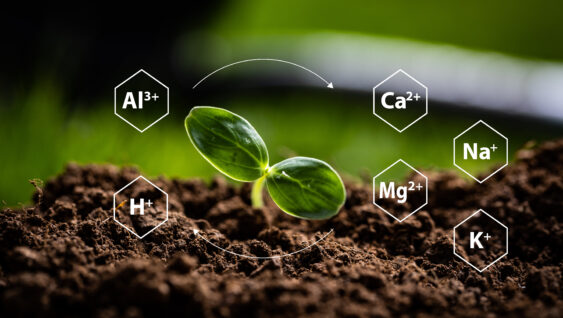
It’s not mobile in the sense that nitrates and sulfates are mobile, but it can move. So it’s a cation, it has a positive charge. And so if you have a soil that has a relatively high cation exchange capacity, it’s probably not going to move very much. It’s a little bit simpler of a nutrient in that it’s largely present in the soil in an [inaudible 00:15:05] form, largely taken up as the potassium cation. Depending on where you’re at like you say, different expectations and solubility. I actually think that even in Western Canada, we probably overestimate the insolubility of it, so we often completely shy away from broadcast applications and potassium here, and that may be overstated I think in some cases. Like you say, you get into a lot of deep sands, and often deep sands are going to be those that are most potassium deficient. Potassium can move into those surface soils. Like you said, you even deal with leaching beyond the root systems, maybe a potassium. We would probably just hope that it would leach to the root system up here.
(15:47):
It just depends on where you’re at. Again, we deal with winter time, we have relatively little rainfall. A lot of our precipitation comes as a snow melt. Leaching out of the root zone of potassium is very unlikely where I sit, very different from conditions that you face. It’s something that we have to understand and it’s something that I always think, Mike, in today’s age, we often search for our answers on the internet, and I sometimes worry about that. You have to know where your sources are or where the information’s coming from when you’re learning about a particular nutrient on the internet. I could read information from your region that might be very, very accurate and meaningful to your region, but if I tried to apply that up here, it just might not be right. So we used to not have to have to worry about people reading beyond their boundaries, but it’s something that you have to keep in mind when we’re talking about nutrients.
Mike Howell (16:38):
That’s exactly right, Lyle. Great point there. Lyle, we’ve covered the big three nutrients. You touched on sulfur a little bit. What about the micronutrients? Is there anything we need to talk about on micronutrients and what may be left or what we may need to add this fall?
Lyle Cowell (16:52):
Oh, absolutely. Micronutrients, they’re essential nutrients, so we should be aware of where you are at for nutrient levels. It’s going to be primarily the micronutrients, zinc and copper. There are localized deficiencies and other micronutrients. I always encourage farmers to measure the micronutrient levels in their fields at least once to know where they’re at. The other thing that we probably should do, if you recognize that you’re on the edge of having a micronutrient deficiency on your farm, is try to start sorting out where on your farm. So you might have a zinc deficiency on a field, but it might only be on 10% of your field. And with micronutrients, we can probably deal with those localized deficiencies quite well. Localized application to the soil, localized foliar applications. A person should at least understand where you’re at for your micronutrient levels at least once or twice in your farming career just to understand that you’re not missing anything from that set of nutrients.
(17:53):
A bit of a warning to anybody. The database for soil sampling and for correlating that the yield response for the wide range of crops in your area is probably really very weak for just about every region. Where I’m at here, we are pretty comfortable with our copper soil test for wheat. Really, I’m not that confident in terms of copper soil testing for most other crops. Our numbers for zinc are fairly robust depending on crop, more confident if it’s for beans or corn than most other crops. Beyond that, where I sit here, our confidence in soil sampling for micronutrients and understanding what is deficient is really very weak. There’s just no database for it. That’s something that you always have to keep in mind.
(18:39):
With today’s lab equipment, you can measure anything. We could measure any nutrients you want and things that aren’t nutrients and try to pretend that we know what that means. But in a lot of cases, we don’t know what it means. Just be a little bit aware that you have to be confident in the database that is behind the soil sample.
Mike Howell (18:55):
Lyle, we’ve covered a lot of information here today. Is there anything else you think our listeners need to be on the lookout for this fall as they’re getting ready and making applications, getting ready for next spring?
Lyle Cowell (19:06):
Mike, fertilizer is an expensive commodity to put on your farm. Following the four Rs, probably the most important R in the four Rs is right rate. It’s also probably the hardest one to get right. I have a pretty good confidence in what is the right place to put nitrogen fertilizer, pretty good confidence in the right time to put nitrogen fertilizer in this growing region, and the right products are fairly easy to pick out. But right rate, that can be hard. Use soil sampling, but also use your experience and understand your removal rate of nitrogen and other nutrients from your crop.
(19:42):
There’s things that we learned in this new Prairie Nutrient Removal Calculator effort that were different than what we had assumed. I’ll give you a couple examples, Mike. Our removal rate of sulfur by canola is not as high as we thought it was. It’s still more than twice as high as most other crops, but it’s not as great as we thought it was. In other things, the removal rate of potassium by pulse crops is substantially higher than we’ve been assuming. So crops like pea and lentil and chickpea, removal rate of potassium’s much higher, two to three times higher than most other crops that we grow in Western Canada. The phosphorus numbers, canola is probably not removing quite as much phosphorus as we had assumed, but some of the cereals are removing more phosphorus than we assumed.
(20:27):
So use soil samples for every region and make sure that you’re using the right type of soil sample that we talked about, but understand what you’re actually removing and get those numbers in mind. Soil’s like a bank, you put a deposit of nutrients in before you grow the crop. Sometimes during the crop you can put a deposit of nutrients into your soil, then you withdraw it and there’s going to be something left over. We don’t want there to be a deficiency of funds within that bank of soil nutrients, but we also don’t need to overinvest, I guess, is what I sometimes think of when I sometimes see that.
(21:01):
For example, Mike, we have a history in the canola belt of Western Canada of really applying a lot of sulfur. Sometimes we overshoot the mark. We probably actually start to build up sulfur in some of our soils because of our concern for sulfur levels for canola. Whereas I think we’ve talked about in a lot of The Corn Belt, we start to see a lot of sulfur deficiencies, tradition of not applying sulfur based on that input from atmospheric conditions, and that’s not coming anymore. We have to put something into the bank there. Just kind of keep that in mind. Think of your soil as a bank. You need to have a nice comfortable investment there, but you don’t need to overdo it either.
Mike Howell (21:42):
Lyle, great advice for our listeners out there. You’ve mentioned several times this new nutrient removal guide in your area there. If our listeners are wanting to get more information on that and check out what’s changed in that, where can they find this information?
Lyle Cowell (21:55):
Easy to find. Just your search engine, look for Prairie Nutrient Removal Calculator, and you’ll very quickly find it. It’s housed in a couple of other websites, but it’s very easy to find. And what I’ve done, I’ve dropped the webpage onto my phone so that I can have a quick access to it as well just for conversations. It’s a very slick webpage. You just select which crop you have and put a yield goal in. It’ll quickly tell you estimated nutrient removal rate from nitrogen to boron. So it’s very slick and easy.
(22:24):
A lot of work went into it. It’s based on about 2,500 crop samples across Western Canada. I really should make mention of those who had the foresight to do this work, and that was Fran Walley and Rich Farrell at the University of Saskatchewan. Credit to them to see that we needed that foundational understanding of nutrient removal, and credit to the agronomists across Western Canada to help those folks collect the samples and to the farmers that took part as well. These are farm-based samples. They’re very meaningful for Western Canada. Like I said, for the crops that are listed on there, probably very meaningful for well outside of Western Canada as well.
Mike Howell (23:02):
Okay, Lyle. Well we sure appreciate you taking a little time to go through these with us today. I’m sure our listeners have got a lot of useful information out of this. Listeners, as you know, it’s now time that we move into talking about somebody famous in agriculture. Today we’re going to talk about a man named John Macready. John was born in October of 1887, and he was an American test pilot and aviator. He was born in San Diego, California, received a bachelor’s degree in economics from Stanford University in 1912. In 1917, he enlisted in the US Army where he earned his pilot’s wings at Rockwell Field in San Diego. Macready was the only person in history to ever win the coveted Mackay Trophy three years in a row.
(23:49):
Now, for those of you who don’t know, the Mackay Trophy was first presented to Clarence Mackay in 1912. This trophy is awarded annually to the most meritorious flight of the year by an Air Force person, persons, or organization. The United States Air Force determines the winner and the National Aeronautic Association presents the trophy to its winner at the Fall Awards dinner. In 1921, he won this trophy for setting an altitude record where he reached a height of 34,509 ft. Later on that same year, he was able to climb to over 40,000 ft. His second trophy came in October of 1922 where he, along with Oakley Kelly, set a world endurance record for a flight that lasted 35 hours, 18 minutes and 30 seconds.
(24:35):
His third trophy came in May of 1923 when Macready and Kelly again made the first nonstop coast to coast flight across the United States. The flight went from Long Island, New York, to Rockwell Field. Now, there was several records that were actually broken in this flight. There was a total flight time of 26 hours and 50 minutes, 48 seconds. During the flight, Macready actually made the first in-flight aircraft engine repair in air service history. He had to replace a defective voltage regulator while they were actually flying. I can’t imagine somebody working on the engine of an airplane while it’s actually being flown, but that’s what he did. And finally, the flight also set a new distance record for a single cross country flight of 2,625 miles.
(25:21):
Now, Macready was also involved in some other things while he was in the army. One thing was the invention of RayBan Aviator sunglasses. Before Macready came along, the aviator goggles who had a fur lining around them and protected their eyes, but when they started reaching these new altitudes, they started freezing up and the pilots couldn’t see. Macready teamed up with the people at Bausch + Lomb. They had a history of working on specialized eye health products, and they were able to create the RayBan Aviator sunglasses. These first came out in the late 1920s and became really popular into the 1930s.
(25:56):
Now, you may be asking why in the world are we talking about a man that’s set all these records for flights, the altitude, and the distance records in an agriculture podcast. Well, we’re getting to that. Before Macready started all of these records and went into the coveted Mackay Trophy multiple times, he made the first aerial application of a pesticide that was done in early 1921. They did this at McCook Field in Dayton, Ohio. That launched the aerial aviation industry, and today there are a little over 4,000 aerial aviators in the United States. We’re not only putting out pesticides with these aircraft, we’re putting out fertilizers, doing aerial imagery, a big industry here in the United States. None of this would’ve been possible without the early work of John Macready. We want to thank him for his work in developing the aerial aviation industry.
(26:46):
Listeners, if you need information on any of these topics we’ve talked about today, we always encourage to look on our website. That’s nutrien-ekonomics, with a K, dot-com. Until next time, this has been Mike Howell with The Dirt.