





Read Full Transcript
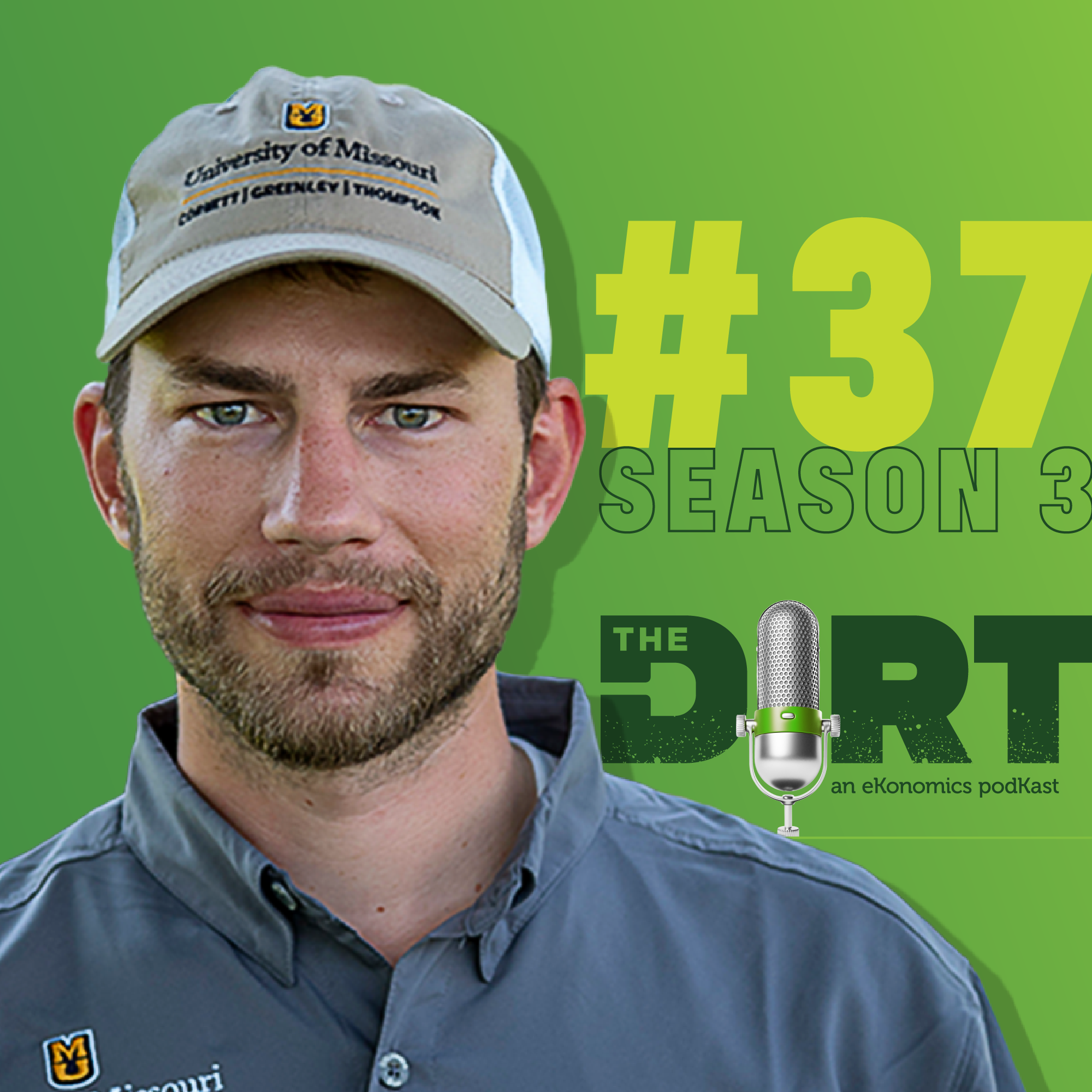
The Dirt, with me, Mike Howell, an eKonomics podcast where I present the down and dirty agronomic science to help grow crops and bottom lines. Inspired by ekonomics.com, farming’s go-to informational resource, I’m here to break down the latest crop nutrition research, use and issues, helping farmers make better business decisions through actionable insights. Let’s dig in. Well, hello again, everyone. Welcome back to The Dirt. As you know, we started several weeks ago visiting with some of the new agronomy faculty around the country. We’ve had several of these people on. And today, we have another new faculty member that we want to introduce and figure out what’s going on with his program. Today, we have Dr. Carson Roberts with the University of Missouri. Carson, welcome to The Dirt.
Dr. Carson Roberts (00:59):
Thanks for having me.
Mike Howell (01:00):
Carson, if you would, introduce yourself to our listeners and tell them a little bit about how you got into the role you’re in now.
Dr. Carson Roberts (01:06):
Well, it’s a really long story. I’ll try to make it short and sweet. I originally grew up in Idaho. And when I was in high school, I took this class. And it was split between spring and fall, with the first part being a zoology course and then the second part being a botany class. I loathed that zoology course. It was just disgusting dissecting pigs and whatnot. The second part was this botany thing. There was a sagebrush step near our high school, and we’d go out and identify plants up on that. We identified all sorts of plants and talked about how plants function and work. I was like, man, this is a really fun thing to do. I was talking with my brother and I was like, “You know what? I really like this botany thing.” But I really want to do something in agriculture, because I grew up on a farm. And he said, “It sounds like you want to be an agronomist.”
(01:59)
I was like, “What in the world is an agronomist?” He explained it to me. I was just simple Idaho country boy. I didn’t know anything about agronomy, even though I lived in it every day. That kicked off what has been a really great journey. Did an undergraduate degree in agronomy. Did a master’s degree at Utah State in plant science and then I did a PhD at Mississippi State University. Throughout all of that, I’ve been interested in forages. I’ve been interested in irrigation, because that’s kind of the world that I grew up in. We were on an alfalfa and barley farm in Idaho. I had those two interests because, of course, nothing grows in Idaho unless it’s irrigated.
(02:41)
After finishing my PhD at Mississippi State, I started looking around and I found this position that I’m now in at the University of Missouri. And it really checks a lot of boxes that I’m excited about. So, I went ahead, and applied and it all worked out and I got the job. Now I am the University of Missouri’s assistant professor in forage agronomy. I have statewide responsibility. It’s been a wild ride. This is a new position with the University of Missouri. In the Department of Plant Sciences, here, I am the only forage agronomist in the state, which is quite a heavy load because there’s a lot of forages in the State of Missouri.
(03:23)
I think right now, we’re number three as far as the head of cattle in the state behind Texas and Oklahoma, so we have the third most cattle of any state. There’s a lot of forages. We have about 11 million acres of forage crops grown in the state between pasture and hay ground. It takes up a huge swath of what Missouri is. A little bit more about my position: It has the words regenerative agriculture in the description. And in the grazing and forage world, that means a little different thing than in the row crop world, where we’re focusing more on some of the grazing management practices. But I also like to dabble in cover crops as well in this position, so that’s where I’m at. I’m really excited about it.
Mike Howell (04:09):
Carson, we’re proud to have you on board there in the University of Missouri and look forward to some great things coming out of your program. You mentioned you were from Idaho and I probably shouldn’t tell this, but I don’t think of anything about agriculture in Idaho except potatoes. And I just assume anybody from Idaho knows something about potatoes. You mentioned you took a plant science class in Idaho, and it reminded me about my son calling a couple of days ago. He’s taken a plant science class, a introductory college level class. And he said, “Dad, the teacher told us today that potatoes cannot reproduce.” And we had to have a long conversation about that, and talk about the ways potatoes can reproduce, and get him straight on that before he got on the wrong track.
(04:46)
Any plant is going to be able to reproduce. That’s what a plant’s there for, but we’ll save that conversation for another day. Carson, I know you’ve done a lot of research and we were talking before we started recording, you actually did your PhD project with Dr. Drew Gholson at Mississippi State. I know Drew well and have done a little bit of work with him in the past. If you will, talk about some of your research experience and some of the findings you found in your graduate work.
Dr. Carson Roberts (05:09):
I’ll talk a little bit about both my master’s research and my PhD. They’re very different. My master’s research was in companion crops with alfalfa. Alfalfa has a really low seedling vigor. It’s really difficult to control weeds in alfalfa, especially if you’re not taking advantage of the traded alfalfa that we have now, Roundup Ready alfalfa. We worked on a project, trying to figure out how to best manage the companion crop aspect because it does really good at the weeds with oak a companion crop. But at the same time there’s this huge problem because it does so well that it outcompetes the alfalfa. And you can have really poor stands, especially if you’re in low moisture situations.
(05:54)
My research, we looked at a lot of different angles, irrigation management and seeding rates for an oat companion crop. Really what we found is when you’re establishing alfalfa, you really need good moisture, which is no surprise. And it’s better to go with a lower seeding rate with the oat companion crop than higher seeding rates, which is counter to what we’ve looked at before. We’re talking about seeding rates as low as 10 or 20 pounds to the acre, whereas before recommended was around 40 to 80 pounds per acre. There’s a huge saving in seeding cost there without much yield reduction. And it helps the alfalfa compete a little better for sunlight, and moisture and all those things. So, that was my master’s research.
(06:39)
And then went to Mississippi, did something completely different. I worked with cotton and cover crops. This was a cover crop tillage irrigation study. And our goals were to try and reduce the amount of irrigation use that we had in cotton. And there’s a few different reasons for this. The first reason is in the Mississippi Delta, they’re having a declining aquifer. And it may not seem like an issue right now, but all we have to do is jump over and look at what’s happened in the panhandle of Texas and how the irrigation water is just becoming more and more scarce, to know that we really want to preserve this resource. That was the first reason.
(07:22)
Another reason is that cotton really doesn’t like to be irrigated a whole lot and you can start losing yield. If you have to go and irrigate every week or something, you can start to see balls falling off the plants and stuff like that just because the plant doesn’t like to be wet. We tried a bunch of different things, a bunch of different tillage practices, bunch of different cover cropping practices. What we found, and this is probably no surprise and honestly, in research, there’s usually not a lot of surprises. It’s usually pretty close to what we expected. Using tillage, full tillage, that does a really good job at producing max yield, but that’s not the whole story. Because if you factor in the costs of that, and we did a full-blown economic analysis of this, looking at the cost, it turns out that if you do straight no-till without a cover crop, you can actually produce better economic returns, even if you’re losing a little yield because you’re not spending so much in diesel fuel and steel.
(08:24)
That was a big finding. And another finding that I found interesting, was with a cover crop, we found that we could infiltrate 12% more rainwater from an average rain event during the summer growing months. And when I started putting all this together, a few of my colleagues said, “12% isn’t really that substantial. In a one-inch rain event, that’s a 10th.” And I said, “Yes, but if you think we get 15 inches of rain during a growing season on average, you’re gaining just about an inch of water during that growing season. That’s a one-inch rain that you didn’t have before.” We really saw a lot of benefits using the cover crop. I think we have a long ways to go on trying to figure out how to maximize yield in a cover cropping situation, especially in the early stages of growing a cover crop on a piece of dirt. There’s a learning process that goes into it and then there’s a bio ecosystem change that occurs with the soil, so there’s a few years where you might see a yield drag. Those are some of the findings that I had in Mississippi.
Mike Howell (09:34):
Carson, sounds like some great research. I started my career right down the road from where you were doing a lot of that research, with the industry company there. And we were growing cotton at the time and we never turned the irrigation off, it seemed. From the time we first started irrigating, we had to keep the water going all summer and we never counted on a rain. We’ve come a long way since that. That was probably 25 years ago. And we understand that a lot better now. And thanks to people like you doing that work, we’re able to conserve a lot of that water and that’s very important.
(10:02)
How much potassium should you be applying? What’s the best form of nitrogen for sandy soils? Should you be applying sulfur? Sometimes you just got to ask an agronomist. eKonomics has an entire team of agronomists ready to answer all of your questions for free. Find your answers with the Ask an Agronomist feature at nutrien-eKonomics, with a K, dot com. Carson, let’s move now and talk a little bit about what are some of the biggest issues that producers in your area are facing? What are you going to need to be working on and what kind of problems are you going to have to help growers solve?
Dr. Carson Roberts (10:35):
Now, I’m in the livestock business and it works a little differently than the row crop world, but some of the things are the same. There have been a number of studies done on what are the pain points of profitability in a beef management system. The number one thing it always rises to the top is the cost of winter feed and the cost of winter forage. And there’s been a number of studies done on this, and it’s proven that the ranchers who’ve feed less during the winter time end up making more money than the guys that don’t. Growing up in Idaho, I always thought, okay, well, yeah, if I lived in Mississippi or something, maybe I could take advantage of that year-round grazing or whatnot, but not here.
(11:20)
There’s also been studies that have found that I think they looked at three different states, Minnesota, which has a lot of snow, Missouri and then Mississippi. And in those three states, they found that producers in all three states were feeding about the same amount of hay per year. One of my objectives is to reduce the cost of that winter feed, both by producing better quality hay, but also by extending the grazing season. Those are a couple of our challenges. Another one, and this goes along the lines with some of the research that I did at Mississippi State, trying to improve our water holding capacity and our infiltration rates in pasture. Pastures can get fairly compacted.
(12:03)
I really want to try and work on ways to manage compaction and to manage infiltration so that we can get better water into the soil, because that correlates directly with the amount of grass that we can produce. And if we can produce more grass, we can make more money. Those are some of the things that I’m interested in. I’m also working on a few projects with soil fertility. There’s a lot of work that needs to be done on that in forages, so that we can update what our current nitrogen recommendations are and some of our other fertilizer recommendations, because there really hasn’t been a lot of work there and there needs to be more.
Mike Howell (12:40):
Carson, you’re going all around. The point that I’ve tried to make from way back in my extension career, I’m in South Mississippi and we grow a lot of ryegrass and that’s just a common practice. But you go around and talk to these cattlemen and a lot of them have the mindset that they’re cattle producers. And I tried to get them to change their way of thinking, try to get them to think that they’re a grass producer and they’re marketing their product through the livestock. And if you can ever get them thinking that way so that they’re paying attention to growing that grass, I think they can be a lot more profitable. Just a different way of looking at it and doing the same thing.
Dr. Carson Roberts (13:11):
Yeah, that’s absolutely true. If you focus on the grass and if you remember that the forage component of your business is the most expensive piece, if you focus on that, focus on the ways to reduce the costs there, then you can really make some headway working towards a profit. There’s only so much you can do with genetics. There’s only so much you can do with different pharmaceuticals, like the veterinary stuff. There’s only so much you can do with implants, but there’s a lot you can do on the forage side and on the growing the grass side to improve your profitability.
Mike Howell (13:46):
I couldn’t agree more. Carson, I know you’re in a new role and you’re trying to get everything started. What kind of research plans do you have going forward?
Dr. Carson Roberts (13:54):
One thing that I’m really excited about, and this might be specific to Missouri, but I think that it has applicability elsewhere. There’s a handful of producers that have started growing milo in the summertime and then grazing it in the winter. They’re finding that they can produce about 400 cow days per acre on an acre of milo. And that’s substantial. Feeding 400 cows for one day on an acre is almost unheard of in almost any forage-related area. There are a few challenges with that. There needs to be better protein in the milo to make digestibility correct. The few producers that are doing this, actually, their cows are gaining weight during the wintertime. A lot of these producers are only feeding maybe 30 days out of the winter. There’s a lot of work that I would like to do, and try and figure out the best management approach to this so that we can get that protein level up, so that we can manage grazing through the winter on milo.
(14:56)
There’s a lot of work on that front to be done. That’s one project that I’m really excited about. One other thing is native forages, like native grasses. We’re seeing a huge push from the NRCS, from the Missouri Department of Conservation, to get these native grasses back into our forage production systems. The big problem with that is, is that native grasses are expensive to establish and they take a long time. So, you’re looking at a two-year establishment window before you’re able to go in and capitalize on that resource. And it’s going to cost around the $500 mark per acre to establish these. In a livestock world, that’s a lot of money to put into a piece of pasture land.
(15:47)
I’m trying to look at different ways that we can shorten the time between establishment, and when we can grow it, and also some ways that we can reduce our costs on establishment there, because that would go a long way for both conservation and for adoption in the state. There’s a lot of great benefits to native grasses, but we’re not going to get a lot of headway and adoption until we can figure out how to make it less expensive and to speed up the hiatus in grass growth.
Mike Howell (16:18):
You got to look at that eKonomics. It’s going to be tough to put a pasture out for two years before you can start grazing it. Hope you can figure out a way to cut that time down and reduce the cost associated with that. Carson, we’ve covered quite a bit here today. Is there anything else you want to talk about before we wrap this segment up?
Dr. Carson Roberts (16:34):
I think we’ve covered most of what I wanted to talk about.
Mike Howell (16:38):
Well, Carson, we appreciate you taking time to visit with us today. Listeners, as you know, we’re going to be right back in just a couple of minutes with our second segment. And we are going to visit another research farm here in North America, so stay tuned. Listeners, I hope you enjoyed the first segment of today’s show. If you did, please take a minute and give us a rating on your favorite podcast channel or app and give us some feedback as well. We want to hear from you to help make the show even better. And don’t keep it to yourself. Please share these episodes with coworkers, family, friends, anyone you think may benefit from the information we’re sharing here. Don’t forget to visit our website, nutrien-eKonomics, with a K, dot com, to help find the latest crop nutrition news and research information, as well as market updates, a growing degree day calculator, a nutrient use calculator, a rainfall tracker, and much, much more.
(17:31)
It’s all at nutrien-eKonomics, with a K, dot com. Most episodes of The Dirt are now available for CCA credits. Visit our website and click on the Agronomics tab to find these CCA credit opportunities. And if you have a question, you can ask one of our agronomy team members. Simply ask your question and one of us will get back with you. Thanks for listening. Now segment two of The Dirt. Well, listeners, welcome back to segment two, where we are continuing our tour around North America, visiting different research farms. Today, we’re going to be back in the State of Missouri and we’ve got Carson Roberts back with us. Carson is going to tell us a little bit about the research farm that he’s located at. Carson, tell us again which research farm you’re associated with.
Dr. Carson Roberts (18:17):
I am on the Cornett Farm. It is part of the Northern Missouri Research, Extension and Education Center. This farm is located in North Central Missouri. And really, it’s kind of a hidden gem. There’s a lot of land resource here. We’re sitting on roughly 1,200 acres of grazing land and forest. There’s about 800 acres of grazable land here. And the University of Missouri has owned this property for a number of years. They actually started doing research here in 1965. And they started with a lease. And then in 1979, the Cornett family that owned this farm gifted the property to the university. It has a rich history of grazing and forage research.
Mike Howell (19:08):
Well, I actually grew up on a research farm with Mississippi State. And we did a lot of grazing work, a lot of grazing research. I’ve been in a similar situation, basically since I was old enough to walk to the truck to ride around with my dad. Tell us a little bit about the different types of research that’s going on there at the farm.
Dr. Carson Roberts (19:24):
I have been in this position here at the Cornett Farm for about five months. And when I came here, there wasn’t a whole lot going on. I’ve since started a few fertility trials and some other stuff, looking at winter grazing of annual crops. Really, there’s not a lot going on. And it’s sad because there’s a lot of research that has been produced here. I don’t know how familiar a lot of your listeners will be with Jim Gerrish and his work. But Jim Gerrish was a researcher and he was located at this farm from about 1980 or 1981 until 2003, or something like that. And he did a lot of the pioneering work on rotational grazing and management-intensive grazing.
(20:13)
He did a lot of fantastic work that really started the movement towards rotational grazing in Missouri and throughout the country, and it even had a worldwide impact. Along with that, this is the home of the first grazing school. Now there’s grazing schools all over the place, but this is where grazing school was born. It has a really rich history. As far as extension programs, I don’t know of another one that has had as large of an impact as a grazing school because of the profitability of the producers after attending the school. It’s just phenomenal compared to those that haven’t learned the principles. There’s a rich history here and I really hope that I can continue that legacy going forward in this new role.
Mike Howell (21:03):
Carson, we’ve been focusing all year on the value of these research farms to the local producers, and you mentioned the grazing school and how important that is. Talk a little bit more about that. What can these producers learn from coming to these grazing schools and what other value do you see coming out of the research farm?
Dr. Carson Roberts (21:18):
At the grazing school, and now they’re done statewide at a local level, usually, if you’re in the state of Missouri, you can find a grazing school near you sometime during the year. They’re very accessible. And they cover a wide range of topics from grazing management to animal nutrition, to eKonomics of grazing, to conservation, fencing, plant science, animal science. There’s a lot covered in it. It’s a three-day school. It’s relatively inexpensive to attend. I think that the cost right now is around $100, which is a bargain for the amount of information that you receive. You come away with a lot more knowledge on how to manage a grazing system and how to manage a grazing enterprise to actually make money. This is for-profit ranching at its finest.
Mike Howell (22:11):
Carson, the last question I have for you today, and this is one I’ve asked all of our guests about the research farms. We know that the face of agriculture is changing. We’ve got new technology coming every day. We know we have more people moving out of the city, getting closer to our farms. That’s an issue that our farmers are going to have to deal with and our research farms as well. What do you see for the future of the farm? How is a farm going to have to adapt to keep up with the changing pace of agriculture and be a viable resource to the producers as we move into the next 50 years?
Dr. Carson Roberts (22:41):
Well, there’s so many changes that are coming at us at this point in time that it’s almost hard to keep up with everything that’s going on. Everything from now we have virtual fencing that’s becoming a thing with radio collars on each animal, and you can control the animals without using fencing. That’s pretty crazy. All the way to agrovoltaics, which is grazing underneath solar panels. There’s a lot of things in the forage and livestock world that are just coming at such a rapid pace. And then as far as forages go, we can also look at grazing cover crops. And with the increasing adoption of cover cropping practices, there’s a lot of producers that are looking at ways to utilize that forage resource.
(23:25)
There’s a lot of work that needs to be done there. We’re in a really good position because there are very few farms that have the amount of land resource that we do. We can take advantage of a lot of these different opportunities, and apply them at a farm scale, and produce results that matter to producers. And that’s kind of the secret advantage of this farm that a lot of other research farms really just don’t have.
Mike Howell (23:55):
Carson, we really appreciate you taking time to visit with us today. I know I’ve enjoyed this episode and got a lot out of it. I know our listeners will as well. Listeners, we appreciate you tuning in again this week. And as always, if you need more information on anything we’ve talked about today, you can visit our website. That’s nutrien-eKonomics, with a K, dot com. Until next time, this has been Mike Howell with The Dirt.