



Read Full Transcript
[00:00:00] Mike Howell: The Dirt with me, Mike Howell, an economics podcast where I present the down and dirty agronomic science to help grow crops and bottom lines. Inspired by economics.com farming’s go-to informational resource. I’m here to break down the latest crop nutrition research use, and issues helping farmers make better business decisions through actionable insights. Let’s dig in.
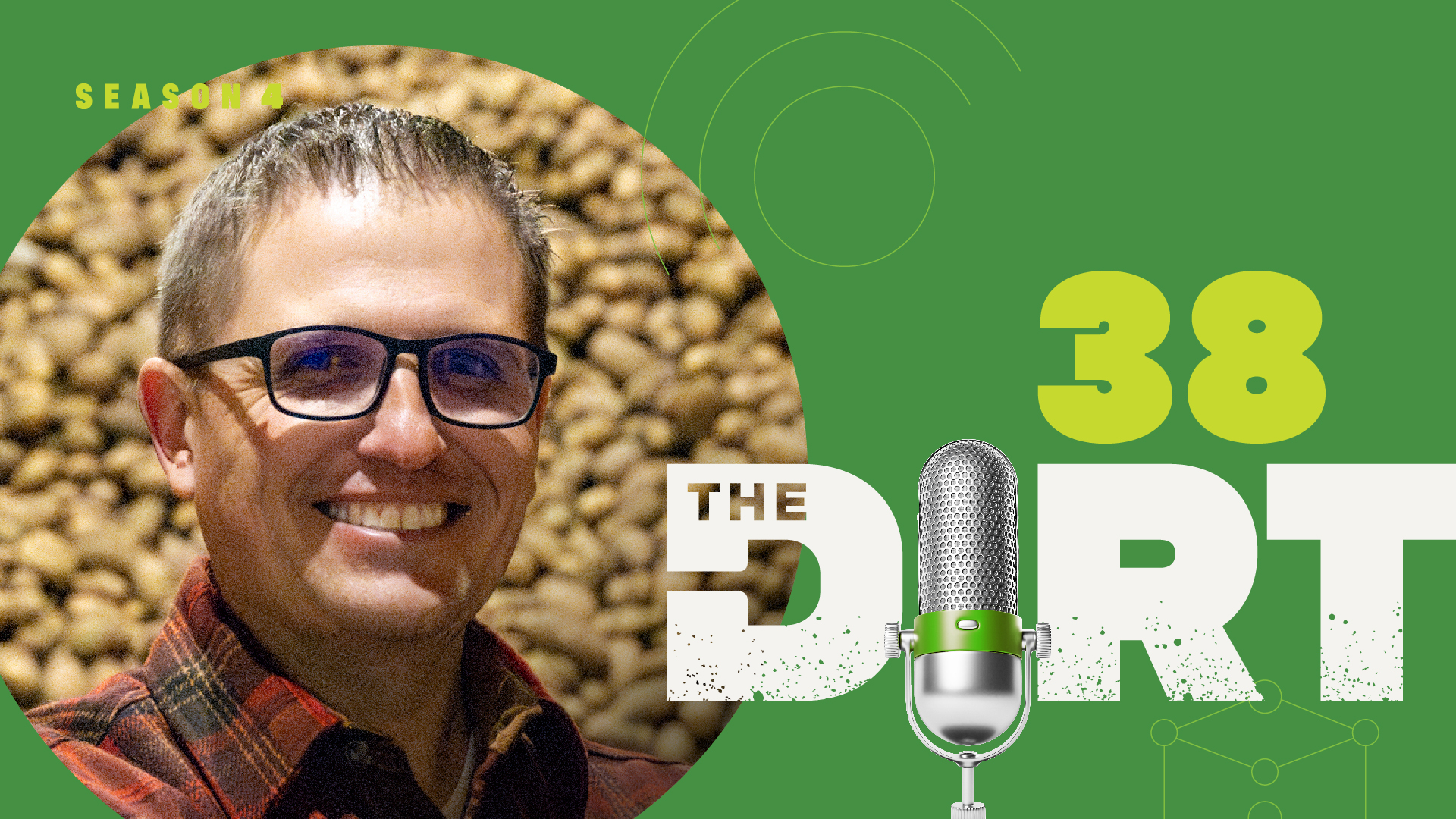
Well, hello again everyone. Welcome back to The Dirt. We’re doing our own location episode today. We are in Grace, Idaho. We’ve got Ryan Christensen with us. Ryan is a farmer here in Grace Idaho, and Ryan has been on a couple of years ago with us, but Ryan, welcome back to the Dirt. It’s great to be back. Mike.
Ryan, if you will, take just a few minutes and introduce yourself to our listeners and tell ’em a little bit about your farm here.
[00:01:00] Ryan Christensen: I’d love to. I’m fifth generation farmer. Here in Grace, Idaho, it’s a small little farming community in the southeast corner. My great-great-grandfather came here and broke the farm outta Sagebrush, and in the mid seventies my dad started growing potatoes and then my brother and I have come back and taken over the farm and continued the potato tradition and that’s our cash crop.
But we work in other. Crops and commodities as rotationals, which has ranged anywhere from peas to mustard, wheat, barley, oats, flax, safflower, anything where the market is good and we can grow it here. We’ve tried it.
[00:01:34] Mike Howell: Well, Ryan, let’s talk a little bit about the soils here on the farm. Kind of tell everybody where you’re located and a little bit about the soils that you have to work with here.
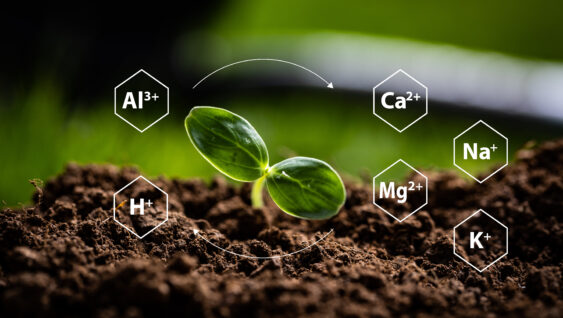
[00:01:42] Ryan Christensen: We’re located here in the high mountain desert that our soils are from ancient volcanic activity. So we have a lot of potash in the soil, which makes great soil for growing potatoes and high in phosphorus, but it’s also very high in pH, unlike where you’re at in, uh, southern Mississippi, Louisiana Valley.
Very common to be above eight on a pH level here in our area. So we struggle with phosphorus, even though being high, getting tied up in the soil. And we struggle with those different things of calcar soils here in the western United States.
[00:02:17] Mike Howell: Yeah, we have the opposite problem. We wish we could get ours up closer to seven sometimes, but we’re closer to five than we are to seven a lot of times.
Ryan, what I wanted to get into today a little bit is you mentioned that you’re on the high deserts here in Idaho, and I know water is a challenge. I haven’t got a lot of ex. Experience here in Idaho, but I know you don’t get a lot of rainfall and you have to conserve every drop of water you get. So talk a little bit about the importance of water and why this saving water is such a big issue for you.
[00:02:44] Ryan Christensen: Water is king. My kids, they love the game. Rock, paper, scissors, I always wanna say, well, water trumps all of them. So why can I just win with being water? Because truly here, water is the limiting factor. If we get maybe 12 to 14 inches of annual rainfall in the valley, and that’s just not enough to grow.
Very good crops to make a living out of it. So a long time ago, the original settlers did canal systems across our valley. So we rely heavily on the Bear Lake River basin to provide water. And then in the sixties and seventies, a lot of wells were drilled. But all that still depends on. Run off from the mountains and rains and snows in the valleys.
Really managing our water to perform a good quality crop is critical. And if you don’t maximize your crop per drop, you’re not gonna stay in business very long.
[00:03:32] Mike Howell: I’m from south Mississippi and we may get 50 or 60, sometimes 70 inches of rainfall during a year, but we have a problem with water as well. We have to be able to get.
Water on our crops at the right time. We also have to worry about getting it off at the right time too. It works both ways, so water’s kind of a blessing and a curse at the same time. Ron, I know you’ve done a lot of different techniques over the years, different things to help save this water. Talk a little bit about some of the practices you have in place to help conserve the water during the year.
[00:04:00] Ryan Christensen: The biggest thing we did was reducing our amount of tillage and trying to leave as much residue on the soil as possible to keep it from drying out, to keep moisture there. It happened. I was really good friends with our local NRCS agent. Years ago, we were floating the Bear River with a scout group, and him and I were in the same canoe and he was talking to me about the new stuff that some farmers were doing in southeast Idaho of conservation tillage, reduced tillage cover cropping.
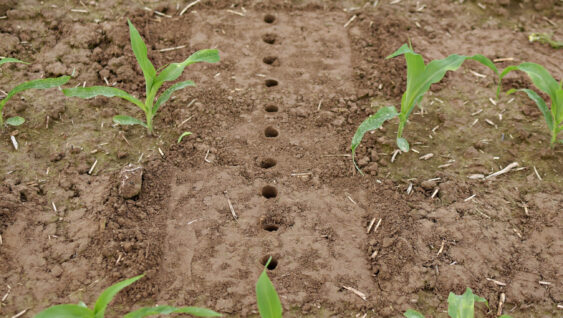
And I got excited about it. So I came home and within six months we’d sold all of our cultivating equipment except what we needed to cultivate for potatoes. Because potatoes are very heavily reliant on seed bed prep and getting the potatoes out of the ground. But for our grain years, we simply eliminated tillage or severely reduced it, and within just two years we saw.
Great performance of saving water and still maintaining our quality yields. Going to a reduced tillage really was the biggest step of conserving water. And then the second step was introducing technologies to monitor the moisture levels in the soil, to monitor how much water we were putting on to getting more accurate localized evapotranspiration rates on a field by field basis, rather than just a generalized, what’s it doing in the whole valley?
Our valley here in this high desert is about 15 miles wide, but it’s 70 miles long and lots of different canyons, and so the amounts of water and temperatures and cold temperatures at night vary so greatly That really being able to measure et vapo transpiration rates on a more localized setting and then monitoring that locally really helped conserve the drops of water that we were getting from the sky and the amount we were putting on our crops.
[00:05:48] Mike Howell: Ryan, you mentioned technology, and I know when I first started working in agriculture, we did a lot of irrigation in the Mississippi Delta. We did a lot of furry irrigation as well as some center pivot irrigation. But when we started irrigating, we just turned the water on and pretty much let it run the rest of the summer.
We didn’t pay much attention to how much water we were using, and I know now we’re doing a lot of stuff with water sensors and measuring when we need to turn the water on. Are you using any sensors in your fields these days?
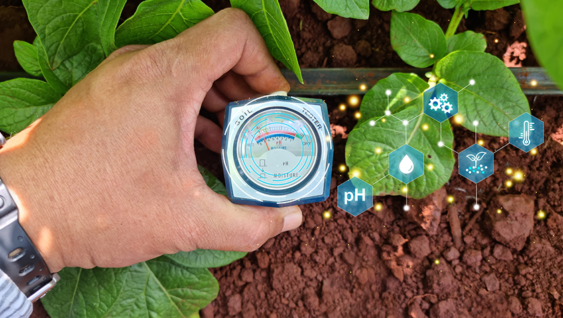
[00:06:14] Ryan Christensen: I am. I have 40 weather stations. That have soil sensors across my farm every summer, and there’s been a lot of advances in the sensor technology.
One of the oldest one is volumetric water content. The percentage of water that’s in the soil, it’s very valuable to have that information, but it doesn’t really tell you the true picture of how much water can be used by the plants in the soil. So a new sensor that we’ve used, which the technology and science has been around forever.
I dunno if you’ve ever heard of Tensiometers that are used in irrigation, but. In recent years, companies have been able to develop a digital version that uses that same technology. What it’s called is the Matrix Water Potential. And basically it’s a measurement of how the plants feel in its simplest ways, how the plants feel in the soil.
Because we were talking about the climate differences. It’s kind of cold here in Grace, Idaho today, and the differences between here and Mississippi, both 72 degrees here. In the wintertime, it’s pretty comfortable, but 72 degrees in the summer could be still a little warm. And so dependent on environmental factors can change what the plant can take out of the soil for water.
This matrix water potential is kind of like a thermostat for your house. It’s telling us the comfort level of what the plants have, and every plant has a different comfort level, and so we’ve used with science. Been able to determine what the comfort level of potatoes is and what the comfort level of greens we’re able to watch that and say, okay, we need to add more, or Our potatoes are comfortable, we can turn that water off.
And so it’s not just to turn it on and forget it. There’s more of a science of when to water, how much to water, and so the plants are getting what they want to stay the most comfortable.
[00:07:55] Mike Howell: Ryan, I wish we could get some of that 72 degree weather today. I got up this morning, it was 18 degrees and we never get that cold where I’m at.
It’s been pretty tough today. My jacket isn’t near about heavy enough, but it’s pretty cool. We’ll make it work. Having a great visit so far. Ryan, one of the places you showed us while we were out visiting the farm was the golf course you have here on the farm, and you were talking about the irrigation you have there and how that led into a lot of these water saving tactics that you’re using in the agricultural fields.
Talk a little bit about that.
[00:08:24] Ryan Christensen: The golf course came about in the early nineties. We had some wasteland that my dad originally was just gonna build a couple holes on, and he went on a snowmobile in the middle of winter, came back and said, I think we have room for nine holes. And the pivot would water some farmland on the north side and some farmland on the south.
But we had some ground in the middle that was just too narrow and rocky for modern day equipment. So that’s where we built the course, and we continued to water with the pivot. Well, Pivot’s gonna put the same amount of water on from center to end. At least that’s the theory, and it doesn’t always work out that way with aging equipment, but as a result of the golf course, it’s not like a monoculture crop.
Yes, it’s all turf, but you’ve got. Your greens that are mowed shorter than your fairways, that are mowed shorter than your rough, which is mowed shorter than your native grasses. So we had a very variable golf course where some areas were so thick that you’d lose your ball instantly, and some places were really dry because it was mowed really short.
So we did some research and I convinced my parents to install a variable rate irrigation system so that we could control the water that was coming out of it. Every nozzle on a polygon base so we could draw shapes and different sizes across the whole course. So then we were monitoring and watering based on the turf needs rather than just a blanket watering.
And I was speaking with a college professor, Brian Hopkins, who’s been a guest of your show from Brigham Young University in Provo, and he got really excited about it. And was like, let’s start doing some stuff on the crop side. So we brought in another professor and some more professors and some more students and started doing a lot of research on how we can monitor and improve our water efficiencies.
And that field. It’s still an ongoing, it’s 12 years into the system, but we’re learning stuff every year on how to improve, and we’ve been able to take the information from that one field. And extrapolate it out to all of our fields and how we can control water using technology and really focus, get the water where it needs to be, when it needs to be.
[00:10:26] Mike Howell: Ryan, another thing you mentioned was conservation tillage, and that’s something a lot of people talk about. You’re either forward or you’re totally against it. Some people can make it work and others seem to have trouble with it. Talk about the adjustment going from a full tillage system to conservation tillage.
What were some of the obstacles and how did you get over some of that stuff to make it work?
[00:10:45] Ryan Christensen: The biggest obstacle that we faced is getting over the fact of feeling like you’re winning a beauty contest with those perfectly teed fields in the fall or the spring. When you till that under and you have that rich, dark brown soil that for some reason strikes pride in a farmer’s heart and getting over the fact that no one’s paying extra because my field looks like that.
No one’s given me a bonus because I have the prettiest fields, and so getting over the fact that I’m not farming for looks, I’m farming for how I can save nutrients, how I can save water, that was probably the biggest challenge, especially for my dad and the older generation around the farm, getting over that mental hurdle.
The second one, it was probably weed control, and that’s something we still struggle with. We actually just went through kind of a conservation tillage reset the last couple years where we had some fields that. We’re struggling with weed pressure, and so we did till those in to kind of start over. Our plan isn’t to go back, but it’s to realize we didn’t have a good enough weed program to control the weeds in those certain fields, and it’s okay to do a reset and go forward.
It didn’t mean the system failed. It didn’t mean we failed, but that it just needed a reset button. I like your computer does sometimes your phone or any of your kids’ toys. That’s why they put a reset button there. So we’ve done resets to try to take care of the weeds, but those have been probably the two biggest factors is getting over the public perception hurdle of what your fields look.
And then the second one of weed pressure and weed control.
[00:12:13] Mike Howell: Well, Ryan, what kind of benefits are you seeing from the water savings you’re doing? I mean, obviously you’re saving water and that’s the cost savings, but what other benefits are you seeing?
[00:12:21] Ryan Christensen: Besides that, the temperature of the soil. The first year we did it, I took a infrared thermal sensor out and I had a neighbor who had a freshly tilled soil, and it was only 55 degrees on a spring morning and his soil temps, and this was in June long after everything was planted.
I understand the spring, you want your soils warmer, but when you’re worried about losing water in June, July, my neighbor’s fields were almost 75 degrees. When the air temp was only 55 and I went across the road into my fields, the soil temps were 52, just because there was some cover there. There was some biomass keeping the temperature, keeping it shaded, and the bare dirt road that I was standing on was 77.
So the bare soil that had been heavily tilled was only a few degrees cooler than a bone dried dirt road. Keeping your soils cool. It all comes back to water. You can’t separate the two. But keeping the soils cool, keeps the water down, keeps the plants happier and it doesn’t cook the soil and cause all the water to evaporate.
[00:13:26] Mike Howell: Ryan, so while we were riding around looking at the farm today, you mentioned that you had rented a piece of ground right across the road and saw some really big differences in terms of irrigation. Talk a little bit about the differences you found there.
[00:13:37] Ryan Christensen: Yeah, I’d love to. That’s one of my favorite stories to tell.
Because it was really like the aha moment for especially my dad and the older generation who still was around the farm. We had an opportunity to rent a field for just one year on our potato rotation, and it was right across the street from another field that we happen to have in potatoes, and this neighbor’s a great farmer.
But he does the conventional tillage. Tills very heavily cuts his grain crop really low to maximize the straw bills that he gets following his grain crop, and this year was no different. He had a barley crop ahead of the potatoes and it cut it fairly short and windrow the straw bailed it and had it removed across the street.
We had left the strawberry tall and incorporated it into the ground like we do on our rotation and the following year. When we had it in potatoes, it just lucked out that it was the same variety. So we took out varietal differences literally across the street from each other. Soils very similar. Rock out, croppings, very similar.
The wells are half a mile apart, so water came from the same aquifer, same age of equipment. As far as irrigation equipment, same fertilizer, same. I mean, it was, everything was the most perfect non-research led trial that you could have on a farm, and we noticed throughout the year. That, that pivot we just always had to leave on.
It had a soil moisture sensor station just like ours, but their neighbor’s field was just constantly on. It’s like we just turned it on and had to leave it where our pivot, we were getting kind of nervous because we would turn it on, make a couple laps, and then it was off for a few days. And then when it came time to harvest, we were kind of nervous actually thinking our side was gonna fail and his side was gonna do so much better.
’cause it was 11 inches difference. It took 29 inches of. Irrigation water on his field and only 18 on our field. Well, when we got all the harvest done, they both yielded almost the exact same, about 325 plus or minus 500 weight per acre. I was kind of expecting it when I said we were all nervous. I wasn’t.
I trusted the system and that was really the aha moment. Of Wow. Leaving the residue, not bailing our straw and sending it away, and then really helped hold the moisture and maximized our crop per drop that we were able to have on our farm.
[00:15:50] Mike Howell: Well, Ryan, we’ve talked a lot about your water savings and the benefits of that.
Is there anything else that you think we need to talk about as far as water savings goes?
[00:15:58] Ryan Christensen: I think water is a natural resource that’s not being made anymore. What we have is what we have. And I’ve seen time and time again in just the last six, seven years since we’ve started down this road of we’ve had really dry years, and by conserving water we’ve still been able to produce crops.
And when we’ve had really wet years, having the biomass there to hold the water, we don’t get goalies through our fields. We don’t get washouts. And so really, of all the things that we can do, managing and protecting our water is the most important to me because. We’re not getting any more of it. What we have is what we have.
[00:16:34] Mike Howell: Well, Ryan, we really appreciate you being with us today. Listeners, we appreciate you tuning in. If you’ll hang around for just a couple of moments, we’ll be right back with segment two. Farming Isn’t farming without questions, and now there’s a place to go for answers. At economics. An entire team of agronomists is waiting and ready to help for free.
No question is too big or too small. Visit Nutrien-ekonomics.com. And submit your question with the ask an agronomist feature.
Listeners, welcome back for segment two. If you’ve been listening this year, you know that this is a part of the show where we do an ask an agronomist question. We’re gonna change things up a little bit on this episode, and we’re gonna ask Ryan another question about his farm here. Ryan, we know you’re growing potatoes here, and that’s a crop that’s grown to feed the world.
That’s one of the most. Prominent food crops here in the world. But several years ago, Nutrien did a study and we were looking at the disconnect between the producers and the consumers. And one of the things we found is that the consumers didn’t really understand what was going on on the farm, and the farmers sometimes didn’t understand what the consumers were thinking.
So this is gonna be your chance to kind of get the word out. What are maybe three things that you do here on the farm that you wish the consumers knew about or could see that you’re doing here?
[00:17:51] Ryan Christensen: I appreciate the opportunity, Mike, to share that. I feel like there’s a lot of disinformation out there, even within my own extended family.
We’ve been farming here for 150 years and there’s still disconnect of what we do. And the most important thing is that farmers, we’re not here to poison the world. We’re here to feed the world and we’re doing the best we can and it’s not profitable. To overly, it’s not profitable to try to kill every pest.
It’s not profitable to poison water supplies. And so as farmers, we really do try to be good stewards of the natural resources that we’ve been blessed with to watch over and to operate and to maximize. I have a family just like everyone else, and I want my kids to have good, clean, healthy, nutrient dense food.
Just like everyone else who’s going to a grocery store. And so the number one thing is that we’re doing the best we can and we’re not trying to poison the world. We’re trying to provide a healthy nutrient dense product to feed the world. Second of all, that farming is hard work, but. It’s rewarding work.
It’s a great opportunity to work hard and to produce something new every year. There’s new challenges, there’s new trials that we have to overcome, and so that leads into my third thing, that to be a farmer, it’s a multifaceted job. You have to do so many different things. You have to be an agronomist. You have to be a technology, not an expert, but you have to use technology.
We’re sitting here with cameras and microphones and preparing for this for a podcast. Well, most farmers now have podcasts and YouTube channels of their own to get the message out. I have a drone pilot’s license so I can fly and spray crops with drones. There’s just so much more to it. My wife might be upset with me, but you know, when she found out that I was a farmer before we even really knew each other, my sister was married to her neighbor and she was like, oh, here’s a farmer that’s gonna come in with coveralls on and not be able to have a conversation.
And then she’s learned that like, wow, farmers, there’s so much more that goes into it. That we really have to be a jack of all trades. ’cause every day I could be working on an engine at one moment, reprogramming a computer at the next moment, doing a podcast and getting a message out. And so there’s just a lot that goes into farming that people don’t realize there’s more to it than just.
Throwing seeds in the ground and coming back and harvesting.
[00:20:10] Mike Howell: Ryan, we really appreciate you opening up your home for us today. We really enjoyed the tour around the farm. I got to see a lot of things that I’ve never seen before. We really learned a lot of stuff. Listeners, we appreciate you joining us today.
As always, if you need more information on anything we’ve talked about today, you can visit our website. That’s Nutrien-ekonomics.com. Until next time, this has been Mike Howell with the Dirt.
Hey guys. If you like what you heard today, do us a favor and share this podcast with someone else. It could be your neighbor, your friend, your crop advisor, or whoever you think would enjoy it.
Your support helps ensure future episodes, so please like, subscribe, share, and rate the show wherever you’re listening from.