





Read Full Transcript
Mike Howell (00:08):
The Dirt with me, Mike Howell, an eKonomics podcast where I present the down and dirty agronomic science to help grow crops and bottom lines. Inspired by economics.com, farming’s go-to informational resource, I’m here to break down the latest crop nutrition research, use, and issues, helping farmers make better business decisions through actionable insights. Let’s dig in.
(00:38)
Well, hello again everyone, and welcome to another edition of The Dirt. In earlier episodes, we’ve discussed how to take a soil sample and how to interpret soil sample results. We’ve learned that one of the most important things to look at on a soil test report is the soil pH. So today we’re going to dig into the soil pH and talk about why it’s so important, how we manage the soil pH, and how we can alter the soil pH. To help me do this today, I’m pleased to have Dr. Larry Oldham with Mississippi State University and Dr. Clain Jones with Montana State University. Before we begin, Dr. Oldham, tell our listeners a little bit about yourself.
Dr. Larry Oldham (01:13):
I’m the Extension Soil Specialist at Mississippi State University Extension Service. I have responsibilities in soil, soil fertility, nutrient management, environmental stewardship. Been here a little over 25 years in this role.
Mike Howell (01:28):
Okay. And Dr. Jones, if you would give us a little bit of your background as well.
Dr. Clain Jones (01:32):
I’m Montana State University’s Extension Soil Fertility Specialist. I’ve been on this job since 2004, so 18 years now. I work a lot with cropping systems, legumes, cover crops, and soil health.
Mike Howell (01:47):
Okay, gentlemen, thank you both for being here today. Let’s dig in and get to the dirt on soil pH. Dr. Jones, if you would, first off, just tell us a little bit about what soil pH is.
Dr. Clain Jones (01:57):
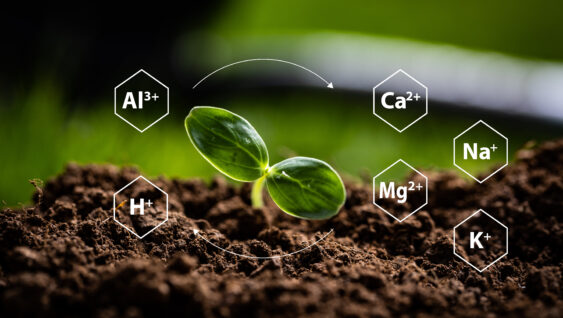
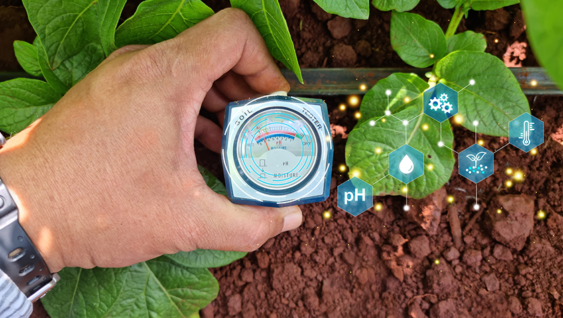
So soil pH is a measure of the soil acidity. It ranges from about zero up to 14 with 7 being neutral, meaning not acid or basic. And as soil pHs drop well below seven, say down into the 5s and 4s, we start seeing major crop yield losses.
Mike Howell (02:18):
Dr. Oldham, do you have anything to add to that?
Dr. Larry Oldham (02:21):
I was just reminded that one of my mentors in this business many years ago that said that pH is easy to spell, but it’s more difficult to understand. It has a profound influence on the growth of plants that we’re trying to foster with nutrient management programs.
Mike Howell (02:37):
Okay. And Dr. Oldham, many times when I look at a soil test report, I see a value for the pH, and I also see another value that they call the buffered pH. Tell us what the difference in these two values is.
Dr. Larry Oldham (02:50):
Well, there are two distinctly different processes done in the soil testing lab. One, the water pH, the regular pH is measured in a slurry of soil and water, and that measures what the pH is in the soil. The buffer pH is a mixture of the soil with various soups, you could call them, that assess the ability of the soil to change pH if lime is necessary to raise your pH.
Dr. Clain Jones (03:17):
So the buffer pH, you can find tables online or the laboratory often provides them where for each buffer pH and a goal of what you want to get the final pH to, say 6 or 6.5, you’ll find how many tonnes per acre of lime you need to do that.
Mike Howell (03:33):
Okay. So Dr. Jones, why is pH so important in agriculture?
Dr. Clain Jones (03:38):
As Larry mentioned, pH affects a lot of different processes. Most notably, it affects nutrient availability. So for example, in Montana where our historical pHs have been around 8, we have very low phosphorus availability and often metal availability such as iron. As pH drops to the levels that are more common, say in Mississippi, the pH goes down and that ends up tying up other nutrients. So for example, phosphorus can also be tied up. At low pH metals become more available, they can become toxic. Microorganisms do not seem to like pHs in the 4s and so they will slow down decomposition, which is not great for your crops because that decomposition is releasing nitrogen and other nutrients to the soil.
Dr. Larry Oldham (04:28):
With us here in the south, as Clain mentioned, we get down into the low categories. We’re looking at some potentially very serious crop growth, bad effects. As he mentioned, the phosphorus availability is a key component of why we need to manage pH. And here in the low pH area of the country, we get down into the 5s. We’re starting to see some serious phosphorus availability issues.
(04:55)
Also, another thing to bring up about the efficiency. Yes, it does create a better microbial environment for our partners in plant nutrition and soil, but pH management also improves the efficiency of applied fertilizers, phosphorus, and potassium, which in this era of volatile fertilizer prices is very important.
Mike Howell (05:18):
Okay. So Dr. Oldham, we’ve talked about how pH affects nutrient availability, and we’ve talked about phosphorus. What about our micronutrients? How does pH play a role in availability of a lot of these micronutrients?
Dr. Larry Oldham (05:29):
I am a person who has seen dramatically what can happen with micronutrient availability. Way back when in my master’s degree program in a different century, I was able to successfully kill plants in pots through manganese toxicity at a very low pH. That’s one micronutrient. Yes, you need it, but too much of it can be a bad thing in low pH. Molybdenum is another micronutrient that’s availability is very closely related to pH, you do need it to be above a certain level. So with me, the main thing that I look for is avoiding manganese toxicity because I get that lesson beat into my head at a young age that we can get really way too low on pH.
Dr. Clain Jones (06:11):
So at really high pH, like we have in a lot of Montana soils, we have iron and zinc deficiency, so the metals can be deficient at high pH. And then as pH drops, which is also happening in Montana, say to the high 5s to mid 6s, now those deficiencies tend to go away. Those metals become more available. And then as Larry mentioned, as we get down into the 4s to low 5s, both manganese and aluminum toxicity can increase. Both of those metals are found naturally in the soil, but when the pH drops below about 5s, they become more available and can be toxic to most of our crops.
Mike Howell (06:52):
Okay. So Dr. Jones, what are some factors that will influence the soil pH?
Dr. Clain Jones (06:57):
The original soil or what we soil geeks call the parent material will affect that. So here in Montana, most of our surface soils had naturally occurring lime, which buffered the pH to 8. In more humid areas, that line might have been there originally, but it has all had time and moisture to leach out. And so I would say two big ones are what was the original soil and what is the climate? Those are natural reasons.
(07:24)
Human caused reasons are highly related to nitrogen fertilizations. So when nitrogen gets processed by the microbes, it releases acid, and that’s what’s happening in pockets of Montana where we initially had pHs that were high around 8 with fairly high nitrogen rates on some farms, the pHs have dropped to as low as about 4 on certain soils. Those tend to be the soils that are less buffered, maybe sandier soils instead of clay soils, but those are the three big reasons. I would say soil, climate and then human caused acidification from nitrogen fertilizer.
Dr. Larry Oldham (08:02):
Organic matter is going to produce some acidity as it decays. We’re going to remove some of the basic cation through harvest calcium that will contribute to the factor. And again, the acidification from some fertilizers is quite an issue to be aware of.
Mike Howell (08:18):
So is there an optimum pH for crops or is it crop dependent? Dr. Oldham, talk a little bit about the optimum pH range.
Dr. Larry Oldham (08:25):
I adhere to that we need to stay out of the trouble range. I want to stay above 5.4, 5.5 to keep us out of that aluminum problem. And as I mentioned earlier, that will keep us away from manganese issues as well. Some crops will prefer a much higher pH. We don’t grow much alfalfa here in Mississippi because we’re a little warm for it, though we keep trying, that likes a pH around 6.5. But what I would like to see is to keep that pH up out of that aluminum area, which is going to be about 5.5 to 5.6. Our negative issues will go down if we stay there. It can be prohibitively expensive in some areas to align enough to get the pH to 6.5 to 7.
(09:10)
Here in Mississippi, we don’t have hard rock sources of lime. We don’t have dolomite or calcite mines within the state. We have some soft rock, which is marl, which is a less hard material and it doesn’t have as much neutralizing value. So getting lime into this state is an expensive proposition, and again, dealing with current events, it’s much more expensive now with diesel fuel prices where they are, because we have to import it. Alabama is the nearest source, but much of our lime comes down to Mississippi River from [inaudible 00:09:44] in Kentucky, Missouri, and Southern Illinois. So it can be a very expensive process.
Dr. Clain Jones (09:49):
We found here in Montana that the cereals seem to be able to tolerate a higher range of pHs. So our winter wheats and spring wheats seem to do fairly well from about 5.5, all the way up to about 7.5. The crops that are more sensitive to low pH are legumes, as Larry mentioned, alfalfa and our pulse crops, so chickpea, pea and lentil. They have a really cool relationship with microbes in the soil that allow those microbes to take nitrogen gas that we’re breathing right now and convert it to a plant available form. Those microbes do not prefer pHs below about 6, and so that’s why our alfalfa yields and our pulse crop yields really fall off below about 5.8 to 6. We’ve also observed that oil seed crops are pretty sensitive to low pH, so our canola’s and safflowers do not do very well below about pH 5.5.
Mike Howell (10:47):
Okay. So we’ve talked about lime a little bit and raising the pH with lime. Are there different forms of lime? I know we’ve talked a little bit about calcareous lime and dolomitic lime. Dr. Jones, can you talk a little bit about the differences and if there’s any other lime and materials?
Dr. Clain Jones (11:01):
What we call straight lime would be calcium carbonate. Dolomitic lime is magnesium calcium carbonate and then we have various forms of lime. So we have what’s called aglime, which is essentially straight lime mined out of the earth. We also have byproducts of industrial processes. One of those is sugar beets. When they pull sugar out of the beet, one of the waste products is lime, and that’s what we’re using here in Montana because we don’t have close by sources of aglime. In the Midwest, one of those byproducts is water treatment plant lime. So they use lime in the water treatment plant process, and then they produce waste lime. There’s mined lime, there’s water treatment plant lime, there’s sugar beet lime, there’s other sources of lime out there. And generally producers are trying to find the cheapest in their region.
Dr. Larry Oldham (11:53):
We have most of those sources available in the state. We don’t have sugar beets, but we do have water treatment lime and other sources such as that. Which leads me to jump a little ahead. What factors go into determine a good lime to use? We’ve talked a little bit about the calcium carbonate content. Another factor is the relative fineness of grind, how small the particles are. Because most of the calcite and dolomitic limes are very insoluble, and the smaller the particles are, the better they will react with the soil.
(12:27)
Another factor that we have had some questions about, over the year, is the moisture content of lime. The water treatment lime is going to have quite a bit of moisture in it. And there was kind of a little controversy here a few years ago about how long piles of lime had set out in the rain when they were weighed when they went into a pile versus when they were weighed when they came out of going through some rainstorms. So yeah, moisture content is the often overlooked lime factor. But again, how pure it is, a measure of the calcium carbonate equivalent, which they can factor in, whether it’s calcium carbonate or the calcium magnesium carbonate, and how small the individual particles are.
Mike Howell (13:06):
Okay. And Dr. Oldham, we’re kind of in a unique situation here closer where I am maybe than where you are, but on the Gulf Coast. We have things like oyster shells and a lot of poultry production eggshells and that kind of stuff. Will those give us any lime value at all if growers applied those?
Dr. Larry Oldham (13:22):
We’ve done some work with poultry shells with the eggshell product. Yes, they will provide some product. The big question for us is with the poultry litter. Poultry litter comes out of the production houses. There in Mississippi we’re the number 4, number 5s boiler chicken production state in the country. We have a lot of material, what comes out the houses. The chickens are fed a high calcium diet, so what comes out of the house after they have lived there is going to have a high level of calcium in it. And if you apply the poultry litter, over time, the soils, almost all the time, it’s going to have an aglime effect. For a soil scientist though, emphasis on the science part, we have not been able to predict that effect to any degree of accuracy. So all we can say, ethically, is most of the time poultry litter is going to raise your pH. We can’t say, “All the time.” We have more predictability with the traditional lime products.
(14:17)
So yes, where we have a long term history of poultry litter applications, we typically see pHs move up over time to the 6.5 to 7 category. In areas where the natural level, so to speak, without poultry litter addition over time is going to be the 5s to 5.5s, in a natural condition, given the climate conditions we have, how much rainfall per year and apparent material where we’re starting from.
Mike Howell (14:42):
So Dr. Jones, we’ve talked a lot about raising the pH on some of these acid soils. Do we ever get into situations where we need to lower the pH, and if so, what can we do to lower that pH?
Dr. Clain Jones (14:52):
There’s a lot of interest in lowering pH in our traditional high pH soils in Montana. It’s really challenging though. So high pH soils have lime, are very well buffered. And what that means, it’s going to take a lot of acid to lower the pH. I remember a commercial laboratory doing a study where they were adding up to 10,000 pounds of elemental sulphur per acre. Elemental sulphur will oxidise and produce acid, so that is a way that soils can be lowered in pH. However, in that study, I remember the pH only dropped from about 8 down to 7.5 and almost certainly resulted in another problem, which would be sulphate or salt toxicity. That is a lot of sulphate and a lot of salt.
(15:37)
So except for pHs that are above 8.3, where that as Larry indicated, indicates a different problem, which is generally high sodium, and those soils can be mitigated with some levels of calcium. For the most part, I just encourage producers and gardeners to live with their pH, to find crops that do okay at their pH because it is really hard to lower the pH, economically.
Dr. Larry Oldham (16:01):
Most of the questions that I’ve dealt with over time have been in those homeowner situations where they want to just pH around the disturbed soil of a house lot easily.
(16:13)
Another consideration we have is also with commercial blueberry production. But again, I’m just thankful in my job that I don’t have to deal with lowering the pH a lot. We have a few other unique situations where pH is above 7 and above 8.3, but usually it’s a really special situation where something has happened with respect to around an oil well or what we call blowouts along the Mississippi River where water seeps up from the soil into some of the adjacent fields to the river. And those are relatively small acreage situations.
(16:48)
And Michael mentioned the Gulf Coast. After Hurricane Katrina, we got a crash course in dealing with these situations. And as he mentioned, in some cases, to lower pH you can add calcium sources such as calcium sulphate gypsum. We had to do this in some occasions along the coast where we had storm surge. One little fact, chemistry/dirt geek here, hurricane surge water is saltwater. Hurricane stormwater is freshwater. What falls out of the sky, it doesn’t have salt in it. So along the coast where we had direct undulation with seawater, we did have some high pH situations where we recommended putting something like gypsum out in water to leach out it’s salt.
(17:33)
But again, that’s relatively small acreage, unique situations that we’ve had to deal with. Maybe more anecdotal than you wanted to hear here, but that’s the kind of thing we deal with lowering the pH here in the southeast.
Mike Howell (17:46):
Dr. Oldham, are there some ways that a grower could prevent getting into an acidification situation? What can they do to keep from lowering their pH too much?
Dr. Larry Oldham (17:54):
I’m going to say just keep an eye on the situation. Use a rigorous, routine soil testing program. Monitor it. One thing that goes into acidifying soils that the grower is not going to have any control over though is rainfall. And we’re getting more and more rain here every year. We go from 55 inches along the coast per annual, it may be up to 58 now to about 40 to 45 inches along the Tennessee border of Mississippi. We don’t have a lot of control over the leaching out of the basic cat [inaudible 00:18:25] which leads to more acidification. But other things that growers can do to minimize the effects is to manage their nitrogen fertilizer sources judiciously to avoid acidifying beyond a point of no return.
Dr. Clain Jones (18:38):
Yeah, I agree. Anything that a producer can do to increase nitrogen use efficiency. So that starts with soil testing, knowing the nitrate levels on your field. And I would say not just on your composite soil, but really I think variable rate nitrogen application, possibly going to variable rate lime application can really help. We have fields with highly variable pH, highly variable nitrogen, and if a producer keeps applying the same amount of nitrogen uniformly to that field, those low pH areas aren’t producing, they have very low nitrogen use efficiency, and that essentially accelerates the acidification process.
(19:16)
So I encourage our producers to use a conservative pre-plant nitrogen rate. Wait and see what mother nature delivers, and then if it’s a wet year, come back in with a second application. If it’s a dry year, they’ve saved on expensive nitrogen fertilizer and prevented additional acidification. So split application, variable rate application, soil testing, I think, are really the ways to increase nitrogen use efficiency and slow acidification rates.
Mike Howell (19:46):
Okay, gentlemen, we have talked an awful lot about pH today. Is there anything that you think that we may have missed? Anything we need to spend a little more time on?
Dr. Clain Jones (19:54):
Besides prevention and mitigation, which we’ve talked about, I talk about a term called adaptation. So for the producer that say, doesn’t have a lime spreader or can’t afford applying lime, they might have to adapt to low pH. And how we recommend that they do that is by selecting crops that are somewhat tolerant to low pH. Here, again, that’s probably our winter wheats, spring wheats, sometimes our barleys do okay. Probably steering away from the broad leaves, the legumes and the oil seeds.
(20:24)
Another adaptation process that we found works quite well is applying fairly high rates of phosphorus with the seed. That phosphorus ends up tying up aluminum and we’ve been able to double Durham wheat yields, for example, by putting high rates of phosphorus with the seed on a soil that had already high levels of phosphorus on it. So those are kind of our adaptation strategies. Picking crops, picking varieties that are tolerant within those crops, and then applying some phosphorus with the seed.
(20:54)
I would like to add one other prevention. We really focused on nitrogen application, but we’ve really found that cropping system here in Montana can affect the pH indirectly. And so we find our continuous wheat systems are our lowest pH systems because they get high rates of nitrogen every year. Systems cropping systems that have a high amount of legumes in them, either a perennial legume or an annual legume, simply don’t have the high nitrogen rates, and therefore they also are not dropping in pH as much. So integrating some legumes into a system to save on fertilizer nitrogen will decrease acidification rates.
Mike Howell (21:38):
Gentlemen, thanks again for being with us today. I think we’ve covered a lot on soil pH today, and our listeners should have learned what soil pH is, why it’s important for nutrient availability and ways to manage pH in the soil. All of this will help producers better manage the soil and the nutrients needed to help grow plants more efficiently.
(21:59)
Be sure to join us next week when I visit with Dr. Allen Blaylock, Interim Director of Agronomy with Nutrien. Our topic will be the essential nutrients, and we look forward to hearing Dr. Blaylock break these down into interesting categories and keying in on three nutrients to determine why they’re needed in the plants.
(22:17)
For more information on today’s topics, please visit www.nutrient-ekonomics- with a k, com. And if you like these podcasts, as much as I like making them, please feel free to rate us and provide your comments. We’re always looking for feedback to help us improve the show and make it more useful for you. Until next time, this is Mike Howell, with The Dirt.