




Read Full Transcript
[00:00:00] Mike Howell: The dirt with me, Mike Howell, an eKonomics podcast where I present the down and dirty agronomic science to help grow crops and bottom lines. Inspired by eKonomics.com farming’s go-to informational resource. I’m here to break down the latest crop nutrition research use, and issues helping farmers make better business decisions.
[00:00:30] Mike Howell: Through actionable insights. Let’s dig in.
[00:00:39] Mike Howell: Well, hello again everyone. Welcome back to the Dirt. We are in the heart of planting season across most of the United States. A lot of decisions being made and people trying to figure out exactly what their best production plans are. One of the things that everybody’s trying to figure out is soil fertility, and do they need starter fertilizers?
[00:00:56] Mike Howell: To help us work through this issue of starter fertilizers, we [00:01:00] have Dr. Allen Blaylock, senior Agronomist with Nutrien With us today. Alan, welcome back to the dirt.
[00:01:05] Dr. Alan Blaylock: Thanks, Mike. I think we’ve got an interesting topic today.
[00:01:08] Mike Howell: Alan, if you will just remind our listeners who you are and what you do.
[00:01:12] Dr. Alan Blaylock: I am senior agronomist with Nutrien.
[00:01:14] Dr. Alan Blaylock: I’m based in Colorado and I spend a lot of my time in about the western half of the us, the Pacific Northwest, a Great Plains and the Western Corn Belt, Northern Plains, providing agronomy support to our customers and our marketing efforts and. Really all kinds of educational activities around soil fertility and nutrient management.
[00:01:37] Mike Howell: Okay, Alan, well, let’s start off this episode and do a little bit of defining what we mean by some of these terms. I hear the word starter fertilizer thrown out there. I hear popup fertilizers. I know people put out fertilizer in a band. Talk a little bit about these application methods and what we really mean when we’re talking about starter fertilizers.
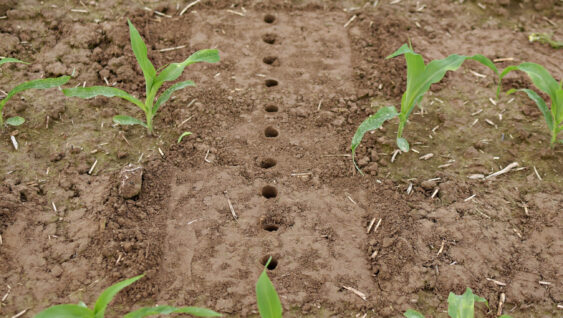
[00:01:57] Dr. Alan Blaylock: Well, Mike, the term starter can be used [00:02:00] fairly broadly, and it may be used to refer to a variety of different applications. So let’s sort that out. When we’re talking about a starter fertilizer, we’re really referring to an application that’s made. At planting, generally pretty low rates of fertilizer that are intended to give that seedling a boost as it’s germinating and getting started in its lifecycle.
[00:02:24] Dr. Alan Blaylock: Now, some of these other terms like popup or inferral, maybe specific types of starter applications, we can also apply starters in a band off to the side of their role with something that’s common. There is what we call. Two by two, and that simply means two inches over from the seed and two inches below the seed.
[00:02:43] Dr. Alan Blaylock: So two by two. These terms may be used a little differently in different parts of the country, but popup as I know it is usually used to refer to an application that’s placed in the seed row and contact with the seed. The name suggests that it’s going to provide some benefit to getting [00:03:00] that seed to pop up, get developed, get growing out of the ground.
[00:03:04] Dr. Alan Blaylock: But popup to me is usually used in the same way that. Something we call inferral application, which is also referring to fertilizer or sometimes chemicals, crop protection chemicals, sometimes placed inferral. That means in the seed row with the seed in that seed furrow. So pop up an inferral. Kind of being used synonymously.
[00:03:25] Dr. Alan Blaylock: And then we have this two by two placement. Sometimes the term sideband might be used simply referring to banding nutrients off to the side of the row. We also have sometimes maybe less common as a starter, but. What we might call a surface band or a dribble band where a liquid fertilizer is dribbled on the surface, near or over the row.
[00:03:47] Dr. Alan Blaylock: So these are some of the different terms that we use now. There’s a really broad term called banding, and that simply refers to placing fertilizer in a band. And a starter is a type of band application. A [00:04:00] popup is a type of band application. So we have at the highest level this term, banding, and then we go to starter, which is a.
[00:04:07] Dr. Alan Blaylock: Broader type of bandit application specifically related to this. Early low rate application to get the seedling started. And then we have popup and in furrow, which are kind of a subset of this starter concept. Hope that kind of helps our listeners sort it out. But there may be different terms used in different parts of the country and it’s important that we make a distinction sometimes because the fertilizers that we use or the method of application may be different for, for some of these different types of starter applications.
[00:04:37] Mike Howell: Alan, you talked a lot about placement when you went through that. You talked about a two by two placement or an infer placement. Talk a little bit about the importance of placement and when you would opt for a two by two or something off of the seed row versus an infer application.
[00:04:52] Dr. Alan Blaylock: I. So Mike, the reason we use these applications, so a step back again to what I said earlier, the purpose of these [00:05:00] applications is to provide a dose of nutrients, usually quite a small dose of nutrients to that developing seed.
[00:05:07] Dr. Alan Blaylock: So we have some nutrition there as that seedling germinates and starts to grow. The placement that we use is going to be determined partly by our equipment. Obviously partly by our fertilizers and then partly by the crop that we’re trying to grow and what we want to achieve with that application.
[00:05:26] Dr. Alan Blaylock: There are limitations on some of these applications based on the fertilizer choices that we have keeping in mind. That fertilizers are soluble salts, and if we have too much in close contact with the seed, then that can be hazardous to that seed. The salt effect of those fertilizers can limit germination and impair root growth.
[00:05:48] Dr. Alan Blaylock: If we’re putting it directly on the seed, we can only use very small amounts if we move it away from the seed a little bit. Like a two by two placement where we have a couple inches of separation. Now we can [00:06:00] increase the amount substantially of how much fertilizer we can apply. But again, keep in mind the goal is really a small dose of fertilizer to get the crop started.
[00:06:08] Dr. Alan Blaylock: Alan, you mentioned
[00:06:09] Mike Howell: some of the effects of putting that infer right on with the seed and increasing that salt load right there with those developing roots. These days, everybody is looking at biological products or innoculants going out with legumes. Talk a little bit about some of the potential watch outs if we’re putting out fertilizer in contact with the seed that has some of these
[00:06:27] Dr. Alan Blaylock: biological traits with it.
[00:06:29] Dr. Alan Blaylock: That’s a great topic, Mike, because often we want to put other things in that starter fertilizer. We may want to put a bio stimulant or a biological product with that fertilizer. The fertilizer can make a great carrier for some of those products. And Innoculants like we use for legumes. But it’s important to keep in mind that fertilizer materials are a pretty harsh environment for living organisms.
[00:06:51] Dr. Alan Blaylock: So we wanna be a little bit careful with that. If you have some kind of chemistry or bio stimulant or biological [00:07:00] organism that you’re. Wanting to put Inferral in close proximity to the seed. You may be very limited on how much fertilizer you can use in that application. You have to consult with the manufacturer to check on compatibility will that material you are providing in the fertilizer.
[00:07:17] Dr. Alan Blaylock: Cause any undesirable chemical reactions will there be toxicities on living organisms? So we need to pay attention to that and always consult with the manufacturer. And there may be certain chemical incompatibilities and we always want to jar test those materials. What we mean by that is simply taking small samples of each and mixing them in a jar and seeing if they’re compatible or if they make.
[00:07:39] Dr. Alan Blaylock: Gob of goo in the bottom of that jar, that’s not going to be suitable for combining into that starter application. We’re always going to have questions about compatibility and there are a variety of sources that growers or applicators can turn to, to look up in charts and check on compatibility of certain materials, but not everything’s going to be listed there.
[00:07:59] Dr. Alan Blaylock: [00:08:00] Again, check what the manufacturers on compatibility, do the JAR test and make sure that you’re not putting things together that one are not gonna be compatible, but also secondly, not have an undesirable effect on the other materials because again, fertilizers are salt solutions. They’re pretty concentrated salt solutions, and they can have negative effects on other materials that are being used with them.
[00:08:22] Mike Howell: Allen. A prime example of that goes back to my peanut days. We put an inoculate out with the peanuts pretty regularly, just about on every acre we planted, but we never recommended putting anything else out with that inoculate. We wanted that to be an independent application. Didn’t want anything else mixed with that because it was so fragile and we didn’t wanna do anything to harm that inoculate.
[00:08:42] Mike Howell: I agree. We need to check with the manufacturer, make sure they have the data that says we can mix that if we’re doing anything like that. Alan, I guess the next thing we need to dive off into is why do we want to use a popup fertilizer? You talked about maybe getting it outta the ground or a starter fertilizer.
[00:08:57] Mike Howell: Talked about getting the crop out of the ground earlier. What are some of the [00:09:00] benefits and is it gonna work every time? What do growers need to know about that? I.
[00:09:04] Dr. Alan Blaylock: One of the main things we’re trying to establish with a start of fertilizer is get a zone with a little bit higher nutrient concentration close to those plant roots.
[00:09:13] Dr. Alan Blaylock: Why is that important? Well, early in the season, our soils are typically cooler and a number of nutrients, particularly phosphorus. We talk a lot about phosphorus with starters, phosphorus is supplied to the roots by something we call diffusion, and that process is very much slower in cold soils. So by.
[00:09:31] Dr. Alan Blaylock: Making this fertilizer placement close to the plant roots, we can improve the availability of phosphorus for a young plant that doesn’t have a lot of roots, and we’re trying to get that growing. So phosphorus is one that we particularly focus on with starters, but those same principles also apply to potassium and to many of our micronutrients that aren’t very mobile in the soil.
[00:09:51] Dr. Alan Blaylock: Getting those. Close to the plant row and they’re more concentrated in a band. So that increases the concentration in the soil that [00:10:00] the plant roots will encounter, and that can increase availability and uptake. And the whole purpose of getting better uptake is to give the plant better nutrition and get it growing a bit faster, get it off to a good start, and things like phosphorus stimulate.
[00:10:13] Dr. Alan Blaylock: Early root growth and development, having a good concentration of phosphate there, not too much. As we said, these are relatively low rates. Small amounts, but we’re elevating that concentration right near the roots and giving them a bit of a boost to help stimulate early root development, early vegetative growth.
[00:10:32] Dr. Alan Blaylock: Again, remembering that a lot of these plants are beginning to establish yield potential fairly early in the season, so we want to set a good environment for them. Now, starters can have multiple benefits and it may not always translate to yield. So getting early growth and development. Can help reduce disease infection.
[00:10:50] Dr. Alan Blaylock: Growing a healthy plant, growing it faster tends to reduce its susceptibility to diseases. So that can be a benefit. One thing that’s also been shown is that [00:11:00] getting that earlier start better plant nutrition early, getting a crop that plant off to a good start can often translate to earlier maturity.
[00:11:09] Dr. Alan Blaylock: Well, what does that mean to the grower? That may mean. Less grain drying costs. If we get the plant matured faster, earlier, dry down can save us a little money on grain drying, and that can be observed even in the absence of a yield response. So oftentimes, starters can translate to a higher yield, but not always, but there may be other benefits.
[00:11:30] Dr. Alan Blaylock: Another benefit. We could think about is if we can apply smaller amounts of these nutrients in the ground, in a band close to the plant row, we maybe can apply less as a broadcast application. In the fall, for example, lots of growers apply phosphorus and potassium in the fall. They’re broadcasting that and oftentimes on the surface in no-till, and that’s susceptible to losses that can lead to environmental problems.
[00:11:55] Dr. Alan Blaylock: So by putting. Part of that, or some of it, maybe even [00:12:00] all of it in a band close to the plant, it’s in the ground. It’s gonna be less affected, less susceptible to those losses. So that’s could be another benefit of starters that may not necessarily translate to yield, but it still has value and improves the efficiency of our nutrient use.
[00:12:15] Dr. Alan Blaylock: I want to come back to something that we hit on, but I maybe need to say a few more words about that. We’re talking about compatibility of materials, and sometimes it may be necessary to put some products in furrow through the planter, and many planters today have attachments and are equipped to place some of these materials in the seed row with the seed and separating.
[00:12:37] Dr. Alan Blaylock: Our starter application, say two by two. So we may have some things that are not compatible with fertilizer going through the planter into the seed furl and some things that are going through a separate opener off to the side of the row so that they’re separated. And then we have, then we don’t have the concerns about compatibility and we still get.
[00:12:55] Dr. Alan Blaylock: The starter benefit while getting the value of that other product. That may not be [00:13:00] compatible with fertilizer. It may require some special equipment setups, but most of our modern planters are capable of doing this, and we can add extra attachments to achieve different things depending on what we’re trying to accomplish and the materials that we’re wanting to use.
[00:13:15] Mike Howell: Great point, Alan. I guess the next question I have is. We have 17 essential plant nutrients. Are there some that lend themselves better to a starter application or is there some that you wanna stay away from in a starter application? I.
[00:13:27] Dr. Alan Blaylock: Well, our main concern with these nutrients, again, in terms of the potential risks would be the SALT index.
[00:13:35] Dr. Alan Blaylock: So that’s something we look at. Materials of higher salt index, we wanna be aware of that risk, and those are gonna be less suitable for the infer or pop-up type of applications. So they may be just fine for the. Two by two or the Sideband application, the nutrients where we tend to get the most benefit, or usually we’re focusing on, as we mentioned, phosphorus, but also the micronutrients because again, [00:14:00] most of the micronutrients are immobile in the soil.
[00:14:02] Dr. Alan Blaylock: They, they don’t diffuse very fast and we’re applying them at low rates anyway. Having those in a starter band. Can be a really good way to apply the micronutrients. I have some of my own experience with that from my university days. And just say in some of the work I was doing, we always got a response to a starter application of zinc, but we rarely got a response to broadcast zinc.
[00:14:24] Dr. Alan Blaylock: So that’s an example of some of the value that. We could gain from a starter application. I will also say, while we focus a lot on phosphorus and some of these other things that these immobile nutrients, there was also some work done here maybe about 15 years, 20 years ago that indicated, and I think there’s been some more recent research with this as well that indicate that boosting a little bit more nitrogen in the starter can also be beneficial.
[00:14:50] Dr. Alan Blaylock: Lots of guys apply. You know, a few gallons of 10 34, oh, they get a little bit of nitrogen and phosphorus in about a one to three ratio, and sometimes that may be [00:15:00] all they’re using as their starter, but there is some evidence in the research that maybe a one-to-one nitrogen to phosphorus ratio can be even a little better.
[00:15:07] Dr. Alan Blaylock: Again, in some other recent research, a little bit of potassium in that starter might be beneficial. Now as we start adding more nutrients, we’re getting more salts in that solution, and that may require us to move to. More of the two by two or sideband application instead of on the seed in furrow or popup kind of application.
[00:15:28] Dr. Alan Blaylock: Just wanna be aware of that. The more we’re putting in that starter application, the more risk we’re going to create for salt effects and potential inhibition of the germination. We wanna look at different things, but really, in my opinion, there’s a lot of nutrients that could benefit from a starter application.
[00:15:45] Mike Howell: Alan, you mentioned this a couple of times. You talked about the salt effects, and we don’t wanna get too much salts in there. How can a grower know the SALT index and how much is safe
[00:15:55] Dr. Alan Blaylock: to put out? There’s lots of resources a grower can turn to. There are tables. You can [00:16:00] look up that salt index for comparison purposes.
[00:16:03] Dr. Alan Blaylock: Take a look at some of the materials. Again, just some broad guidelines. The more soluble the material is. Generally the higher salt effect it’s going to have. And then we have some things like urea and remembering UAN solution. Urea ammonium nitrate solution contains some urea. Another effect of urea is it’s going to evolve some free ammonia as it starts to react with the soil.
[00:16:24] Dr. Alan Blaylock: So that’s a secondary effect to the salts, but. There are some things that have high salt index like potassium chloride, and most of our potash is potassium chloride. That’s got a pretty high salt index. Potassium sulfate, on the other hand, has quite a bit lower salt index because it’s somewhat less soluble.
[00:16:40] Dr. Alan Blaylock: If we look at ammonium sulfate, it has a really high salt index. There may be other materials we could use that have. Less risk in a lower salt index. That’s something we wanna take a look at. There are tables, you can look those up. There are some general rules of thumb around this, and for example, one that I’ve heard for virtually my entire career is for corn.[00:17:00]
[00:17:00] Dr. Alan Blaylock: The amount you can put on the seed in the seed row, N plus K, should not exceed 10 pounds. Per acre, actual units of N plus K, that total should not exceed 10 pounds. Well, that’s a general rule of thumb soil and moisture conditions, all these other things might vary that up or down, but that’s kind of a starting point.
[00:17:20] Dr. Alan Blaylock: Uh, I know South Dakota State University has an excellent calculator for seed safe rates, and you can put in a variety of different fertilizers. They did a lot of laboratory incubation studies to see. What levels would be safe, and so that’s a pretty good calculator that you can find with a simple Google search just by looking at South Dakota State University seed safe rates, something to that effect.
[00:17:42] Dr. Alan Blaylock: You can pull that right up and it’s an online tool, putting your own numbers, and you can calculate out what’s safe. Generally speaking, I’ve used very high rates in two by two placement with no effect. As long as you can guarantee you’ve got two to three inches of separation from the seed, you can put some fairly high rates or even rates far [00:18:00] beyond what we would consider.
[00:18:01] Dr. Alan Blaylock: Starter rates. Again, looking at solubility of the materials, the salt index of the materials. Do they contain a urea source that might evolve some free ammonia that could create an additional risk, but these are some of the things we wanna look at. And also I should add to that, Mike crops vary widely in their sensitivity, so it helps to understand a little bit about the crop.
[00:18:21] Dr. Alan Blaylock: We look at something like wheat and barley. They have a higher tolerance of some of these materials where corn and soybeans are pretty sensitive. Cotton, I believe, also has a higher tolerance of some of these salts. So you have to know the crop. And there are also resources where you can look that up, but follow your guidelines.
[00:18:37] Dr. Alan Blaylock: And this is something you don’t want to create a lot of risk because the last thing you want. Is to destroy part of your stand and have to go replant. That’s absolutely not worth it if the risk isn’t known, be safe and go off to the side rather than with the seed.
[00:18:52] Mike Howell: Alan, that kinda leads me to my last question and that has to deal with crops.
[00:18:57] Mike Howell: Do some crops respond better to starter fertilizers [00:19:00] or are there some crops that you absolutely do not wanna put a starter fertilizer?
[00:19:03] Dr. Alan Blaylock: I can’t think of an answer. A crop, I would absolutely not want to use a starter. I can’t think of an answer to that part of the question. In terms of crops that would respond, we often think about row crops when we’re thinking about starters, but there are a lot of crops that will respond, and I think it’s more dependent on the soil condition and our nutrient levels and.
[00:19:25] Dr. Alan Blaylock: Factors related to root growth. Do we have conditions that are going to impair the root growth? And typically, cold soils is one of those conditions. If I’m planting early and cool soils, that’s often a prime target for starters, regardless of what the crop is. If we have low nutrient levels in the soil, I.
[00:19:42] Dr. Alan Blaylock: We’re gonna get a better benefit from starters and boosting that concentration close to that seedling. Anything that could impair root growth. If we have compaction or high bulk densities or lots of residue cover, which again goes to the soil temperature, the soil’s going to warm up more slowly. These are environments where starters [00:20:00] are likely to be more beneficial.
[00:20:01] Dr. Alan Blaylock: So it’s more related to the soil conditions and our planting times and those kinds of things, but. Speaking of planting times, I think back to some of the work that I did with starters and a study that I ran across. It was a cotton study. I don’t remember exactly where it was from, but the objective in the study, the general hypothesis was, well, we should see a better benefit of starters on early planting rather than later, because those later plantings and soils warmed up.
[00:20:26] Dr. Alan Blaylock: We expect them to develop quickly and you know, everything’s gonna be fine. But the interesting thing in that study is they got just as good a response to starters in the later plantings. As they did in the early plantings, and maybe for a different reason, the early plantings, nutrient availability and uptake, limited by cool soils and slower root development.
[00:20:46] Dr. Alan Blaylock: But in the later plantings, that crop developed a lot faster and it had a higher nutrient demand. So the starter was able to, to give it what it needed. And in the work I did, I didn’t see a difference in planning date. I got just as good a starter [00:21:00] response. Whether it was early planted or late planted, but maybe for different reasons.
[00:21:03] Dr. Alan Blaylock: Take a look at those conditions. Do you have conditions that may limit availability of certain nutrients? That’s an environment where you want to put those nutrients in a starter. You have low soil tests. All of these things that we mentioned and not so much related to the crop. I think many crops could benefit if you have conditions that maybe impair root growth or root availability in that seedling development.
[00:21:25] Dr. Alan Blaylock: Those are prime candidates for starter use and likely to give a benefit.
[00:21:29] Mike Howell: Well, Alan, I know we’ve covered a lot of information here in just a short time. Do you think we’ve covered everything or do you have anything else we need to talk about before we wrap this segment up?
[00:21:38] Dr. Alan Blaylock: We’ve covered a lot personally, from my own experience and things I’ve learned in the literature, I like starters.
[00:21:45] Dr. Alan Blaylock: I generally would recommend them. There may be cases where there might not be a benefit, and one case comes to mind that we didn’t talk about. We talked about row crops, but I think of one example. Where a starter application could be really beneficial, and that’s in winter [00:22:00] wheat. Usually with winter wheat, we want to get those tillers established in the fall if possible.
[00:22:05] Dr. Alan Blaylock: And nitrogen and phosphorus both stimulate Tillery development. So that may be a case where putting a little bit of nitrogen and phosphorus and it’s often done in the seed row because we don’t need a lot and it has a fairly good tolerance, we can put a pretty healthy dose of NNP in the seed row. You just have to watch your safe limits.
[00:22:23] Dr. Alan Blaylock: But that’s an example where it’s a little different, but it’s still a starter kind of application. We’re still giving a boost to that early nutrition, and so again, as I said, from my experience, I like starters and I think they’re usually worth I. Looking into at least, and considering your conditions and if your equipment will achieve that for you.
[00:22:42] Dr. Alan Blaylock: I like that application personally. It doesn’t take a lot to achieve that benefit. I think there’s usually a good return on investment to little starter applications.
[00:22:51] Mike Howell: Helen, we really appreciate you taking time to visit with us today. I know I’ve learned a lot from this episode. I hope our listeners have as well.
[00:22:57] Mike Howell: And listeners, thank you for hanging around and listening [00:23:00] to this episode. We really hope you enjoyed it as much as we did. Also, if you need more information on starter fertilizers, you can visit our eKonomics website. That’s eKonomics with a k.com. We have a starter fertilizer toolkit, and we have several articles in there that dive a lot deeper into starter fertilizers.
[00:23:17] Mike Howell: If you will, please hang around for just a couple of moments and we’ll be right back with segment two. Farming Isn’t farming without questions, and now there’s a place to go for answers. At eKonomics, an entire team of agronomists is waiting and ready to help for free. No question is too big or too small.
[00:23:35] Mike Howell: Visit nutrien dash eKonomics with a k.com and submit your question with the Ask an Agronomist feature.
[00:23:45] Mike Howell: Listeners, welcome back for Segment two. Segment two of the Dirt is where we ask an agronomist a question of the week. This week to help us with that. We’ve got La Cowell back with us. La welcome back to the Dirt.
[00:23:56] Lyle Cowell: Well, thanks for having me again, Mike. Holly’s great to be on
[00:23:59] Mike Howell: la It’s [00:24:00] spring and there’s a lot of planters in the field trying to get this crop planted.
[00:24:03] Mike Howell: We did get a question that came in from a farmer, and I think he was up in your region wanting to put some nitrogen. I think he was looking at the. ESN form of this nitrogen and wanting to put that in in a blend with some map plus MST and maybe a few other things. He got a little concerned that he may be getting the fertilizer too hot.
[00:24:21] Mike Howell: Talk a little bit about what he means by getting the fertilizer too hot and then talk about seed row safety and what somebody needs to understand before they put fertilizer down in furrow with the seed. You bet, Mike. It’s a
[00:24:32] Lyle Cowell: very important question in the farming system that we’ve adopted in Western Canada, which would include a lot of the northern states using air drills, trying to very much minimize soil disturbance, to retain soil, water, and also do this quickly and efficiently in terms of fertilizer application and seeding.
[00:24:52] Lyle Cowell: We’ve adopted a system where we apply fertilizer directly in the seed row. Now, what fertilizer do we apply? [00:25:00] Usually we focus on nutrients that are slowly available. Our soils often very cold and spring, and some nutrients just are not readily available. Unless you have them right near the developing seedling root system and those nutrients, first off, are phosphorus and secondly, potassium.
[00:25:19] Lyle Cowell: In our soils, in our conditions, phosphorus availability can be very slow in the spring, largely because the soils are cold, and also because. We’re trying to supply the phosphorus to a very small root system, small developing root system, which is affected by the cold soil as well. And again, potassium is also tends to move very slowly in our cold soil and strain.
[00:25:41] Lyle Cowell: So those are the two nutrients we tend to focus on. Now. The specific question was, uh, related to safe rates of map plus ST and or ES. I had a good chat with farmer and tried to sort this out. I would encourage agronomists that are asked this question of. What is the safe rate of fertilizer to apply [00:26:00] near seed?
[00:26:01] Lyle Cowell: When planting, when seeding, you have to ask some questions. There’s no one answer. There’s not one right answer to this question. You have to ask two primary questions. What are you seeding with and what is the spread of the fertilizing seed? Are you trying to squish all the seed and fertilizer into a three quarter inch opener?
[00:26:20] Lyle Cowell: Or is it being spread over three or four inches? If it’s spread over a wider area, your safety increases with every bit that you can spread the fertilizer and seed. A lot of the questions though, do come from fellows that are using the very narrow opener, a three quarter or one inch opener. Now, the most important soil question is soil moisture.
[00:26:40] Lyle Cowell: If the soil has lots of moisture. It dilutes the effect of the fertilizer, and that is huge factor. In fact, even within a field, you might have parts that your safety is going to be greater than other parts of the field. So the drier knolls of a landscape might have lower safe [00:27:00] rates than the lower parts of the field.
[00:27:01] Lyle Cowell: So there has to be that thinking that is it acceptable to thin some of the crop in some parts of the field, but not in other parts of the field? Now, what we’re worried about here is having fertilizer prill or granule right against the seed. If we have a dense combination of seed and fertilizer and the.
[00:27:20] Lyle Cowell: They’re actually directly contacting that sea. Either, either germinate slowly or may not germinate at all. We get wrapped up in the term salt index of fertilizers. It’s an important term. It’s terribly misused in our fertilizer industry. Salt index is a measure of fertilizer solubility, really a high salt index is a good thing because it means that the nutrients in that fertilizer are highly available.
[00:27:44] Lyle Cowell: But if you have a fertilizer with a high salt index and it’s near the seed. It increases the risk of the fertilizer in the seed drill, so you have to ask what are you seeding with? Do you have good soil moisture, and which crops are you seeding? Is a crop like flax or canola, [00:28:00] has a much higher risk to seed drill fertilizer than a crop like barley, for example.
[00:28:06] Lyle Cowell: You have to ask all those questions. For me to say that 25 pounds of phosphorus is safe, that’s a wrong answer some of the time. You have to have those conversations with the farmer to make sure that you’re giving as much advice as you can. And there also has to be an acceptance that fertilizer is going to have some impact on seed germination at all rates.
[00:28:26] Lyle Cowell: Sometimes it’s so tiny that you cannot measure it, but what we’re really trying to gain is a level that is not going reduce crop yield. The rate of maturity, we just don’t want to damage it to an excessive amount. So we’re trying to balance the goodness of having fertilizer near the seed and also reduce the risk of having fertilizer near the seed.
[00:28:50] Lyle Cowell: Now, ESN is highly safe to seed. It’s three or four times safer than urea in the Searo if you want to apply nitrogen in the Searo, ESN as a fantastic [00:29:00] solution. And there’s a number of reasons why farmers might want to do that. Map plus MST primarily, we’re looking at the safe rate of phosphorus in the searo.
[00:29:08] Lyle Cowell: There is sulfur in MAP plus MST, but that sulfur is elemental sulfur, so the risk from that sulfur is negligible in terms of crop safety. So when it comes to MAP plus MST, we’re just really taking that step back and asking yourself, what is the safe rate of one ammonium phosphate 1152 in terms of phosphorus rates with that particular crop?
[00:29:28] Lyle Cowell: Not much of an answer. I just provide a lot more questions I think in my answer, Mike.
[00:29:34] Mike Howell: Law you gave us a lot to think about and a lot to understand before we do this. We don’t wanna do anything that’s gonna harm that developing seedling when it’s trying to get through that soil surface and start growing.
[00:29:44] Mike Howell: Great answer there. Lyle. Listeners, we appreciate you tuning in for this week’s episode. And as always, if you have any questions about anything we’ve talked about today, you can visit our website. That’s Nutrien eKonomics with a k.com. Until next time, [00:30:00] this has been Mike Howell with the dirt. Hey guys. If you like what you heard today, do us a favor and share this podcast with someone else.
[00:30:08] Mike Howell: It could be your neighbor, your friend, your crop advisor, or whoever you think would enjoy it. Your support helps ensure future episodes, so please like, subscribe, share, and rate the show wherever you’re listening from.