Travis Votapka, Senior Advisor of Technical Training, Nutrien Ag Solutions
Summary of what you'll find
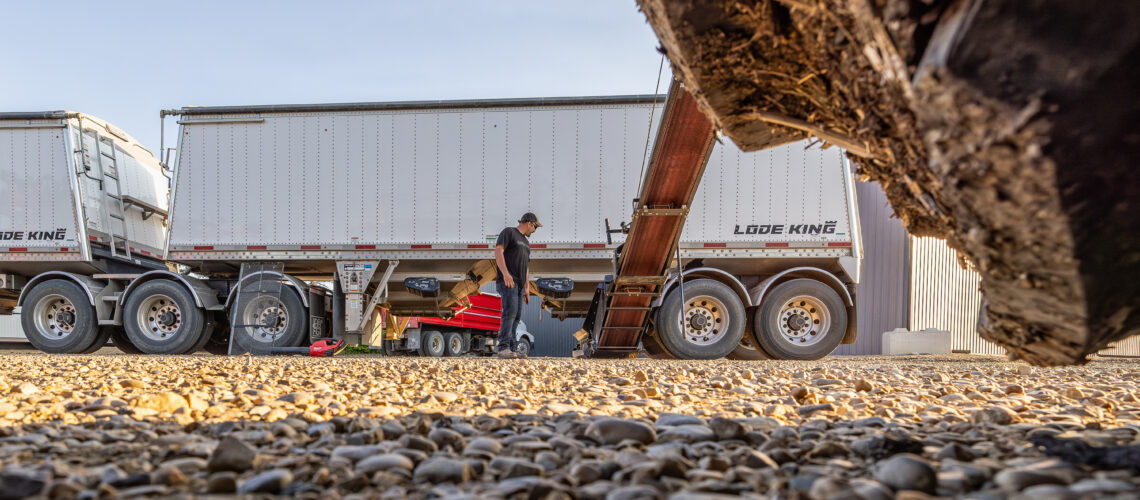
The fertilizer application season moves fast, requiring massive amounts of dry fertilizer to move quickly from trucks to spreaders. While augers and conveyors assist with this process, handling dense, dusty, and clumpy materials can significantly increase the risk of farm accidents. Staying safe at this stage of the season means thinking about the risks and planning accordingly.
Clearing fertilizer clumps and blockages safely
Dry fertilizers suck in moisture like a sponge, often hardening into solid blocks inside trucks or hoppers. When the flow stops, the natural reaction is to grab a tool and break up the jam so you can get back to the field. However, even when deadlines are tight, urgency does not justify taking risks. Doing this while the equipment is running can be a recipe for disaster. The spinning components can easily catch a shovel or broom and risk a serious accident.
Rushing or skipping safety steps to save time can lead to serious injuries. Never try to clear a blockage with the power on. Always shut down the tractor or motor, remove the key, and keep it in your pocket. This simple habit ensures the equipment stays off while you clear clogs.
Avoiding conveyor belt pinch points
Conveyor systems have dangerous spots where the belt goes around pulleys and rollers. If your clothing or body gets caught, the belt can keep pulling and cause a serious accident or injury. The best way to stay safe is to keep guards securely in place over every roller, and ensure you never use equipment if the guards are missing. If you do notice a missing or damaged guard, stop working immediately and replace the guard before using the machine. This protects everyone throughout busy seasons on the farm.
Fertilizer dust can also build up on these moving parts, which can make belts slip or move the wrong way. It might seem simple to scrape off the buildup or fix the tracking while the belt is running, but reaching into moving machinery is very risky. Always turn off the power before doing any maintenance.
Equipment strain and wear
The heavy weight and density of dry fertilizers can put a lot of stress on handling equipment. Using equipment that is too small for the job often leads to broken bolts, damaged belts, or burnt-out motors. Before starting work, check your equipment’s load rating or capacity sticker and compare it with the amount of fertilizer you plan to handle.
If you are not sure if the equipment can handle the job, ask a service tech for advice. This can help prevent breakdowns and overloading. If something breaks when you are in a hurry, it is easy to cut corners and risk safety. Make sure your equipment matches your workload to keep things running safely and smoothly.
Corrosion and guard maintenance
Fertilizer can wear on equipment in two ways.
First, friction wears down protective coatings, and then fertilizer dust corrodes unprotected metals. Screens and guards regularly rust out or get smashed, and running without them turns the equipment into an accident waiting to happen. Treat safety shields as essential parts of your equipment. Before the season starts, check that all covers and guards are in place and intact. Also inspect structural parts like winch cables, as a kinked or rusted cable can drop a heavy auger without warning.
Do not stop with preseason checks. Continuously inspect covers, guards, screens, and structural parts throughout the busy season, and repair any damage or missing safety equipment right away before an accident happens.
Dressing for the job
Exposed shafts spin quickly and can catch a loose drawstring or open jacket, creating the risk that clothing will get caught before you can react. Anyone working near this equipment should wear fitted clothing, keep shirts tucked in, and tie back long hair. The following safety tips will also help you dress for the job:
- In busy areas, wear bright or visible clothing
- Protect yourself from corrosive fertilizer dust by wearing, at minimum, safety glasses, though unvented goggles are better in dusty spots
- Use gloves to protect your hands and sturdy boots to prevent slips and protect your feet
- Use a dust mask or respirator when working in areas with heavy dust
Transporting fertilizer safely
Always set up your equipment on solid, level ground, so heavy machines do not tip over on soft ground. Keep anyone not operating the machinery out of the work area.
When moving equipment on the road or between fields, lower it all the way down, as moving raised equipment can hit power lines and cause electrocution. Also ensure you lower and strap down every machine before driving on the highway.
Staying safe when fertilizer is on the move
Safety is the priority when dry fertilizer is on the move. Augers and conveyors are powerful pieces of equipment, and it is crucial to remain careful, cautious, and considerate when using them. Following proper procedures, keeping guards in place, and stopping equipment before inspecting it can help protect everyone on the farm.
Learn more about staying safe on the farm this season in the farm safety toolkit.