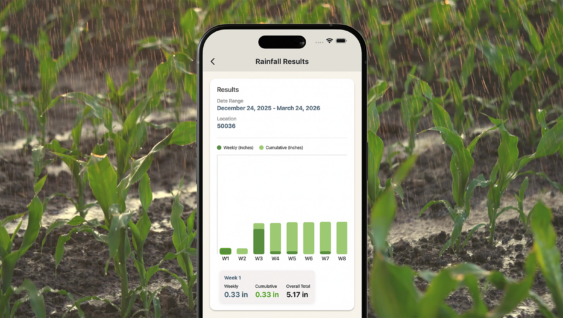




Managing Water in Dry Fertilizer Blends

Soluble fertilizers offer you the ability to quickly supply nutrients to your growing crops. But highly soluble fertilizers can absorb water from the atmosphere, leading to issues with storage, application and product quality, especially in dry fertilizer blends.
How Do Dry Fertilizers Blends Absorb Water?
Fertilizers are like salts, meaning they can absorb water directly from the atmosphere. Each has its own unique ability to withstand and hold moisture during storage and application, which is measured by critical relative humidity (CRH). Anything above a fertilizer product’s CRH means it will begin to absorb water from the air, and fertilizer blends tend to have a much lower tolerance for moisture.
Fertilizers can also absorb water through condensation. When warm air suddenly cools, the water in the air will ‘rain’ down on fertilizers and can be absorbed by the product. Condensation most often occurs during spring applications when temperatures are fluctuating, and equipment is in the field.
The Issues with Absorption
In both scenarios, the water absorbed by fertilizers can result in something called ‘caking’ or ‘bridging.’
When fertilizers absorb moisture, a small amount of the product may dissolve and recrystallize, resulting in crystalline bridges that form a solid cake on the surface. This caking can create unstable walls of fertilizer that can collapse during storage, posing not only a significant safety risk on the farm, but issues with fertilizer application and product quality.
Fertilizer in storage must be monitored for the risk of bridging or caking every week.
What Can You Do?
Growers can lower the risk of water absorption and condensation with the following tips:
- Check stored fertilizer frequently to address developing problems.
- Minimize fertilizer handling, the creation of dust, and accidental mingling of fertilizer in storage structures.
- Ensure the fertilizer bin is completely clean and dry before storage.
- Keep the CRH of the air well below the 50 percent threshold to lower the risk of water absorption for all fertilizer products.
- Add an absorbent product to the top and bottom of the fertilizer product if storing in a bin.
Want to dig deeper into the management and control of water in dry fertilizer blends?
Click on the image below to download our free guide.
Explore the following eKonomics resources to learn more about dry fertilizer storage and managing dry fertilizer blends:
The Dirt Season 4, Episode 23: Fertilizer Storage: Protecting Quality and Flowability