Lyle Cowell is based in northeast Saskatchewan, where he has spent his career in agronomy with a focus on better soil management. Lyle has always had the goal of connecting the three points of good research, agronomy extension and farm gate advice and application of soil fertility principles.
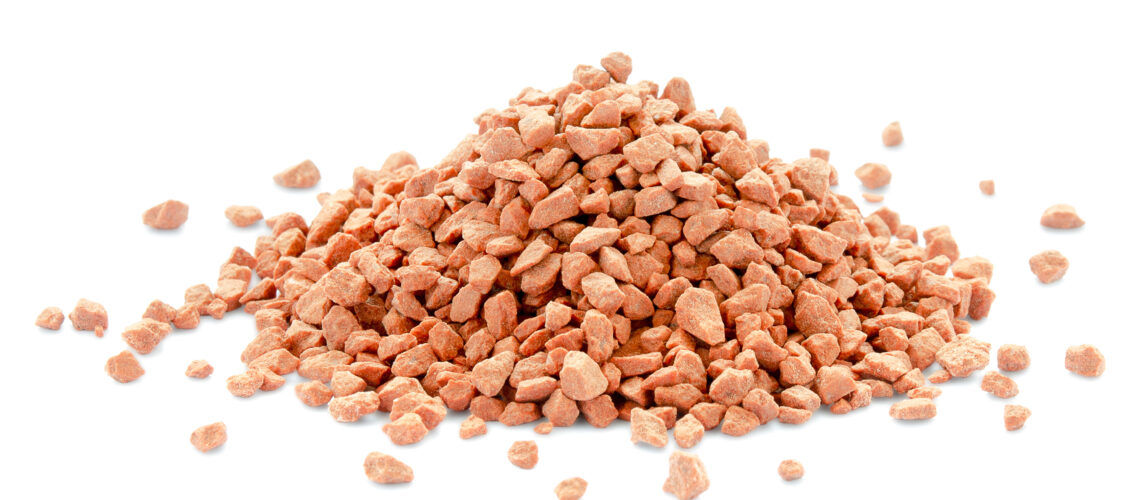
When we think of applying potassium (K) to farm fields, we most often think of “potash.” Potash is a somewhat generic term that embraces a range of minerals. But the specific fertilizer we often call “potash” is the mineral sylvite, which is also referred to as muriate of potash (MOP).
And what is “muriate?” It’s a term used to describe a mineral that contains chloride (Cl⁻). So, the potash in your fertilizer bin or application equipment is actually potassium chloride (KCl). Every pound of potash will contain close to half a pound of chloride.
Do Plants Really Need Chloride?
Chloride is the anion form of chlorine (Cl), an essential nutrient. Plant roots absorb chloride from soil water, and it is highly mobile within plants.
It’s been identified as an essential nutrient for more than 70 years, but the focus on its role and response has been limited. We do recognize that chloride has several functions in plants as both an essential nutrient as well as a nutrient supplement with secondary benefits:
Responsible throughout photosynthesis for the splitting of water and the release of oxygen.
Regulates turgor pressure and water movement in plants when paired with potassium (the other half of potash).
Together, chloride and potassium play an important role in balancing the opening and closing of the guard cells surrounding leaf stomates, the pores that allow movement of gas vapor and air out and into plants.
Improves stem strength when paired with potassium.
Plays a role in disease reduction and resistance; this is both a direct nutritional role and a secondary impact – plants with good cell turgor and water movement will have lower risk to disease, and chloride can have a direct fungicidal effect on pathogens such as root rots of cereal crops.
When It’s Needed
Plants respond to chloride most when they are under stress from drought or disease. For this reason, the benefit of added chloride will depend on both soil deficiency and seasonal conditions.
One caution – a few crops, such as tobacco and some tree fruits, are sensitive to excess chloride. This mention of sensitivity in a few publications has occasionally led to unwarranted concern for other crops. In most cases, the negative impact of chloride occurs on soils that have elevated levels of chloride from other sources. If one chooses to use a potassium source other than potash based on concerns of chloride sensitivity, crops will no longer reap the benefits of chloride nutrition. In any case, the use of reasonable potash rates and the proper management of application timing can help remove any concerns related to crop sensitivity.
It is difficult to know if and when you will benefit from the application of chloride. Most of the chloride we apply is applied as potash, and potassium and chloride have some similar effects on crop growth. At a field level this doesn’t matter so long as the application of potash provides a positive crop response.
How Much Chloride Is Enough Chloride?
Many agricultural regions have soil with plenty of chloride already present. For example, coastal regions receive adequate chloride nutrition from atmospheric deposition, and irrigated crops often have enough chloride applied within the water source.
Certain soils may also have naturally high chloride levels. For example, fields affected by soil salinity are more likely to have high levels of chloride. As an anion, chloride moves readily in the soil and is highly soluble, making it prone to leaching downward and prone to moving up into groundwater. It is most likely to be at low soil levels on well-drained soils where nutrients can easily leach.
What Research Tells Us
Research in Kansas and North Dakota has suggested that chloride should be considered “low” at soil levels less than four parts per million (ppm). If you sample soils to 60 centimeters (24 inches), then this would equate to about 30 pounds of chloride per acre. If you sample to a lesser depth, this, of course, would equate to a lower value.
This soil test recommendation data (Figure 1) largely reflects winter wheat production and, of course, different soils than in Canada, but can provide at least a basis for understanding soil tests.
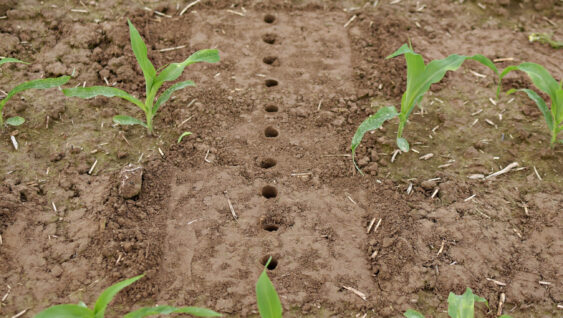
This is simple – potash is an excellent source of chloride, and when potassium is applied at typical annual rates of 15 to 30 pounds of K2O per acre, it will also provide sufficient chloride for the crop. As an anion, chloride is very soluble so it will easily move into the surface soil when surface applied.
Response to chloride fertilizer application on a farm field is hard to assess as response may be from potassium when potash is the source applied. However, research suggests a yield increase of 5-10 percent is gained in about 20 percent of applications, which varies within the same field based on annual environmental conditions, crop species, and even crop variety.
Symptoms of Deficiency – Physiological Leaf Spot And More
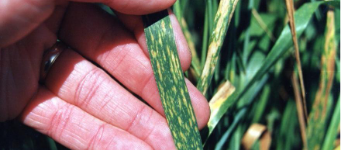
Due to the role of chloride in plant water balance, and the possible benefit of chloride in disease suppression, chloride deficiency symptoms can often be mistaken for potassium deficiency, drought, or disease in terms of leaf necrosis and stem strength. One well-published symptom is “physiological leaf spot” (PLS) which was recognized in certain winter wheat varieties (current varieties tend to not display this specific symptom).