



Pulse Development and Growth Staging
Pulse crops are the edible seeds of legume plants that are harvested as dry grains.¹ Currently, the United Nations Food and Agriculture Organization (FAO) has classified 11 types of pulses including dry beans, dry peas, dry broad beans, chickpeas, lentils, cow peas, pigeon peas, lupins, pulses nes, Bambara beans, and vetches.¹ While this list does not encompass all pulses, it does comprise of the most widely known.
Pulse crops are grown in 173 countries around the world in hundreds of varieties.¹ It’s estimated that we have been consuming pulses for more than 11,000 years—dating all the way back to 8th century BC.² It’s grown to become a healthy, sustainable source of protein around the world.
Producing high-yielding, quality pulse crops requires a strong understanding of their growth throughout production. A deep understanding of each stage of development will help you better manage the crop from planting to harvest. Certain fertility decisions are only effective at specific stages of development, and factors like the climate and soil conditions can impact the evolution of growth. Thus, it is important to better understand a pulse crop’s growth stages and development cycle to make more informed management decisions while meeting your productivity and profitability goals. Knowing what stage of growth your crops are in will also allow you to better manage their health, assess crop quality, and determine the best time to harvest.
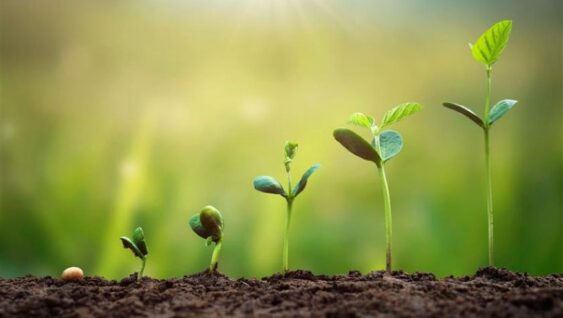
The stages of pulse development can be broken into two parts: vegetative and reproductive. Click through each of the MORE buttons below to learn about each stage.
Planting Tips
- Soil temperature has a direct impact on growth—temperatures above 82°F (27.8°C) can negatively impact growth.³ Early planting is often encouraged with March becoming a common time of year to plant.
- Seeding depth should be considered—large pulses can be seeded deeper into the soil than small pulses.⁴
- Soil moisture is critical—pulse seeds require three times more moisture to complete germination than other crops.³
Source:
¹Pulse Canada, What Are Pulses?
²Pulse Canada, A Brief History of Pulses
³Farmers Business Network, The Need-to-Know on Growing Pulse Crops