




The Science Behind Maximizing Yields and Profits

Farmers face various challenges that can affect their return on investment and on-farm profitability. From rising input prices and labor demands to tariffs and unexpected weather, farmers are masters of managing risk who can navigate challenges while producing high-yielding, quality crops. Among these moving parts, your crop’s need for nitrogen, potassium, and phosphorus remains constant. So how do you know where to invest your input dollars every season? How do you know what nutrients will have the greatest impact on your profitability? Nutrien Director of Agronomy, Dr. Karl Wyant, shared his insights in a recent presentation at the 2025 Top Producer Summit. Let’s take a closer look at what he had to share and how you can leverage science-based nutrient management to improve your ROI.
Where does my fertilizer go?
The nutrients you add to your field through fertilizer help you provide your crops with adequate nutrients, but where do they go in the plant?
Nitrogen
The nitrogen you apply is used by the entire crop and plays a vital role in the production of chlorophyll that can turn sunlight into energy your crop can use (Figure 1). It plays a critical role in the ‘DNA’ of your crop and its ability to produce proteins and amino acids—important indicators of harvest quality. Your crops rely on nitrogen throughout every stage of production—it’s foundational to the chemical structure of your crops.

Phosphorus
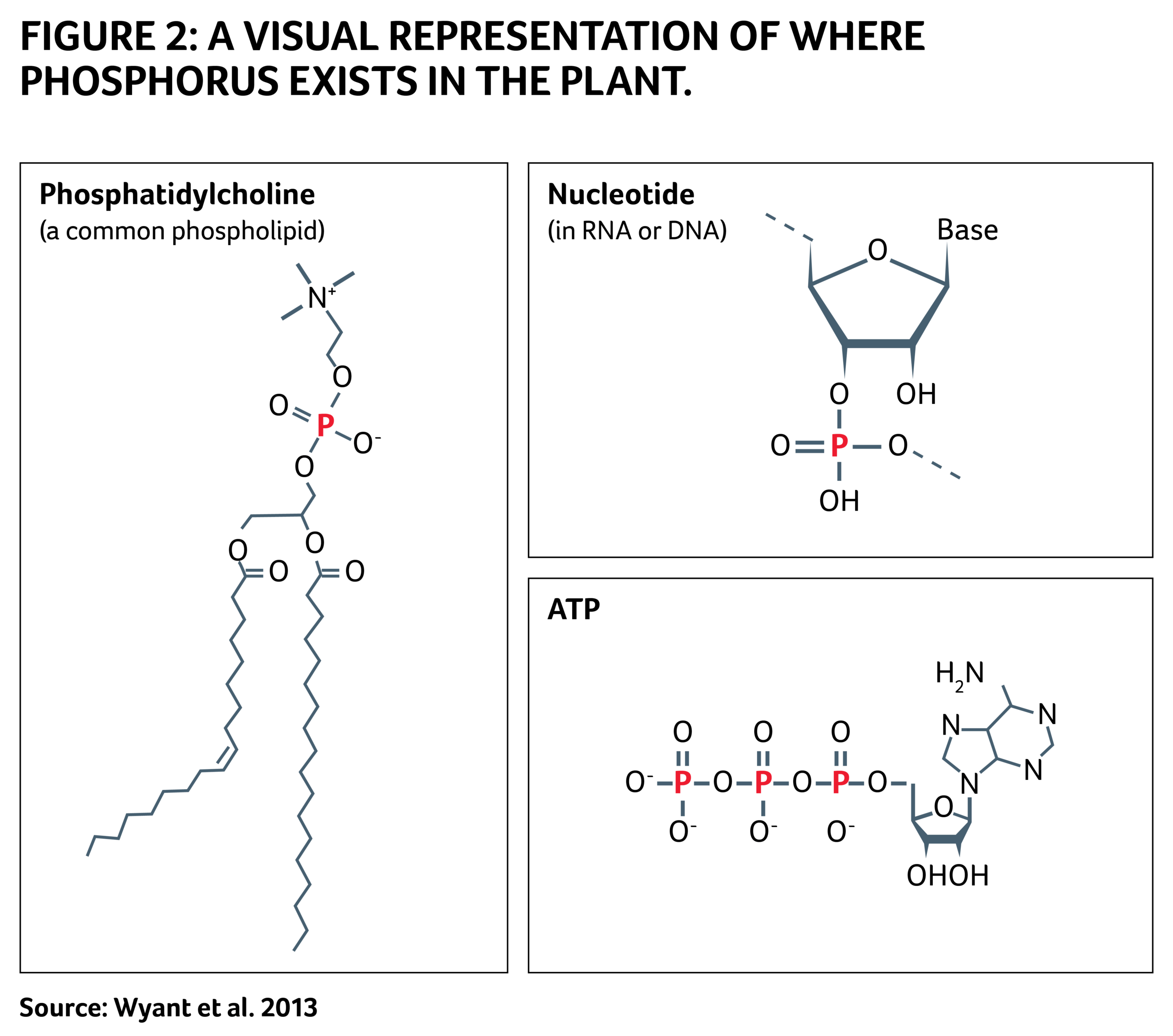
The phosphorus you apply is used to support photosynthesis and the process of respiration. Phosphorus is critical to the production of seeds and fruits, and it also plays an essential role in energy transfer (ATP), cell division and enlargement (DNA and RNA, and phospholipids), and the formation of roots, all of which are critical to the growth of your crops. The phosphorus you apply is used to fuel these processes in the plant and create the foundations of crop structure (Figure 2).
Potassium
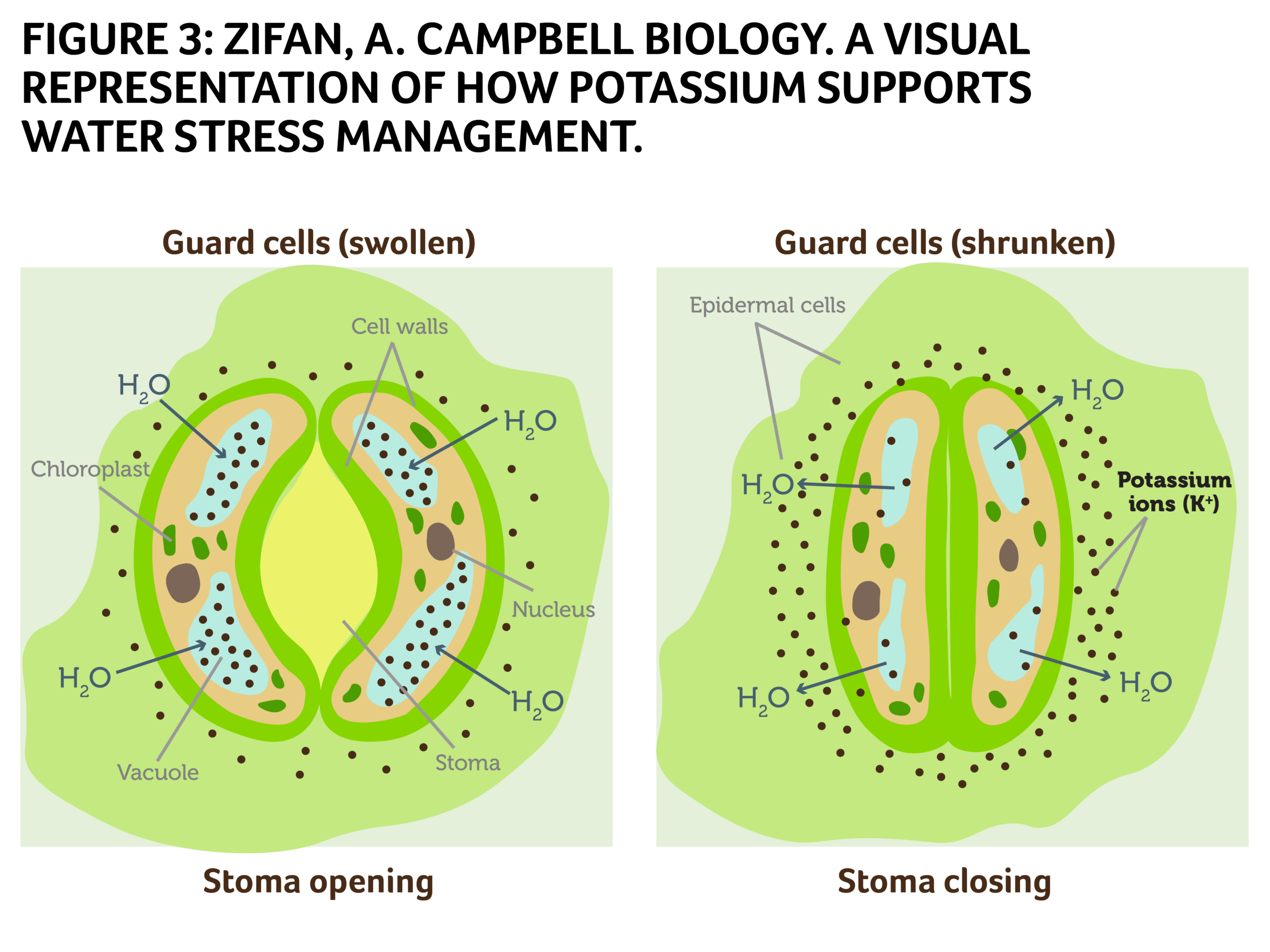
A significant amount of the potassium you apply is used in the surrounding cellular structures of a plant. Unlike nitrogen and phosphorus, potassium is not built into the chemical structure of your crops, but it is essential to their growth. Potassium is vital to photosynthesis, the production of sugar and carbohydrates, and water use efficiency. It is also responsible for the crop’s ability to resist and manage disease, drought, and lodging, all elements that can affect your crop’s growth, quality, and expected yield.
The graphic below demonstrates how potassium helps to open and close the guard cells on the underside of a leaf to help crops manage water stress.
Your soil’s bank account & the triage approach
Dr. Wyant advocates that you must know what you are working with in your soil before deciding to invest in fertilizers. Soil testing helps you better understand the need for critical nutrients and what your crops can access through your soil’s “bank account”. Soil test results will help you better understand where to invest, which nutrients need priority, which nutrient applications could take a back seat for the season, and identify what input spend should give you the greatest yield return.
Dr. Wyant suggests the concept of triaging your input dollars based on soil test results. When a nutrient is below critical value in your soil, it’s classified as an emergency that requires your attention as this nutrient will likely limit yield. When your soil is somewhat deficient in a specific nutrient, it’s classified as a priority to be addressed as soon as possible. And when your soil is close to or above optimum in a specific nutrient, you can monitor its levels, reduce the application priority, or even delay the delivery of said nutrient to the following year(s) as you monitor the supply through soil and plant tissue testing. The triage approach to nutrient management helps you identify which nutrients may deliver a profitable response to fertilization.
Data-Driven Investment
Following national soil test data and deficiency mapping can also help you better understand the value of investing in specific nutrients and where we are likely to see certain deficiencies. Regional data can help you identify what a worthwhile investment will be. For example, if you live in an area that is consistently testing below critical levels for phosphorus, visiting your local extension office could be worthwhile for a review of their recent phosphate fertilizer trial work to help you understand potential yield response.
Soil test data from your specific fields will help you get even more granular and uncover the deficiencies in your fields to uncover the greatest areas for investment. While more time consuming, a field-by-field approach gives you the opportunity to understand where you can profitability invest and where you can cut back; creating a tailored fertilizer program based on the needs of each field.
Soil investing based on triage
So how do you know where to invest based on your field’s triage? Dr. Wyant says that when soil test results show that you are below the critical value in a specific nutrient, the crop yield response to fertilizer will likely be profitable (Figure 4). Thinking out even further, low soil test values indicate that it is a critical time to invest in a buildup program that can supply more nutrients than your crops will remove at harvest. A build up program will help deliver much needed nutrients in the short term and help build your soil “bank account” for future production. This can be a valuable strategy if the cost of the nutrient needed (e.g., potash) is affordable (relative to crop prices and other inputs). If you do not invest in priority low-level nutrients, you may witness a sharp decline in yield in the short and medium term as shown in local university trial data.

However, when your soil test shows that you are above the critical value in a specific nutrient, Dr. Wyant says that a profitable response to fertilization is not likely. In this case, Dr. Wyant suggests that you rely on your soil’s bank of nutrients and reassess the need for fertilization the following year. It’s all about investing in the nutrients that have the greatest likelihood of producing a profitable response.
Where to invest this growing season
When the affordability of nutrients changes and you are not sure what to invest in for the upcoming growing season, Dr. Wyant says to go back to the concept of triaging. Invest in the macronutrients that are below critical values in your soil and start building back that soil bank. When you invest in nutrients that are below critical value, the likelihood that you may see a profitable response to fertilization is high. Under tight budgets and unpredictable prices, hold back on investing in nutrients that are above the critical value and focus on what truly needs attention in your field—which all begins with a soil test. 4R Nutrient Stewardship practices can also help you manage your fertilizer more efficiently (Figure 5).

Moving forward
The nitrogen, phosphorus, and potassium your soil and crops rely on is non-substitutable. A fertilizer program is essential to supplying the nutrients your crops need to deliver the yields you want. Under tight budgets and unpredictable input prices, blindly cutting back on your fertilizer use can cost you missed yield targets and lower-quality crops. It’s essential to be strategic and leverage soil test data from your field and national testing to justify any changes you’re making to your nutrient management and fertilizer program. Utilize the triage approach to identify the nutrients that are most profitable to get the most value.
Dr. Wyant says that finding the right partner is essential to successfully implementing this scientific approach to nutrient management. The right partner can provide sound advice and help you analyze your soil test results to identify the most profitable plan for your operation.
Dig deeper into Dr. Karl Wyant’s expert insights in the full presentation.
Interested in learning more? Visit the following eKonomics resources to learn more about the value of soil testing and uncover other tips for managing nutrients under tight budgets.
Soil Tests, Critical Values, High Prices, And What It All Means
5 Ways to Elevate Your Fertilizer Budget
Crop Nutrition And Production In Uncertain Economic Times
Soil Testing: From The Fields To The Lab