Stacie Yaremko, Agronomic Innovation Manager, Nutrien Ag Solutions
While larger farm equipment can help increase efficiency on the farm, it comes at the risk of increasing soil compaction.
Soil compaction occurs when the amount of pore space in the soil is reduced, leading to an increase in soil density. It’s caused by force applied downward on the soil, like the movement of equipment passing over the soil. Both compaction and soil structure damage can occur when tires slip while moving forward or even when raindrops fall onto the soil surface.
The issue with soil compaction is that it reduces the amount of pore space available to hold water and allow plant root exploration, and it can also reduce the rate of water infiltration into the soil.
Not All Compaction Is Equal
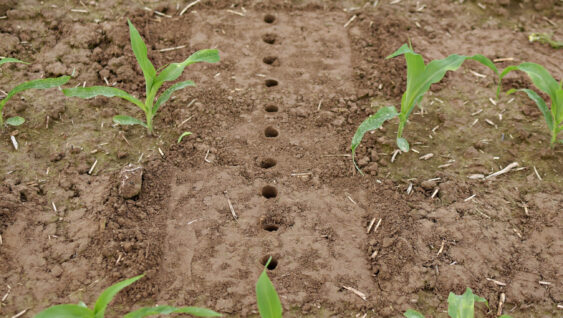
Not all compaction is created equally or is equally detrimental to crop production. We actually apply some compaction to surface soil when seeding to improve contact of a seed with the soil. If the correct amount of seedbed packing is used, soil damage should not occur.
Harmful soil compaction can be broadly grouped into two categories: surface and sub-surface. Surface compaction is sometimes referred to as “crusting” and is often caused by rain or irrigation water falling on bare soil. This layer of compaction is thin and limited to the soil surface. It can become a problem to seedling emergence, and is a greater problem if tillage leaves the soil surface unprotected.
Sub-surface compaction occurs below the surface (as the name implies). This type of compaction can be caused by a piece of equipment’s wheels and tracks or farm tractors and implements. The weight of modern-day farm equipment, which seems to get larger every year, can compact soils as much as three feet deep. With larger and heavier equipment comes a greater risk of wheel or track compaction. If soils are tilled, a zone of compaction, or a “hard pan,” can develop just below the depth of tillage. The risk of a hard pan developing increases with repeated tillage passes. While tillage is sometimes thought to reduce compaction by breaking up a hard pan, this is only possible if the depth of tillage reaches the depth of the hard pan and comes with its own risk of causing further compaction.
In-Field Diagnosis
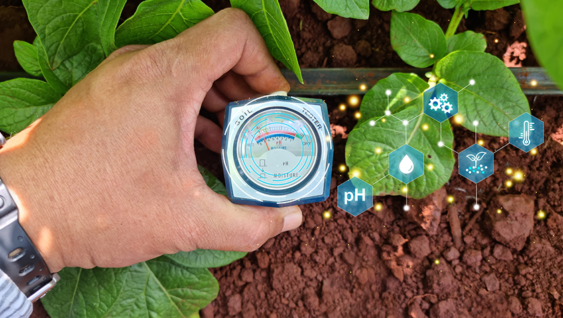
If a producer suspects they are dealing with compacted soils, there are a few ways they can be diagnosed. Aerial imagery from drones or satellites can reveal patterns in the field that may not be obvious from the ground; tire tracks from previous seasons often become visible from above. Back on the ground, soil penetrometers can be used to quantify the severity of compaction and locate which depths of the soil profile are affected. These devices measure how much pressure is required to push the probe through the soil.
Avoiding Compaction
Although not very helpful for those already dealing with compaction, the best management practice for compaction is to avoid causing it in the first place. Something as simple as ensuring that tires are properly inflated within manufacturer guidelines can reduce wheel compaction significantly. Research also suggests that deep compaction begins to occur at more than a 10 tonne axle load.
As much as possible, driving over moist soil should also be avoided. Dry soil is more resistant to compaction than moist soil, as the water between moist soil particles allows them to slip and slide past each other, ultimately reducing pore space. It may seem counterintuitive, but saturated soils may have the ability to resist compaction more than moist soils; water cannot be compacted, and therefore water-filled pore spaces also resist compaction. However, if tires slip in wet soil, the soil structure can be badly damaged due to shearing. Clay soils, which have a lot of very small pore spaces and tend to stay moist, are the most prone to compaction and can also be the most difficult to remediate following compaction. Soils that are low in organic matter are also more prone to surface compaction.
Combatting Compaction
Reducing the amount of field that is travelled over, which reduces the area that can be compacted, is an attainable and meaningful step in combatting compaction. Some farms employ controlled traffic farming, where tramlines are established that all equipment travels over, and the width of each implement (seeding, spraying, harvesting, etc.) is carefully chosen so that all equipment can use the same tramlines. On a much simpler scale, producers can be mindful of where they are driving in their fields and avoid making unnecessary passes over fields with full trucks, combines, and sprayers.
Managing Compaction
If compaction has already occurred, what can be done? Many producers opt for tillage, which can be very expensive to do, especially if the compaction layer being targeted is deep. Additionally, compaction symptoms will quickly return if the factors that caused compaction in the first place are not mitigated. Soil disturbance from deep tillage can also be counterproductive, as tillage disturbs soil aggregates, which are naturally more stable and resilient against compaction than heavily disturbed soil. Practices that conserve and enhance soil organic matter content will encourage soil aggregation; tillage, on the other hand, is destructive to soil organic matter.
Encouraging healthy crop growth of a variety of crop types can alleviate and prevent compaction. Different crop types have different root structures and depths which interact with soil compaction, and healthier plants have more extensive root systems which can improve soil structure and combat compaction. Some deep-rooted tap root crops, like alfalfa, can also play a role in breaking up sub-surface compaction.
Having plant coverage at the soil surface also protects against surface compaction or crusting; growing perennials reduces the amount of time the soil is left bare, and therefore vulnerable to surface crusting. Maintaining straw or stubble on the soil surface can also protect against surface crusting.
In northern regions, producers benefit from the freeze-thaw cycle, which can naturally alleviate soil compaction to some extent. The expansion and contraction of soil water freezing and thawing has some ability to alleviate compaction. This benefit is greater to the soil surface, where the soil can be lifted and churned by the frost cycle. Frost often penetrates quite deep in the soil, but the weight of soil above starts to limit the ability to break compaction layers.
Looking Ahead
Soil compaction is a complex problem with no one-size-fits-all solution, but there are many management options, big and small, that producers can employ and combine to prevent and reduce compaction.