Lyle Cowell is based in northeast Saskatchewan, where he has spent his career in agronomy with a focus on better soil management. Lyle has always had the goal of connecting the three points of good research, agronomy extension and farm gate advice and application of soil fertility principles.
The volatile loss of ammonia (NH₃) gas is one of the most significant pathways for nitrogen (N) fertilizer and manure loss.
While denitrification losses through nitrous oxide (N₂O) and nitrogen gas (N₂) are often discussed because of their environmental impact, they rarely account for more than two percent of applied nitrogen losses. In contrast, ammonia volatilization losses can exceed 20 percent under certain conditions, with Canadian averages estimated at approximately six percent of applied urea.¹
While much of the focus on nitrogen loss has centered on nitrous oxide because it is a greenhouse gas, ammonia volatilization deserves equal attention from an agronomic perspective. Understanding how, when, and why ammonia losses occur is critical to improving nitrogen use efficiency, protecting fertilizer investments, and supporting more effective nutrient management programs.
Where does volatilization occur in the nitrogen cycle?
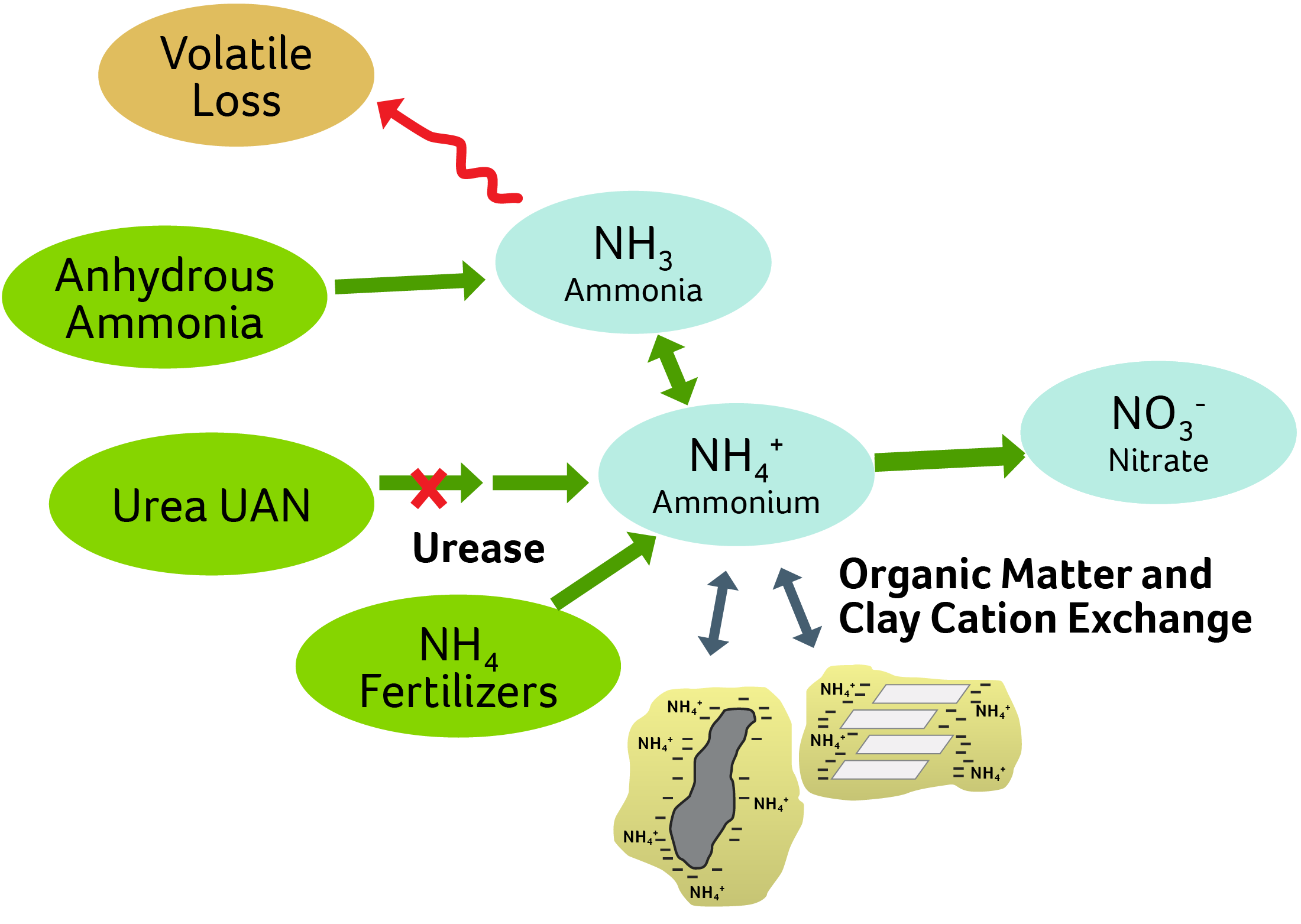
Ammonia (NH₃) loss occurs very early in the nitrogen cycle, particularly for inorganic nitrogen fertilizers, but all nitrogen fertilizer sources have the potential to lose nitrogen as ammonia under the right conditions.
For example, anhydrous ammonia can be lost directly if not applied properly at a sufficient depth (at least 8-10 centimeters) or if the application band is not well sealed.
Urea fertilizers (including the urea portion of UAN) convert to ammonium (NH₄ +) in the soil. This ammonium can then transform into ammonia (NH₃) and be lost to the atmosphere. All fertilizers that contain ammonium, including monoammonium phosphate (MAP), ammonium sulfate (AMS), ammonium polyphosphate (APP), ammonium thiosulfate (ATS), and urea-ammonium nitrate (UAN) contribute to the soil ammonium pool and therefore carry some risk of ammonia volatilization. Organic nitrogen sources such as manure and compost can also be vulnerable to ammonia loss following application.
How can we reduce volatilization losses?
Reducing ammonia volatilization starts with understanding the behavior of ammonium in the soil.
First, remember that as a cation, ammonium will be attracted to the cation exchange layer of clay and soil organic matter, which helps hold nitrogen in place. Practices that improve soil contact—such as subsurface banding, timely rainfall, or irrigation to incorporate surface-applied nitrogen—significantly reduce volatilization risk. We can also mitigate loss by understanding the conditions that increase the risk of loss. Soils with low organic matter or sandy textures are at a higher risk for volatilization loss.
The rapid plant uptake of applied nitrogen will also reduce the size of the ammonium pool and lessen the overall risk of ammonia loss.
Figure 1: A simple overview of how different nitrogen fertilizers transform after application
The steps of urease hydrolysis
Urea ((NH2)2CO) is the most common nitrogen fertilizer used, making it extremely important to understand how it can be lost to the atmosphere as ammonia.
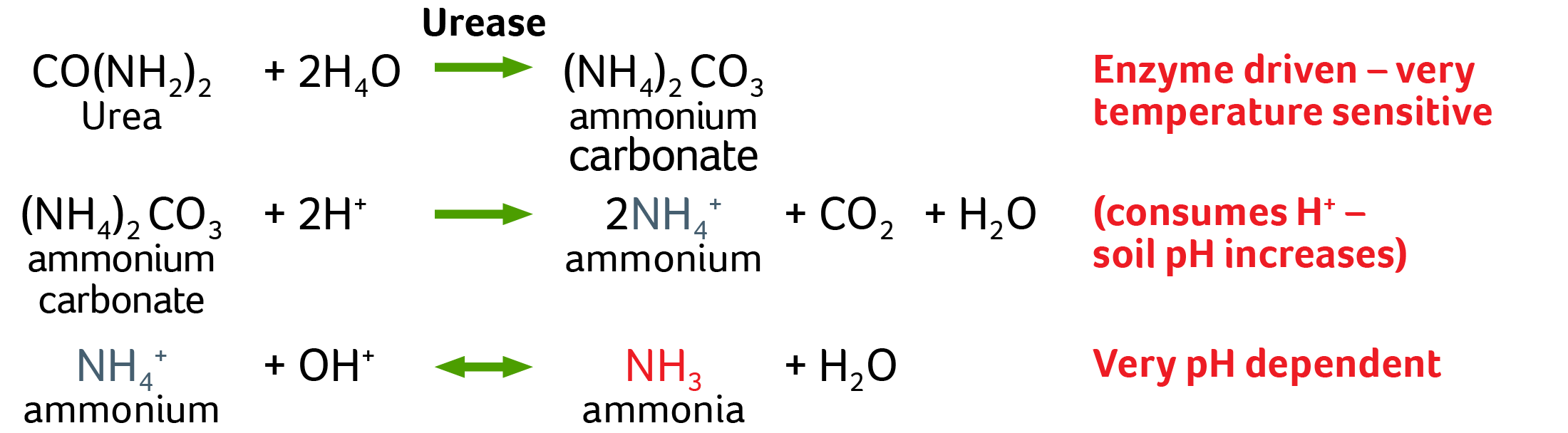
Figure 2: A simple overview of urease hydrolysis
Urea reacts with water and the urease enzyme to form ammonium carbonate, which very quickly forms ammonium. This reaction rapidly increases the soil pH around the urea fertilizer. This is a key factor in the next step as ammonia gas is more likely to form at a high soil pH.
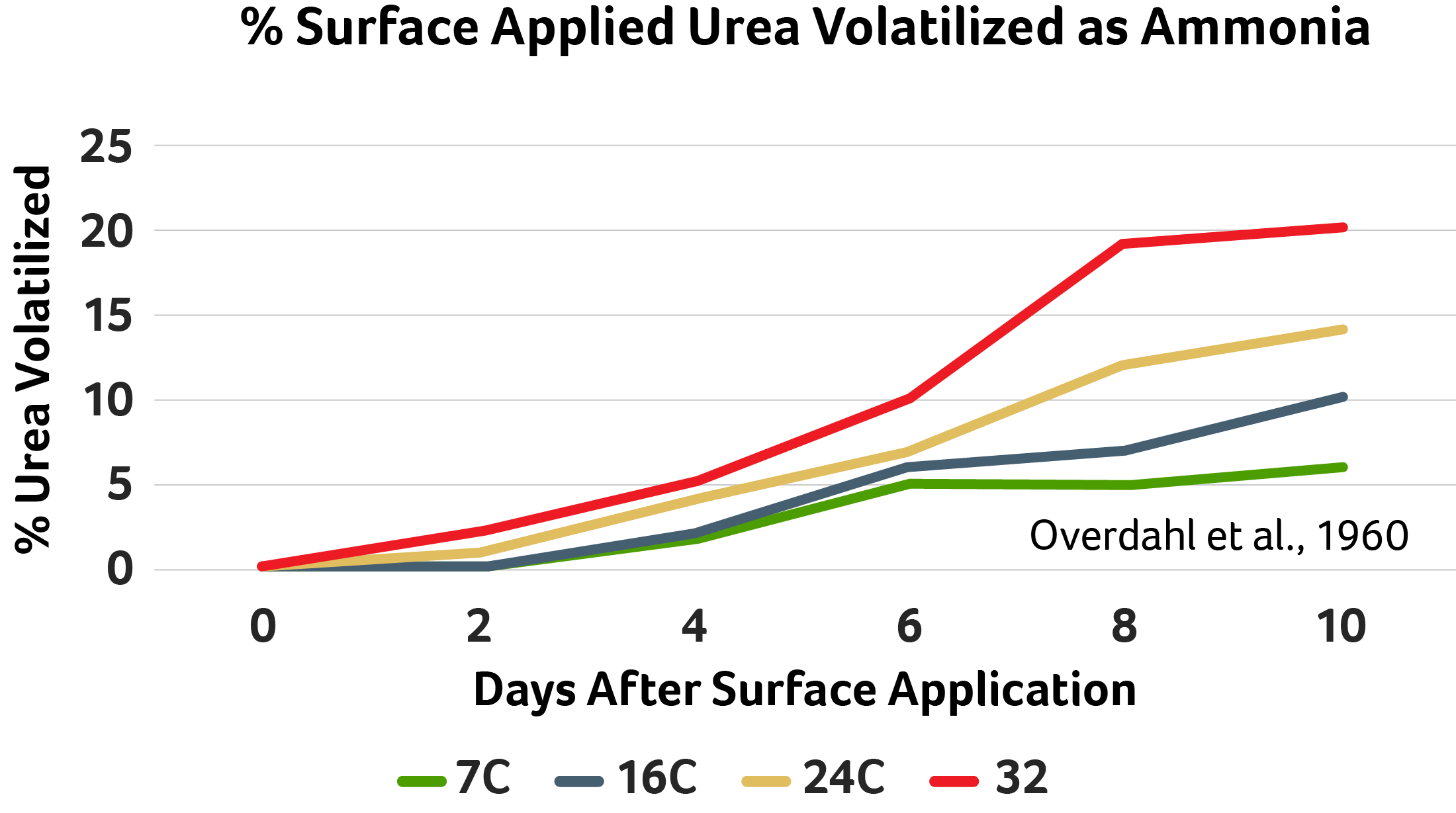
As an enzyme-driven reaction, we can expect that urea hydrolysis will increase in warm soils. This explains why the risk of ammonia loss is typically lower when urea is applied under cool conditions, such as in late fall or early spring. But remember, while cold soils help reduce loss, applications on frozen soil can create a higher risk for eventual nitrogen loss through runoff or continual loss through freeze-thaw cycles.
Figure 3: The percentage of urea lost through volatilization after surface application
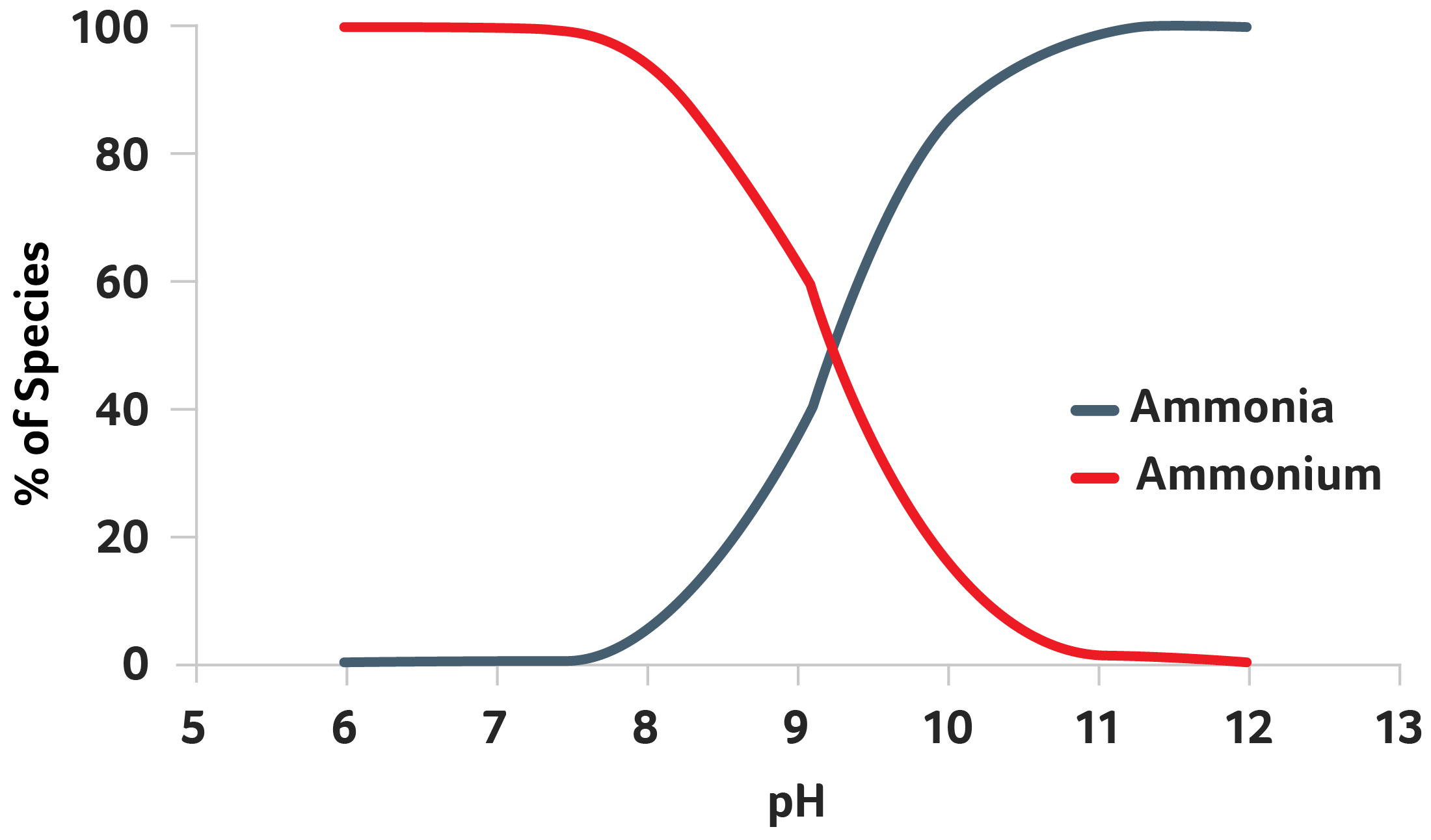
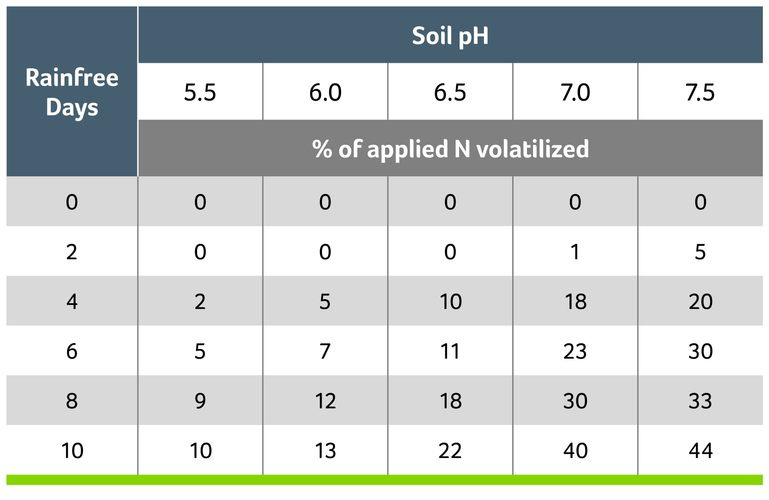
The reaction to form ammonium from urea will increase soil pH, and the formation of ammonia is favored by a high pH. High application rates of urea can then create soil pH conditions that exacerbate ammonia volatilization. The balance to form ammonia rapidly increases over a soil pH of eight. If the soil has a naturally high pH, the hydrolysis of urea is more likely to create alkaline conditions that lead to the formation of ammonia as demonstrated by Overdahl’s research (1960).
Figure 4: Influence of soil pH on ammonia volatilization
Figure 5: Loss of applied urea as influenced by soil pH and rain-free duration. Source: Overdahl et al., (1960)
Protecting urea from ammonia loss
We know that urea can lead to ammonia formation and potential loss if soil is warm and soil pH is high. We can protect that urea from loss with two methods: slowing down urease activity or creating a well-sealed band.
If we slow the activity of the urease enzyme, we will have a smaller pool of ammonium in the soil and prevent the rapid increase of soil pH. Urease inhibitors such as NBPT can inhibit urease activity for a period of time to allow rainfall to move the urea to a soil depth where loss is restricted. These inhibitors protect the urea from hydrolysis for a period of one to two weeks. With time, loss can still occur, and there remains the problem that surface applications of urea are not ideal for root uptake and may lead to increased nitrogen immobilization. Applying a polymer-coated urea can also lessen the risk of ammonia loss as the slow release of nitrogen will mitigate the impact of urea on soil pH and reduce the total potential ammonium pool.
Subsoil banding is another effective tool that can help reduce ammonia loss. While banding does not prevent hydrolysis, if the urea is placed deep enough in a well-sealed band, the ammonia is much less likely to be lost to the atmosphere. Rather, the ammonia will form near the urea band but then form ammonium again as it enters surrounding soil water.
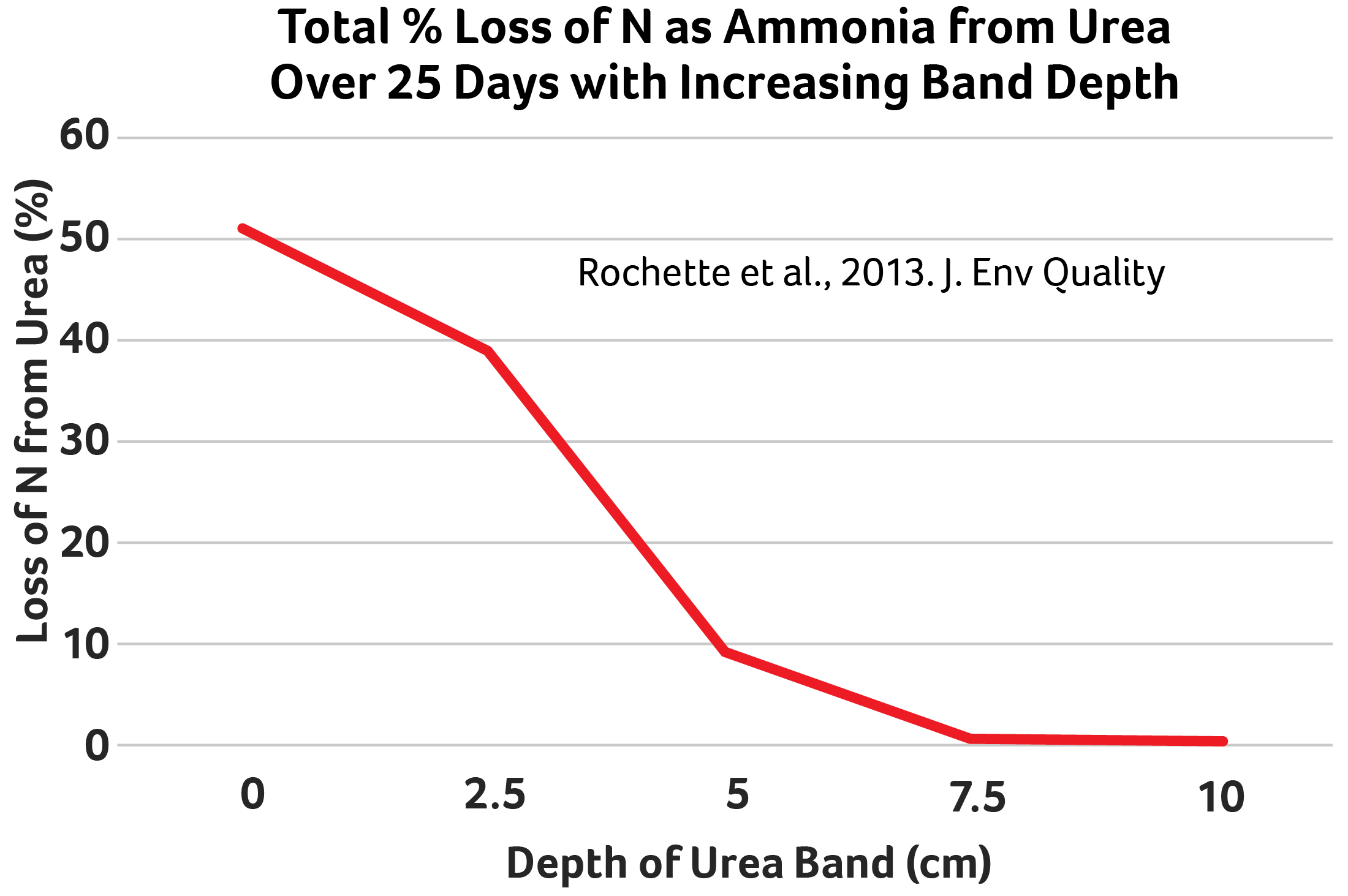
One challenge with subsoil banding is that concentrated bands of urea can lead to a rapid increase of soil pH and actually increase the amount and rate of ammonia formed. For this reason, the urea band should be placed at least eight centimeters below the soil surface and sealed to prevent loss. An added benefit of this banding depth is that it will place the urea within the root zone of the crop and reduce the overall risk of nitrogen immobilization during crop residue decay.
Figure 6: The impact depth of a urea band has on nitrogen loss from urea. Source: Rochette et al., (2013)
Risk of ammonia volatilization from ammonium fertilizer
All fertilizers that contain ammonium (MAP, AMS, APP, ATS, UAN) will contribute to the soil ammonium pool, which in turn may be lost as ammonia. However, the risk of loss is less than it is for urea as these sources do not increase soil pH, and so the balance of ammonia and ammonium depends only on native soil pH.
There is very little data from Canadian soils to measure ammonia loss from these fertilizer products, but research published in the National Library of Medicine indicates that if soil pH is less than seven, the risk of volatilization is quite low.² Most surface soils tend to have a pH less than seven especially when managed with zero tillage. In contrast, if the surface soil has a high pH or is highly carbonated with the presence of free lime, added caution will be necessary to help prevent nitrogen loss.
Understanding nitrogen’s loss pathways
The more we understand the pathways our nitrogen can be lost through, the better we can plan our applications and fertilizer programs to prevent loss and improve uptake.
Learn more about nitrogen loss mechanisms and strategies to prevent nitrogen loss in the following resources: