



Six Tips for Effective Anhydrous Ammonia Applications
Applying nitrogen fertilizer in the fall can help save time, money, and added stress during a busy spring planting season. However, effective applications cannot be planned without proper preparation. Soil and field conditions must be strongly considered before applying anhydrous ammonia (NH₃) to ensure its effectiveness and to protect against nitrogen loss.
1. The cooler the soil, the better
Soil temperature is critical to effective anhydrous ammonia applications. When anhydrous ammonia applications occur, the ammonia quickly dissolves in soil water to form ammonium. The ammonium can then be oxidized by certain bacteria into nitrate in a process known as nitrification. While both ammonium and nitrate can be used by growing crops, nitrates have a higher risk of loss through leaching and denitrification—which makes it beneficial to slow its conversion in the soil.
When soils are cooler, microorganisms will convert ammonia into nitrate-N at a much slower rate—reducing the likelihood of nitrogen loss and protecting your nitrogen investment.¹ Best practices suggest beginning anhydrous ammonia applications once soil temperature is below 50°F (10°C). Cooler soil temperatures will help slow down the process of nitrification and reduce the potential for nitrogen loss. Soil temperatures should be based on a soil depth of three to four inches (the depth of fertilizer application) and the soil should be on a cooling trend before application.²
2. Consider soil moisture and recent weather conditions
Soil moisture is one of the most important factors to consider when it comes to effective anhydrous ammonia applications. While anhydrous ammonia does dissolve readily in water, it is held in the soil by clay and organic matter. Before this hold occurs, the ammonia must dissolve in soil water to form ammonium. Ammonium (NH4+), which has a positive charge, will bind with the negative charge of surface clay and organic matter.
Thus, extremely dry soils may not be ideal for ammonia applications for two important reasons. First, it takes very little soil water to dissolve applied ammonia. But, when soils are extremely dry, the rate at which ammonium binds to the soil exchange sites will be slower as a result of low moisture.² This can lead to lower levels of plant-available nitrogen in the soil.
Second, and perhaps most important, extremely dry soils may not be capable of creating an effective seal over top of a band of ammonia. This allows the direct loss of ammonia from the furrow which can lead to significant nitrogen loss and additional time, money, and effort. Ensuring the soil has available moisture and good structure to flow over and seal the fertilizer band will help reduce the potential for loss and make a more effective anhydrous ammonia application this season. Even a small amount of rainfall or conserved soil moisture can improve soil conditions enough to create a more effective application.²
Pro Tip: Research shows between 2-12 percent ammonia loss in dry soil conditions. Make every effort to conserve soil moisture and structure before banding ammonia and confirm that application is leaving the furrow covered and in good structure.
3. Use a nitrification inhibitor
When added to nitrogen-based fertilizers, nitrification inhibitors slow down the conversion of ammonium to nitrate.¹ Slowing down this process allows higher levels of plant-available nitrogen to remain in the soil for growing crops. Nitrification inhibitors are important tools that protect nitrogen investments, reduce nitrate leaching, decrease nitrogen gas emissions, and improve nitrogen use efficiency, regardless of whether you apply it in the spring or the fall.
Pro Tip: If you experience an extremely wet spring after a fall anhydrous ammonia application, a nitrification inhibitor can help reduce nitrogen losses to support crop production.¹ Growers should avoid applying ammonia in the fall on fields that have a risk of flooding in the spring.
4. Perfect the application seal
With the right soil and environmental conditions in place to apply anhydrous ammonia, it is time to perfect the seal. When applying anhydrous ammonia to the field, you want to do everything you can to avoid loss. Achieving a perfect seal on the application slot supports this and allows you to avoid the direct loss of ammonia through volatilization (loss to the air). ¹
Pro Tip: A good soil seal over a band requires good soil structure and good surface moisture. Avoid topsoil compaction and unneeded tillage to improve ammonia application.
5. Choose the right application equipment
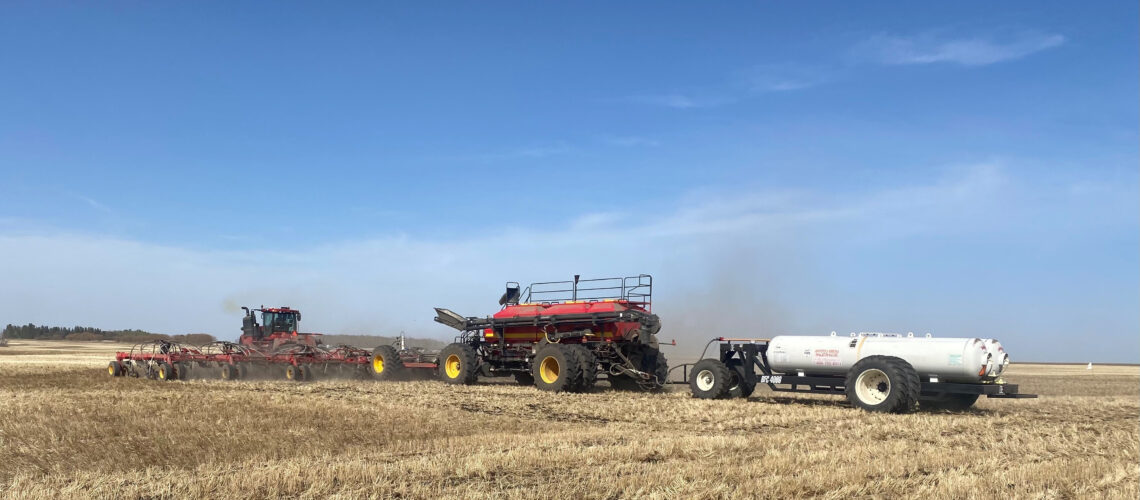
Good ammonia applications require an applicator capable of creating a well-sealed band at an appropriate depth. Applicators and machines that are not level or contain various banding depths may create a poor band, even in good soil conditions.
Pro Tip: Some application equipment and machines will have harrows or row packers to help seal a band. Be sure these are positively impacting the condition of your field.
6. Use the right band depth
Ammonia is a gas that is capable of expanding beyond its point of application. If it is poorly sealed during application, it will continue to move to the soil surface and risk loss. Thus, the depth of your band is extremely important for effective anhydrous ammonia applications. In good soil conditions, the band should be 8-10 cm deep before sealing.
It’s Time to Minimize Loss
Following these tips will help reduce nitrogen loss, increase plant uptake, and make more effective annual anhydrous ammonia applications—helping to create a more productive and profitable nutrient management plan.
Learn more about anhydrous ammonia and how to make effective applications with the following eKonomics resources:
Fall Anhydrous Ammonia (82-0-0) Use On Dry Soil –
Nitrogen Application Calculators For Stronger Nutrient Management
Next on Nitrogen: Fall Applications and Smart Sources
Managing Nitrogen Inputs For South/Central Plains Winter Crops –
Proper 4R Practices Can Lessen Ammonia Toxicity in Roots
Sources:
¹Fall-applied Anhydrous Ammonia Best Practices | Purdue University Pest&Crop newsletter
²Fall Anhydrous Ammonia Applications: What to know about soil moisture | Integrated Crop Management