





Read Full Transcript
Mike Howell (00:08):
The Dirt with me, Mike Howell, an eKonomics podcast where I present the down and dirty agronomic science to help grow crops and bottom lines. Inspired by ekonomics.com, farming’s go-to informational resource, I’m here to break down the latest crop nutrition research, news, and issues, helping farmers make better business decisions through actionable insights. Let’s dig in.
(00:38):
Well, hello again everyone. Welcome back to The Dirt. I’m glad you’re joining us this week. If you had the chance to listen to last week’s podcast, we talked about the 4R’s and the importance of four 4R Nutrient Stewardship. We also mentioned a little bit about how that relates to sustainability, and it just so happens that this week we had planned to start our series on sustainable agriculture. To help us get started on this discussion about sustainability, we have Michelle Nutting with us today. Michelle, welcome to the Dirt.
Michelle Nutting (01:07):
Hi Mike. Thanks for having me on the show today.
Mike Howell (01:10):
Michelle, if you would tell our listeners a little bit about yourself and what you do for Nutrien.
Michelle Nutting (01:15):
I joined Nut Nutrien, our a predecessor company back in 1990. I’m an agronomist, and I work on our sustainability and stakeholder relations team. In my history with the company, I started out doing field research and product development. I tested new fertilizer products in the field, and one of my roles was to do some agronomic extension with our farm customers and retail customers. So really agronomy is my DNA and my passion, but I had some interesting opportunities along the way. I’ve worked in the regulatory frameworks for our company and how fertilizers are regulated. Fertilizer use is regulated. I’ve worked in the sales and marketing team because I thought as an agronomist it was really important for me to understand the cost equation, for a company like ourselves and at the farm level. Taking those experiences, I then had the opportunity about six years ago, seven years ago, maybe, to move into the sustainability and stakeholder relations team, and I think that really brings together the experiences that I’ve had, and helps me give a perspective on sustainable agriculture for the company and for farmers.
Mike Howell (02:30):
Michelle, that’s quite a diverse background. I didn’t realize you had held all those positions during your career. So talking about sustainability, that’s the word that’s in the popular press these days. Everybody’s talking about sustainability, but the more I read, the more I dig into sustainability, it seems like everybody has a little different definition of sustainability. So if you would take just a few minutes and talk about what sustainability means to you.
Michelle Nutting (02:56):
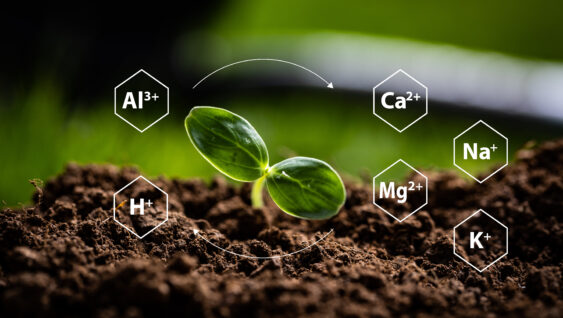
Thanks, Mike. I like the way you asked that question. Because I do have a personal definition for sustainability. And for me, sustainability means looking after the land in a way that produces good crops year after year, and understanding how the farming practices have an effect on the environment around it. I think sustainability is a new word for an old concept. In my mind, sustainability is synonymous with good agricultural practice, and that comes from my background as an agronomist. One of the basic principles in good agronomic practice is to apply good management before you apply a product. So good management, when it comes to soil, means things like assessing the nutrients, supplying capability of the soil. The minerals that come from its parent material and the organic matter sources, and then adding what’s needed to grow a healthy crop. Good management practices keep the nutrients that you apply on the field in the field.
(03:54):
This can be from placement, like subsurface banding to reduce losses from surface applications. Or from tillage management, keeping crop residues on the soil and minimizing tillage to reduce erosion and improve soil moisture, or understanding the impact of pH on nutrient supply. And having a balanced nutrient supply so that a deficiency of one nutrient doesn’t prevent the crop from making the best use of all the nutrients. None of those things are products. They’re all management practices, and products are used when they’re a necessary and in the amount that’s needed to be effective. So technology’s given us better ways to measure and manage and see the results in crop yield or in landscape quality. And the application of products and technologies is in addition to good management, not instead of it. But Mike, I’ve been talking about sustainability in relation to farm practice and it goes beyond that for nutrient.
(04:53):
It also pertains to how we make our products, and Nutrien been investing in technology and fertilizer production to reduce the greenhouse gas emissions. You might have heard recently that Nutrien announced plans to build the world’s largest clean ammonia facility at Geismer. And we’ll be using a new production technology and carbon capture and storage to reduce emissions by about 90%. And nutrient also has microbial based products that have a really low environmental footprint, and they work with the plant soil microbiology improving the way that plants can access and use nutrients from the soil from production to use. These are all factors in sustainable agriculture.
Mike Howell (05:34):
Michelle, one thing that you mentioned several times was management techniques and making sure that we apply things correctly. Last week, we talked about four 4R Nutrient Stewardship and how that’s important to growers. It sounds like that a lot of what you were just talking about is really the four 4R Nutrient Stewardship program. You didn’t say it in those specific words, but how does the four 4R Nutrient Stewardship program relate with sustainability or how do they go hand in hand?
Michelle Nutting (06:01):
Yeah, Mike, you’re right on with that. It is for 4R Nutrient Stewardship and for 4R Nutrient Stewardship considers the interactions between the management decisions around rate, time, place, and source. So a decision made on any one of those elements affects the decision for the others. And it starts with having a plan advised by a qualified agronomist or a certified crop advisor. The management practices are tailored to the site specific conditions on the farm, and at the most advanced level of 4R planning, decisions are made at the subfield level, like variable rate fertilizer applications that change as conditions change across the field, and the use of advanced nitrogen management products like ESN or a nitrification and urease inhibitor, in conditions where it might result in losses of nutrients from the field.
(06:51):
If you have excess moisture, for example. Reducing losses when there is excess moisture or preventing ammonia volatilization from broadcast or shallow nitrogen application, those are practices in a 4R management plan. And that plan can form the basis of some of the carbon market programs that we see out there today. So reducing nitrogen loss potential and doing this in a no-till system increases the amount of crop biomass produce, and it increases the crop residue that’s retained in the soil, and this can increase the amount of carbon stored in the soil. 4R Nutrient Stewardship has a key role to play in both managing losses from nutrients, increasing crop productivity and increasing soil carbon sequestration.
Mike Howell (07:37):
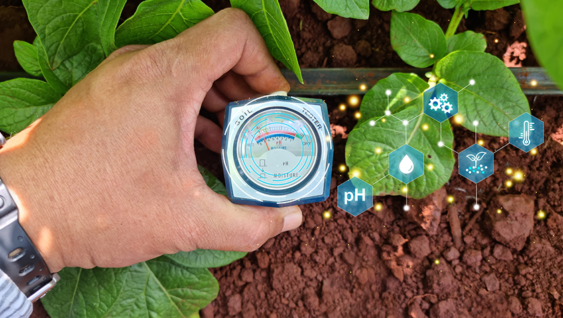
Another thing you mentioned, Michelle, was factors that affect nutrient availability, and you also mentioned soil pH. That’s something that our listeners have grown accustomed to here and here on The Dirt. I think every guest I’ve had has said something about soil pH. But if you don’t mind, talk a little bit about the relationship between soil pH and nutrient availability.
Michelle Nutting (07:59):
Yeah, Mike, I’m an agronomist in Western Canada, so I’m going to give a Western Canadian perspective on this. And I think our listeners probably really know like pH is different everywhere, but until you’ve started having a look around the world about the impacts of pH, you might not realize the differences in context. Western Canada, our soils are neutral to high pH. We have highly calcareous soils. Lots of calcium in the soil. Means that phosphorus fertilizer when it’s applied can quickly be tied up with the calcium in the soil and make it less plant available. We don’t broadcast phosphorus. We always subsurface band phosphorus close to the seed to ensure that that concentrated band reduces the amount of tie up that we get of that phosphorus in our higher pH calcareous soils. But I think the experience would be really different if we looked down in the western corn belt region, Mike.
Mike Howell (08:57):
Yeah, that’s right. Different parts of the world have different soil pHs. You get down here in the mid south where I am, and we have pHs that will naturally go to high fours or the mid-fives somewhere in that range, and we regularly have to apply lime to keep that pH up in the area that we need it. Most of the time, we recommend to growers that they keep that pH between 6 and 6.5, and all of our nutrients are going to be most available at that pH range. So Michelle, earlier you mentioned that sustainability was a new term for an old concept. If you would talk a little bit about what may have changed over the years, why is it a new term.
Michelle Nutting (09:36):
Mike, I think what’s changed the most is the interest of people about how food is growing. And alongside this are the questions about climate and what can be done to carbon emissions into the atmosphere. Farms have been using yield monitors, variable rate prescription maps, digital tools to help make better management decisions, and that’s not new. But what is new is how those digital tools can be used to produce the kind of information that could quantify an environmental benefit. Like the increased potential for soil carbon sequestration or a reduced greenhouse gas emission, it’s the data around the management practices that really becomes a valuable asset of the farm when that data’s collected and managed in a way that meets the requirements of some of these developing environmental service markets that are looking for low carbon products in improved water quality.
(10:31):
And that ecosystem service value for society, that’s in addition to the benefits of managing for crop productivity and soil quality. So it’s really a shift looking at data for the purpose of good farming and shifting that data now to the purpose of providing information and quantification for some of those external groups that are looking at how can they drive down carbon emissions or improve water quality and support that, maybe incentivize that through a market mechanism.
Mike Howell (11:03):
Michelle, you also mentioned that you do a lot of work with government relations and try to help make sure that we’re able to get what we need as far as government programs, and make sure that nothing’s imposed on these farmers that they can’t live with. If you would talk a little bit about some of the sustainability issues that you’re working with, and how you work with the governments to make sure that it works out best for everybody.
Michelle Nutting (11:25):
Sure, Mike. There’s a couple of things happening, and again, just the context for me right now is Canada, so I’m going to use that example. In Canada, the government set a 30% emission reduction target for fertilizers. Meaning they’re looking to lower the emissions from the use of fertilizer by 30% by 2030. And when we are talking with the government, there’s really sometimes some gaps between the research that’s completed and considered credible and publicly available that would quantify or describe the amount of emission reductions that happen as a result of farm management practices. And there’s a gap between that research and what’s actually happening on the farm and what those 4R management practices might be able to accomplish. So it’s really an education process. Sometimes we have to talk about the newer research, newer practices and products the farms are using to improve their nitrogen management, improve nitrogen use efficiency, and that ultimately results in a lower greenhouse gas emission, working with the government to help make them aware of what’s possible in agriculture.
(12:39):
Some of the science that industry’s been funding, research at the universities, all of those factors have to be considered and really bring a little bit deeper picture when the government’s trying to solve a problem and taking what I would call a broad brush, maybe national approach and not looking at the differences from one region of the country to the other, or from one border of a province to the other border. In the US from one corner of the state to the other, there’s a lot of differences in terms of what’s going to work to reduce a greenhouse gas emission from fertilizer use. And so that one size fits all solution isn’t the best solution for agriculture. We’ve got a big education job to do with policymakers and the government so that they can understand what’s actually implementable and workable on a farm.
Mike Howell (13:29):
That’s right, Michelle. And you mentioned how much things can change going between state boundaries or province boundaries, and it doesn’t even have to be that large a scale. We can see some dramatic changes just from one end of a field to another end of a field. If we’re in the Mississippi Delta, we can have a deep sandy soil on one end and a heavy buckshot clay on the other end. And when we’re talking about nitrogen management, we have to manage those two areas differently to make sure we’re not losing too much nitrogen in either one of those cropping systems. Michelle, another factor that we have to take into consideration when we’re doing this is economics. Growers definitely want to do what they can to protect the environment and make sure they’re doing things sustainably, but it also has to be done in an economical manner. I think that’s something that some people tend to leave out the equation sometimes. Talk a little bit about the economics and how you work with the government officials to make sure that the farmers are going to be able to survive doing these new practices?
Michelle Nutting (14:28):
Yeah, Mike, that is a big challenge. Farm decisions are made on an economic basis, and I think farms do by and large an excellent job of getting the right rate of fertilizer, optimizing that, not over applying it because that’s an economic cost, and they’re really trying to make their best economic outcome from the use of the inputs in relation to the amount of the yield that they get for those crops. So there is a lot of optimization right up front to get that rate and all of the placement and source and timing right. Once that’s done and the farm is getting that good management plan and their best optimized outcome economically, now there’s still a little component left in terms of can we reduce greenhouse gas emissions from fertilizer management practices? And typically, if you look at the average amount of nitrogen loss, this nitrous oxide gas, it might be over a whole country like Canada.
(15:32):
1% of nitrogen’s lost, is nitrous oxide gas. Preventing the loss of that nitrogen is nitrous oxide gas, that’s not going to move the needle in terms of having a yield impact. If you put a hundred pounds of nitrogen on and you saved one more pound from being lost, that doesn’t really have an impact on yield. But that 1% of nitrous oxide loss, that does have a big effect on our greenhouse gas footprint. I know it seems kind of minuscule, but as we increase the amount of nutrient that we’re using for these rising yield crops, our greenhouse gas footprint as an industry has grown from the higher use of fertilizers. So we’re really trying to manage a very small percentage of loss.
(16:14):
And things that will do that for us once we’ve got our yield benefits out of using better practices, applying products correctly and more effectively, things like enhanced efficiency fertilizers, nitrification inhibitors, urease inhibitors, and ESN, they’re going to have that added bonus of preventing a buildup of nitrate in the soil, which then potentially could be lost as nitrous oxide. But that little loss as nitrous oxide in comparison to the total amount applied to the crop, while it doesn’t have an economic impact on yield, it comes at an extra cost that doesn’t necessarily produce an incremental yield benefit at that point.
(16:54):
We need some support from carbon funding, for example, from governments, maybe some incentive payments in the US Climate Smart Action Program or the Canadian On-Farm Climate Action Fund to help support the adoption of some of these products that can reduce greenhouse gas emissions, but may not additionally provide an economic yield beyond what the farmer is already seeing.
Mike Howell (17:18):
Michelle, we’ve talked a lot today about sustainability. What can you tell us to kind of sum everything up? What’s your take home message to our listeners today?
Michelle Nutting (17:26):
Mike, I think that agriculture has the opportunity to increase soil carbon levels and reduce greenhouse gas emissions. And that opportunity can have a monetary value, in addition to the benefits of better soil quality or crop productivity. The whole system from fertilizer production to putting food on the table is being looked at from a sustainability lens today. How do we do more with less, and assure that we will have the kind of future we want for our families and for the planet? So I think that’s really my summing up point. We’re all looking to do better for ourselves, for our families, and for the planet.
Mike Howell (18:04):
Michelle, that’s exactly right. And as you said, growers are doing a lot of these things already. We don’t have to tell them what to do. We’re trying to help be a voice for these growers to let everybody know what they are doing already and maybe give them some new ideas of how to take that next step and take the next step toward sustainability on their farm. Michelle, we really appreciate you joining us today. You’ve given us a lot of good information.
Michelle Nutting (18:27):
Thanks, Mike. It was a pleasure.
Mike Howell (18:30):
Okay, listeners, it’s time for our tailgating tip section. Hope you’ve been enjoying these sections. We’re enjoying talking about it and bringing it back to you. This week. We’re going to be getting the smoker out. We have not pulled the smoker out yet this year, but several of our guests have talked about the smoker and smoking some meats, and I decided that we’re going to pull the smoker out this week and we’re going to smoke a brisket. And we also have some leftovers from some of our previous tailgates. We’re going to pull out some of those leftover baked beans from the freezer and have to go with that, and we’ll probably try the smoke cheese dip that Kristy talked about a couple of weeks ago. So we’re looking forward to that. And for dessert this week, I am going to make my blueberry cobbler. Now, the way I make this blueberry cobbler is I start with the crust, and that’s nothing but flour and sugar and butter and just a little bit of water to make that crust.
(19:20):
And then we’ll cook those blueberries down and some butter and sugar. Candy those blueberries up and add that to it. And then put another layer of the crust on top. We’ll top that crust off with some butter and sugar, put it in the oven and let it bake. And when it gets about halfway done, this is what really makes mine really good, is I’ll go back and put the butter and sugar back on top of it again. It’s not really good for you, but it sure is good to eat. So talking about blueberries, I thought we would discuss the blueberry industry here in the United States a little bit. The US is the primary producer of blueberries. They produce about 290,000 tons of blueberries annually. And of that, 98% of those blueberries come from the states of Washington, Georgia, Michigan, Oregon, New Jersey, California, North Carolina, Florida, Mississippi, and New York.
(20:12):
Those 10 states are going to produce 98% of the blueberries grown in the United States. Blueberries really like well-drained soils. They like full sun, and this is one crop that’s going to be a little different on our pH requirements. Blueberries tend to prefer a little lower pH. They like a little more acidic soil to be the most productive. Well, listeners, another great night of Friday night football this week. We had a good time continuing our games and just socializing with friends and family. Football team did a great job as well. They finished a night with a score of 47 to 18. The Hornets are just really on a streak right now. They’re number one in the 4A state rankings, number nine overall in the state right now. Just having a great time going to these games on Friday night, watching the Hornets play some football. If you’re in the area, I encourage you to come by and watch them for yourself.
(21:10):
Want to remind everyone to tune in next week as we continue our sustainability series. Until then, this has been Mike Howell with, The Dirt.