



Potassium Nutrition Opportunities In Cotton
Dr. Karl Wyant & Mike Howell
Potassium is an essential nutrient for normal cotton growth and development, which plays a particularly important role in fiber development. If potassium is limited during active fiber growth, there is a reduction in both fiber quality and yield, which can have a negative financial impact on the farm gate profitability (Abaye 2009).
Research shows that a bale of cotton requires more potassium (52 lbs K2O/bale) than it does nitrogen (~48 lbs N/bale), which is indicative of the high relative potassium demand of the crop. Much of the potassium required for high yields is contained in the stalks, leaves, and burs and is eventually returned to the soil. However, potassium is the second most needed nutrient when it comes to actual lint and seed production, which is indicative of potassium’s relative importance in promoting both vegetative growth and lint yield.

Furthermore, potassium needs in cotton are particularly pronounced from first square through peak bloom.
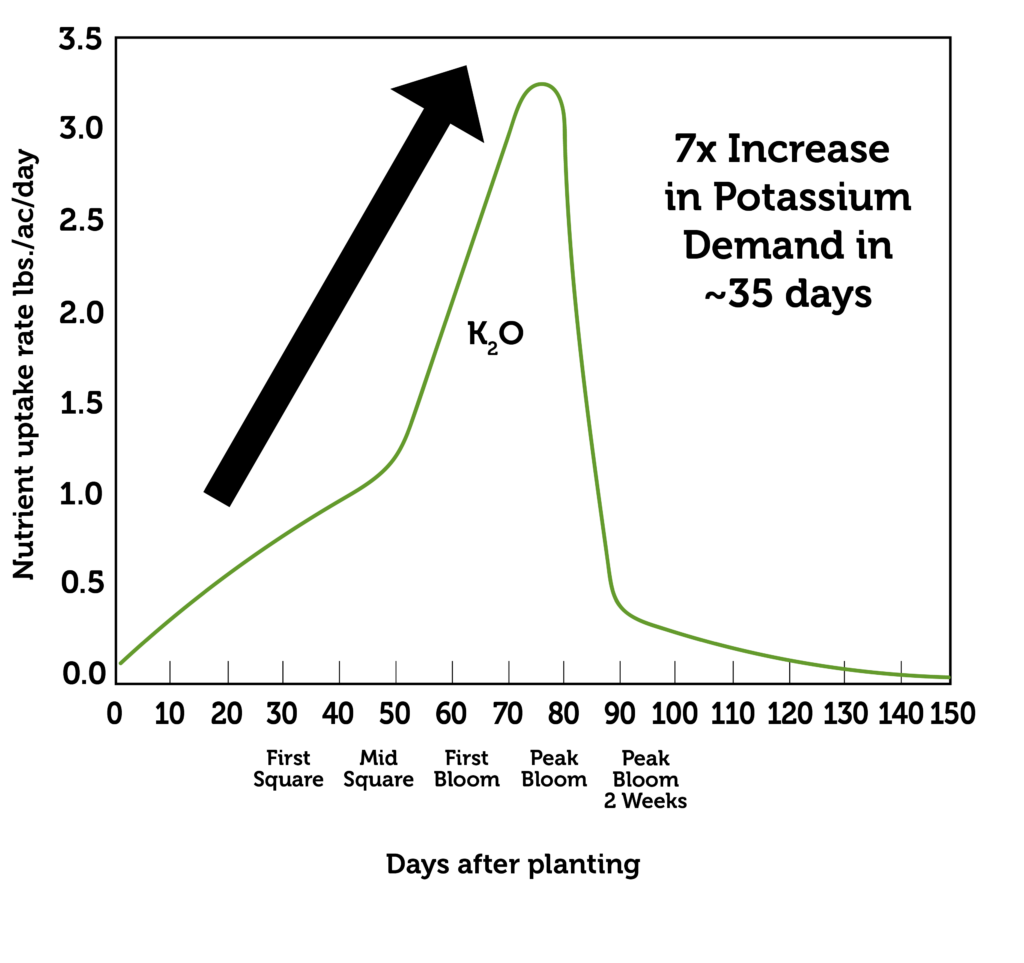
For example, Mullins and Burmester (1991) reported maximum daily potassium uptake rates of 0.5 (first square – 20 days after planting to 3.5 pounds (peak flowering – 90 days after planting) potassium per acre per day. This seven-time increase in potassium demand is important too as it correlates with final yield.
Challenge
It is crucial that potassium be available when the plant is setting fruit on the first position of the first several branches, because 70 to 75 percent of the total yield occurs from first position bolls on the first seven or eight fruiting branches. However, many growers are reporting increased potassium deficiency and, therefore, missed profitability opportunities (Abaye 2009). Increased potassium deficiencies in cotton have been attributed to 1) use of higher yielding varieties, 2) depletion of soil potassium reserves from previous crop removal, and 3) the relative inefficiency of cotton in absorbing potassium from the soil compared to other crop species (Cassman et al., 1989).
Recommendation
An application of potassium fertilizer, starting around first square, is recommended when potassium limitation of cotton growth poses a risk. Situations to be especially mindful of include low CEC soils, where potassium leaching can occur, and fields that tested low to moderate for potassium and did not receive additional potassium fertilizer prior to planting. Top dress applications around first square will help match anticipated potassium needs in a timely manner.
Reference:
Abaye 2009 – Potassium Fertilization of Cotton