



Outsmart Your “K” – ompetition
The role of potassium in crop growth
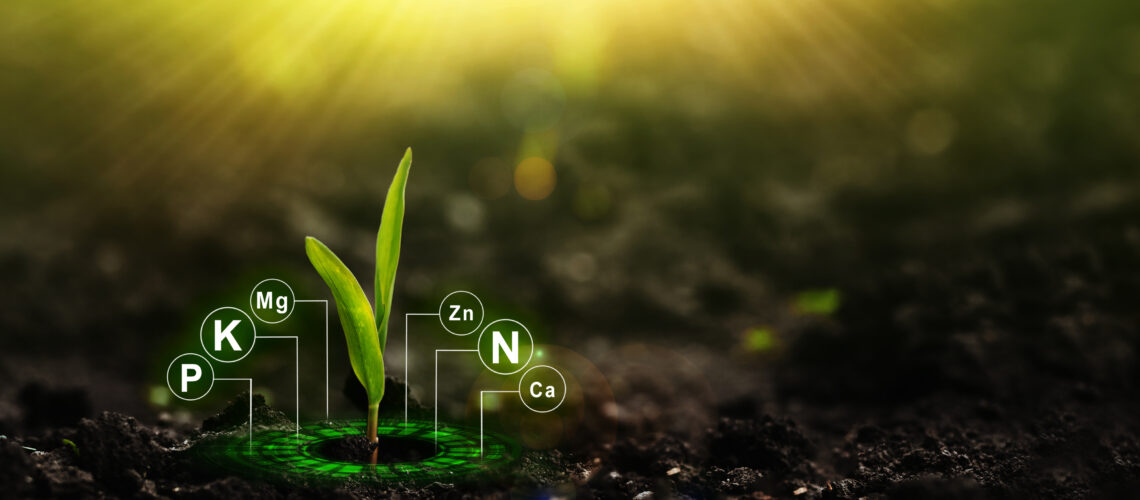
Potassium (K) increases crop yield, improves crop quality, and is considered one of the primary plant macronutrients, along with nitrogen and phosphorus. Except for nitrogen, plants often require more potassium than any other nutrient, as it plays vital roles in crop growth and development.
Unlike phosphate and micronutrients, potassium availability is not generally related to soil pH. rather, potassium supply is regulated by a complex interplay between crop demands, fertilization practices, and five forces that compete with your plant for potassium uptake.
Understanding your ‘K’- ompetition in the soil will help you overcome and deliver much needed potassium to the crop to ensure yield and quality (Figure 1).
5 sources of “K” – ompetition
Potassium tie up
Soils differ in their relative amounts of sand, silt, and clay particles (e.g., texture). Clay dominated soils tend to have a high cation exchange capacity (CEC), which is the relative ability of a soil to store positively charged nutrients. However, nutrient release rates are inversely related to the CEC value. Thus, clay soils can release stored potassium back to soil solution at a slower rate than actual plant demand. In this sense, clays can ‘tie up’ potassium and slow its availability.
Certain clay minerals can scavenge plant available potassium from the soil, including potassium fertilizers, and render the nutrient unavailable to the plant. This is called potassium fixation and the degree of the fixation ‘strength’ can vary between regions and even in different areas of a field. Strong potassium fixation capacity is typically associated with the presence of vermiculite and mica-based minerals in soil. These minerals have a high affinity (e.g., high negative charge) and internal space to attract and sequester plant available potassium in your soil. Fixed potassium, once tied up, is no longer available for plant use during the growing season.
Dry soils
Potassium must be in solution (e.g., soil water) for the plant to take it up through the roots and put it to work for the crop. Make sure water inputs are moving through the entire rooting volume of the crop to ensure adequate potassium uptake. Excessively dry soils, at any depth throughout the rooting zone, will prevent potassium uptake.
Lightly textured soils, such as sands, are not very good at storing plant nutrients (e.g., low CEC). Furthermore, they also have a high nutrient release rate back to solution. Potassium, in these types of soil situations, is prone to leaching as water can move the potassium ions out of the rooting zone, similar to the way we think about nitrates.
Potassium uptake antagonisms with sodium
Potassium (K) and sodium (Na) atoms are of similar size and charge and can therefore interfere with each other in soil solution for plant root uptake. Wakeel (2013) recently summarized the antagonistic effect of Na on K uptake.
- Poor uptake of potassium: Membrane depolarization caused by sodium makes it difficult for potassium to be taken up by inward-rectifying channels (KIRs). Sodium can compromise potassium uptake into plant roots.
- Increased potassium leakage: Sodium increases potassium leakage from the cell by activating outward-rectifying channels (KORs). Sodium can cause plants to lose potassium through the roots.
Options
Outsmarting your soil competition for potassium uptake in your crop requires the recognition that your crop is not on a level playing field for maintaining optimum potassium nutrition. A combination of clay mineral interactions, leaching forces, and antagonisms can prevent your crop from acquiring adequate potassium from soil solution.
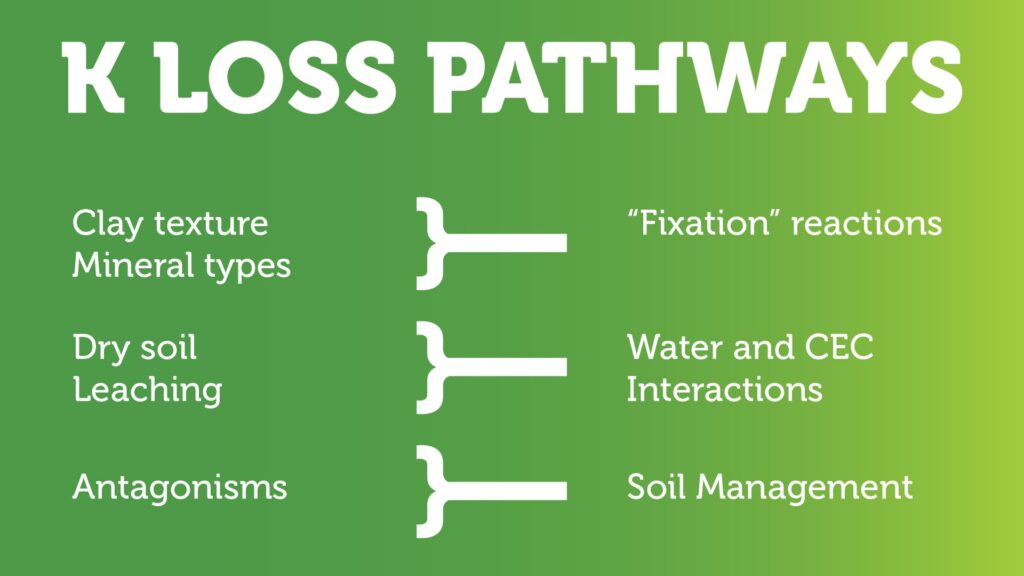
Figure 1 – The five main sources of competition for your potassium nutrition which can represent a net potassium loss to the plant (on left).
*This article was originally written by Dr. Karl Wyant in 2019