






Read Full Transcript
[00:00:07] The Dirt:
Welcome to The Dirt, an economics podcast bringing you the down and dirty agronomic science behind growing better crops and bigger returns. Backed by nutrien-economics.com, we break down the latest research, news, and insights to help farmers make better business decisions. Let’s dig in.
[00:00:32] Karl Wyant:
Hello and welcome back to The Dirt. I am Dr. Karl Wyant, the Director of Agronomy at Nutrien and thank you for tuning in this week. We’ve got a great show, super special. I know we’re in the middle of planting season across much of the country, but what we wanna talk about today is not the planting part of a crop season, but it’s the end of the crop season in terms of residue management. I’ve got a great guest on the show. We are both obsessed with residue management. We’ve both worked in this space for a long time and we’re gonna have a great discussion on what to do at the end of the season and why you should care about residue management. Today, I’m joined by Dr. Cassidy Million, Vice President of Science at BW Fusion, who brings a wealth of experience in agronomy, soil health, and crop residue management.
[00:01:17] Karl Wyant:
Cassidy, welcome to the show, and please start off by introducing yourself and tell us a bit about who you are.
[00:01:22] Cassidy Million:
Thanks, Carl. Thanks for having me. I’m super excited to be here and dive into residue. I can talk about residue, I think, every day.
[00:01:47] Karl Wyant:
Awesome. Thank you. Now, Cassidy, your PhD’s from the Ohio State University, but you live in Indiana. Are you a Hoosier or are you a Buckeye fan?
[00:01:55] Cassidy Million:
You know, I’m a Hoosier.
[00:01:57] Karl Wyant:
Okay.
[00:01:57] Cassidy Million:
At heart. I didn’t get the chance to live the Columbus, Ohio world, because I was in Worcester, so I never caught the fever, but we’re winners, not IU, so I can be proud to say that.
[00:02:07] Karl Wyant:
All of our Big 10 fans that are listening, there’s another Hoosier fan here. My neck of the woods, we sent UCLA and USC over to the Big 10, and I think they’re really enjoying that December football experience, so good luck to them. Anyways, football aside, we wanna chat about residue, and I know that residue has lots of different names. Some folks call it crop trash. They call it stover, straw, residue, debris, detritus. There’s all kinds of names. They all sound like they’re disparaging the resource we’re talking about. Tell us, Cassidy, what is crop residue, and why should a farmer care about it?
[00:02:41] Cassidy Million:
It’s simple, right? It’s just what’s left over after that previous crop on the soil. We can get in those technical curbs of the detrituspired, how to break it down, but it’s just simple. It’s just what’s left in the soil. Should you care about it? Yes, regardless if you value it or not, because it’s gonna impact you come the next season if you don’t manage it properly.
[00:02:58] Karl Wyant:
That’s right. I think that’s where we’re evolving, too. I’ll tell you my world that I come from winter wheat, we harvest in June, and then they would burn the crop residue off. That’s how we got rid of it. We got rid of the straw by burning it. Sometimes we could bale it as straw bales and sell it into the feed markets, but most of the time it was burned. But we’ve moved past that very quickly in just a few short years of time because of regulatory concerns. Now we have more growers saying, “Well, what do I do with it? What do I do with all this residue?” Cassidy, explain what happens on a farm field when there’s too much residue left over.
[00:03:30] Cassidy Million:
It’s that paradigm that balance. It’s a pain to wanna think about managing the dead crop once you’ve already managed the crop all season. You have a lot of growers that just forget about it. Leave it alone, don’t wanna mess with it. They cleaned up their sprayers, they’re done. But what happens when you take that approach is multiple different things. You can impact yourself over the season and then also next season. You’re leaving a lot of residue that has value to it. It’s value to the soil health, the microbiome that you’re not properly utilizing, but then also you’re gonna give yourself a headache come next spring. You’re gonna have a poor seeding bed. You can also have a breeding ground for plant pathogens. They love to over winter in that residue, so the more you build up time over time, you’re gonna see more disease pressure.
[00:04:11] Cassidy Million:
You’re really gonna leave yourself a headache if you don’t take the right approach in managing it from operation to yield impacts to disease pressure overall.
[00:04:19] Karl Wyant:
Cassidy, I’ve always been told in your neck of the woods and further north that one of the challenges with residue is just keeping the soil warm in the springtime so you can go plant. And if you have too much residue, it’s just gonna have cold soil and poor germination and that can delay your spring activities. I know we are right in the middle of planting season as we have this conversation, that’s probably ringing a bell for somebody who’s sitting in the planter right now. Cassie, great point on too much residue. What happens if we don’t leave enough residue on a field? If we take all of it off, we burn it off, 100% removal, what happens if there’s not enough residue in the system?
[00:04:52] Cassidy Million:
Go back to the dust bowl, right? Like
[00:05:39] Karl Wyant:
Somewhere in the middle is an optimum of how much residue, right? And I think that’s the intentional management of this resource that we’re discussing today that it’s important to use it as a tool in your toolbox and not see it as just some dead leaves and stems at the end of the day, not just the corn stop that’s gonna pop your truck tire later. When you go to take a soil sample, it’s an actual resource that should be managed as such that’s a fantastic point. We have these two optimums, the clean fields, too much residue on a field. I call it the paradox of residue management. We’re trying to build soil health and improve soil quality by having more residues and that’s a good thing, but then we’re stuck with just more residue to manage. And I think that’s where this conversation’s been shifting is when we get into some of these soil health initiatives that growers are kind of like, “Well, I didn’t intend this to happen where now I’ve got so much more straw or stove or stems to deal with in the fall.” Does that message resonate with you and conversations you’re having with farmers about residue management?
[00:06:35] Cassidy Million:
Yeah, absolutely. I’m lotigated here, like, just in the south part of Indiana. I’m on that fine line of, like, we still need to manage our residue because we’re not hot enough all winter long to help break it down down in Arkansas where they’re lucky enough to have that temperature to decompose it. So how do you manage it and also how much time and effort do you put to that management? Again, it’s a time of season where no one really wants to get in the field, but we have seen time and time again, it’s worth the effort. There’s so many things to think about in terms of we’re beating into our head soil health, cover cropping systems, put that out there, no-till systems. And then also, you have a lot of people looking now at corn on corn systems. You’re just one after another adding more and more and more residue and then told, “Don’t till because it preserves your soil health.
[00:07:17] Cassidy Million:
So what do you do? ” And then you lead to all these problems, tie up of your nitrogen as well when you get those carbon and nitrogen balances out of ratios and then all these other issues. So really understanding how much effort do we wanna put in to make sure that we are not causing us a headache for the next cropping system and really having this soil health paradigm working for us and not against us if we manage it incorrectly.
[00:07:40] Karl Wyant:
We’ve kind of moved on in our understanding of residue and I’ll admit, this is how I learned it was there’s all this stuff left over on the wheat. We need to clear this field very quickly to get into our produce season that starts in the summer here for planting. We’ve got to get rid of the wheat as fast as possible. Let’s burn it, let’s till it. Even my timing ag, it’s like we’ve moved into just much more intention here. And you think that it’s just become easier to manage the residue or do you think that it’s been truly a line shift of seeing it as a resource?
[00:08:09] Cassidy Million:
I think it’s really a mind shift because we’re adding more complexity to it. We’re adding these corn on corn systems in my area, we’re adding cover crops, so you’re adding more residue out there, more to manage. I think it’s more the mind shift is understanding of this is not trash. Let’s treasure it a little bit. How do we use it to our advantage? And there’s so many different ways you can manage residue. There’s just a plethora of different ways, but in terms of understanding how it fits into your system and not taking a moldboard plow anymore and just dumping it underground and messing up that entire structure, there’s more ways that we can go about this that gets us building our soil health, building our organic matter, and then also kicking start that system. I think what’s most important for me is, and actually a lot of the work you’ve done is that soil temperature.
[00:08:54] Cassidy Million:
If you truly manage your residue correctly, that’s the most impressive measurement in my mind that you can see time and time again, you can get those soil temps up. It’s significant in some areas over five degrees Fahrenheit that is game changer for these growers. Everyone’s pushing to get out and plant earlier and earlier and earlier. For my area, this spring has been absolutely crazy. We’ve been out two, three weeks earlier than we ever have been and I’m sitting back holding my breath nervous of what’s replant gonna look like? Are we gona get the frost the early May like we always do? But these are tools we can use when we’re pushing these systems that we really need to holistically start to think about how can we manage residue to fit into earlier planting, disease pressure. It’s the whole integrated strategy.
[00:09:38] Karl Wyant:
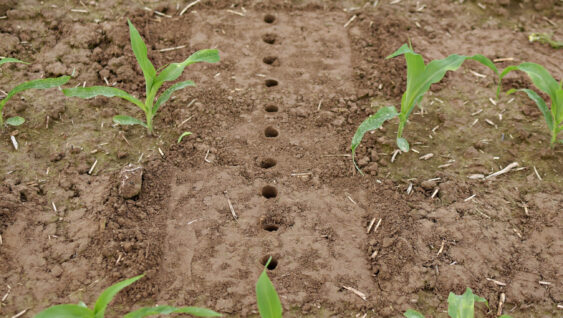
Yeah, you raise a fantastic point about the earlier planting. We’ve got folks trying to get out to the racetrack as soon as possible and having warm soil temperatures, that’s one of your best partners to help make sure that seed sprouts and emerges. A lot of research shows that having that residue managed in a certain way, maybe clearing that seed row out a little bit, managing the thickness of that residue down a bit, all of that can help push warmer soil temperatures when you go to plant, even if it’s earlier than you’ve ever done it before, that residue can either get in your way or you can get the benefits, manage it the right way and still have your optimum planting conditions. Cassie, let’s talk about how we manage residue for a little bit because there’s so many different ways. If you go to a farm show, you could go on a whole day just looking at residue management equipment, you have the flail mowers, you’ve got the choppers and the spreaders, you’ve got all the discs you can put on an implement now, you’ve got the row openers and then you get into some of these other options.
[00:10:32] Karl Wyant:
I came from the school of nitrogen addition where, oh, you’ve got winter wheats on the field, all the straw, and we can’t burn it, let’s put down some UN32 and speed it up. And then I think more recently, you’ve got some of these products that are out there that talk about, “Hey, we can help manage residues.” Cassidy, how does a grower work through all of that, just that many options for managing residue and not go crazy from adding more complexity to their system?
[00:10:56] Cassidy Million:
It’s really looking at your operation, what fits into your operation and also what fits into your system in terms of your cropping rotations, et cetera, and how much residue you have. There are a lot of great options and also it’s not just that, it’s what’s your soil look like? Do you have a hard pan? Are there reasons you should go out and strip till or use different tillage types that can also help manage residue? But I think we also need to distinguish between managing the physical residue visually and actually breaking it down, because those are two different things. And I think in Ag, we talk about it hand in hand and they truly are we’re not talking the same thing. Just because you bury it underground and you can’t see it doesn’t mean that you’re decomposing it and you’re actually utilizing it to your benefit.
[00:11:34] Cassidy Million:
You’re just hiding it from your eye, right? There’s a lot of different ways we can break this down, but there are some people who tillage is the best way. Strip till is the best way, clean out that bed. They’re not going to get around it. That’s their soil type. That’s how their operation works. And even when we’re talking about no-till and pushing that, you can still get the benefits, you can still build soil health. There’s really great examples out there that you can do these minimal tillages that can help you. And then you come to, back to UAN. I know people love to put nitrogen out and they also say carbon and nitrogenuration we’re going to help feed
[00:12:16] Cassidy Million:
A question again, why are you using it then? Is it beneficial to other practices you’re doing? Maybe questionable, but let’s really dig into using your dollar wisely to make sure we’re truly breaking it down, not just hiding it from us. And I think that’s where we need to break that paradigm and ag on how do we break it down and it’s time temperature moisture and microbes at the end of the day.
[00:12:37] Karl Wyant:
So your viewpoint on managing residue is not so much shredding it, spreading it, flailing it, the physical impact on the residue, you’re thinking more of how do I put the microbes to work to sort of chew on that detritus or that residue and start really releasing what’s inside of those plant cells? Is that correct? That’s your viewpoint, that’s the more important relationship to focus on?
[00:12:59] Cassidy Million:
Exactly. Again, it’s just when you’re doing those methods, it’s great to clean it up. It’s great to get a clean field, make it look nice. If that’s what you’re after, it’s a great option to go for. It gets you a nice seed bed. But if you wanna get additional value out of it, you truly gotta decompose it, right? You gotta decompose it, you gotta get that organic matter, you gotta start breaking down nutrients, you gotta get the soil system working for you to help break that down. And when you talk about that, that’s where we come back to microbes. Microbes are the only thing that are gonna drive that decomposition because they actually secrete that enzyme to break down the complexity of these residues, which is all hemicellulo, cellulose, pectin, lignin that makes that up. What can you do to drive microbial activity that’ll actually drive that decomposition to get the additional benefit, not just a pretty field or a clean seed bed?
[00:13:47] Karl Wyant:
Yeah, that’s a great point. There’s some work that’s been done out there showing that e- even under snow cover in winter, there’s microbes that are still showing up to work every day and decomposing things, including your crop residue. You might be in the house drinking hot cocoa and watching who’s your football, but your microbes are still looking to do their jobs and that’s to make a living chewing on carbon and releasing all the contents of the plants. That’s been a fun part of this residue conversation is just showing how active these microbes are year round if they’ve got food, if they’ve got their food stuffs to show up to work for and that a grower can really kind of treat those microbes almost like a livestock on the field and the soil, even in late winter, early spring. Cassie, what’s your viewpoint here? We’re talking about managing residues.
[00:14:32] Karl Wyant:
How do we find the value of managing residues? Where’s that incentive to look at residues differently? We’ve talked about some of the theoretical sort of reasons to better manage residues and that sort of paradox of residue management. Where do you find the financial value? Where’s the ROI? Where’s that incentive for a grower to think a little bit differently?
[00:14:49] Cassidy Million:
I think across the value chain, you’re gonna see ROI from managing your residue. I think we start operationally. If you’re reducing pillage, if you’re doing no-till, you’re gonna see that labor reduction costs, you’re gonna see a fuel cost immediately right there off the bat. Number one, starting there. And then we talk to the actual physical residue, breaking it down, utilizing what’s in it, you’re gonna build your organic matter, you’re gonna build your soil health, you’re gonna have those nutrient cycling back in over next spring. That together though, again, is not gonna pay off more than likely the next planting season, but it’s building that soil health that eventually you can do less applications across the field in the future. It’s a tool in the toolbox to drive that and then to yield, you’re gonna get that better seedbed and I can’t beat the drum enough about these warmer soil temperatures.
[00:15:34] Cassidy Million:
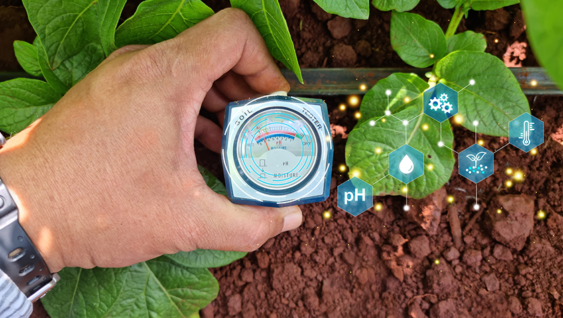
We’ve done study time and time and again across the US, Canada and you see that. It is so impressive and it’s almost a benchmark I use now. If you’re gonna buy a value add product for residue, if you don’t see a soil temp increase, probably not the best quality product. Look at that as a way to manage it because a lot of people look at visuals, which are great. They walk past the field, that one looks clear or not. But if you truly get out there and walk it, feel it, and start measuring temps, you’re gona get a better idea if those things are working. There’s gonna be value across the entire value stream that you’re gonna get from equipment to yield, also to labor and just building that soil health over your fields season after season.
[00:16:12] Karl Wyant:
Yeah, fantastic. Too much residue, you’re gonna have trouble, not enough, you’re gonna miss those benefits, but figuring out the sweet spot for your operation in terms of releasing the nutrients, getting that soil health and soil carbon, getting the water, pull the capacity improvement, catching that snow that blows through and keeping it on the field. I live in Arizona. We don’t have any snow. We just want this soil to not blow away. That’s our big deal. Yeah, keep it stand and cactus in place. It’s such an interesting space and I think it’s, in my mind, agronomists and growers, folks that are listening to this podcast, we have spent so much time thinking about the seed chemistries, you know, honest seed, seed treatments, seed genetics, varieties, fertilizer programs, nutrient fertilizer programs, in season fungicide management and adjuvants. Think of all the things that you’ve been exposed to in your career, but we’ve never really been trained on residue management.
[00:17:01] Karl Wyant:
I think it’s this frontier that just has this wide open space, whether it’s physical management of the residue, whether it’s the microbial management, you’re managing microbes now, just such a fantastic way to think about that last chunk of the season and driving more value across the chain to promote a better field the next season. I think it’s fun. Let’s chat about a couple more things here, then we’ll wrap it up. We’ve talked a lot about tillage and mold boards, some of these more conventional implements and practices. Where do these folks that are intentionally leaving lots more residue on the soil like the no-tills, the strip-till folks, how are they managing this? They are really running into this paradox of residue management, but they’re being successful, obviously. What are they doing that’s so different? How are they making that plan to work through the resident?
[00:17:48] Cassidy Million:
I think they understand, right? They understand that your season doesn’t end at harvest and also your season begins at harvest. It’s switching that idea of you don’t just shut off the combine and you’re done, it takes that extra effort. There’s a lot of different ways you can manage it. They’re doing practices in the field. They are chopping it up potentially in some of those cases that have really heavy residue, but they’re doing applications. They’re doing value added applications to help drive that decomposition as soon as possible. And I think that’s the winner here is you have to be chasing that combine. As soon as it gets off the field, the longer time you have to decompose, the better, right? You shorten those decomposition windows. As soon as that combine’s out of the field, they’re chasing it with an application to drive decomposition as soon as possible.
[00:18:31] Cassidy Million:
And then also coming back in the spring, there’s applications that can help you continue that decomposition before you plant as well. If you’re going out with any sort of burndown, again, driving that additional application to make sure you’re getting those microbes active to continue pushing that. And I think for them, again, it’s just a mindset shift they have already taken and they’re successful. There’s no-till practices out there that are not as successful because they haven’t adapted these practices well. It’s really heavy management, but it does pay off and I think you have to see it to believe it. You gotta put in that extra effort, you gotta see that it breaks down and it’s not just visual, but it’s actually driving that entire ecosystem throughout the season.
[00:19:07] Karl Wyant:
Yeah. Grab that soil thermometer, go prove it to yourself on a residue managed field versus a maybe more kind of set it and forget it kind of field. It should be warmer in the spring and you should be happier. Interesting. A couple more questions here. The nuances, right? That’s, I think, where we’re going into some challenges. You mentioned with strip till and no-till. Any other nuances worth considering for residue management, got a big listener base, Midwest, Western Canada, places that are colder through the wintertime. We also have a big listener base that’s down in some of these areas that are drier that we tend to lose microbial activity just because we don’t have enough moisture in the system to keep them alive. They just shrivel up and go to sleep on us. Any advice on just managing these different conditions that can impact the microbes that are in the soil?
[00:19:49] Cassidy Million:
Both of those places are difficult, because again, time temperature and moisture, that controls your decomposition because it controls that microbe activity. And those are all things that are difficult to manage outside of mother nature. Up in Canada, again, it’s chasing that combine. How quickly can you get out there and do an application to drive that activity as soon as possible? Whatever you’re doing in terms of mixture, if you’re using humic acids, if you’re doing those things that are gonna help promote soil health, help hold nitrogen, build a house for those microbes to thrive, doing that as soon as possible is the key. I have a lot of people ask me, “Is there a break of I shouldn’t apply because I know a first frost is gonna come soon? Should I not apply?” And I think it comes back to what you’re doing. What product are you choosing?
[00:20:31] Cassidy Million:
How are you applying it and can it withstand it over winter because just because you don’t see it come spring, go out early summer. It’s still there, it’s still being active. You’re still gonna get that nutrient lease into the season, which I really think is a sweet spot for the nutrient release with these residues. And then down south, it’s looking at what are you applying. If you’re, again, chasing that combine putting something out, look at how much your carrier you’re putting out. Are you adding enough added moisture? There’s been a lot of studies looking at different rates of carrier volume of water and it’s a game changer. So look into that. There’s a lot of studies around the south and the corn belt that have been very interesting on pushing a heavier carrier volume to help get some of that moisture out there to activate those microbes quickly as well.
[00:21:14] Cassidy Million:
There’s little tricks to the trade we can do. And then again, it’s not just managing it in the residue. You think about managing residue, you need soil health. Whatever’s in your soil’s also gonna drive that. So what can you do with end season to also continue to promote that soil health that’ll kickstart and fall, right? It’s an ecosystem, not just that one-time application focus.
[00:21:32] Karl Wyant:
Cassidy, is there anything that we miss in our conversation that you wanna add about residue management?
[00:21:37] Cassidy Million:
Oh, goodness. There’s so much we could talk about around residue management.
[00:22:28] Cassidy Million:
And these microbes, they’re diet. They love to feed on something 24 to one, so that’s why you see alfalfa, you see soybeans get taken away really quick because they’re happy. They’re in their happy spot. That’s like their big math of food. It’s easy for them to break down. They love to eat it. They’re gonna go after it
[00:23:13] Cassidy Million:
And then people freak out on that as well. It’s okay, they’re gonna die. Microbes die, it’ll come back, but it’s again, timing that on how do you time it correctly so we’re having those nutrients, we’re having those soil temperatures right when you need it and it’s back to that ecosystem model.
[00:23:28] Karl Wyant:
Thanks for bringing that up. When we’re thinking about managing the microbial partners, one thing I think where we are starting to shift our brains a little bit is thinking about what’s limiting my microbial activity right now. Of course, we talked about temperature in the winter and the fact that microbes are still showing up to work in January. They’re under the snow layer. It’s just warm enough for them to go to work. So temperature could be a challenge. We’ve typically thought about microbes in the nitrogen, adding some nitrogen in at your burn down or running in an irrigation cycle at the end of the season to help promote decomposition. We’re adding labile carbon, so just like an easy to eat carbon source to kinda rev up kinda like spraying carburetor fluid into the carburetor, just rev that engine hard, get it going. And then you just mentioned that some folks are adding water.
[00:24:12] Karl Wyant:
They’re just putting extra carrier water in the tank to make sure those microbes aren’t thirsty at the end of the season. Really interesting way to think about, I’m at the end of my season, I need my microbes to go to work. What is limiting them right now and how can I help keep them going so that I can break down more residue from a microbial standpoint, release the nutrients, get the soil health, get those glues and things that kind of restructure soils. I think that’s a really just different way of managing soil and connecting it all the way through that planting season all the way through harvest. Cassie, we really appreciate you showing up on the podcast here and taking time to walk us through what I think you and I consider one of the most exciting things in agronomy right now is residue management.
[00:24:52] Karl Wyant:
Hopefully there’s somebody in the tractor cab right now, hooten and hollering and agrees with us here. Super exciting. Thanks for taking the time and walking us through these management practices. Listeners, if you’d like to see more insights on crop residue management, check out Nutrien-eKonomics with a k.com. Please keep listening for more insights from our agronomy team and our expert guests in the next segment.
[00:25:15] The Dirt:
Farming isn’t farming without questions and now there’s a place to go for answers. At economics, an entire team of agronomists are ready and waiting to help for free. No question is too big or too small. Visit nutrien-eKonomics with a k.com and submit your question with the ask an agronomist feature. How does soil moisture impact a crop’s ability to take up potassium?
[00:25:42] Lyle Cowell:
The primary problem that comes with dry soil is the slow movement of potassium within the soil. Potassium just doesn’t move very much or very rapidly within the soil pores, moves through the process of diffusion. And if the soil is very, very dry and if those pore spaces are simply empty spaces of air, then it becomes a long pathway for that potassium to slowly make its way to a root system. If there’s water in those pores, then the roadway to the roots is a lot shorter. That is the primary problem that we face in soils is if the soil’s dry. There are other factors that can come to play. Certain clays open and close their lattices, their layers as soil becomes wet or dry and potassium can become entrapped within the layers of clay and that is probably a factor that we don’t completely understand, especially throughout geography of North America.
[00:26:44] Lyle Cowell:
But nevertheless, those are the two reasons that we suspect that potassium becomes an increased deficiency risk in dry conditions.
[00:26:54] The Dirt:
If you liked what you heard today, share this podcast with someone who’d enjoy it, your neighbor, a friend, or your crop advisor. Your support helps us keep these conversations going. Don’t forget to like, subscribe and leave a rating wherever you listen.