






Read Full Transcript
[00:00:07] The Dirt PodKast:
Welcome to The Dirt, an eKonomics podcast bringing you the down and dirty agronomic science behind growing better crops and bigger returns. Backed by nutrien-ekonomics.com, we break down the latest research, news and insights to help farmers make better business decisions. Let’s dig in.
[00:00:32] Alan Blaylock:
Welcome back to The Dirt, everyone. Glad you could join us. I’m your host, Dr. Alan Blaylock, senior agronomist with Nutrien. Today, we have a very special guest, an old friend of mine, Dr. Antonio Mallarino, Professor Emeritus of Soil Science from Iowa State University. And he and I have known each other and worked together on different things for many, many years, going back all the way to graduate school. It’s really a pleasure for me to have Antonio on with us. We’re going to talk about an issue that is important really everywhere, but Antonio’s going to give us some special perspectives from the US Corn Belt and his experience in Iowa and neighboring states.
[00:01:09] Alan Blaylock:
We’re looking forward to our visit with him. We’re going to talk about soil pH today and a bit about managing soil pH and how to deal with that. Antonio, let’s start by having you tell us a little bit about yourself and what you’ve been doing and your current status and things you might be working on today or looking into the future. I know you’re retired, but I’ll let you talk a little bit about what you have done there at Iowa State and where you are today.
[00:01:35] Antonio Mallarino:
I started to work on pH and lime many years ago when I was in Uruguay. I was assistant professor in the University of Uruguay and I had a project with lime and for alfalfa there in 1975. That’s a long time. Then when I came here in the United States, I focused mostly in phosphorus and potassium, not much as [inaudible 00:01:58] pH and lime, but I have been in Iowa State almost 40 years. But about 15, 20 years ago I decided that I had to get into lime. I had several projects on farm, strip trials, working with farm, long-term experiments at research farms, things like that, mostly with corn and soybean. I didn’t do much with alfalfa or forages here in Iowa, but it was mostly corn. My projects involve how to use variable-rate for lime application, soil sampling methods. I also look at sources like ag lime, pelleted lime.
[00:02:33] Antonio Mallarino:
Actually, one of my last projects, I’m retired now, one of my last project was a large study with pelleted lime compared with ag lime. I’ve been looking at what is the optimum pH for corn and soybean mainly in Iowa, although there had been work before that needed to be updated. So that’s what I have been doing, in addition to potassium, micronutrients, phosphorus, phosphorus and water quality, all those things. But lime, really, I like this issue because you know what? Lime is like the fourth or fifth priority with farmers usually. They always think about nitrogen, of course, because you can see the nitrogen deficiency. Phosphorus, potassium, of course, you can see potassium deficiency. But when there is too acidic pH, there’s no symptoms. When the prices are not very favorable. When it’s a drop, it’s lime. I think it’s very important, especially in the Corn Belt. So that’s the story.
[00:03:32] Alan Blaylock:
Okay, great. Appreciate that. Long history here. Certainly, we could have a lot to talk about, but let’s start, Antonio, by briefly describing what soil pH is. What does that mean when the farmer sees soil pH on his soil test? And what are the effects of soil pH? And what do we watch out for in that measurement?
[00:03:53] Antonio Mallarino:
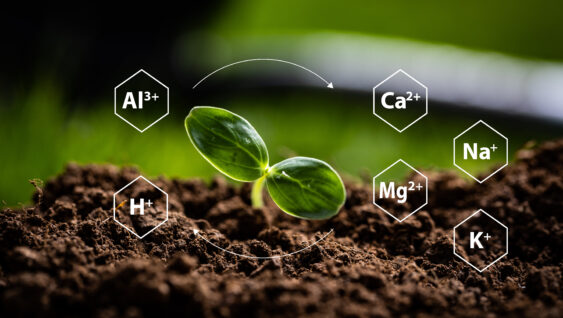
Well, soil pH, strictly speaking, in scientific terms, is the activity of hydrogen in the soil solution. It’s not even the concentration, it’s the activity. And that sometimes is enough when there are too many. That means the pH, remember that pH is mentioned a negative low scale. One is very acidic. We have pH below seven or below six. When it is alkaline, we have pH above seven. But it’s not just the pH the important thing because even though the concentration of the activity hydrogen ions is one thing that affects especially the roots. The roots uptake nutrients and the membranes of the root functioning. That’s one of the reasons that acidic pH is not a good thing. But also, the pH affects other things in the soil. One of the most important, which is not an issue in the Corn Belt is that acidic pH, we sometime have a toxic changeable aluminum. This is very common in soils in the Southeast. And that’s aluminum and high concentration is toxic to plants. That’s a problem.
[00:05:02] Antonio Mallarino:
Also, with extremes pH, either very acidic or very alkaline, we may have some impact in the availability of other nutrients. For example, some micronutrients became not much available in very acidic pH or in very alkaline pH. We also have phosphorus extreme acidic pH. We have lower soil phosphorus availability and extreme high pH like in calcareous soils. When we have calcium carbon, three calcium carbon, we have problems too. And then there is also impact on the microbes, how they work the biology in the soil. The most clear impact is in nitrogen fixation through symbiotic nitrogen fixation by legumes like alfalfa, clovers, things like that, soybean. Those bugs don’t like acidic pH. There are many reasons for which we should be aware of soil pH and monitoring, watching over time because in many soils it’s okay, but once we start applying heavy nitrogen rates, things like that, we get acidification very fast.
[00:06:09] Alan Blaylock:
That’s great. Great overview. That leads me to a follow-up question. On the soil test, how often should a farmer be soil testing for soil pH? Is this something that changes very rapidly like some of our nutrients or is this something that’s fairly stable? What’s your recommendation to farmers in how often they should be looking at that and what are the methods used to monitor that?
[00:06:30] Antonio Mallarino:
The vast majority of the farmers, when they do soil testing, they do pH. They do for phosphorous, potassium, and they include pH. Now the issue is, do they look at the results and they do something about it? Most farmers, at least in Iowa and here in the Western Corn Belt, they take soil samples every four years, the majority, but there are a few that they sample every two years too. The issue is not the lack of testing. The issue may be if they pay attention, the farmers or the consultants pay attention to the pH results.
[00:07:06] Alan Blaylock:
In your experience, let’s take a look back at maybe the last five to 10 years, are you seeing more pH problems emerge? Are farmers generally taking care of that problem and managing for appropriate pHs for the crops they’re growing or are we seeing conditions maybe worsen with regard to the effect on crop productivity?
[00:07:28] Antonio Mallarino:
I thought when I started this [inaudible 00:07:31] about 15, 20 years ago that we were okay. And in fact, in order to find fields with acidic pH in order to do my experiments, I had to look a lot because many farmers apply lime. But [inaudible 00:07:45] surprised when we started doing in the ’90s grid sampling, we started seeing that when they sample by soil type, seems that pH is okay. But once we start doing grid sampling, we start seeing that there are some spots that are low in many fields. I believe that it’s not a huge problem, at least in Iowa, Minnesota, Illinois, Nebraska, but I don’t know in other states east or in other parts of the world, but they’re aware of it and they usually manage pH and lime well, except for this issue that not everybody uses variable-rate. I am well known in the United States for this crazy guy that believes everybody should do grid sampling on variable-rate application.
[00:08:29] Antonio Mallarino:
So you do that, you will find some things. But the most important thing Alan, is what I mentioned at the beginning. When the farmers are concerned about the economic of crop production and the benefits, the first thing they threw away is lime. That’s the first. Then maybe phosphorous or potassium. Of course, they never cut down on nitrogen because they can see that it’s important. That’s my concern actually now in these days. I believe that farmers may be more slow in terms of maintaining adequate pH. And then, this is of course very important when there is manure applications. In Iowa, Minnesota is lot of manure or liquid swine manure being applied and lots of nitrogen for corn. When liquid swine manure is applied and nitrogen fertilizer for corn, even with console rotation, but especially with continuous corn, that’s when the acidity dives down really quick. And I will say that sampling every two or four years is essential.
[00:09:32] Alan Blaylock:
You mentioned grid sampling and we all recognize that soils are variable and certainly in Iowa, this rolling landscape, this prairie landscape with hills and valleys and alluvial areas and eroded hilltops and quite a variable landscape. Do you recommend some kind of variable or grid sampling for pH and lime management?
[00:09:54] Antonio Mallarino:
Yeah. I work a lot with phosphorus, potassium and lime with variable-rate. I recommend it 100%, without absolute any doubt for phosphorus and potassium because most of my research have shown that because of so many years of management of cropping, of applying P and K fertilizers, the variability in a field on phosphorus and potassium doesn’t follow much the landscape of the soil types. We see tremendous variation in phosphorus and potassium soil tests within these soil map units. Unless there is a farmer that has 80 acres, 100 acres and has been cropping that field for 40 years, I think that grid sampling or a very good management zone sampling, the issue is that not many do a very good management zone sampling. Grid sampling is easy to do. You can send a kid with a four-wheeler to sample every 2.5 or five acres or something like that.
[00:10:52] Antonio Mallarino:
And I think it pays. There is absolutely no doubt, the cost of soil testing, sampling and testing has remained about the same over the years and hasn’t increased too much. For pH and lime, in some situations, in some soil associations, the landscape or the sampling by soil type as it is called, usually works well, but not everywhere, especially where there have been lime application. And in Iowa for 50, 180 years of lime application and the uniformity of the lime application, many people used to apply lime. Yeah, put lime on the high ground, not in the low ground, things like that. In many fields, I think that the use of dense sampling and variable-rate for lime, it is important. And in fact, I believe, of course, there are no good statistics about that, but when I talk to co-op farmers, there are more farmers using variable-rate for lime than for P or K. Seems that they have understood the importance of good pH and lime management.
[00:11:54] Alan Blaylock:
Certainly if we have a variable that we can manage in response to the soil variability, well, it seems to make sense and particularly something like lime where we don’t want to apply too much. We want to avoid applying lime on areas that may not need it. With that preface, let’s talk a little bit about managing this soil pH issue. If we have a pH problem, what do we do about it? We’ve used the word liming. What does that mean? What are we trying to achieve? What kinds of materials do we have available? Start with describing generally what is liming and what are we trying to do with that in terms of managing soil pH?
[00:12:32] Antonio Mallarino:
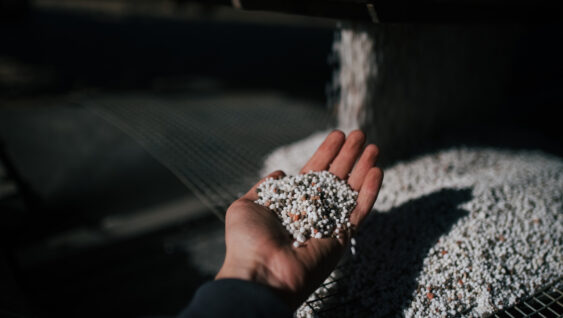
Well, liming it means add something that counteracts the acidity in the soil. The most common material used for many years has been ag lime, which ag lime is really limestone finely ground and they supply [inaudible 00:12:48] like that. That’s the least expensive and more common. And the pricing varies a lot, depending where the quarries are and the distance from the quarry or from the distributor pile to the field because the transport is something that is expensive, especially now with the gas prices that we have. But there are other products. Pelleted lime used to have bad filling because of course it’s more expensive than granulated or pelleted. But in the ’80s and early ’90s, there were several experiments in the United States, mainly in the East Ohio and Eastern. And the pelleted lime was really bad. Didn’t work well. But about 15 years ago, some company in Iowa that they have quarries in Iowa and they manufacture the pelleted lime.
[00:13:36] Antonio Mallarino:
They asked me to do some research and I didn’t want to. I said, “Ah, you know, that’s more expensive. Farmer will not use it, you know?” Blah, blah, blah. And I published a couple of papers with that. And oh Jesus, you see that pelleted lime is fantastic. There is this quarries in Northern Iowa. And the key is, I discovered when you read [inaudible 00:13:56] papers and things from the ’80s and ’90s, they don’t say exactly, okay, pelleted lime and what? How was made? I was so frustrated with that. With this guy, I ask a million questions and the thing is that they get the lime, the ag lime from the quarry and they grind it. They crush it very fine, which I don’t remember the numbers now, but most pass 100 mesh and then they granulate it. I tell you, it’s fantastic. It’s almost in my experiments, the effective calcium carbonate equivalent of the pelleted lime is higher than the one in ag lime. And is almost, the efficiency is almost the same as pure calcium carbonate. It’s amazing.
[00:14:37] Antonio Mallarino:
Now, it is more expensive, but some I know because I know farmers in Iowa, some farmers are, instead of applying large amounts of lime once every six or eight years, they’re applying lower rates of pelleted lime more frequently. And of course, there’s no magic. You need to put some lime to raise that pH. But one of the advantages of granulated pelleted lime is that the application is much more uniform than the ag lime. I have not done experiments to prove that, but I know I’ve been in the field. When you go with those applicators or with spinners or whatever, with 60, 70, 90 feet when it’s windy, who knows where most of the lime is going. However, when you use these air tubes, delivery systems and granulate it, that’s a potential advantage of pelleted lime.
[00:15:30] Antonio Mallarino:
Now, something similar may happen, although I did not study it, with liquid lime. See, there is liquid lime that of course, the application has some issues, but I believe that liquid lime may be as good as pelleted lime. Then, the other thing that is readily available in most states here in [inaudible 00:15:50], we have a pile here just five miles north of [inaudible 00:15:53], is the lime from water treatment plants. And that’s an excellent lime material because to measure the effective calcium carbonate equivalent is more than the ag lime because it has not only calcium carbonate, but also have calcium hydroxide, things like that that has more power to neutralize acidity. This is a great, and I get the question all the time. The problem with that product is that usually it’s wet or it’s dry, but then you have all these clogs things.
[00:16:22] Antonio Mallarino:
So you’re applying, I have some pictures, you see where that lime material is applied. I mean, you see all this rocks. How is the actual efficiency of that? That’s the problem. Now, if it were dry and at least broken some of the big clamps, it could be a very good source. Of course, another issue that always come up, farmers are totally confused about it, is gypsum. The core gypsum is a great source of salt for crops, especially in Iowa that you dig anywhere, you find gypsum underneath. But people have this idea that gypsum increases pH because it has calcium. Gypsum does not increase pH and doesn’t acidify either. Many people are confused. Sometimes we see a farmer applying huge amount of gypsum and they believe that they’re supplying sulfur and also fixing some soil properties and changing pH. Well, gypsum doesn’t change pH.
[00:17:19] Alan Blaylock:
I’m glad you mentioned gypsum because that often comes up in these conversations. And yes, it’s a calcium source. Yes, it’s a sulfur source, but it’s a neutral salt. It doesn’t have an anion in accompanying the calcium that will neutralize the acidity. We’ve mentioned several materials. We’ve talked about lime, calcium carbonate, the pelletized or granular lime and the liquid lime. We’ve kind of focused on those materials. Are there other things the farmer might be able to use? Obviously, it’s dependent on availability, but what other products might we use and how does the farmer evaluate the effectiveness? You mentioned the term effective calcium carbonate equivalent. How does the farmer evaluate that? What are the properties of the material that determine how good a liming material something might be?
[00:18:08] Antonio Mallarino:
There are several analysis of lime, but in Iowa we call it ECCE, Effective Calcium Carbonate Equivalent. In other states, they call it CCE. They use different power acidity reduction powers and different states have different names. But essentially, the analysis is fairly consistent across states in terms of the two components. One is an analysis that tell you how much calcium carbonate equivalent there is in the lime, essentially by adding an acid. I’m not going to go in details, but that’s one thing. Something very important for lime and for increasing pH is the fineness, how coarse or how fine in the ground it is. Because as I said for the water treatment plants, lime, if you put clogs there, they don’t dissolve and then the [inaudible 00:18:58] were not very good. What has been done for decades is this particle size analysis. It used to be mostly a dry sieving.
[00:19:06] Antonio Mallarino:
Now it’s mostly a wet sieving where you just put a [inaudible 00:19:11] lime as it comes and then you sieve it through several sieves, different mesh size. And then based on those things, that’s where the difference between states come is to use some magic formulas in order to decide, okay, if I have so much percent of this fineness, so much of that and so forth, then that assign a number that gives an idea of defining [inaudible 00:19:35]. What this effective calcium carbonate equivalent measurements of liming products mean is a combination of the two things because you could have lots of limestone that it could have 100% calcium carbonate equivalent just by the reaction with acid, but it may not be ground enough in order to do that.
[00:19:55] Antonio Mallarino:
And that’s one of the questions that arose with pelleted lime, because of course in lime, it has to be fine. Yeah, you can see some dust blowing, but it has to be fine. So when pelleted lime came, which is granulated, they say, “Okay, wait a minute. Will that be efficient? Will the lab ECCE analysis really show when it’s applied that granulated in the field? Will it really be effective?” And it is. Those are the two things, Alan, is a key. And then they express that ECCE, 30 calcium carbonate pounds per ton or it’s a percent. There is quite large variation in the capacity to affect a pH change. In Iowa, and I believe in other states of the North Central region too, by state law, every single liming material that is sold in the state, they have to have this effective calcium carbonate analysis.
[00:20:49] Antonio Mallarino:
And the method is stated by the Department of Natural Resources. I’m sure in Minnesota it’s the same. When a farmer buys lime from some dealer or from some quarry directly, most of the time they come with that analysis. They should be able to do all this calculations. That’s the other issue we haven’t talk about. How do you determine how much lime you need to apply to get to a optimum pH that you want? That’s another thing. That’s another part of it. The soil you should measure, not just pH, but you should measure something else that gives you an idea of the potential to counteract a pH change. In most states, with exception of one or two states, that’s buffer pH.
[00:21:32] Antonio Mallarino:
And that’s something that when I told you that most farmers get pH in their analysis every two or four years, automatically [inaudible 00:21:42] in labs, they do pH and buffer pH. You can have not only the pH, but also the buffer pH, which indicates how much liming you have to apply. That’s another thing that I have been working for years because even consultants sometimes get confused. The pH measurement is useful to decide if you need to apply lime or not, but the buffer pH is what it should be used to determine a calibrated buffer pH based on research, of course. That’s what should be used to decide how much lime you should apply to get to a target pH.
[00:22:18] Alan Blaylock:
You hit on several very important concepts there. The soil pH tells us if we have a problem. The buffer pH tells us how much we need to apply to fix the problem. You talked about these different materials. I’m glad you mentioned the labeling requirements because just like fertilizers, we have to put the analysis of the fertilizer on the bag or on the bill of sale for that fertilizer and accurately represent what that material is. And the same thing applies to these liming materials.
[00:22:46] Alan Blaylock:
And as you mentioned, different states may have a little bit different variation on how they do that, but there’s a legal requirement when they sell that product to provide that Effective Calcium Carbonate Equivalent or whatever measure that state uses to guarantee that the purchaser, the farmer, gets the product that he’s wanting and then he can use that information to go back to that buffer pH and the recommendation on the soil test and determine how much you need. I’ll try to pull all that together, but you talked about a lot of very important concepts there, Antonio.
[00:23:15] Alan Blaylock:
I want to talk about another issue of soil pH that is not so much a problem in the Midwest as… In fact, it’s probably quite an uncommon problem, although I know it does occur in some places in North Central Iowa and in Southern Minnesota, but it’s a very common problem when we move further west, and that’s the issue of high soil pH. And I sometimes get calls and say, “How can I reduce this soil pH? I have a pH of seven and a half or eight, and that’s too high and I need to reduce that.”
[00:23:45] Alan Blaylock:
First of all, is that really an issue and where might we see those issues? And can I practically do something about that? Is that something I want to try to do? Because these are soil chemistry questions. And in the Western US, we often get that question about how can I reduce my soil pH? And obviously, farmer eKonomics are very challenged right now. Everybody’s wondering, is this something that I can do? Does it have an economic benefit to me? Address this issue of high pH. Is it a problem? If so, should I try to change it and how do I do that?
[00:24:18] Antonio Mallarino:
I’m smiling because I was hoping you were not going to ask me that. But before we go to that, because it’s a bit complicated, I remember something when we talk about the pH and buffer pH. We are in the Corn Belt in the North Central region and that’s important. However, if you are in some states in the south, the Carolinas, Alabama, some of those states, there may be soils that they have this exchangeable aluminum there.
[00:24:46] Antonio Mallarino:
And you know what? Research have shown for a long time in those states, the ideal may not be just to use buffer pH and raise pH to six, five or seven or things like that, but they should measure the exchangeable aluminum. And then for liming, lime an amount that will neutralize, eliminate the exchangeable aluminum for the solution because some of those soils are very fragile. They are sandy, then some things.
[00:25:15] Antonio Mallarino:
And you put six tons of lime and you raise pH to six or seven, and you create a disaster because you are inducing deficiencies of micronutrients, all kind of things. Remember, the age and buffer pH, yes, very important in the North Central region, the Corn Belt, but you are in other soils. The measurement of exchangeable aluminum and lime to neutralize that, may be the best agronomic practice. Sorry for the addition, but think it’s important.
[00:25:43] Alan Blaylock:
That’s good. It’s good information.
[00:25:45] Antonio Mallarino:
The issue of the reducing pH, no way, Jose. I mean, don’t even try. That’s what I tell people. Now, there are a couple of extension publications in Wisconsin, Illinois or Minnesota that they explain there are two kinds of high pH. The most common here in the North Central region in the Corn Belt is high pH because of calcareous, active calcium carbon or magnesium carbon. But there is also in some areas that you have saline, you have sodium, you have high sodium salts and high sodium. And in that case, your pH may go up to 10. The highest pH you can get because of calcium carbon.
[00:26:25] Antonio Mallarino:
It’s about 8.2, 8.3. You can saturate the soil with calcium carbonate. It will not go above that. But if you have an alkaline soil, then pH could be 10. So what do we do about that? When the pH is high because of calcium carbonate, it’s almost impossible, economically, to reduce that because you have to apply so many pounds of, for example, elemental sulfur or nitrogen, some ammonium nitrogen in order to acidify. It’s not economical. I mean, it’s impossible, especially in soils like in the border between Minnesota and North Dakota that you can have soil with 30, 40% calcium carbonate.
[00:27:04] Antonio Mallarino:
Here in Iowa, maybe we have 15, 20% calcium carbonate in some soils. So that’s not a good idea. People have thought for a long time, what if you can acidify in bonds or something like that so you can effectively reduce the carbonate there? Which is important because we have, for example, iron chlorosis in soybean, so it’s soybean in calcareous soil. You see this yellow-whitish color early and that’s a problem, but acidification is not practical solution for those soils. And the best is to choose cultivars, varieties that are more tolerant to iron chlorosis.
[00:27:40] Antonio Mallarino:
Now, if we move to the alkaline soils because of sodium, there are a couple of things that can be done. I know about this because in our farm in Uruguay, we have some alkaline soils, a pain in the neck because the alkaline soils often is not just the problem of high pH, but also the physical properties are horrible. See, you have a sandy shallow horizon, and then you have a BT clay back there that could be 50, 70, 80% clay. And then there is a problem because of the moisture management says they’re really [inaudible 00:28:16].
[00:28:15] Antonio Mallarino:
There is some research that in those cases, when there is fairly good drainage, internal drainage, you can reduce that pH by applying sulfur, for example, or even gypsum. Gypsum doesn’t change pH, but in this alkaline soil you have pH 10. When you apply very high rates of gypsum that exchange with the sodium and the sodium is retained by the soil less strongly than calcium. When you apply gypsum or lime, but gypsum, then you get this exchange.
[00:28:48] Antonio Mallarino:
And then if there is rainfall, [inaudible 00:28:51] and drainage, then the soil leaches out and then the pH go down. These are the conditions where I believe acidification is possible. But the important thing is when there is internal drainage. In our soils, in our farm, it was impossible. Well, there were small pockets in the field, so they were not much of a problem because with 70, 80% montmorillonite, smectite clay, nothing goes through there. There’s no good drainage of that sodium. There has to be some good drainage for gypsum or other things to reduce pH in alkaline soil.
[00:29:27] Alan Blaylock:
That’s, like I said, a common problem as we go to some areas of the Western US where we have both kinds of high pH soils. We have strongly calcareous soils, and we also have some areas with some sodic or alkaline soils where we do have to do something about that and drainage always has to be a part of that solution.
[00:29:45] Antonio Mallarino:
It’s not just the sodium. When there are sodium salts, it’s worse, but it’s also the salts in the soil. They’re too high. And sometimes with irrigation that becames worse because the salts tend to migrate and accumulate in the surface. Because I’m not in those areas, I haven’t done research myself and this what I heard was just because I had that experience in my country 50 years ago.
[00:30:08] Alan Blaylock:
Thank you. We’re about to our time here, time to wrap up and want to thank you for being here. A lot of great information available in this episode. We’ve heard a lot of very important things from Dr. Mallarino. As we wrap up here, is there anything that you would like to share with us that maybe we haven’t covered, some key take-home messages from our conversation that you want to leave with the audience to say, “Hey, this is important, remember this,” or maybe some ideas that we haven’t talked about?
[00:30:38] Antonio Mallarino:
To me, see, there are a couple of things important. One is that of course different species, different crops have different optimum pH and everybody knows that alfalfa is one of the ones that require higher pH, between six, five and seven or something like that. But then there is this misconception even in many crop consultants that liming of acidic soils is very important for soybean, and it is. But you know what, Alan? In all the hundreds, literally, experiments I’ve done in Iowa, the most reliable responses to liming come from corn.
[00:31:16] Antonio Mallarino:
Corn doesn’t like acidic soils. And often to tell you the truth, we don’t know why except the potential effect of the hydrogen concentration on the membranes of the root cells. But I see actually, more consistent responses to lime in corn, not in soybean. Now I’m not saying that soybean should not be [inaudible 00:31:39]. I’m saying, “Hey, watch out. You see, in corn is when we put lots of nitrogen.” That’s what acidifies. And when we have swine manure applied, not poultry manure. See, poultry manure, especially from egg layers, actually can increase pH. It’s the swine manure.
[00:31:56] Antonio Mallarino:
The liquid swine manure is the same as nitrogen fertilizer that have ammonium to acidify. In Iowa, that is a lot of continuous corn especially, and people apply nitrogen and lime. Watch the continuous corn because that’s where you may get a decrease. Of course, that depends on the buffer of the soil, but you may get a decrease from pH six to five in seven, eight years. I have measured that in continuous corn. Farmers, don’t forget about lime, especially if you are applying liquid swine manure and you have continuous corn.
[00:32:34] Antonio Mallarino:
Watch because you may be hit by too acidic pH in corn. And the other thing is what I said already. We need to advertise, we need to demonstrate farmers that, “Hey, it’s okay that you worry about nitrogen, you worry about phosphorus, potassium, things like that. But remember, you don’t see symptoms of acidic pH. You may easily forget and when the prices are not right, you may be doing a huge mistake by not watching pH and buffer pH and manage pH right.”
[00:33:07] Alan Blaylock:
Appreciate that comment, that reminder. I think we’ve all heard at various times, and those of us that had soil science classes, we all heard how important pH is because it influences virtually everything that’s going on in the soil from biology to chemistry, and even some physical things and certainly the crop itself. That’s a great reminder to everyone to pay attention to that soil pH on your soil test. That goes hand in hand with your nutrient management program.
[00:33:35] Alan Blaylock:
Well, listeners, we want to remind you all that you can find information on this topic and others at our website, nutrien-eKonomics.com. That’s eKonomics with a K. Lots of articles there. I know we have a number of pieces there on soil pH and liming and pH management and related topics, so check us out there. And as always, we thank you for joining us and look forward to seeing you back on a future episode. Again, this is Alan Blaylock and Dr. Antonio Mallarino signing off from The Dirt. See you next time.
[00:34:08] The Dirt PodKast:
Farming isn’t farming without questions and now, there’s a place to go for answers. At eKonomics, an entire team of agronomists are ready and waiting to help for free. No question is too big or too small. Visit nutrien-eKonomics with a K, .com and submit your question with the Ask an Agronomist feature. Are soil fertility ratios a good way to manage soil fertility?
[00:34:35] Alan Blaylock:
This is kind of a controversial issue that comes up from time to time, and these concepts have been around for a long time. And really, when we think about our 4R nutrient stewardship practices, balanced plant nutrition is an important component of our 4R nutrient management plans. We want to have things in balance. We don’t want to have large excesses of one nutrient or another, but sometimes in natural systems, they’re not exactly in the balance that we might find in plants. Now, ratios of nutrients are particularly important in the plant itself.
[00:35:12] Alan Blaylock:
In certain elements, find fairly tight ratios, and we have talked in other conversations about nitrogen and sulfur ratios and how it’s important to have those in some kind of balance. In terms of feeding forage to lactating cows, the potassium magnesium ratio is very important because when that gets out of balance, we can induce grass tetany into those lactating cows, something called milk fever. And so those ratios become important. Where the controversy comes in is, in how we use those ratios from the soil in achieving proper plant nutrition. And this is where the science becomes much more complicated.
[00:35:52] Alan Blaylock:
And the real challenge is that specific ratios in the soil do not necessarily translate to the appropriate ratios in the plant. And the science has shown us many studies over many decades that these ratios are not a particularly good predictor of crop response to fertilizer. And basically, what the research has shown is if we have adequate amounts of these nutrients in the soil, then the plants will do fine at different ratios, that there’s not a specific ratio that is important for plant nutrition. So as long as we have enough, the ratio usually isn’t important.
[00:36:29] Alan Blaylock:
Now, there may be cases where we have large excesses of one over another where, like I mentioned, potassium, magnesium for lactating cows, and we may need to manipulate that ratio through fertilizer application in order to get the right ratio in the forage, or I also talked about nitrogen and sulfur, and that’s another one that we may need to manipulate through fertilizer application. But by and large, a lot of these ratios don’t really correlate well with crop response to fertilizer.
[00:36:56] Alan Blaylock:
And simply what we mean by that is, they’re not good predictors of how much fertilizer of one nutrient or another that we need to add. Again, except in some special circumstances and certain ratios and where we have large excesses of one or the other, ratios of nutrients in the soil are not particularly informative of what we need to apply in terms of fertilizer. Within the plant itself, in plant nutrition, yes, we do want to have good balance of those nutrients. But again, the idea that there is one optimum ratio has not been well proven in research studies in the field.
[00:37:33] The Dirt PodKast:
If you liked what you heard today, share this podcast with someone who’d enjoy it, your neighbor, a friend, or your crop advisor. Your support helps us keep these conversations going. Don’t forget to like, subscribe, and leave a rating wherever you listen.