




Read Full Transcript
Mike Howell (00:08):
The Dirt, with me, Mike Howell, an eKonomics podcast where I present the down and dirty agronomic science to help grow crops and bottom lines. Inspired by ekonomics.com, farming’s go-to informational resource, I’m here to break down the latest crop nutrition, research, news, and issues, helping farmers make better business decisions through actionable insights. Let’s dig in.
(00:38)
Well, hello again everyone. Welcome back to The Dirt. We’ve got Dr. Alan Blaylock, senior agronomist with Nutrien. Alan, glad you could join us again.
Alan Blaylock (00:45):
Thanks, Mike. It’s good to be back with you.
Mike Howell (00:47):
Now, Alan, it’s the middle of August. I don’t know about it where you are today, but it is hot at my house. We have been over 100 degrees for the last three or four days. That trend is supposed to continue through the next three or four days and no chance of rain in the 10-day forecast. My pastures have turned brown. Can’t mow the yard. The cows are running out of grass. The people that have irrigation, their crops seem to be looking okay in my part of the world. Now, I know you’ve been doing a lot of travelling here recently and pretty much went coast to coast. What are the crops looking like where you’ve been?
Alan Blaylock (01:17):
I was in the Pacific Northwest, actually, in Idaho a couple of weeks ago. Crops look really good there. Even though they started out quite cool, had some cold stress early on, the crops there look really good. I was in Ontario, Canada earlier this week and things are good there, but again, a little behind because they were quite cool, very dry early, but they’ve had some good rains recently and things have shaped up quite well. I was also in Pennsylvania here last week and I thought crops look quite good there. They again had some dry early conditions but have had good regular rains in the corn I saw was looking really good.
(01:55)
So I know it’s not as good in a lot of other parts of the country. Parts of the Midwest have been suffering with drought. We’re going to look at some of those crops here in the next few weeks. I’ll be out looking at some research plots, maybe I can give you an update on that after I make those visits, but it’s very inconsistent across the country. Some areas have really good crops this year and some areas have very poor crops and there’s a lot in between, and I think everybody’s concerned about where things are going to end up this growing season and everybody’s watching the weather, they’re watching the heat stress, they’re watching the drought. And where I’m at today on the East Coast, it’s really overcast and not especially hot.
(02:34)
And in my home area there in front range of Colorado, in the Denver area, we have had such a pleasant spring and summer this year. In the more than 25 years I’ve lived there, I don’t think I’ve ever seen Colorado’s green as it is this summer. We’ve had abundant and regular rainfall and we haven’t had the water our lawns very often. The weather has just been about as perfect as it could be in terms of comfort and all of that for Colorado, and it’s been a little cooler than normal. I like to grow a garden and some of those things have not progressed very well because it’s been quite cool and some of the things I like to grow and need a little bit of heat, but overall it’s been a really pleasant summer in Colorado.
Mike Howell (03:14):
Sounds like I may need to come visit, Alan. This heat’s about to get to me down here. So Alan, we ask you on today to talk about a subject that’s a little bit controversial. This all started with a recent trip to the doctor’s office. My 17-year-old son is playing basketball. They had a lot of games this summer and he decided that he was going to tear his ankle up during one of the ball games and the trainer there on the staff at the school we were playing at told him that he had messed it up pretty bad. He needed to go to the urgent care just right down the street. She said that she worked there and there was a doctor there that would take care of him and when we get in and get to talking to the doctor, come to find out we were actually playing against his son when my son got hurt, and one of the people on his staff was actually there.
(03:57)
Now, I’ve heard about the tire dealer throwing nails out in the road, but that seemed a little strange to me. But anyway, he was a really good doctor. He took care of my son and he’s back on his feet and playing ball again. But after he got through with his examination, he started talking to me and asked what I did and we started talking a little bit and he said, “I’m a believer in regenerative agriculture and soil health.” He said, “I grow a garden,” and we talked about that a little bit and it got me thinking, maybe that’s something we need to talk about on the podcast because when we talk about regenerative agriculture, it means something different to different people, and somebody with a home garden may be able to implement a lot more things than somebody that’s growing 20,000 acres of corn in the Midwest. So Alan, if you would, let’s jump in and start talking a little about regenerative agriculture. First off, let’s start with some definitions. What is regenerative agriculture?
Alan Blaylock (04:46):
Well, Mike, yes, this is a little controversial and there are varying opinions on what that actually means, but most of the ideas and definitions of regenerative agriculture coalesce around some basic concepts. The idea behind this is to do things that actually build and improve soil rather than cause the soil to decline or deteriorate. And this is important because over the generations that we have farmed some of our soils, they have declined. We’ve had soil erosion, loss of topsoil, loss of soil organic matter, loss of nutrients, and that contributes to a decline in productivity if we don’t do something to improve that soil and replace what’s lost. The idea behind regenerative agriculture is to do just that. Let’s implement practices that regenerate that soil. Those ideas, those generations usually come together around, as I’ve studied this and attempted to bring some sense to it in my own mind and maybe for others as well, is to pull all those ideas together.
(05:57)
So those five main concepts generally center around limiting or, even better, eliminating the soil disturbance. Let’s not till the soil, let’s not turn it over. Let’s not remove that soil organic matter and bury it in the ground. Let’s leave those crop residues where they are, protect the soil. That protects against erosion, helps with water infiltration into the soils. There are some benefits to leaving the crop residues on the surface and not disturbing the soil. Disturbing the soil also disturbs the soil microorganisms, and that’s particularly important for the fungi, that class of organisms, as eliminating that disturbance helps them flourish better.
(06:37)
Secondly is maintaining soil cover and especially maintaining living roots in that soil for as much of the year as we can, and obviously in some parts of the world and in the country, we can’t have a living crop there during the winter. It doesn’t survive, but the idea is to maintain living roots for as long as we can. Living roots add organic matter to the soil. Living roots encourage soil microorganisms. Those roots are secreting chemical compounds into the soil that feed those organisms, and so those living roots provide great benefits to the soil. The idea of keeping the soil covered and protecting it, but having something alive, growing in those soils as much as we can.
(07:20)
The third concept is increasing biodiversity. Now, this is in our soil microbial systems, but also in the crops that we’re growing, increasing the diversity of the crops, longer crop rotations instead of just corn soybeans or wheat fallow or wheat and rape seed, whatever the case may be, extending that rotation and including more different crops, especially including some of the perennial forage crops in that rotation. So that increases the diversity and crop diversity also increases soil microbe diversity. I think there are some good links with that. If we can encourage more different organisms to flourish in our soil, we can improve the soil. I think there’s some evidence for that.
(08:06)
The fourth basic concept typically, and this isn’t in all systems, in all definitions, but many advocates of regenerative agriculture advocate the integration of livestock grazing into our system. It does a number of things. That usually means some perennial forages. Not always, but usually we would want to add perennial forage crops into that. That gives us the opportunity to add more legumes in the system, more living plants for a longer time. Those animals are very good at recycling nutrients. They’re consuming the above-ground portion, depositing the urine and manure on the soil which adds those nutrients back. So it gives us a way to grow plants, extend our rotations, and grow plants that are more beneficial perhaps to our soils than maybe an annual cereal crop, a grain crop of some kind, or cotton or something else.
(08:59)
Those grazing systems can have many benefits in rebuilding soil. And if we think about how lots of our soils were formed under rangeland or under the prairies, that’s basically what those systems were that built a lot of our great soils in the Midwest. We can link back to that and think about some of those benefits.
(09:17)
And the last basic concept is to reduce or eliminate the off-farm inputs, particularly synthetic fertilizers or inorganic fertilizers and pesticides. The idea being, and most of the proponents of these systems view those additions, those I’ll use the term chemical inputs, even the natural inputs are chemicals, but to reduce the amount of manufactured inorganic fertilizers and pesticides into the system because those may be counter to the idea of increasing soil microbial activities. That comes with some issues, right? Because we need to grow healthy crops, we need to do something to control our pests that would damage those crops and reduce productivity. So we have to think about, instead of off-farm inputs, those manufactured inputs, what inputs from on-farm are we going to use? And this is where some of our longer rotations can help us perhaps reduce pest pressures and those longer rotations may allow us to reduce both nutrient and pesticide inputs. These are the basic concepts around which most systems of regenerative agriculture come together.
Mike Howell (10:31):
Well, Alan, that’s an awful lot that you just gave us and on the surface, a lot of that stuff makes sense, some good scientific principles there and things that we could take home and maybe improve on situations a little bit. But before we get in and talk a little bit about each one of these items that you mentioned, you mentioned a couple of other terms in there and you brushed around one and didn’t really bring it out, but let’s talk about soil health. Soil health goes hand in hand with regenerative agriculture. So let’s talk a little bit about what is meant by soil health. We hear that out there a lot these days. If you will take just a few minutes and give our listeners a little information about soil health.
Alan Blaylock (11:06):
Yeah, soil health is a term that’s thrown around and, like the term regenerative agriculture, the term soil health has varied definitions and different concepts for different people, but generally the way it’s defined is an expression of the suitability of that soil for its intended purpose. And I’m really shortening that definition for simplicity, but if we think about the purpose of that soil, our purposes in agriculture are generally we see that soil’s purpose as the medium in which we’re producing food and fiber and feed and even fuel. We see it as a plant growth medium.
(11:43)
We need to extend that definition beyond just that because obviously it’s important for that. But soil is also a living ecosystem in and of itself and it’s part of the ecosystem around it and it’s connected to the ecosystem. Whether it’s in a forest or a prairie or whether it’s farmland or in our home garden, it’s part of that ecosystem. And so that soil health and the purpose of that soil goes beyond just producing crops or livestock. That soil also serves a purpose in the ecosystem and the health of the entire ecosystem around it. If we describe soil health as the suitability for fulfilling the soil, suitability for meeting that purpose or meeting that objective and think about it as an ecosystem, we broaden our definition of what soil health means to us. It also means we want to maintain the health of that soil ecosystem.
Mike Howell (12:40):
Alan, travelling around the country like we both do, it’s not hard to find some soils that are high in organic matter, have a lot of biodiversity in them, have a lot of microorganisms in them and just don’t produce like other areas. Here where I’m at, we have basically no organic matter. There’s not nearly as many microorganisms in the soil and we can grow really good crops. Is a healthy soil necessarily the same depending on where you’re at?
Alan Blaylock (13:04):
No, not necessarily. And like you, Mike, I have spent much of my life in an area where soils are very low in organic matter. I grew up in the west and I’ve spent a lot of time in my career in the western US and we have soils that many of which are almost devoid of soil organic matter in their natural state, but yet some of those irrigated western valleys are some of our most productive soils and we can grow some fantastic crops in those soils, but they need more inputs to do so. And so there again is a connection to that soil health. We can maintain a healthy soil and many people think that that means having lots of soil organic matter. Indeed, soils rich in organic matter tend to be good quality soils and have a lot of favorable properties, but in cases where the natural environment doesn’t support high levels of soil organic matter, we can still do things to improve the soil.
(13:59)
There are things we can do to, for example, replace nutrients that are not there, add nutrients that are not there naturally in some of these soils. There are things we can do with management to improve the soil, and we can indeed, in these low organic matter soils, add organic material. Just growing good crops adds organic material to those soils and, in my opinion, improves those soils that may be in their natural state, maybe not as good as they are today after being farmed for many years. There’s probably people that disagree with me on that, but I saw it in our own farm in the west, that just doing a good job of growing crops is one of the best things we can do to improve the health of the soil because, again, those living roots in that soil are one of the big factors in soil improvement.
Mike Howell (14:45):
Alan, another definition we probably need to throw out here is something about organic matter. We’ve mentioned it several times already today, so if you would just give our listeners an idea of what organic matter is and what it takes to build organic matter in your soils.
Alan Blaylock (14:59):
Organic matter, Mike, is a fairly broad term and it includes all kinds of materials that are basically carbonaceous materials, so they contain lots of carbon, but they also have some nitrogen and phosphorus and all kinds of other nutrients with them and hydrogen and oxygen. When we use the term organic matter, we’re using that term to refer to the residual organic materials in the soil that may have been there for thousands of years. It also includes crop residues that are maybe in some various stages of decomposition. It includes the dead plants and animals from previous times because those organisms are continually growing, dying and being replaced and repopulating, and so those dead organisms are part of that soil organic matter. There are many different forms of organic materials in the soil.
(15:54)
Another term we sometimes refer to that’s maybe a little more specific is soil organic carbon. And really, when we’re talking about organic matter, we’re talking about carbonaceous materials, materials that are made of mainly carbon with other things, so complex molecules that are leftover from previous life in the soil. And the question you ask, how can we build soil organic matter? Well, the natural tendency of the soil and the soil organisms is to try to decompose the organic material that’s added to it. Those organisms feed on that organic material. That natural equilibrium is to decompose any organic material that’s added, and most of it goes back in the atmosphere as carbon dioxide. Some of it may persist in the soil for many, many years, and it becomes what we call humus, which is also part of that soil organic matter. In order to build soil organic matter, basically we have to add more than the soil ecosystem will decompose, so we either have to somehow slow the rate of decomposition or we have to add more, but usually it requires both.
(17:03)
And this is one of the ways in which reduced tillage can build soil organic matter is we leave it on the surface, it decomposes more slowly than if we till it up and break it down and put it into the soil where it decomposes more quickly. So again, growing cover crops, reducing tillage, leaving the residue on the surface is one way in which we can sometimes build soil organic matter. It’s very difficult to build soil organic matter above what that ecosystem will support, but by changing the processes of the ecosystem, we can build soil organic matter in many cases.
Mike Howell (17:36):
And Alan, there’s just some places it doesn’t matter what you do, you’re not going to build that soil organic matter. I’ve got some fields that I can take you to here in the southeast that have been no-till for 40 or 50 years at least, and you look at the organic matter, it’s still less than 1%. The temperature and humidity has a lot to do with how that organic matter is broken down, and when we get out into the desert southwest, it’s really hard to build any soil organic matter there. All soils are not created equal and it’s really hard to build organic matter, especially when you’re looking at temperatures like we have in some parts of the country. We’re just not able to build that soil organic matter.
Alan Blaylock (18:12):
That’s correct, Mike. Again, each different ecosystem has certain constraints, and these specific environments you named, at those high temperatures, that organic matter decomposition proceeds very quickly. And the other thing that you didn’t mention that’s related to that is these areas that don’t really have a winter where soil freezes up and the organisms shut down, you have organic matter decomposition going on virtually all year long. And so, those kinds of ecosystems, it’s really tough to change that balance.
(18:48)
Now, if we go north and say we go into the Canadian prairies, boy, there’s some wonderful soils in those prairies and the reason that those soils are so rich is they have an environment where organic matter decomposition is slower than it is where you live or the desert southwest, as you mentioned. In those prairie environments where they have a good long winter and the soil is cooler, but yet they have an environment in which plants can grow and grow well, then we can do a better job of accumulating that soil organic matter, and the soils that exist there are evidence of that occurring over thousands of years. That balance favored the accumulation of soil organic matter. Where you live, that ecosystem is very, very opposed to accumulating soil organic matter, so you have soils that don’t have much.
Mike Howell (19:36):
Okay, Alan. Well, let’s get back to our main topic today and talk a little more about regenerative agriculture now that we’ve got some of these definitions out of the way. A couple of years ago you wrote a paper and that paper is published on our eKnomics website that really does a good job asking a lot of questions surrounding regenerative agriculture. If people want to get more information on that, all you have to do is go to ekonomics.com and type in regenerative agriculture. It’ll go straight to the paper that we’re referencing here today. But Alan, in that paper you talked about some of the main objectives behind regenerative agriculture. You mentioned things like being a source for carbon. Talk a little bit more about some of the objectives.
Alan Blaylock (20:16):
Right. The reason adding or building soil organic matter is such a primary objective here is that adding organic matter to the soil can have many great benefits. Organic matter helps build soil structure which improves water infiltration, improves water holding capacity, improves nutrient holding capacity. Adding organic matter adds organic forms of those nutrients which can decompose slowly over time and help supply the crop with nutrients. There are a great many benefits. That’s why the main objectives, these five main points of regenerative agriculture really center around practices that can build that soil organic matter, and it’s because of all the benefits of the organic matter that we’re after. Soils that have high organic matter have a lot of these favorable properties that we really like in our soils, and improving that organic matter can enhance productivity, it can enhance resistance to erosion and all these other water relationships that I mentioned.
(21:20)
It’s really a worthy objective, and even if we can’t build organic matter, maintaining that organic matter and maintaining the biological activity or improving biological activity, can still help us maintain soils or even improve soils. These are the main objectives is increasing biological activity, improving the environment for soil biology. The soil microbiome is a term that we use that’s simply referring to the colonies of microbes that exist there, and improving the health and activity of those imparts a lot of favorable properties to the soil, and that’s why we target specifically building soil carbon or soil organic matter as an objective. Now, some proponents of regenerative agriculture think that this objective of building soil carbon in and of itself has value, in that it’s a way that’s been proposed that we can reduce atmospheric carbon and maybe offset some of the effects of that atmospheric carbon on climate change by storing more of that carbon in more permanent forms or long-term forms in the soil, to put it in the soil where it has great value instead of in the atmosphere where it has these effects on our climate.
Mike Howell (22:28):
Okay, Alan. You talked about the five principles earlier. Let’s dig in and talk about each one of those a little bit more specifically. You mentioned the first one was to reduce or eliminate soil disturbances. No-till farming has been around for a long time. There’s a lot of people that practice no-till farming and do great with that, but even some of those guys still have to do some tillage from time to time. And one of my first jobs out of college, I was working with a company and we were promoting no-till, but it didn’t take long to realize if you had a wet fall and rutted those fields up, you had to do some tillage to get those fields back in shape.
(23:02)
No-till isn’t going to work for everybody. Some other examples of places that it may not work, some of these crops that grow underground where we have to disturb the soil to get the crops harvested, things like potatoes and peanuts, a lot of other crops are actually grown below ground and we have to disturb the soil to harvest those. Where will no-till farming work, and where is it more of a challenge, and how can people make that shift if that’s what they choose to do?
Alan Blaylock (23:26):
Well, no-till farming is obviously well-suited to our cash-green crop rotations and we’ve really learned how to grow wheat and corn and soybeans without tillage, and we have great equipment that allows us to do a good job planting into a standing crop residue. That’s a system where it is well-established and has been used, as you say for a long time, and we’ve seen benefits from that. Even if we don’t build soil organic matter, it’s a great way to prevent erosion. If we do a good job with no-till, we maintain good residue cover, we can virtually eliminate soil erosion. So that’s a good reason to reduce tillage where we can just for that reason.
(24:08)
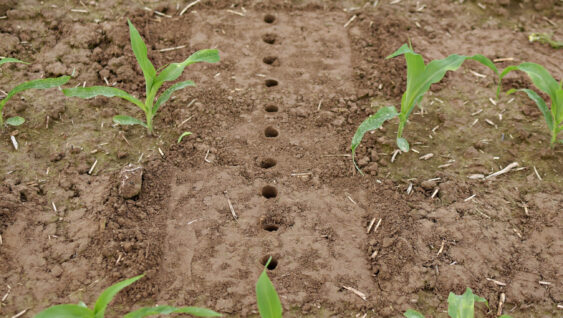
Now, some of the places where it’s a little harder to adopt are cold, wet soils. When the soil is covered with residue, it doesn’t warm up very fast in the spring. It doesn’t dry out very fast. That can complicate our planting. It can complicate a lot of those spring operations because it does keep the soil wet and cold. There are some, shall we say, reduced tillage systems that are a compromise. One system that’s becoming more and more popular is something called strip till where we simply till a narrow band where we’re going to plant the crop that opens up that band of soil to air, to sunlight, to warm it up, dry it out to make a more favorable planting zone, but yet we keep the residue cover on the rest of the soil. So we’re not eliminating disturbance, but we’re minimizing that disturbance and we can maybe achieve most of those objectives while still having a good environment to plant our crop into.
(25:01)
You mentioned crops where there has to be soil disturbance, root crops, or maybe some of really small seeded vegetable crops where we have to have a really fine smooth seed-bed. We have to have tillage to create that. So how do we implement reduced tillage in a system like that? Well, in that system we have to focus on the other crops we’re going to grow in the rotation, so maybe we’re rotating, like is common in the Pacific Northwest, we rotate potatoes with a winter wheat crop, for example. We can use winter wheat and we can grow a cover crop in the years between the potato crops, but in the potatoes it’s really hard. We can’t do no-till because the harvest operation is a tillage operation basically. We really disturbed the soil extensively. We have crops like that, but we can focus on these, what I will call regenerative practices in the years in between the crop, that may be more difficult to do that in. There are environments where no-till is really suitable and there are environments where it’s really difficult to maintain.
(26:05)
And one point we really need to make, Mike, and since I’m kind of going that direction, I’ll interject that here, is that these practices and different advocates for regenerative agriculture will tell you different things. In my opinion, these practices are very site-specific. Some advocate that we have to apply the entire system, we have to imply all of these practices together to make it work. I would argue that these are very site-specific and situation-specific, and we can implement certain practices maybe in combination in one environment, but maybe in another they’re not so conducive. And I’ll give you an example. In our semi-arid dry land wheat systems, it’s pretty tough to grow a cover crop because we don’t even have enough moisture to grow the economic crop, the wheat that we’re after and when we grow cover crops, it often results in economic loss because that cover crop uses up the moisture that we need to grow our wheat or canola or the other cereal crops that we might want to grow, so that’s a really difficult compromise.
(27:08)
Now, one argument is that over time as we improve the soil by growing the cover crops, we’ll build more water holding capacity. Well, that may be true, but we still get a limited amount of precipitation, so that’s a tough compromise. In that case, maybe that cover crop is more of a detriment than a benefit. Certainly there are benefits to the cover crop, but they may be contrary to the goals of producing an economic crop, so maybe that’s not such a good fit, but we can reduce tillage and store more moisture by keeping the soil covered. Some practices may fit and some may not. My argument is that these are site-specific practices and let’s implement the practices that we can, that fit a specific soil and environment, but maybe we can’t implement all of them together in every situation.
Mike Howell (27:56):
Alan, you mentioned the cover crops and how it doesn’t fit into some systems. Let’s look at the other end of that scale you talked about. You mentioned the really dry areas and not having enough moisture to maintain both. In my part of the world, we can plant cover crops and we can get really good cover crops. The problem is if we get a warm winter, we can have so much residue that it’s basically impossible to get into plant. We can’t get the soils dried out. We can’t manage that residue effectively and get rid of it in a timely manner, and that just delays the whole cropping season, so you can’t have problems on both ends of that spectrum.
Alan Blaylock (28:30):
Yes, Mike, and I think what you point out with that example is we still have quite a bit to learn about how to implement these systems. If I think about your system and growing a cover crop and we have potential to maybe get too much cover crop, as you mentioned. We need to think about how we’re going to manage that cover crop. Maybe it’s the type of cover crop we plant. Maybe we really do need to look at a chemical control of that cover crop and maybe we need to kill it a bit sooner and be able to manage that. Now, if it’s too wet and you can’t get in the field, well, that creates a problem. I think we have a lot to learn about integrating all of these practices into our management and our cropping systems.
(29:09)
I think one of the other things that is often pointed out by the proponents of regenerative agriculture is that sometimes we need to change our entire way of thinking and approaching that cropping system, and we may need to just do things differently all the way around and think about things differently in order to make some of these things work. And I think we need to be open to that and think, maybe it fits in my traditional management system, but maybe it doesn’t, and maybe I need to change that management system in some way to allow for less tillage, to allow for a [inaudible 00:29:43] crop to allow for some grazing or whatever the case may be, whichever one of these practices fits.
(29:48)
And again, I come back to this idea that some people refer to regenerative agriculture as a whole system and you have to do it all in a prescribed way. I prefer to think of it as there’s a list of practices that we can implement that can improve our soils, and let’s implement the practices that fit best in the way that fits best, and I think we still have a lot to learn about how to do some of those things.
Mike Howell (30:13):
That’s right, Alan. There’s never a lack of something else to research and find out more information about it. So we’ve talked about eliminating or reducing soil disturbances, and we unintentionally, I think, talked about soil cover keeping cover crops on those. Let’s go to the third point you mentioned, Alan, and increasing biodiversity. And you mentioned that it’s not just biodiversity of crops, it’s biodiversity of the organisms that are living there. Can you expound on that a little bit more?
Alan Blaylock (30:39):
Yeah, Mike. The soil is a really interesting ecosystem and there are thousands of organisms in the soil and they say a teaspoon of soil contains more living organisms than the entire human population of the earth. That’s mind-boggling. There are so many organisms in the soil and different kinds of organisms, and most of them work to the benefit of that soil ecosystem. Some of them are actually pathogens that can hurt our crops, but part of the ideas there is that most of these organisms are beneficial. Let’s do what we can to encourage those organisms. Now, because there are so many, it’s hard to think that we can improve by adding additional organisms, but there are many advocates that we can do that, and they advocate the use of, say, animal manure and compost teas and even specific microbial inoculates that those can enhance that microbial biodiversity.
(31:36)
I personally have my own doubts and reservations about that because I think we have so many organisms in the soil, it’s hard for me to visualize adding a small inoculant of some other species is going to make a difference, but maybe it can. I think we have a lot to learn about that. But nonetheless, in my mind, the idea is to create an environment that’s conducive to those organisms flourishing and doing the job that we want them to do. Growing healthy crops, having good active roots, adding as much biomass as we can to feed those organisms, that tends to encourage more of those organisms more in numbers and more in variety. It comes back to work with some of these other concepts we’ve talked about like growing cover crops, but I think it’s important to grow healthy crops, whether it’s a cover crop or whether it’s a grain or whatever it is, because those add materials to the system that feed those microorganisms and encourage them to flourish. To me, that’s a really important part of this.
Mike Howell (32:35):
Alan, you also mentioned basically crop rotation, increasing the number of crops you grow and things like that. Diversity in crops. Now, we all know the benefits of crop rotation. That’s been well-studied and well-documented, but it’s not really that practical in some situations. You get down in Georgia and Florida or over in California, they produce a vast number of crops. They can grow just about any crop you want to grow, but it’s hard to grow cotton up in Colorado where you live. And with Mississippi, we were wall-to-wall cotton for a long time, and that’s just recently changed in the last 30 or 40 years. But there are some places that we just don’t have a choice but to grow certain crops and eKonomics is going to play a lot into that. What can we do to generate the income we’ve got to have to keep farming?
Alan Blaylock (33:18):
Well, I think that is a big concern. Let’s say we’re going to switch to a forage grazing system where we’re going to integrate more perennial forages into our system. How do we convert that to income? Well, we convert that to income by growing livestock of some kind. In consuming those forages, the livestock are converting grass, which we humans don’t digest very well. The livestock are converting that to really high quality food, high quality protein that’s nutrient-dense and very nutritional for us. That’s one way we can convert a crop that otherwise doesn’t have a lot of economic value in and of itself. We’re not going to bail up hay and go sell that at the farmer’s market for human consumption. Everybody realizes that’s a ridiculous notion, but we have a mechanism to convert that to an economic return in livestock.
(34:11)
Now, there are also opponents of livestock who say we eat too much meat, and the people on the other side, the proponents of these systems, are advocates for livestock because livestock can have great benefits in enhancing the soil, the recycling of nutrients, and allowing us to get economic value out of these perennial forage crops. It also allows us to add more perennial legumes into that system, and they’re the best nitrogen fixers. They really can add a lot of nitrogen to the system and that can reduce our fertilizer nitrogen requirements. So I’m moving into one of these other topics. I’m bringing the biodiversity and the livestock grazing together, because they do go together. They’re part of enhancing that biodiversity, extending that crop rotation out.
(34:56)
And let me give you another example. There was some research done in Colorado previously, back in the eighties and nineties, and formerly a lot of Eastern Colorado was a wheat fallow system. Grow wheat one year and the next year you just fallow and allow soil moisture to accumulate because we don’t get a lot of rainfall, frankly, in eastern Colorado. It was a wheat fallow system. There was a lot of research done on intensifying that rotation, and so we think of the word intensification and that might run counter to some of these objectives, but what they did is started implementing more no-till. And by switching to no-till, keeping that soil covered, again, integrating these different concepts, these different practices together, by switching to more no-till they conserved more moisture and allowed them to add maybe another year of grain crop. Instead of wheat, fallow, wheat, fallow, maybe it’s wheat, sorghum, fallow, or wheat, corn, fallow, or maybe even three successive years if you got enough rainfall.
(35:57)
But by protecting that soil and allowing it to store more soil moisture, they increase the intensification, which meant more diversity in a cropping system. Instead of just wheat every other year, now they’re able to integrate some additional crops into that. I think about some of the other areas of the northern plains where maybe historically it’s been wheat fallow, but they can incorporate maybe peas or lentils some years. Now, there’s a limited market for peas and lentils, right? If everybody grows peas, then they’re worthless, but there’s a certain market for that. If that’s economical, integrate those into your crop rotation to both enhance your eKonomics to enhance the diversity, extend that rotation out.
(36:39)
But that also has benefits in terms of pest pressure and weed control. If we have more diverse crops, if we’re growing wheat every year, we’re going to have those wheat pests all the time. If we interrupt that with a different type of crop, a canola or a legume crop, we can break some of those pest cycles and reduce our reliance on some of these pesticides. There are great benefits to extending that crop rotation where we can do so economically, but there are economic constraints to that. Finding new markets for crops that maybe don’t have as much value. I know it’s a tough sell, but those are things we need to look at.
Mike Howell (37:16):
Alan, another example of that, going back to my peanut days, when I was working with peanuts here in Mississippi, we worked a good bit with the University of Florida and they had a program going where they would grow a year of cotton or corn, a year of peanuts, and then two years of forages, graze the cattle on that, and they were showing some long-term benefits to doing that, much like we’ve described today. The problem is, a lot of these guys that are set up to do row crop agriculture just really aren’t set up to do livestock agriculture, so it gets to be a challenge. I know some people do both and can be successful at both, but it gets to be a challenge for some people that aren’t set up for that. It can work. You just have to figure out how to make it work sometimes.
Alan Blaylock (37:57):
Yeah, I think you’re right. It takes some different thinking maybe and adjustments in how you approach things, because integrating livestock into a row cropping system is different because they can be at odds with each other, and your time constraints, your time demands and equipment and the diversity, the level of management just goes up exponentially to try to integrate those. It does take more effort. It is more complex. There can be advantages to doing that where you can make it work. It can be worth that extra effort.
Mike Howell (38:28):
Alan, let’s jump into the last factor that you talked about where they’re looking at reducing or eliminating synthetic fertilizers and pesticide inputs. Talk a little bit more about that one.
Alan Blaylock (38:38):
Yeah, this is one that I struggle with in my own mind, particularly in relation to nutrients, and I’ll get into that. We’ve talked a little bit about how extending your crop rotation, increasing diversity can reduce your reliance on pesticides by disrupting weeded and pest cycles, so that’s pretty clear and that’s been studied a lot over the decades, and we know that’s been proven. Some of these advocates say we can eliminate the use of those pesticides. I’m not sure we can get there completely, but maybe there are alternatives. For example, some of these cover crops may serve as certain trap crops is a term that we sometimes use, and when I was at University of Wyoming, some of my colleagues there were doing some research on trap crops to trap the nematodes and focusing on particular species and radishes and mustards that the nematodes would infect, but then that crop plant, that pulse plant, would basically prevent them from reproducing.
(39:39)
By using this trap crop between your sugar beet crops, you could reduce the pest populations and that can also serve as a cover crop. Again, we’re integrating different practices, and by doing some of these things, we probably can reduce our reliance on pesticides. Can we eliminate them completely? I don’t know. I think that remains to be proven. My concern really in this area is with eliminating nutrient inputs, and what I really struggle with is, because many of these advocates say if we implement these practices and nurture the soil microbiology, that those microbes will provide everything the crop needs and we don’t need to apply fertilizers. I have trouble with that arithmetic because that may be true in some short or medium term because we know these microbes are effective at cycling nutrients. They can solubilize nutrients from both minerals and organic materials and make them available to the crop. We know that and there’s benefits to that, so that’s all a good thing.
(40:34)
But every time we harvest a crop or ship meat or milk off of the farm, we’re exporting nutrients from the farm. That soil is a finite resource for nutrients. There’s a finite amount of nutrients that are in the soil in mineral and organic forms, and at some point they have to be replaced. And while the microbes may increase the availability of what’s in the soil naturally, aside from nitrogen fixing organisms, we don’t have organisms that just create more phosphorus or more potassium or other nutrients. We don’t have microbes that will add those to the soil. We have microbes that can increase their availability in soil, but they don’t create more. At some point, the export of all those nutrients off the land in terms of crops and livestock products is going to deplete those nutrients.
(41:25)
We can extend that out with these regenerative practices. We can extend the time the soil can supply those nutrients, but my concern is that advocating that we completely eliminate nutrient applications in the interest of these regenerative systems, I think, to me, laws of mass balance would tell me that that soil eventually will become depleted and become non-productive, and then that defeats the purpose of the regenerative approach. And all we have to do is look at sub-Saharan Africa where they farm for hundreds or thousands of years with no nutrient inputs, and some of those soils are very unproductive, and remember that the microorganisms in the soil also need the same nutrients that higher plants need, and they’re competing with the crop plants. So while they are making nutrients more available to the crop, they’re also using some of those nutrients, and if we allow nutrients in the soil to become depleted, those microorganisms are also going to suffer and they might eventually shut that whole system down or certainly decrease their activity.
(42:27)
There’s good research showing that, to build soil organic matter, we also have to build soil nitrogen because soil organic matter has a fairly fixed carbon and nitrogen ratio. If we’re going to increase carbon, we have to increase nitrogen, we have to increase phosphorus. I don’t know how you do all of that if you allow the soil to become depleted by continually exporting nutrients and not bringing in nutrients in some form, whether it’s organic, whether it’s manures. Whatever the source is, we still have to bring those nutrients in to replace what was removed somehow. I have concerns about advocates who say we can eliminate the import of fertilizer to the farm. I still think you have to have those nutrients coming from somewhere. It may not be a commercial fertilizer, but it has to come from somewhere. I have some concerns about some of the things that are promoted in regard to that.
Mike Howell (43:16):
Alan, I think you just made this go full circle back to one of the first comments I made. The docker that we started talking about was looking at his family garden, and in that family garden, he doesn’t have to sell anything off of that to make a living. He doesn’t have to move anything, and he can return a lot of the waste products and things back to the soil. If you’re looking at a corn farmer in the Midwest who’s trying to grow 20,000 acres of corn, it’s a lot harder to do that and not sell some of that corn to make a profit. He’s not going to be in business very long. The world population, the last I looked, this year, it’s about 8 billion. It’s projected to go to 10 billion within the next 25 years, and we still have to feed all of these people.
(43:53)
If we’re not going to be as efficient as we can on the land that we’re able to farm, there’s no way we’re going to be able to keep feeding this growing population. The amount of arable land that we have to farm isn’t getting any bigger. We keep losing land to housing developments and everything else. We’ve got to be more productive, and it’s just going to be harder and harder to do that if we’re not able to put fertilizer on these fields like we need to do. I think you just brought it full circle with your last comments.
Alan Blaylock (44:20):
Yeah, Mike. I think there was some great work at University of Nebraska that went on for quite a long period of time, and the term they used in that research was ecological intensification. And what they were demonstrating is that in our really good soils, we need to be producing as much as we can, and we can do it in a sustainable way by intensifying the management, intensifying what we’re doing on those soils and doing a better job, but that still meant they had to apply nutrients. But by doing that, they could do it while reducing the loss of carbon from the soil, reducing the loss of nutrients through runoff or nitrogen loss by leaching, by reducing these different nutrient loss mechanisms. And by intensifying the productivity of that system, they were able to maintain or improve soil quality while still producing very high yields. And I think maybe that’s one of the ways we need to think about this is we have these practices that we call regenerative practices, and again, I like to think of it that way in implementing these practices where we can, and I think we can do more.
(45:32)
We can do better with our soils and improve our soils, but by doing that, we can, if we do this right, if we manage it right, we can maintain our increased productivity on these soils, and I think you’re right. We can’t be satisfied with just producing the same yields. We can’t feed the world with the same yields we have today as the population increases. We have to improve the soil while also improving the productivity. Now, I would argue those go hand in hand. If we improve the soil, we should be able to improve our productivity by making that soil more resilient to drought conditions, more resistant to runoff and erosion, improving soil water holding capacity and infiltration, improving the ability for roots to grow through the soil. All of these things are related to these practices that we’ve talked about, so we can implement these practices, improve our soil and improve our productivity, but I think we have a lot to learn.
(46:27)
I think I said that a couple of times already. I think we still have a lot to learn about how to integrate all these different things, and you referred earlier to the article we published on our eKonomics website, and I pose a lot of questions in that article about what do we really know about this? There are a lot of claims made about these programs. What do we really know about all those claims? And you’re listing some of those claims, and what do we know? What does the research show? And I think there are still lots of questions, and I also provided a bunch of supplemental reading references that people can take a look at if they want to know more, because there’s a lot of people who have written a lot about this, and I think there’s some great articles I would commend to them in the reference list for that piece that we published on our eKonomics website.
Mike Howell (47:09):
Alan, we really appreciate you joining us today and going through regenerative agriculture. Just to sum up everything we’ve talked about today, there’s a lot of practices out there, and they all may have some merit, but it may be hard for everybody to adopt all of these practices at one time, but I want to encourage everybody to take a look at your own system and see what you can do to help become more sustainable in the future. There’s always something that we can do better and we need to focus on things that we can do in the short term to help improve everything. And Alan, as you mentioned, there’s a lot more work that needs to be done on this. We have a lot of information posted on this subject on our website. That’s nutrien-ekonomics.com. I want to encourage our listeners to visit that site and find out more about this than any other topic that we’ve discussed.
(47:57)
Now, listeners, as you know, it’s time now that we move into our next segment where we talk about a famous person in agriculture. Today we’re going to talk about Hugh Hammond Bennett. Now, Alan mentioned in his conversation earlier today several times about soil conservation or soil erosion, and Mr. Bennett led the Soil Conservation Movement in the United States back in the 1920s and thirties. He urged the nation to address the national menace of soil erosion. He created a new federal agency and served as its first chief, and that agency was a Soil Conservation Service, which is now referred to as the Natural Resource Conservation Service within the US Department of Agriculture. Now, in some of Bennett’s speeches, he inspired action for soil conservation around the country, whether these were farm and field demonstrations or scholarly gatherings or in the House of Congress.
(48:49)
At one of his speeches, a dust storm was actually moving from the Great Plains and moved over Washington DC. This was in the early spring of 1935, during the height of the Dust Bowl. Bennett was actually testifying before a congressional committee on a bill that would create the soil conservation Service. He knew the storm was coming, and he used this to dramatically demonstrate the need for soil conservation. The resulting Soil Conservation Act of 1935 did create the Soil Conservation Service, and Bennett served as its first chief until he retired in 1951. In 2000, Bennett was named as a charter member and inductee into the USDA Hall of Heroes. One of his famous quotes was, “Out of a long list of nature’s gifts to man, none is perhaps so utterly essential to human life as the soil.”
(49:41)
Listeners, once again, we want to thank you for joining in today. We hope we’ve learned a little bit about regenerative agriculture and some other topics as well. I want to remind everyone, once again, to visit our website, leave us some comments on the website or in your podcast channel. Always looking for more information on ways that we can make this program better for you. Until next time, this has been Mike Howell with The Dirt.