






Read Full Transcript
The Dirt with me, Mike Howell, an eKonomics podKast where I present the down and dirty agronomic science to help grow crops and bottom lines. Inspired by eKonomics.com, farming’s go-to informational resource, I’m here to break down the latest crop nutrition research use and issues, helping farmers make better business decisions through actionable insights. Let’s dig in.
(00:39)
Well, hello again, everyone. Welcome back to The Dirt. I’ve got a familiar face with us today. He really needs no introduction, but I’m going to ask him to introduce himself for our new listeners anyway. Alan Blaylock has joined us again today. Alan, welcome back. And if you will, let everybody know who you are and what you do.
Alan Blaylock (00:55):
Thanks, Mike. It’s good to be here. I think we have a really interesting topic today. I’m Senior Agronomist with Nutrien. I’m based in Colorado, and I cover largely the western US, the great Plains and Western Corn Belt, as far as my territory responsibilities. And we help support sales and marketing of Nutrien products, as well as provide agronomic training and education for a lot of our customers and sometimes their customers.
Mike Howell (01:23):
So Alan, you and I were together quite a bit this growing season, visiting different research plots and trying to hone in on some new products we’ve got out in the field that we’re evaluating, and we noticed some deficiencies going on in some of our plots, primarily a sulfur deficiency that’s showing up in some of our nitrogen plots. And that got me to thinking about what may be going on there, and we’ve seen that before, but it was really pronounced this year. We’ve spent a lot of time on past episodes talking about the individual nutrients, but we haven’t really dove off and talked about a lot of interactions between these nutrients and how one nutrient affects what another nutrient is going to be doing.
(01:58)
O I thought today we would talk about the interactions between nitrogen and sulfur, and this really came about from a presentation I saw you make. This summer, you gave a presentation at the Nitrogen Use Efficiency Workshop, and I really thought that was a great presentation. It did a great job talking about these two nutrients and how they interact with each other. I learned a lot from that. And there’s even more that’s came out since you did that presentation that we’ve had the opportunity to talk about and learn from. So today, I thought we would get in and talk about this interaction a little bit. So first off, tell us a little bit about nitrogen and sulfur and why these two nutrients are important, just kind of remind our listeners about these two nutrients.
Alan Blaylock (02:36):
Well, Mike, nitrogen and sulfur are both important in plant nutrition for a lot of reasons, but one of the key functions of these two nutrients, especially with regard to how they interact together, is the formation of amino acids and proteins in the plant. And both nitrogen and sulfur are key elements of those amino acids and proteins. They work together a lot in that role. There are obviously some other specific roles of each of these nutrients, but those are a couple of keys. Because a lot of the functions of the plant, even the enzymes are many of those are protein materials that contain nitrogen and oftentimes sulfur. These are two really key elements that work together in plant nutrition.
Mike Howell (03:23):
One of the things that we were noticing this summer is, when we increased our nitrogen rate, had more nitrogen out there, we could see a response from that nitrogen, but we were also starting to pick up a sulfur deficiency at some of these higher nitrogen rates. Talk a little bit about what’s going on there.
Alan Blaylock (03:38):
It’s a really interesting thing, and I happened upon a similar circumstance many years ago in a nitrogen plot that I was visiting. And I seemed to notice these symptoms that seemed more severe at higher nitrogen rates, which seemed kind of backwards to me. It seemed like, “Well, why should the plants show more symptoms when we’re putting on a higher end?” And then it occurred to us, and through some plant tissue testing, we confirmed that what we were seeing in those plots was the sulfur deficiencies. As we increased the nitrogen rate, we increased the growth of the plant, and thereby, we increased the demand for other nutrients, and in this case, particularly, sulfur. And because nitrogen and sulfur are kind of inseparable in plant nutrition because they work together, as we increase the nitrogen, we stimulate more growth. We stimulate the plant’s response to try to produce more amino acids, more proteins. If the sulfur isn’t there to satisfy that demand and work with nitrogen, then we actually induce a greater degree of sulfur deficiency.
(04:41)
Now, what we were seeing in the field, the sulfur was probably deficient in the lower nitrogen plots anyway, but because we didn’t have the extra nitrogen there to stimulate more growth, the sulfur deficiency was probably masked by a nitrogen deficiency in a smaller plant not growing as vigorously. We’ve seen this phenomenon now increasingly in a lot of our nitrogen studies as we increase nitrogen rate, or as we use treatments that make nitrogen utilization more efficient. We tend to see more sulfur deficiency.
(05:14)
And you and I visited some plots that were particularly notable in the sulfur deficiency. That’s an important consideration. And a lot of us are trying to get the most out of the nitrogen that we can. But it caused us to think, and this was a subject of the talk that I gave that he referred to, it caused me to think as we evaluate nitrogen and nitrogen products and nitrogen management practices, if we’re not also providing adequate sulfur, we may be confounding the results of our nitrogen treatments by this sulfur deficiency. In other words, the sulfur deficiency may be interfering with the plant’s ability to respond to these more efficient nitrogen treatments and really limiting the value of a specific nitrogen product or a specific nitrogen practice and limiting our ability to really get maximum efficiency out of that critical input.
Mike Howell (06:12):
Alan, when we set up a protocol and try to evaluate a product, we’re looking at one nutrient. In this case, it’s nitrogen. And we’re wanting to see what the effects of that nitrogen is on the corn plant. But if the sulfur is interacting with it and we have higher rates of nitrogen and in turn have that sulfur deficiency that could be limiting our yield, how are we going to correct for this? The first thing that comes to mind, “Well, just put some extra sulfur out there.” But can we get into a situation where the lower nitrogen rates have too much sulfur and kind of go the other direction with this?
Alan Blaylock (06:40):
That’s a good question, and I don’t think we would see a problem of excess sulfur at our lower nitrogen rates. We’re not going to see a sulfur toxicity with any kind of reasonable rate of sulfur fertilizer that I’m familiar with. That’s not something I’ve observed. Within some reasonable range, I don’t think we’d see an excess causing toxicity problems.
(07:04)
But you raise an interesting question in that what we’re really trying to do is achieve something we call balanced nutrition. And when we think about nitrogen and sulfur, one of the measurements that we sometimes look at is a nitrogen-sulfur ratio in the leaf tissue. When that nitrogen-sulfur ratio gets really out of balance, that’s where I’ve seen these sulfur deficiency symptoms induced by higher nitrogen.
(07:29)
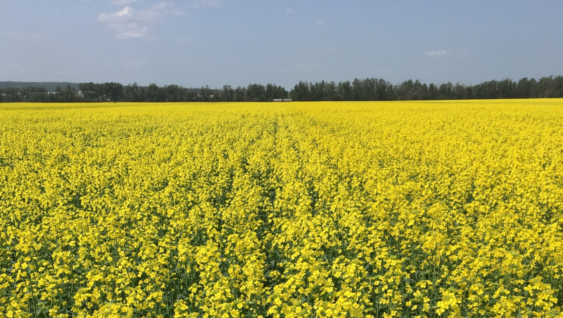
Let’s take a crop like corn or wheat, the grasses generally, we would like to see a nitrogen-sulfur ratio in the leaf tissue of something on the order of 12 to one or 15 to one, kind of in that range. If we look at a crop like canola, some of the other oil seeds, that ratio is more like five to one or seven to one, because those crops have really high sulfur content. They tend to need more sulfur, particularly canola. Anything in that mustard family, they have really high sulfur requirements. Alfalfa also has higher sulfur requirements. They would have a lower nitrogen-to-sulfur ratio, especially crops that produce higher protein levels, and that’s going to be more important.
(08:07)
That’s one of the diagnostics we look at, and that’s an indication of whether or not we have nitrogen and sulfur balance. In some of these treatments I’ve seen where we have high nitrogen rates and we start to see sulfur deficiencies, I’ve seen that nitrogen-to-sulfur ratio be 40 to one or 50 to one, which really suggests a gross imbalance that needs to be corrected. Balanced nutrition is the point you’re getting at. We’ve had some of those discussions in relation to nitrogen and potassium as well, and that’s a subject for maybe a future podcast. But really, to grow healthy plants, we want those nutrients to be in balance so that they can all function at their highest capacity.
Mike Howell (08:48):
Hey, guys, if you like what you heard today, do us a favor and share this podcast with someone else. It could be your neighbor, your friend, your crop advisor, or whoever you think would enjoy it. Your support helps ensure future episodes, so please, like, subscribe, share, and rate the show wherever you’re listening from.
(09:11)
Alan, you’re talking about making sure we’re in the right balance and we have the right proportion of nitrogen and sulfur. How can a farmer know if they’ve got the right amounts of these nutrients out there? It’s really hard to test the soil and figure out how much sulfur is available in the soil. What can a grower do to ensure he’s doing things right?
Alan Blaylock (09:27):
Well, soil testing has been used, and it’s been studied. We have real challenges with soil testing for sulfur. That soil test isn’t maybe as reliable or maybe not as good a predictor as it is for PNK and some of the other things. Again, looking at that nitrogen-sulfur ratio, and we can do some kind of estimation with our fertilizer blends for putting on, say, a hundred pounds per acre of nitrogen, and we know that we’re in a region that may be prone to sulfur deficiency, say, “Okay, for a hundred pounds of sulfur, maybe I want to apply 15 pounds of N or 15 pounds of sulfur.” Yes, you can do some things with that. Really, it’s monitoring the crop. That’s the best way we can know. Because our soil test is not the best predictor for this. But monitoring the crop and looking at that nitrogen-sulfur ratio, it’s also knowing a little bit about the history.
(10:17)
Now, we can look at gross estimates of atmospheric deposition, and that’s the factor that’s really led us to this sulfur problem in large part, because we’ve cleaned up the air and we’ve removed a lot of the sulfur from the atmosphere and we’re not getting that contribution like we did 20 or 30 years ago. Again, you can make some gross estimate of atmospheric deposition, but that’s really not site-specific and probably not a great tool to use.
(10:43)
Again, looking at history, we can take a look at some of our soil type soils that are coarser, textured, sandy soils, soils lower in organic matter, eroded soils. Those tend to be most responsive to sulfur, and certainly in those situations, we probably want to be including some sulfur. But also looking at or cropping history, have we seen these symptoms manifest in the past? And looking at symptoms in the field, and we can take corrective action if we see a sulfur deficiency emerging, but obviously, it’s like many other nutrients, once we see that symptom, we probably already missed some yield potential. If you see those symptoms, you want to get on that right away, confirm that by plant testing, but really get those applications early on. We want to be watching for these symptoms. If that’s what we’re relying on, really want to be watching for that very early in the growth of the plant.
(11:37)
We don’t have a lot of good predictors in advance, other than the type of soil we have, the cropping history and knowing something about the crop itself and its specific sulfur demand. I mentioned canola. If we’re growing canola, we almost always need to be applying some sulfur it seems, because it’s so responsive. If we had sulfur applied in a previous year, that may be a consideration, but looking at the type of crop can give us some clues.
Mike Howell (12:03):
Alan, you’re talking about monitoring these crops in season and making adjustments. If a grower determines that he does have a sulfur deficiency, what steps can he take then? what’s going to be his course of action to correct that deficiency in season?
Alan Blaylock (12:15):
To apply sulfur in season for correcting an existing deficiency, you really need to be applying something that’s immediately available. Then that goes to something like an ammonium sulfate, maybe side-dressing ammonium thiosulfate, which is not immediately available but fairly quickly available, but getting something out there that will produce an immediate response. In that case, a product like elemental sulfur, which may be a good fertilizer for a fall application or pre-plant application that’s not good for immediate correction of an existing problem. I’m not familiar with any foliar materials that are really very useful. Probably my first choice would be ammonium sulfate, get it out there as early as you see a problem occurring, and then you hope to get some rain to move it into the ground.
Mike Howell (13:03):
That’s going to be an expensive option, but that’s probably our best option. If we miss that application early, that’s probably going to be the best way to get it out there. But a better option would be to make sure we have those sulfur needs met at the time of planting. Take a look at your history, like Alan mentioned, and make sure if you’re starting to see some of these sulfur deficiencies that you address those before planting.
Alan Blaylock (13:22):
Yeah. Mike, and I would make a comment to that. The amount of sulfur we need to prevent these problems is really a fairly small amount. In a lot of cases, the recommendations for corn are in a range of 10 to 15 pounds of sulfur per acre, maybe 20 pounds of sulfur per acre. It’s a fairly small amount. If you know that sulfur deficiencies are occurring in your area or you’ve seen symptoms in the past, my recommendation would be to add a small amount of sulfur, a modest amount of sulfur, to your pre-plant fertilizer program, just to avoid those deficiencies. Because as we said, that sulfur deficiency or having inadequate sulfur there, it affects the yield of the crop, it can affect the efficiency of nitrogen use. We’re seeing some cases also an interaction with phosphorus and phosphorus use. The sulfur deficiency can affect the performance of other nutrient input. You don’t want to risk that small amount of sulfur interfering with the performance of the crop and your large investment in other nutrients.
(14:23)
If you know that you have a crop that needs sulfur, you’ve seen these problems in your area in the past, you know of others in the area, they’re seeing this, I tend to favor an insurance application here, because it’s really a small amount of sulfur that we need to prevent that deficiency.
Mike Howell (14:40):
Well, Alan, since you gave the presentation a couple of months ago, there’s been a new paper that we have just discovered, talking about the use of sulfur and how sulfur can actually aid in the reduction of nitrate leaching. What can you tell us about that paper?
Alan Blaylock (14:54):
It’s a very interesting paper, Mike. I just obtained it here within the last couple of weeks. But it was a study that included nitrogen and sulfur treatments. They had sulfur rates, they had some different sulfur products in this study. There were sites in the US, Asia and Africa over a period of several years. They were trying to determine the effect sulfur nutrition would have on nitrogen nutrition. And saw some interesting things that have also been observed in other studies, so this is not necessarily a new or unexpected finding, but the way the study was conducted, it revealed some pretty interesting findings.
(15:29)
In brief, a few things we could say about that study are, as the sulfur rate increased, nitrogen uptake and nitrogen use efficiency increased. It was almost a linear response. And the highest nitrogen use efficiencies or highest nitrogen recovery it measured in uptake was observed at the highest sulfur rates. And they used a range of rates up to the recommended rate. They had one rate 25% above the recommended rate, and measured increasing nitrogen use efficiency all the way up to that highest rate. They found that the lowest nitrogen recovery occurred with no sulfur applied. Very dramatic response.
(16:10)
In relation to that, they also measured nitrate leaching using suction lysimeters, and they found that the greatest nitrate leaching occurred with the lowest sulfur rates. And at the highest sulfur rates, they were able to virtually eliminate nitrate leaching. In other words, reduce it down to a background level, the level of the zero nitrogen checks, by applying sulfur. At the highest sulfur rates, the nitrate lost by leaching was similar to treatments with zero nitrogen fertilizer applied. That’s a pretty significant improvement, and particularly, we’re all concerned about that nitrate loss. It’s an economic loss for the farmer, it reduces yields, but it also has impact on water quality. By adequately balancing with sulfur, if we’re able to significant reduce, or in this case even eliminate, nitrate leaching, that’s a very significant improvement in nitrogen use efficiency and a significant reduction in the environmental impact of nitrogen fertilizer.
Mike Howell (17:16):
Hey, guys, if you like what you heard today, do us a favor and share this podcast with someone else. It could be your neighbor, your friend, your crop advisor, or whoever you think would enjoy it. Your support helps ensure future episodes, so please, like, subscribe, share and rate the show wherever you’re listening from.
(17:38)
So Alan, what else do we need to be aware of when we’re talking about this nitrogen and sulfur ratio?
Alan Blaylock (17:43):
I’d like to point out just a few things in relation to physiology and nitrogen and sulfur in the plant. Part of this response that I’ve described, improving nitrogen uptake, reducing nitrogen loss is very directly related to the growth of a healthier plant. Growing a bigger crop, a healthier plant that takes up more of the nitrogen that’s in the soil. But there are also some physiological responses within the plant. Sulfur tends to stimulate the uptake of nitrate by the plant. In addition to its effects on growth and overall nitrogen demand, it seems to have a direct stimulation on nitrate and its physiology in the plant. First of all, stimulating greater nitrate uptake by the roots, but then also better and more efficient metabolism of nitrate within the leaves. More of that nitrate gets utilized by the plant. When we have adequate sulfur, we see nitrate depleted from the rooting medium more rapidly, and we see less nitrate accumulation in the leaf tissue. Because while we’re taking up more nitrate, more of it’s being utilized. It’s a very interesting physiological response.
(18:52)
There’s the effect of stimulating better growth by having adequate sulfur nutrition, stimulating a bigger plant that uses more nitrate, but also stimulating the exact processes that translate to better nitrogen utilization. All of these things are working together, and it was just a reminder that balanced plant nutrition is important. And particularly when I’m talking about nitrogen, sulfur seems to be a really critical nutrient.
(19:18)
And I would say that, to come back to the change that we’ve seen in recent decades, 30 years ago, we had excessive sulfur from atmospheric deposition and acid rain. That was really emissions from our industrial, our power plants, our factories, steelmaking, all of those things, and we had more sulfur than we needed, so we didn’t really pay a lot of attention to sulfur in these relationships because we didn’t have deficiencies. And largely, this applies to the eastern half of North America where the industrial region is.
(19:50)
But as we’ve cleaned up that sulfur from the atmosphere, and now we’ve started to learn more about the importance of sulfur, we’ve studied its role in plant nutrition. We’ve studied responses in the field more, and so we’re learning a lot more about it. But we didn’t even pay attention to it in previous decades. It’s opened a whole new world of plant nutrition and interactions with some of these nutrients. And yes, I knew about this nitrogen-sulfur interaction previously, but just especially in recent years, it’s really started to pay a lot more attention to it. And as we’ve seen these deficiencies in the field, I think it highlights some of the challenges we have.
(20:26)
And come back to this talk that you reference. One of my challenges to that audience in Nitrogen Use Efficiency Workshop is, maybe we need to be paying more attention to sulfur in our nitrogen-efficiency studies, and my challenge to them was, maybe you need to be looking at this interaction to really optimize nitrogen utilization and kind of raising the question of, “How much has sulfur deficiency maybe confounded some of our results unknowingly, and we didn’t even know the effect that maybe it was having?” Maybe we weren’t aware that there was a sulfur deficiency. It could have been hidden hunger. But now that this has come to our attention and really coming to the forefront more, just really something maybe we need to pay greater attention to.
Mike Howell (21:12):
Alan, you’ve talked a lot about sulfur research and how it’s really basically just in its infancy, because we’re just now starting to see sulfur deficiency symptoms showing up in our crops. There’s a lot of work going on these days in the field of autonomous agriculture, and using imagery to detect deficiencies of different nutrients. And they can do a lot of things with this technology, but it seems to me like it’s going to be really hard for a computer system to detect the difference between a nitrogen deficiency and a sulfur deficiency in a field. I think we really need to keep our foot on the gas on this and make sure that we’re understanding the role of sulfur in plant nutrition and make sure that we’re not misdiagnosing what could be a nitrogen deficiency with a sulfur deficiency problem.
Alan Blaylock (21:52):
Good point, Mike. And this was one of the things about which I raised a question in this presentation I gave is because a number of the people studying nitrogen use efficiency are evaluating crop sensors or measuring crop color and diagnosing nitrogen deficiency and nitrogen variability, but if we have sulfur deficiency that is also causing a yellowing of the plant is actually interfering with our ability to detect and properly diagnose these things.
(22:19)
Now, when we look at it visually, nitrogen deficiency appears differently on the plant than sulfur. The symptoms look different. Nitrogen deficiency occurs primarily first on the lower leaves and then progressing to a general yellowing of the entire plant, where sulfur deficiency is going to appear first on the newer leaves, young leaves emerging, and it appears more of a striping as opposed to a general yellowing. Now, that’s very crop specific. Some crops, it’s exhibited very different. I’m talking specifically about corn, I guess, here. But in canola, for example, we can get a purpling of the leaf, so it’s a very different kind of symptom.
(22:55)
But we need to understand what these symptoms are. If I go to look myself with my own eyes and I can evaluate the difference in those symptoms, sometimes I may not always know and I need to confirm it with tissue testing, but just looking at where it occurs on the plant is your first best clue. But nonetheless, when we’re looking at nutrient deficiency symptoms, they can resemble each other sometimes, and sometimes it’s hard to know exactly the difference. “What nutrient deficiency am I looking at?” You need to be very careful with that.
(23:25)
And particularly, as we start to use some of these instrumental methods of measuring the crop, diagnosing symptoms, flying drones over the crop and looking at color changes, we need to make sure we’re ground truthing that against what’s actually occurring so that we don’t misdiagnose. That’s an important thing that… As we’re seeing confounding symptoms now with some of these things, it’s important for us to really ground truth those instrumental measurements, make sure that we know what we’re looking at. That’s certainly an interesting point, and again, coming back to tissue testing to verify, having the tissue analyzed so we know exactly what nutrients we’re looking at, using that against our symptoms to confirm what the actual deficiency is. You raised a good point there with diagnosing these symptoms and really knowing what we’re looking for.
Mike Howell (24:13):
Well, Alan, a lot of great information today about nitrogen and the sulfur ratio and how this balance is important. Is there anything else you want to leave our listeners with before we wrap this episode up?
Alan Blaylock (24:22):
Well, we didn’t talk about sources a lot, only in regard to maybe remedial corrective treatments, but you mentioned this paper. And one of the interesting findings in this recent paper that we looked at was the differences in sources, and it’s related to the timing of the availability from these different sources. And they compare ammonium sulfate, a micronized elemental sulfur, and an ordinary elemental sulfur. And the ammonium sulfate and the micronized elemental sulfur performed very similarly. The rate response was very similar. But the normal or standard elemental sulfur really needed a higher sulfur rate to achieve the same objective.
(25:06)
Now, this is looking at responses in the season of application, and we all understand that elemental sulfur has to oxidize to become available. Micronizing that sulfur makes it available more quickly, so it performs more similarly to the immediately available ammonium sulfate, but our regular elemental sources take more time to oxidize. It’s more of a delayed response, and we maybe need a higher rate to achieve the same result in the season of application.
(25:34)
Now, they do have some lasting value. Don’t mistake me to say that elemental sulfur is not a good fertilizer source. But we need to understand its differences and perhaps utilize it a little differently. We may need to apply it further in advance, say, in the fall instead of the spring. We may need to apply it in consecutive years to make sure we have a, more or less, continuing release of sulfur. But just recognize the differences in these sources and how to use them. They’re all good fertilizers, but we may need to utilize them a little differently based on the properties of each of those sources. This isn’t a complete discussion of that, but just a reminder to evaluate each of those sources and use it in the best way for that individual fertilizer source to get the best value.
Mike Howell (26:20):
Well, Alan, once again, we appreciate you taking time to visit with us today and enlighten us with this information about this important nutrient relationship. Listeners, we hope you’ve enjoyed this part of the episode and want to remind everyone to stick around for just a couple of minutes, and we’ll be back with segment two.
(26:35)
Listeners, I hope you enjoyed the first segment of today’s show. If you did, please take a minute and give us a rating on your favorite podcast channel or app, and give us some feedback as well. We want to hear from you to help make the show even better. And don’t keep it to yourself. Please share these episodes with coworkers, family, friends, anyone you think may benefit from the information we’re sharing here. Don’t forget to visit our website, nutrien-eKonomics.com, to help find the latest crop nutrition news and research information, as well as market updates, a growing degree day calculator, a nutrient use calculator, a rainfall tracker, and much, much more. It’s all at nutrien-eKonomics.com. Most episodes of The Dirt are now available for CCA credits. Visit our website and click on the agronomics tab to find these CCA credit opportunities. And if you have a question you can ask one of our agronomy team members, simply ask your question, and one of us will get back with you. Thanks for listening. Now, segment two of The Dirt.
(27:44)
Listeners, welcome back for segment two as we’re continuing our trip around North America, visiting different research farms. We know the importance of these research farms, and today, we’re going to be in the state of Washington. We’re glad to have Dr. Surendra Singh with us today. He’s going to tell us a little bit about Washington state. But before we get into that, Surendra, if you will, tell us a little bit about yourself and what you do.
Dr. Surendra Singh (28:05):
Of course. Thanks, Mike, for having me on the podcast. So I am Surendra Singh, I’m agronomist and a director of Lind Dryland Research Station. I joined here… A little bit of background myself that I grew up on a farm in Northwestern part of India, similar geography like a Pacific Northwest. A mountain range goes from the middle of state, other side is too wet, the other side is too dry. And obviously, I was on the drier side of that as well. So pretty much like Northwestern Drylands of India, and I grew up on that farm. And then I did my undergrad from Punjab Agricultural University with an agronomist soils major. Then moved to Arkansas, at University of Arkansas for my Master’s, and then University of Tennessee for my PhD on soil health testing methods for the local cropping systems up there. And then joined Pendleton Station from Oregon State University for my postdoctoral program where I learned more about dryland farming, which is more common in that area. Since last year, I joined Washington State University of Lind Dryland Research Station. So that’s a little bit of background on myself.
Mike Howell (29:14):
Surendra, if you will, tell us a little bit more about the farm.
Dr. Surendra Singh (29:17):
This research farm was established in 1915. So soon, we’ll be completing 110 years of the farm. And this research farm is mostly focused on the dryland area. And when we talk about dryland, we are talking about rainfall less than 12 inches, generally. The area spans from Adams County in Washington all the way into Sherman County, Oregon. So this is the area where dryland wheat farms are, and predominant rotation is wheat fallow, where wheat is grown in one year and land is left fallow for the next year. And then in the subsequent year, the wheat is again seeded into it. So that is the kind of typical wheat fallow rotation, because we don’t have enough rainfall or moisture to do the annual cropping in general. So that has been the traditional rotation for the farms around here. This station serves about one and a half million hectares of cropland in this whole area. One dryland station is in Lind, another one is in Morrow Oregon. So these two stations are instrumental for providing growers with the latest information and new technologies and working on emerging issues around the regional cropping systems.
Mike Howell (30:26):
Surendra, if you will, tell us a little bit about some of these issues. What types of research are currently going on there at the Dryland Station?
Dr. Surendra Singh (30:32):
Historically, the main issue was that, since we follow wheat fallow systems here and with the heavy wind from the Pacific, our soils were very prone to erosion, and that was a huge issue, and still it is to some extent. But the research through our experiment stations and also experiment stations on the Oregon side led by Oregon State University, the research from this station have been really instrumental in conservation effort of that soil, reducing the erosion, and increasing the wheat yields and profitability of the farms around here. So conservation management research, for example, reduced tillage, also locally known as camp fallow traditionally. So switching from traditional till wheat fallow systems over to more conservation, and now also known as no tillage, but in the area, it’s known as camp fallow system. So that has been really instrumental in bringing the soil erosion down.
(31:26)
In addition, there has been other issues like weed management. So that has been also the issue of providing growers with alternative crops, which they can actually incorporate into their traditional wheat fallow system and have better handle on the weed control. So these kinds of issues growers have been facing in the past. And now, the latest emerging issues are herbicide resistant weed, where weeds more and more commonly getting resistant to the common chemicals which are used to control them. So in addition to working at the station, we collaborate with all other stations and all other main campuses around which have similar issues within the US and outside the US too. That’s the kind of research work we do.
(32:05)
And in addition, our station also focuses on long-term cropping rotations. So we have a long-term trial, which started in 1997 and still continuously going on with different kind of tillage systems, two-year rotation, three-year rotation, and combining with tillage, different kind of crop, wheat based, broadleaf crops including canola, winter peas into it. So those kinds of research we do so that we can provide growers with information on. Once they move towards more conservation effort, what are the challenges and what are the benefits they’re going to see? And how they can still have a better handle on the profitability yields and weed and pest management. That’s pretty much the summary of it.
Mike Howell (32:47):
One thing we’ve talked about a lot on this segment this year is the importance of these research farms to the producers in the area. I know this station is really specialized in the dryland situations there, but talk about the importance of this research farm to the producers in the area.
Dr. Surendra Singh (33:01):
We host one of the biggest dryland wheat field days. So every year, annual field day happens in June, where over two 50 farmers and stakeholders and industry partners and other researchers attend the field where we showcase our research and we also invite lot of faculties from the main campus, which is in Pullman, to showcase their research, which they’re doing related to dryland farm. And this has been a success story for the station for past a hundred plus years. This year, we completed 106 annual lead field day at the station. So that shows us the importance.
(33:34)
And this station is very well-supported by regional leaders, leaders, regional farmers, and our state legislation as well. So this is a really important research site for farmers, because the area itself, as I mentioned, like over 1.5 million hectare, dryland cropland, which is really big. And we have been fortunate enough to get support of our local producers and leaders in supporting this station in the need and providing… We do a lot of on-farm research as well. So we go to producers farm and do our research trial there with, not only us on the station, but our breeding team, our variety testing team. They do research trial all across the state on producers farm and tell them the results closest fitting to their geographical location and the microclimate they’re in. That has been our focus throughout.
(34:20)
And mainly, I forgot to mention that our winter wheat and spring wheat breeding programs, our station pro also hosts their trials, and during the field day, we showcase the results from different breeding programs and variety testing to grow so that they can better adopt and see the results for themselves in the field and make the informed decision for their farm.
Mike Howell (34:41):
So the farm has been there over a hundred years, and I know without asking, that there’s some major accomplishments, really important events that you want to spotlight. Is there anything you want to talk about, some of the significant achievements?
Dr. Surendra Singh (34:52):
Of course. And I have been here just year and a half, so I may not be able to complete it all, but as I briefly mentioned that the major challenges of soil erosion and adopting the latest cultivars, this station has been instrumental in providing growers with the results and how to better transition into conservation, reducing soil erosion. And since moisture is the limiting factor in the region, how can we increase our moisture use efficiency? How can we maximize our crop production with the given moisture?
(35:19)
And the second part I want to highlight is the latest variety adoption. There was a breeding program here, but now, it is on the main campus. But we provide the varietal updates to growers in timely manner, and that has been a major driving factor for latest variety adoption, whether it is from the yield perspective or better suitable for the area or varieties which can improve yield over time. And that has been seen that how yields have overcome from, if you compare last 50 years, wheat varietal development has been instrumental in increasing the wheat yields in the area. That has been a few.
(35:53)
And the same goes for other side as well, like different kinds of drills to use, how to plant, what kind of tillage equipment to use, more intensive to conservation, like undercut tillage. Those kinds of results growers see for themselves that, yes, on this trial these many years we have tried, and these are the results. So that is how it has been an ambassador of change over time and help farmers maintain the profitability while saving our soils for the future generations.
Mike Howell (36:21):
Surendra, you talked about change, and we know that agriculture is changing these days. We’ve got a lot of autonomous agriculture, a lot of new technology coming in. We know we’re also faced with urban sprawl. These major cities are moving out closer and closer to our farms, and we’ve got a lot of challenges going on with that. What kind of changes do you see are going to have to happen at these research farms in order to keep pace with the changing face of agriculture and continue to be a viable resource to the producers in the community there?
Dr. Surendra Singh (36:47):
I would say moving in the latest technology that has been also, not a challenge, but I think it’s a blessing that we can now, with the latest technology and different instruments, whether it has been new technologies in the tractor, new drills and new weed management equipments, all those technologies also help us expedite our data collection in high throughput manner that we can even provide more updates in timely manner. So our strategy is to adopt these new technologies into our research and showcase that to growers in the region, how it may look like on their farm once they adopt it. So I think that is a blessing rather than a challenge on technology side, and especially with the latest instrumentation to measure different soil properties and measure data from the larger trials, which span acres and acres. So we can actually fly a drone and get the NDVI data and have a little bit better handle on things, in addition to just the yield data collection at the end. So that has been our focus on technology and adoption.
(37:45)
And the second part of the question, the urban sprawl, we are a little bit away from the city so far, so that may not be a bigger challenge for our station. But that has been… The cropland have been shrinking, not only in our area, but across the world where you can grow food on. So that will be a major challenge. That also actually highlights and increase the importance of these stations, that how can we produce higher and higher yields so that we can feed the increasing population from the sinking land area? That’s where the technology adaptation, latest varietal adaptation, and pet weed and pest management technologies, which we test and provide results to farmers, help us with that. We are not going to get any more land, so we have to produce higher and higher. So that actually is a challenge for the cropland side, but that also highlights the importance of these small regional research stations, which can help growers adapt with latest technologies and different aspects of their farm, which can help them maintain their profitability to stay in business while increasing the production and feeding the increasing population across the world.
Mike Howell (38:52):
Well, Surendra, we really appreciate you taking time to visit with us today. We really got a lot out of these episodes. Listeners, I hope you’ve enjoyed this tour around the North American research farms as much as I have. Once again, we appreciate everybody tuning in this week. If you need any more information on anything we’ve talked about today, you can always visit our website. That’s nutrien-eKonomics.com. Until next time, this has been Mike Howell with The Dirt.