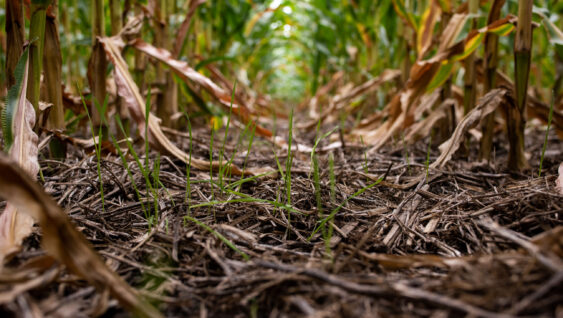




Six Soil Fertility Considerations For Spring

The secret to producing high-yielding, quality crops? A sound nutrient management plan and a strong soil fertility program. As planting begins on your farm, consider the following spring soil fertility tips that can drastically improve your soil’s health, support fertilizer investment decisions, and support greater productivity and profitability in the season ahead.
Justify fertilizer decisions with the right soil test
The 4R Nutrient Stewardship framework provides growers with fertilizer use guidelines that can increase productivity, profitability, and sustainability. The 4Rs helps you use the right source of fertilizer, at the right rate, at the right time, and in the right place. Former affiliate Professor and Soil Fertility Specialist at Colorado State University, says there is a fifth ‘R’ that growers should pay attention to—the right soil test.
The right soil test helps you justify your 4R decisions and get an accurate picture of the nutrients available in your soil before you begin planting. It provides insights into the chemical and physical properties of your soil to help guide your nutrient management decisions and maintain soil fertility. Soil tests give you an overview of what your crops will be able to access throughout the growing season, and what nutrients you will need to apply with your fertilizer program.
Expert Tip: Testing your soil regularly will help you avoid over or under applying nutrients and give you the data you need to support your crop’s greatest yield potential.
Avoid cutting back on phosphorus and potassium
When commodity prices are low, it can be tempting to cut back on your fertilizer and nutrient management program to help save costs. Cutting back on key nutrients like phosphorus and potassium will shortchange future crop yields and hold your yield back from reaching its full potential. To produce high-yielding, quality crops, you need the right balance of key nutrients through a strong fertilizer program.
Expert Tip: Explore eKonomics crop guides to uncover typical crop removal rates, application tips, and rate recommendations to help you plan your fertilizer program.
Use crop removal rates to inform fertilizer applications
High-yielding crops remove valuable nutrients from our soil. For example, a 250 bushel an acre corn crop removes nearly 50 pounds of potassium per acre. Annual soil testing can help you get an accurate estimate of crop removal rates and how much of each nutrient needs to be supplied through your fertilizer program. Crop removal rates should be considered when planning your spring fertilizer and nutrient management program, especially for nitrogen, potassium, and phosphorus.
When analyzing crop removal rates and the need for fertilization, consider Dr. Karl Wyant’s rule of thumb for fertilizer profitability. The lower the soil test value, the more likely you are to see a positive economic return to fertilizer applications.
Expert Tip: Estimate crop removal rates with the nutrient removal calculator—helping you better understand how much of each nutrient you need to replace with your fertilizer program.
Enhance nitrogen efficiency with spring split applications
Unforeseen weather conditions and other factors can impact your ability to fall apply nitrogen. If you missed the fall window to apply anhydrous ammonia, applying your nitrogen in the spring makes good financial sense. Split applications of nitrogen throughout the growing season can help provide your crops with the nitrogen they need to produce the yields you want.
Dr. Robert Miller suggests that growers apply 50 per cent of their nitrogen before planting and apply the other half as a side dress. This allows you to maximize nitrogen use efficiency, even when the weather doesn’t allow for fall applications.
Expert Tip: Better understand the nitrogen in your field with our new nitrogen application calculators—helping you calculate how many acres you can cover with the nitrogen in your tank, how long applications will take, and approximate application rates.
Build up your soil bank when prices are low
When fertilizer prices are low, it can be an ideal time to help build up your soil nutrient bank and ensure your crops can access the nutrients they need to produce quality, high-yielding crops. A variety of factors should be considered before deciding to build your soil bank, including commodity and fertilizer prices, to ensure it is the most profitable decision for your bottom line.
Expert Tip: If your soil’s nutrients have been depleted by high yields, take advantage of a season with good growing conditions and steady crop prices to start building your soil nutrient bank while maintaining profitability.
Pair the right hybrids with an optimized fertility program
You should always prepare for the best season possible with an optimum fertility program paired with the right hybrids. This allows you to take advantage of the optimum yield potential of your crops.
Expert Tip: When you don’t prepare for the best season possible with an optimum fertility plan, you risk lower yields and a lower bottom line.

Looking Ahead
Planting is a busy time of year—get ahead when you develop a strong soil fertility program rooted in your field’s needs and leverage tools and tactics that can protect your fertilizer investment.
Want to dig deeper? Visit the following eKonomics resources to learn more about spring soil fertility considerations including soil testing tips and other nutrient management tips:
5 Ways to Elevate Your Fertilizer Budget
Manage Nutrients AND High Fertilizer Prices
The Dirt Season 1 Ep 2: Interpreting Soil Test Results with Nathan Slaton
The Dirt Season 3 Ep 10: Put Your Soil Test to the Test
The Dirt Season 3 Ep 27: Grower’s Guide – Phosphorus and Potassium Management
The Dirt Season 2 Ep 33: Liebig’s Law – Tools to Manage Yield
Soil Tests, Critical Values, High Prices, And What It All Means